
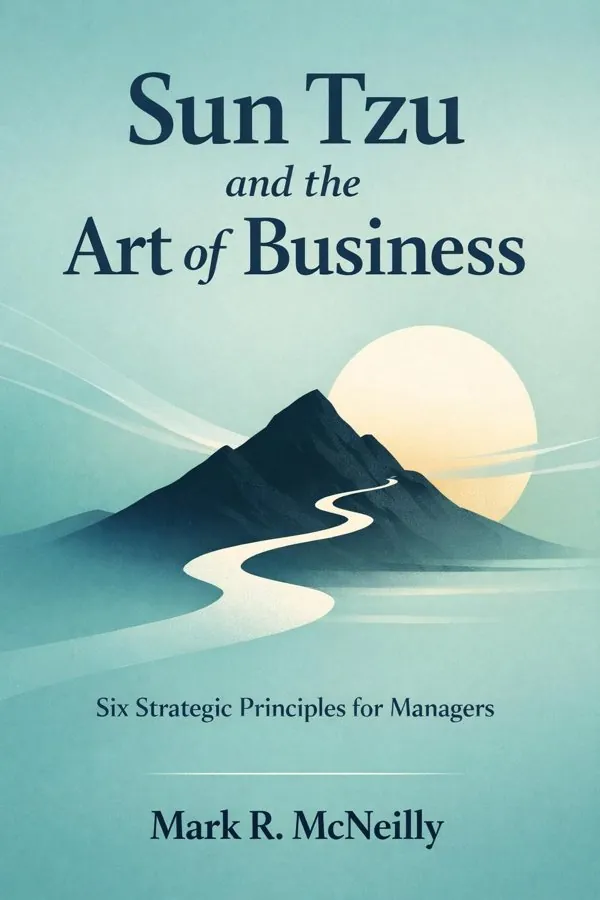
Sun Tzu and the Art of Business: Six Strategic Principles for Managers: Summary & Key Insights
 10 min8 chaptersAudio available
What Is Sun Tzu and the Art of Business: Six Strategic Principles for Managers About?
Sun Tzu and the Art of Business: Six Strategic Principles for Managers by Mark R. McNeilly is a strategy book spanning 8 pages. This book applies the ancient Chinese military strategist Sun Tzu’s principles from *The Art of War* to modern business strategy. McNeilly identifies six key strategic principles that can help managers and leaders gain competitive advantage, outthink rivals, and adapt to changing environments. The work bridges Eastern philosophy and Western management theory, offering practical insights for leadership, competition, and organizational success.
This FizzRead summary covers all 8 key chapters of Sun Tzu and the Art of Business: Six Strategic Principles for Managers in approximately 10 minutes, distilling the most important ideas, arguments, and takeaways from Mark R. McNeilly's work. Also available as an audio summary and Key Quotes Podcast.
Sun Tzu and the Art of Business: Six Strategic Principles for Managers
This book applies the ancient Chinese military strategist Sun Tzu’s principles from *The Art of War* to modern business strategy. McNeilly identifies six key strategic principles that can help managers and leaders gain competitive advantage, outthink rivals, and adapt to changing environments. The work bridges Eastern philosophy and Western management theory, offering practical insights for leadership, competition, and organizational success.
Who Should Read Sun Tzu and the Art of Business: Six Strategic Principles for Managers?
This book is perfect for anyone interested in strategy and looking to gain actionable insights in a short read. Whether you're a student, professional, or lifelong learner, the key ideas from Sun Tzu and the Art of Business: Six Strategic Principles for Managers by Mark R. McNeilly will help you think differently.
- ✓Readers who enjoy strategy and want practical takeaways
- ✓Professionals looking to apply new ideas to their work and life
- ✓Anyone who wants the core insights of Sun Tzu and the Art of Business: Six Strategic Principles for Managers in just 10 minutes
Want the full summary?
Get instant access to this book summary and 100K+ more with Fizz Moment.
Get Free SummaryAvailable on App Store • Free to download
Key Chapters
Sun Tzu teaches that the highest form of victory is one achieved without fighting. In business, this means success gained through strategic positioning, not destructive competition. The corporations that prosper most sustainably are those that redefine markets, change rules, and make competitors irrelevant. In my work with international firms, I’ve seen that managerial brilliance often lies not in aggression, but in foresight and innovation.
To win without fighting, a business must deeply understand both its customers and its competitors. It must create value in such a way that rivals are dissuaded from direct conflict. Consider how Apple revolutionized personal technology—not by fighting established players on their terms, but by crafting an ecosystem that merged design, utility, and emotion in ways others could not easily replicate. That is strategic positioning par excellence. It is not the absence of conflict, but the elevation of the game.
When a manager learns to think this way, every market challenge becomes a puzzle rather than a battle. The aim is not to take a larger share of the existing pie, but to bake a new one. By aligning resources, building customer loyalty, and anticipating shifts in the market, companies can render competitors’ advantages obsolete before they even act. In the words of Sun Tzu, true mastery is to subdue the enemy without battle—because the battle has already been won in the mind.
Too often, companies waste vast amounts of energy confronting competitors at their strongest points. Sun Tzu warns against this folly. The wise strategist identifies where the opponent is brittle, not where they are reinforced. In business, this principle involves discernment, creativity, and subtlety.
When Southwest Airlines entered the U.S. airline industry, it didn’t attack the major carriers on their long-haul networks or international routes. Instead, it focused on short, low-cost flights—segments the major carriers largely ignored. That was attacking weakness, not strength, and it changed the entire industry. This lesson resonates across all sectors. The path to advantage rarely comes from standing in front of a competitor’s charging momentum—it comes from discovering unmet needs, inefficiencies, and overlooked customer desires.
To apply this principle, one must cultivate the habit of clear-eyed observation. Watch how competitors structure their offerings. Look at where they overinvest, where they rely on outdated processes, and where they neglect emerging opportunities. As a manager, redirect your energy toward arenas where your organization can gain asymmetric advantage. Sun Tzu knew that victory often depends not on overwhelming power but on intelligent leverage.
+ 6 more chapters — available in the FizzRead app
All Chapters in Sun Tzu and the Art of Business: Six Strategic Principles for Managers
About the Author
Mark R. McNeilly is an American author, lecturer, and business strategist. He has extensive experience in marketing and management at IBM and Lenovo and teaches at the University of North Carolina at Chapel Hill. His works focus on applying classical strategic wisdom to modern business and leadership contexts.
Get This Summary in Your Preferred Format
Read or listen to the Sun Tzu and the Art of Business: Six Strategic Principles for Managers summary by Mark R. McNeilly anytime, anywhere. FizzRead offers multiple formats so you can learn on your terms — all free.
Available formats: App · Audio · PDF · EPUB — All included free with FizzRead
Download Sun Tzu and the Art of Business: Six Strategic Principles for Managers PDF and EPUB Summary
Key Quotes from Sun Tzu and the Art of Business: Six Strategic Principles for Managers
“Sun Tzu teaches that the highest form of victory is one achieved without fighting.”
“Too often, companies waste vast amounts of energy confronting competitors at their strongest points.”
Frequently Asked Questions about Sun Tzu and the Art of Business: Six Strategic Principles for Managers
Sun Tzu and the Art of Business: Six Strategic Principles for Managers by Mark R. McNeilly is a strategy book that explores key ideas across 8 chapters. This book applies the ancient Chinese military strategist Sun Tzu’s principles from *The Art of War* to modern business strategy. McNeilly identifies six key strategic principles that can help managers and leaders gain competitive advantage, outthink rivals, and adapt to changing environments. The work bridges Eastern philosophy and Western management theory, offering practical insights for leadership, competition, and organizational success.
You Might Also Like

Mastery
Robert Greene
10 min
Cut Costs Not Corners: A Practical Guide to Staying Competitive and Improving Profits
Colin Barrow
10 min
Good Strategy/Bad Strategy: The Difference and Why It Matters
Richard P. Rumelt
10 min
On Grand Strategy
John Lewis Gaddis
10 min
The Six Disciplines of Digital Transformation
George Westerman
10 min
7 Powers: The Foundations of Business Strategy
Hamilton Helmer
10 minBrowse by Category
Ready to read Sun Tzu and the Art of Business: Six Strategic Principles for Managers?
Get the full summary and 100K+ more books with Fizz Moment.