
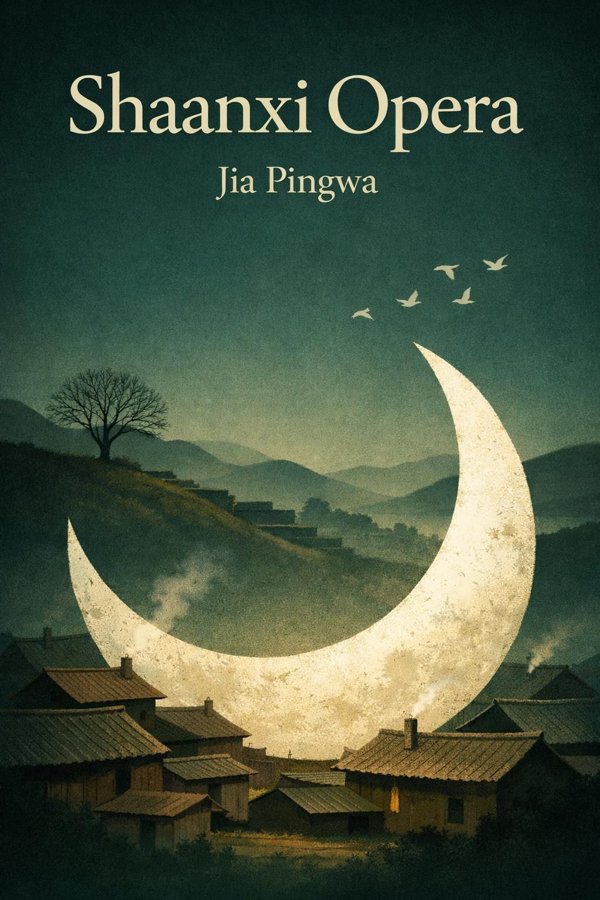
Shaanxi Opera: Summary & Key Insights
by Jia Pingwa
 10 min6 chaptersAudio available
What Is Shaanxi Opera About?
Shaanxi Opera by Jia Pingwa is a classics book spanning 6 pages. Shaanxi Opera is a novel by Jia Pingwa that depicts the turbulence and transformation of rural China over two decades. Set in a fictional town inspired by the author’s hometown, it explores the lives of villagers through birth, death, illness, and aging, reflecting the social and cultural shifts during China’s modernization. The book is known for its realism and deep portrayal of local life and traditions.
This FizzRead summary covers all 6 key chapters of Shaanxi Opera in approximately 10 minutes, distilling the most important ideas, arguments, and takeaways from Jia Pingwa's work. Also available as an audio summary and Key Quotes Podcast.
Shaanxi Opera
Shaanxi Opera is a novel by Jia Pingwa that depicts the turbulence and transformation of rural China over two decades. Set in a fictional town inspired by the author’s hometown, it explores the lives of villagers through birth, death, illness, and aging, reflecting the social and cultural shifts during China’s modernization. The book is known for its realism and deep portrayal of local life and traditions.
Who Should Read Shaanxi Opera?
This book is perfect for anyone interested in classics and looking to gain actionable insights in a short read. Whether you're a student, professional, or lifelong learner, the key ideas from Shaanxi Opera by Jia Pingwa will help you think differently.
- ✓Readers who enjoy classics and want practical takeaways
- ✓Professionals looking to apply new ideas to their work and life
- ✓Anyone who wants the core insights of Shaanxi Opera in just 10 minutes
Want the full summary?
Get instant access to this book summary and 100K+ more with Fizz Moment.
Get Free SummaryAvailable on App Store • Free to download
Key Chapters
The novel opens with the village itself, a microcosm of the Shaanxi countryside, where life is bound by the seasons and rituals that have persisted for generations. The inhabitants work the land, gossip at the wells, and gather during festivals where the sound of the local opera fills the air. I wanted to paint this community with a sense of intimacy—each villager a thread in a vast, ancient tapestry. It was essential for me to show that before modern change arrives, there is already a harmony, however imperfect. People understand their place in the world, and even poverty has a rhythm to it.
The opera troupe is the heart of this community. Its performances are both entertainment and spiritual nourishment, the medium through which values, stories, and history are shared. When the troupe sets up its makeshift stage, even quarrels pause. The actors’ painted faces, the shrill voices, the clang of drums—all remind the villagers that art, no matter how rustic, connects them to something eternal. Through this opera, the villagers preserve a moral code and emotional outlet otherwise absent in their harsh lives.
But with reform and new ambitions creeping into the countryside, this harmony begins to tremble. The opera becomes a metaphor for the conflict between continuity and change. While the troupe struggles to survive, the younger generation grows restless, dreaming of money, education, and escape. That contrast—the loyal yet aging actors versus the pragmatic new villagers—embodies the novel’s heartache: how a culture’s voice threatens to dissolve just as its people begin to find their own.
When I created the villagers in *Shaanxi Opera*, I aimed to reveal not archetypes but real human beings, etched with contradictions. Among them are the patriarchs who cling to ancestral rules, women who bear silence like a second skin, and youth whose ambitions both inspire and destroy them. Their relationships trace the transformations of our society. Parents can no longer command their children’s respect through custom alone; tradition fractures under the weight of individuality.
Take, for instance, the old elders who once held moral authority. They are bewildered to find their wisdom discounted when new economic opportunities emerge. The young, often educated in distant towns, return home full of impatience for their elders’ beliefs. Yet even as they reject the old ways, they are haunted by guilt and nostalgia. Between these generations lies the story of a nation wrestling with modernization—torn between the need to progress and the fear of losing its essence.
I also devoted much attention to the lives of women—farmwives, widows, and daughters—whose roles shift subtly but profoundly. Once confined to domestic circles, they begin to sense new possibilities as the rural economy opens up. Their awakenings are quiet yet powerful, showing how the smallest shifts in self-awareness can echo through a family or an entire village. Their strength, often born of pain, is what sustains the emotional current of the story.
+ 4 more chapters — available in the FizzRead app
All Chapters in Shaanxi Opera
About the Author
Jia Pingwa, born in 1952 in Danfeng County, Shaanxi Province, is one of China’s most acclaimed contemporary writers. His works, including Ruined City, Turbulence, and Shaanxi Opera, are celebrated for their rich depiction of rural life and social change. He has received numerous literary awards, including the Mao Dun Literature Prize.
Get This Summary in Your Preferred Format
Read or listen to the Shaanxi Opera summary by Jia Pingwa anytime, anywhere. FizzRead offers multiple formats so you can learn on your terms — all free.
Available formats: App · Audio · PDF · EPUB — All included free with FizzRead
Download Shaanxi Opera PDF and EPUB Summary
Key Quotes from Shaanxi Opera
“The novel opens with the village itself, a microcosm of the Shaanxi countryside, where life is bound by the seasons and rituals that have persisted for generations.”
“When I created the villagers in *Shaanxi Opera*, I aimed to reveal not archetypes but real human beings, etched with contradictions.”
Frequently Asked Questions about Shaanxi Opera
Shaanxi Opera by Jia Pingwa is a classics book that explores key ideas across 6 chapters. Shaanxi Opera is a novel by Jia Pingwa that depicts the turbulence and transformation of rural China over two decades. Set in a fictional town inspired by the author’s hometown, it explores the lives of villagers through birth, death, illness, and aging, reflecting the social and cultural shifts during China’s modernization. The book is known for its realism and deep portrayal of local life and traditions.
More by Jia Pingwa
You Might Also Like



Browse by Category
Ready to read Shaanxi Opera?
Get the full summary and 100K+ more books with Fizz Moment.