
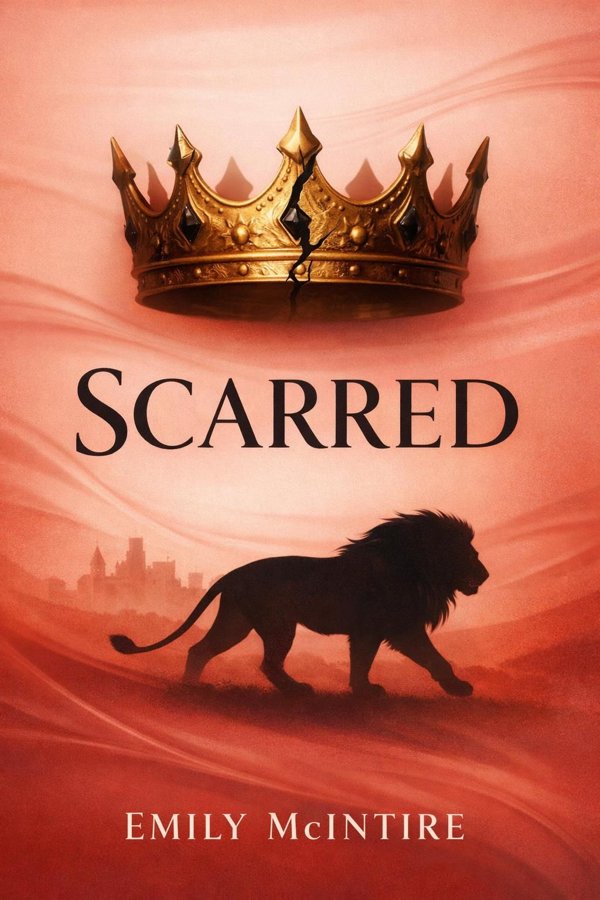
Scarred: Summary & Key Insights
 10 min9 chaptersAudio available
Key Takeaways from Scarred
Every love story is shaped by the world that surrounds it, and in Scarred, romance grows out of political fracture rather than safety.
The people most ignored are often the ones who understand power most clearly.
Some of the most powerful deceptions begin with a smile.
Attraction becomes most dangerous when it collides with an agenda.
Revenge is rarely clean, because the closer you get to someone, the harder it becomes to treat them as a symbol.
What Is Scarred About?
Scarred by Emily McIntire is a romantic_relationships book spanning 5 pages. Scarred by Emily McIntire is a dark contemporary romance that reimagines the emotional architecture of The Lion King in a modern, human kingdom shaped by privilege, betrayal, and old blood debts. At its center is Tristan Faasa, a prince scarred in body and spirit, who has grown up in the shadow of power, rejection, and carefully cultivated rage. Into his orbit steps Sarah, a woman with hidden motives and a past connected to the royal family’s deepest wrongs. What begins as manipulation and revenge slowly turns into a dangerous intimacy that neither of them expected. What makes Scarred compelling is not only its forbidden romance, but its sharp interest in emotional damage: how humiliation hardens into cruelty, how grief distorts loyalty, and how love can become either a weapon or a path to redemption. McIntire, known for her Never After series, has built a reputation for taking familiar fairy tales and exposing their darker psychological undercurrents. Here, she blends court intrigue, sensual tension, and moral ambiguity into a story that asks whether damaged people can choose something better than the pain that made them. For readers who enjoy intense, character-driven romance with high emotional stakes, Scarred offers both heat and depth.
This FizzRead summary covers all 9 key chapters of Scarred in approximately 10 minutes, distilling the most important ideas, arguments, and takeaways from Emily McIntire's work. Also available as an audio summary and Key Quotes Podcast.
Scarred
Scarred by Emily McIntire is a dark contemporary romance that reimagines the emotional architecture of The Lion King in a modern, human kingdom shaped by privilege, betrayal, and old blood debts. At its center is Tristan Faasa, a prince scarred in body and spirit, who has grown up in the shadow of power, rejection, and carefully cultivated rage. Into his orbit steps Sarah, a woman with hidden motives and a past connected to the royal family’s deepest wrongs. What begins as manipulation and revenge slowly turns into a dangerous intimacy that neither of them expected.
What makes Scarred compelling is not only its forbidden romance, but its sharp interest in emotional damage: how humiliation hardens into cruelty, how grief distorts loyalty, and how love can become either a weapon or a path to redemption. McIntire, known for her Never After series, has built a reputation for taking familiar fairy tales and exposing their darker psychological undercurrents. Here, she blends court intrigue, sensual tension, and moral ambiguity into a story that asks whether damaged people can choose something better than the pain that made them. For readers who enjoy intense, character-driven romance with high emotional stakes, Scarred offers both heat and depth.
Who Should Read Scarred?
This book is perfect for anyone interested in romantic_relationships and looking to gain actionable insights in a short read. Whether you're a student, professional, or lifelong learner, the key ideas from Scarred by Emily McIntire will help you think differently.
- ✓Readers who enjoy romantic_relationships and want practical takeaways
- ✓Professionals looking to apply new ideas to their work and life
- ✓Anyone who wants the core insights of Scarred in just 10 minutes
Want the full summary?
Get instant access to this book summary and 100K+ more with Fizz Moment.
Get Free SummaryAvailable on App Store • Free to download
Key Chapters
Every love story is shaped by the world that surrounds it, and in Scarred, romance grows out of political fracture rather than safety. The novel opens in a kingdom that appears orderly from the outside, but beneath that polished image lies a family system built on neglect, favoritism, and fear. The Faasa dynasty is not simply a royal household; it is an emotional battlefield where worth is assigned unequally and power is used to wound. Tristan, long treated as lesser, has learned to survive by turning pain into control. That makes the kingdom itself more than a setting. It becomes a reflection of the characters’ internal damage.
Emily McIntire uses this divided world to show how private trauma and public power feed each other. A prince who feels unloved may become a man obsessed with domination. A court that rewards appearance over truth creates people who hide behind roles, masks, and manipulation. This dynamic makes the stakes larger than a simple romance. When Tristan and Sarah move toward each other, they are also moving through a system designed to keep trust impossible.
In everyday life, this idea appears whenever relationships are shaped by unhealthy environments: dysfunctional families, toxic workplaces, or social circles built on rivalry. People rarely make choices in isolation; they respond to the emotional climates around them. Scarred reminds readers to ask not only, “What is this person doing?” but also, “What kind of world taught them to do it?”
Actionable takeaway: When judging a relationship, examine the environment around it. Understanding the system often reveals why people cling to power, secrecy, or emotional distance.
The people most ignored are often the ones who understand power most clearly. Tristan Faasa is not merely a dark, brooding hero; he is a man formed by exclusion. Scarred physically and emotionally, he has spent years being measured against others and found wanting. That kind of sustained rejection does not simply hurt. It reshapes identity. Tristan’s coldness, ambition, and hunger for control are not random personality traits but survival strategies built from humiliation.
One of the novel’s strongest ideas is that neglect can be just as destructive as overt cruelty. Tristan is not empowered by being underestimated; he is deformed by it. He becomes skilled at reading weakness, exploiting silence, and using intimidation because those are the tools that give him a sense of agency. McIntire refuses to soften him too quickly, which is part of why the character feels compelling. Readers are asked to sit with the uncomfortable truth that wounded people can become dangerous before they become healed.
This idea has broad relevance beyond fiction. In workplaces, families, or friendships, constantly dismissing someone can breed bitterness, not humility. A child ignored by caregivers may later chase validation through achievement, manipulation, or emotional withdrawal. A colleague repeatedly overlooked may stop collaborating and begin competing. Scarred dramatizes that process through Tristan’s transformation from neglected prince to threatening force.
At the same time, the book suggests that understanding a person’s pain does not excuse their behavior. It only explains its origin. That distinction matters. Compassion without boundaries becomes enabling, while judgment without context becomes shallow.
Actionable takeaway: Pay attention to the quiet wounds created by dismissal. If you feel unseen, name the hurt before it hardens into resentment; if you lead others, do not underestimate the damage of making someone feel invisible.
Some of the most powerful deceptions begin with a smile. Sarah arrives in the palace under false pretenses, carrying secrets that tie her directly to the royal family’s past crimes. On the surface, she appears compliant, useful, and easily overlooked. In reality, she is driven by motive, memory, and a quiet determination to get close enough to expose or avenge what has been hidden. Her position as an outsider disguised as a servant allows her to move through spaces where truth is whispered but rarely spoken aloud.
McIntire uses Sarah’s entrance to explore how identity can function as both shield and weapon. Sarah is not simply lying to survive; she is strategically performing a role. That performance gives her access, but it also costs her emotional clarity. The longer she remains inside the palace, the harder it becomes to separate mission from desire, especially once Tristan enters the picture. Her deception creates suspense, but it also raises a deeper question: if someone begins a relationship under false circumstances, can anything genuine still emerge?
This tension is familiar in real life, though usually less dramatic. People often enter relationships, jobs, or social settings while hiding part of themselves. They minimize past pain, perform confidence they do not feel, or present only the traits they think will be accepted. Such self-construction may be protective, but it complicates intimacy. The more energy spent maintaining the image, the harder honesty becomes.
Sarah’s arc shows that secrecy can secure access but not peace. Sooner or later, hidden motives demand a reckoning. Trust built on incomplete truth may still contain real emotion, but it cannot remain stable forever.
Actionable takeaway: Ask yourself where you may be performing instead of connecting. If an important relationship depends on a version of you that is not real, honesty is risky but necessary.
Attraction becomes most dangerous when it collides with an agenda. In Scarred, the chemistry between Tristan and Sarah is not a comforting escape from conflict; it intensifies the conflict. Their growing desire blurs the boundaries between manipulation and vulnerability, making both characters question the stories they have told themselves. Sarah is supposed to remain focused on her purpose. Tristan is supposed to remain in control. Instead, longing disrupts strategy, and physical closeness begins exposing emotional truths they would rather avoid.
What makes this dynamic effective is that McIntire does not treat desire as purely redemptive. Passion does not magically erase damage. Instead, it acts like a spotlight, revealing insecurity, possessiveness, tenderness, fear, and hunger all at once. Tristan’s attraction exposes his need to be chosen rather than merely obeyed. Sarah’s attraction reveals how revenge can weaken when the target becomes human. The result is a romance built not on innocence but on destabilization.
This is one of the novel’s most psychologically accurate ideas. Intense attraction often makes people feel that they are discovering truth, when in fact they may be entering confusion. Desire can reveal what matters, but it can also distort judgment. People stay in unhealthy relationships because chemistry feels meaningful. They ignore red flags because being wanted feels healing. They rationalize contradictions because intimacy creates emotional momentum.
Scarred does not deny the power of passion; it insists that passion alone is not wisdom. Love becomes transformative only when desire is paired with honesty, accountability, and choice. Without those, attraction remains another form of danger.
Actionable takeaway: When strong chemistry appears, do not ask only whether it feels intense. Ask what it is bringing out in you: clarity, denial, courage, or self-betrayal.
Revenge is rarely clean, because the closer you get to someone, the harder it becomes to treat them as a symbol. One of Scarred’s central achievements is how it binds political ambition and romantic intimacy together. Tristan seeks power not only because he wants status, but because power promises correction for years of injury. Sarah is drawn into his world with motives that are also rooted in the past. As they grow closer, each must confront a painful truth: revenge is easiest when the other person remains abstract, but intimacy destroys abstraction.
McIntire builds tension by showing how both characters use closeness strategically before discovering that strategy does not prevent attachment. A touch can be calculated, a conversation can be manipulative, a confession can be selective, yet real feeling may still emerge. This is what makes the novel darkly compelling. It understands that people often pursue control in the language of love and pursue love while pretending it is control.
Outside fiction, this pattern appears whenever unresolved hurt enters relationships. Someone dates to prove they are desirable after rejection. Someone seeks emotional leverage instead of mutuality because vulnerability feels unsafe. Someone keeps score in love, turning affection into a hidden contest. Scarred magnifies these dynamics through royal stakes, but the emotional logic is deeply recognizable.
The novel also suggests that revenge has a narrowing effect. It simplifies people into offenders, heirs, enemies, or obstacles. Intimacy, by contrast, forces complexity back into view. That complexity does not erase wrongdoing, but it makes easy hatred harder to sustain.
Actionable takeaway: If you notice yourself using closeness to win, punish, or regain control, pause. Relationships built as battlegrounds may feel powerful in the short term, but they rarely lead to peace.
A scar can be proof of survival or a prison of self-definition. The title Scarred points to far more than Tristan’s physical marks. Nearly every major character carries some form of damage: abandonment, betrayal, grief, humiliation, or guilt. McIntire’s deeper question is whether these scars will become excuses, armor, or catalysts for change. Tristan initially treats his wounds as evidence that the world has denied him tenderness, fairness, and rightful power. Sarah carries her own injuries as mission and memory. Their challenge is not to erase pain, but to decide what kind of future pain will shape.
This is where the novel’s redemptive arc gains force. Healing in Scarred is not sentimental. It does not mean forgetting harm or pretending trauma never mattered. Instead, healing begins when characters stop organizing their entire identities around what was done to them. That shift is difficult because wounds can feel strangely stabilizing. If pain explains everything, then change becomes threatening. To become more than a scar requires risk, responsibility, and openness to uncertainty.
Readers can apply this idea in ordinary life. Many people unknowingly build identities around old injuries: the rejected one, the betrayed one, the overlooked one, the strong one who needs no one. These identities may protect, but they also limit. They keep pain central long after the original event has passed. Scarred suggests that survival is real, but it should not become the only story a person tells about themselves.
The novel does not promise perfect restoration. It offers something more believable: the possibility that love, truth, and accountability can make scars part of a person’s history without letting them dictate every choice.
Actionable takeaway: Reflect on one old wound that still defines your self-image. Ask not only how it hurt you, but how you may be letting it script your present.
People are not redeemed because they suffer; they are redeemed because they change. This distinction gives Scarred much of its emotional credibility. Tristan’s pain explains him, but the novel does not present pain as automatic justification. For redemption to matter, he must confront the ways he has used his wounds to harm, dominate, and manipulate. Sarah, too, must face the consequences of deception, even when her motives are understandable. McIntire’s romance works because it insists that love is not a substitute for accountability.
This matters in dark romance, where damaged characters often attract readers precisely because they are intense, morally gray, and difficult. Scarred acknowledges that intensity can be appealing without pretending it is harmless. Transformation in the novel requires choice: choosing honesty over concealment, vulnerability over coercion, and responsibility over self-pity. That is what separates redemption from mere absolution.
In real life, many people confuse explanation with repair. They say, “I act this way because of my past,” as though understanding the origin of behavior should end the conversation. But relationships heal only when explanation leads to changed action. An apology without behavioral shift is theater. Insight without responsibility is self-indulgence. Scarred dramatizes this truth through characters whose love can survive only if they become more honest about what they have done to each other.
The book therefore offers a mature view of forgiveness. Forgiveness is not pretending no damage occurred. It is deciding whether a person has shown enough truth, effort, and change to make trust conceivable again. Not all harm can or should be repaired, but where redemption exists, it is earned.
Actionable takeaway: When evaluating your own growth or someone else’s apology, look for changed patterns, not moving explanations. Redemption begins where responsibility becomes visible.
Many people do not struggle most with being unloved; they struggle with believing they could be lovable at all. Beneath the intrigue and sensual tension of Scarred lies a quieter emotional conflict about worth. Tristan has internalized the belief that he is the lesser son, the damaged prince, the one who must seize value because it will never be freely given. Sarah’s presence disrupts that narrative, not because she flatters him, but because she sees dimensions in him that his world has trained him to hide or weaponize. Their relationship becomes meaningful when it begins to challenge the stories both of them inherited about who deserves tenderness and who does not.
This idea gives the novel emotional resonance beyond its dark setup. Families, institutions, and early relationships often hand people scripts about themselves: you are difficult, you are disposable, you are useful only when obedient, you are too broken to be chosen. Those stories can govern adulthood unless they are interrupted. Love, at its best, does not magically heal insecurity, but it can expose the lie that one’s deepest wounds make connection impossible.
Still, McIntire avoids turning love into instant therapy. Being seen is powerful, but it does not remove the need for self-confrontation. Tristan cannot simply receive affection and become whole. He must also unlearn the worldview built around his shame. Sarah, likewise, must decide whether she can love someone fully once illusion has fallen away.
For readers, this key idea invites reflection on the hidden beliefs that shape relationships. Sometimes the hardest part of intimacy is not finding someone who cares, but allowing yourself to believe that care is real.
Actionable takeaway: Notice the old story you tell yourself about why love is hard for you. Challenge it with evidence, conversation, and choices that reflect your actual worth rather than your oldest fear.
All Chapters in Scarred
About the Author
Emily McIntire is an American author known for writing dark, emotionally intense contemporary romance. She gained wide recognition through her Never After series, in which she reimagines classic fairy tales and well-known stories as adult romances filled with moral ambiguity, psychological tension, and high-stakes passion. Her work often centers on flawed characters, forbidden attraction, trauma, power struggles, and redemption, appealing to readers who enjoy romance with a darker edge. McIntire’s writing style blends sensuality with strong emotional conflict, making her stories both addictive and character-driven. In Scarred, she brings that signature approach to a royal retelling inspired by The Lion King, further establishing her reputation as a writer who can transform familiar narratives into provocative, modern love stories.
Get This Summary in Your Preferred Format
Read or listen to the Scarred summary by Emily McIntire anytime, anywhere. FizzRead offers multiple formats so you can learn on your terms — all free.
Available formats: App · Audio · PDF · EPUB — All included free with FizzRead
Download Scarred PDF and EPUB Summary
Key Quotes from Scarred
“Every love story is shaped by the world that surrounds it, and in Scarred, romance grows out of political fracture rather than safety.”
“The people most ignored are often the ones who understand power most clearly.”
“Some of the most powerful deceptions begin with a smile.”
“Attraction becomes most dangerous when it collides with an agenda.”
“Revenge is rarely clean, because the closer you get to someone, the harder it becomes to treat them as a symbol.”
Frequently Asked Questions about Scarred
Scarred by Emily McIntire is a romantic_relationships book that explores key ideas across 9 chapters. Scarred by Emily McIntire is a dark contemporary romance that reimagines the emotional architecture of The Lion King in a modern, human kingdom shaped by privilege, betrayal, and old blood debts. At its center is Tristan Faasa, a prince scarred in body and spirit, who has grown up in the shadow of power, rejection, and carefully cultivated rage. Into his orbit steps Sarah, a woman with hidden motives and a past connected to the royal family’s deepest wrongs. What begins as manipulation and revenge slowly turns into a dangerous intimacy that neither of them expected. What makes Scarred compelling is not only its forbidden romance, but its sharp interest in emotional damage: how humiliation hardens into cruelty, how grief distorts loyalty, and how love can become either a weapon or a path to redemption. McIntire, known for her Never After series, has built a reputation for taking familiar fairy tales and exposing their darker psychological undercurrents. Here, she blends court intrigue, sensual tension, and moral ambiguity into a story that asks whether damaged people can choose something better than the pain that made them. For readers who enjoy intense, character-driven romance with high emotional stakes, Scarred offers both heat and depth.
You Might Also Like

Rebel
Beverly Jenkins
10 min
The Last Letter
Rebecca Yarros
10 min
A Thousand Boy Kisses
Tillie Cole
10 min
Aflame
Penelope Douglas
10 min
After The Bite
Lynsay Sands
10 min
Alchemised
SenLinYu
10 minBrowse by Category
Ready to read Scarred?
Get the full summary and 100K+ more books with Fizz Moment.