

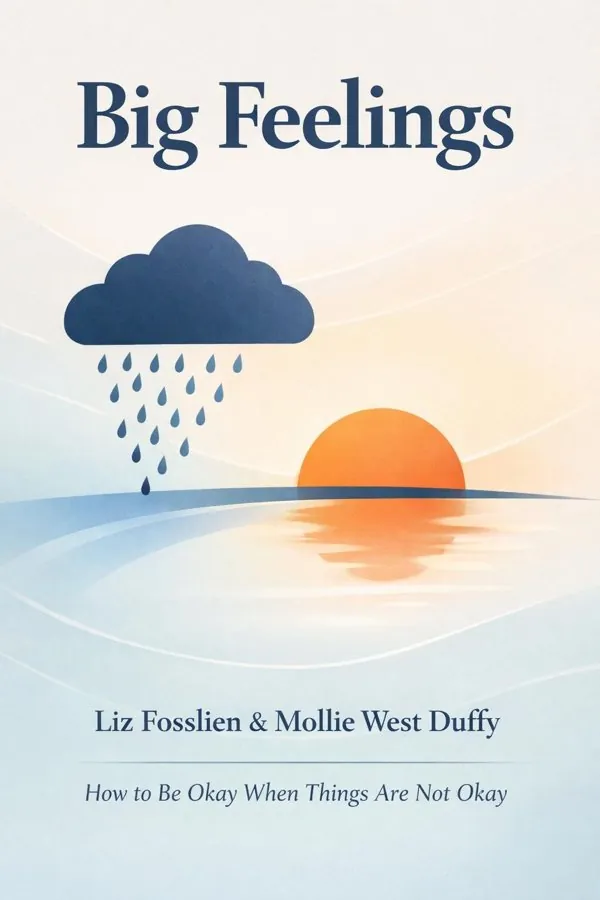
No Hard Feelings: The Secret Power of Embracing Emotions at Work: Summary & Key Insights
by Liz Fosslien, Mollie West Duffy
 10 min11 chaptersAudio available
What Is No Hard Feelings: The Secret Power of Embracing Emotions at Work About?
No Hard Feelings: The Secret Power of Embracing Emotions at Work by Liz Fosslien, Mollie West Duffy is a organization book spanning 11 pages. A practical guide that explores how emotions influence our professional lives and how embracing them can improve communication, collaboration, and well-being at work. The authors combine behavioral science, organizational psychology, and personal anecdotes to show how emotional awareness can lead to healthier and more productive workplaces.
This FizzRead summary covers all 11 key chapters of No Hard Feelings: The Secret Power of Embracing Emotions at Work in approximately 10 minutes, distilling the most important ideas, arguments, and takeaways from Liz Fosslien, Mollie West Duffy's work. Also available as an audio summary and Key Quotes Podcast.
No Hard Feelings: The Secret Power of Embracing Emotions at Work
A practical guide that explores how emotions influence our professional lives and how embracing them can improve communication, collaboration, and well-being at work. The authors combine behavioral science, organizational psychology, and personal anecdotes to show how emotional awareness can lead to healthier and more productive workplaces.
Who Should Read No Hard Feelings: The Secret Power of Embracing Emotions at Work?
This book is perfect for anyone interested in organization and looking to gain actionable insights in a short read. Whether you're a student, professional, or lifelong learner, the key ideas from No Hard Feelings: The Secret Power of Embracing Emotions at Work by Liz Fosslien, Mollie West Duffy will help you think differently.
- ✓Readers who enjoy organization and want practical takeaways
- ✓Professionals looking to apply new ideas to their work and life
- ✓Anyone who wants the core insights of No Hard Feelings: The Secret Power of Embracing Emotions at Work in just 10 minutes
Want the full summary?
Get instant access to this book summary and 100K+ more with Fizz Moment.
Get Free SummaryAvailable on App Store • Free to download
Key Chapters
Let’s begin by acknowledging that emotions aren’t distractions from rational thought — they’re part of it. Research in behavioral science shows that our feelings guide judgment: a spark of excitement can fuel innovation, while frustration can reveal obstacles we’ve been glossing over. Mollie and I often say that emotions are data. They tell us how invested we are in something, where our boundaries lie, and when something feels off. Ignoring them means cutting yourself off from valuable signals.
Think about a team project. When tension arises, it’s easy to dismiss it as mere personality conflict. But beneath that tension often lies fear, miscommunication, or a difference in values. Acknowledging emotions helps us name what’s really happening. If a team member feels excluded, acknowledging that emotion opens the door to inclusion; if someone feels overwhelmed, understanding it helps redistribute workload.
Emotions also play a role in motivation. When you feel seen and validated, you’re more likely to engage deeply with your work. Conversely, environments that shame emotional expression lead to disengagement and burnout. In practical terms, emotional awareness isn’t softness — it’s strategy. It’s knowing when enthusiasm can drive a bold idea forward, or when stress signals you to step back and reassess.
At work we spend as much time managing feelings as we do managing projects. The key is not to suppress them but to decode them. Once we do that, we can transform emotional noise into insightful dialogue, stronger teamwork, and thoughtful leadership.
One of the biggest cultural myths we confront in this book is that professionalism means emotional neutrality. You’ve probably heard phrases like “don’t take it personally” or “it’s just business.” But we’ve found that this brand of detachment often discourages empathy and authenticity. When people suppress their feelings in pursuit of ‘professional behavior,’ they end up communicating in overly guarded, robotic ways, stifling connection and creativity.
We want to redefine professionalism. It’s not about burying your emotions; it’s about managing them with care and awareness. Professionalism means showing up as your best self — which includes your emotional self. You can be empathetic and still maintain boundaries. You can express frustration constructively instead of pretending everything is fine.
We’ve seen how teams thrive when emotion becomes part of the conversation. When leaders share moments of vulnerability or admit uncertainty, they create psychological safety. That safety allows creativity to surface and problems to be solved honestly. In fact, emotional openness doesn’t weaken authority — it strengthens it, because authenticity builds trust.
The myth of emotional detachment keeps workplaces sterile and impersonal. But healthy professionalism is emotional intelligence in action: listening deeply, acknowledging feelings when they arise, and responding with composure rather than denial. That’s what sustains long-term respect and engagement.
+ 9 more chapters — available in the FizzRead app
All Chapters in No Hard Feelings: The Secret Power of Embracing Emotions at Work
About the Authors
Liz Fosslien is an expert in design and emotion, known for her work illustrating the intersection of feelings and work culture. Mollie West Duffy is an organizational development expert who has worked with companies on innovation and culture change. Together, they co-authored this book to help professionals navigate emotions in the workplace.
Get This Summary in Your Preferred Format
Read or listen to the No Hard Feelings: The Secret Power of Embracing Emotions at Work summary by Liz Fosslien, Mollie West Duffy anytime, anywhere. FizzRead offers multiple formats so you can learn on your terms — all free.
Available formats: App · Audio · PDF · EPUB — All included free with FizzRead
Download No Hard Feelings: The Secret Power of Embracing Emotions at Work PDF and EPUB Summary
Key Quotes from No Hard Feelings: The Secret Power of Embracing Emotions at Work
“Let’s begin by acknowledging that emotions aren’t distractions from rational thought — they’re part of it.”
“One of the biggest cultural myths we confront in this book is that professionalism means emotional neutrality.”
Frequently Asked Questions about No Hard Feelings: The Secret Power of Embracing Emotions at Work
No Hard Feelings: The Secret Power of Embracing Emotions at Work by Liz Fosslien, Mollie West Duffy is a organization book that explores key ideas across 11 chapters. A practical guide that explores how emotions influence our professional lives and how embracing them can improve communication, collaboration, and well-being at work. The authors combine behavioral science, organizational psychology, and personal anecdotes to show how emotional awareness can lead to healthier and more productive workplaces.
More by Liz Fosslien, Mollie West Duffy
You Might Also Like

A Guide to the Project Management Body of Knowledge (PMBOK® Guide)
Project Management Institute
10 min
Organizational Behavior
Stephen P. Robbins
10 min
Accelerate: The Science of Lean Software and DevOps – Building and Scaling High Performing Technology Organizations
Nicole Forsgren, Jez Humble, Gene Kim
10 min
Awakening Compassion at Work: The Quiet Power That Elevates People and Organizations
Monica C. Worline, Jane E. Dutton
10 min
Building an Inclusive Organization: Leveraging the Power of a Diverse Workforce
Stephen Frost
10 min
Collaborative Intelligence: Thinking with People Who Think Differently
Dawna Markova, Angie McArthur
10 minBrowse by Category
Ready to read No Hard Feelings: The Secret Power of Embracing Emotions at Work?
Get the full summary and 100K+ more books with Fizz Moment.