
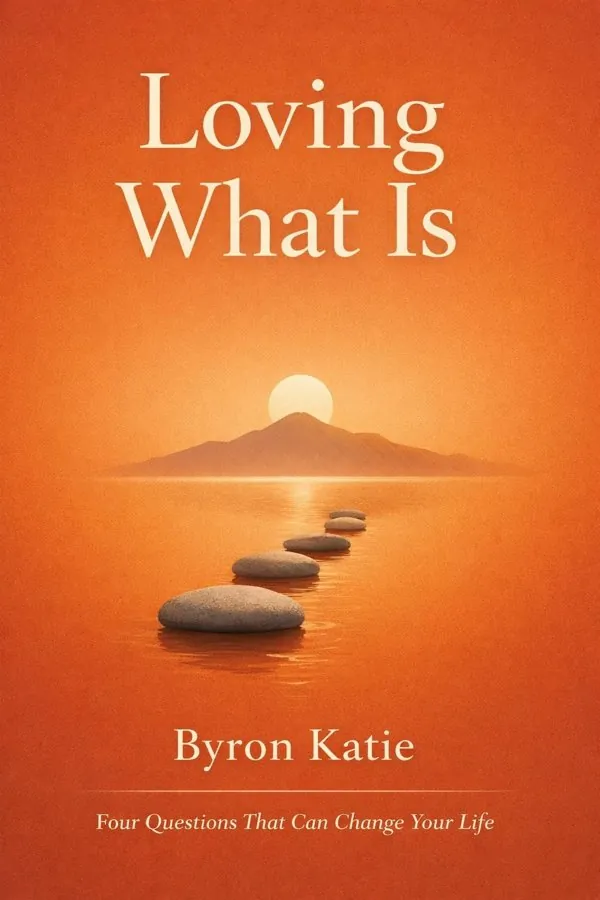
Loving What Is: Four Questions That Can Change Your Life: Summary & Key Insights
by Byron Katie
 10 min10 chaptersAudio available
What Is Loving What Is: Four Questions That Can Change Your Life About?
Loving What Is: Four Questions That Can Change Your Life by Byron Katie is a self_awareness book spanning 10 pages. In this groundbreaking work, Byron Katie introduces 'The Work', a method of self-inquiry that helps individuals identify and question the thoughts that cause suffering. Through four simple questions, readers learn to challenge stressful beliefs and discover inner peace and clarity. The book combines practical exercises with real-life examples, guiding readers toward freedom from negative thinking and emotional distress.
This FizzRead summary covers all 10 key chapters of Loving What Is: Four Questions That Can Change Your Life in approximately 10 minutes, distilling the most important ideas, arguments, and takeaways from Byron Katie's work. Also available as an audio summary and Key Quotes Podcast.
Loving What Is: Four Questions That Can Change Your Life
In this groundbreaking work, Byron Katie introduces 'The Work', a method of self-inquiry that helps individuals identify and question the thoughts that cause suffering. Through four simple questions, readers learn to challenge stressful beliefs and discover inner peace and clarity. The book combines practical exercises with real-life examples, guiding readers toward freedom from negative thinking and emotional distress.
Who Should Read Loving What Is: Four Questions That Can Change Your Life?
This book is perfect for anyone interested in self_awareness and looking to gain actionable insights in a short read. Whether you're a student, professional, or lifelong learner, the key ideas from Loving What Is: Four Questions That Can Change Your Life by Byron Katie will help you think differently.
- ✓Readers who enjoy self_awareness and want practical takeaways
- ✓Professionals looking to apply new ideas to their work and life
- ✓Anyone who wants the core insights of Loving What Is: Four Questions That Can Change Your Life in just 10 minutes
Want the full summary?
Get instant access to this book summary and 100K+ more with Fizz Moment.
Get Free SummaryAvailable on App Store • Free to download
Key Chapters
Every thought we believe holds the power to distort the way we see the world. Pain begins when we argue with what is—when we insist that reality should be different than it is. A child spills milk, a spouse leaves, a job ends, and instantly the mind constructs a story: this shouldn’t have happened. In that story, we position ourselves against reality, as if life itself made a mistake. That inner argument, felt as tension, anger, or grief, is the experience of suffering.
From my years of working with people, I’ve seen again and again that the stress we feel is a reliable signal, not an enemy. It tells us when we’re believing an untrue thought. Reality itself is benign; only our interpretations make it cruel. When I hear someone say, “He doesn’t respect me,” or “I should be thinner,” I simply respond: is it true? The suffering doesn’t come from the world but from clinging to thoughts that oppose it.
When I was trapped in depression, I believed the world should be different: that people should act better, that I should be happier. Every thought was resistance to what is. The moment I stopped believing those stories, peace replaced confusion. Suffering dissolves when we see clearly that reality is unchangeable and that our arguments with it are optional. Life does not wait for our approval to unfold—it simply unfolds. And when we stop fighting, we begin to live.
The Work is pure simplicity: four questions that unravel the tangled web of the mind. They are not mantras or affirmations, but instruments of honest investigation. The first question asks: Is it true? It invites a pause, a slowing down of the mind’s rush to judgment. The second question—Can you absolutely know it’s true?—pierces deeper. It reveals how much of what we call knowledge is merely assumption.
The third question—How do you react, what happens when you believe that thought?—turns the gaze inward. You begin to notice how a single belief transforms your body and emotions, how it isolates you, alters your relationships, and colors your world. You see clearly that the thought has become your tormentor.
Then comes the final question: Who would you be without that thought? Here lies the opening to freedom. When you let go of the belief, if only for a moment, your mind quiets, your body softens, and reality becomes radiant again. You are not asked to suppress or deny anything; you simply witness life without the filter of one painful thought. Often, the release is instantaneous. What remains is clarity, compassion, and laughter—it turns out the monster under the bed was made of paper.
+ 8 more chapters — available in the FizzRead app
All Chapters in Loving What Is: Four Questions That Can Change Your Life
About the Author
Byron Katie is an American speaker and author known for developing 'The Work', a method of self-inquiry aimed at achieving mental clarity and emotional freedom. Her teachings have influenced millions worldwide through workshops, books, and public appearances.
Get This Summary in Your Preferred Format
Read or listen to the Loving What Is: Four Questions That Can Change Your Life summary by Byron Katie anytime, anywhere. FizzRead offers multiple formats so you can learn on your terms — all free.
Available formats: App · Audio · PDF · EPUB — All included free with FizzRead
Download Loving What Is: Four Questions That Can Change Your Life PDF and EPUB Summary
Key Quotes from Loving What Is: Four Questions That Can Change Your Life
“Every thought we believe holds the power to distort the way we see the world.”
“The Work is pure simplicity: four questions that unravel the tangled web of the mind.”
Frequently Asked Questions about Loving What Is: Four Questions That Can Change Your Life
Loving What Is: Four Questions That Can Change Your Life by Byron Katie is a self_awareness book that explores key ideas across 10 chapters. In this groundbreaking work, Byron Katie introduces 'The Work', a method of self-inquiry that helps individuals identify and question the thoughts that cause suffering. Through four simple questions, readers learn to challenge stressful beliefs and discover inner peace and clarity. The book combines practical exercises with real-life examples, guiding readers toward freedom from negative thinking and emotional distress.
You Might Also Like

Rising Strong
Brené Brown
10 min
You Do You
Sarah Knight
10 min
Master Your Emotions: A Practical Guide to Overcome Negativity and Better Manage Your Feelings
Thibaut Meurisse
10 min
The Mountain Is You: Transforming Self-Sabotage Into Self-Mastery
Brianna Wiest
10 min
101 Essays That Will Change The Way You Think
Brianna Wiest
10 min
A Radical Awakening: Turn Pain into Power, Embrace Your Truth, Live Free
Shefali Tsabary
10 minBrowse by Category
Ready to read Loving What Is: Four Questions That Can Change Your Life?
Get the full summary and 100K+ more books with Fizz Moment.