
King: Summary & Key Insights
by John Berger
 10 min4 chaptersAudio available
What Is King About?
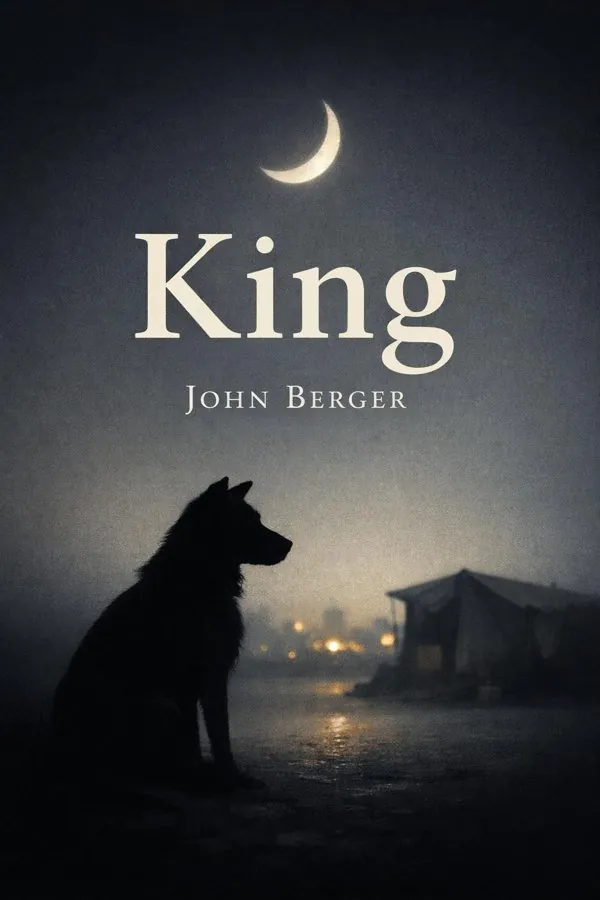
King by John Berger is a classics book spanning 4 pages. King is a novel by John Berger, first published in 1999. Told from the perspective of a dog named King, the story explores the lives of homeless people living on the margins of society in a European city. Through King’s eyes, Berger offers a compassionate and poetic reflection on human dignity, poverty, and resilience.
This FizzRead summary covers all 4 key chapters of King in approximately 10 minutes, distilling the most important ideas, arguments, and takeaways from John Berger's work. Also available as an audio summary and Key Quotes Podcast.
King
King is a novel by John Berger, first published in 1999. Told from the perspective of a dog named King, the story explores the lives of homeless people living on the margins of society in a European city. Through King’s eyes, Berger offers a compassionate and poetic reflection on human dignity, poverty, and resilience.
Who Should Read King?
This book is perfect for anyone interested in classics and looking to gain actionable insights in a short read. Whether you're a student, professional, or lifelong learner, the key ideas from King by John Berger will help you think differently.
- ✓Readers who enjoy classics and want practical takeaways
- ✓Professionals looking to apply new ideas to their work and life
- ✓Anyone who wants the core insights of King in just 10 minutes
Want the full summary?
Get instant access to this book summary and 100K+ more with Fizz Moment.
Get Free SummaryAvailable on App Store • Free to download
Key Chapters
King lives among the homeless at the edge of an unnamed European city—a city that recognizes its outcasts only when it wants to remove them. To King, this periphery is his universe: a patch of flattened ground by a motorway, the smell of fried food from nearby stalls, the cold glitter of headlights passing through the rain. The novel opens in this atmosphere of vitality and deprivation, making the outskirts feel like both a refuge and a battlefield.
Through his eyes, I wanted the city to appear both vast and indifferent. The world of those without homes exists parallel to that of citizens with addresses, but it rarely intersects except through the police baton or a moment of fleeting charity. King, however, recognizes patterns that others ignore. He understands that the homeless sustain one another with rituals: sharing scraps, guarding one another’s sleep, and exchanging jokes carved out of despair. The story studies these gestures not as anthropological curiosities but as forms of resistance. What keeps them human is not possessions but shared attention.
The language of the book is spare yet lyrical. King’s observations often turn poetic because he does not separate sense from emotion. When he describes the smell of rust or the touch of a hand, those impressions carry moral weight—they reveal how texture and affection intertwine in survival. Every milestone in the novel—every night under the open sky—becomes a meditation on belonging. The city, meanwhile, presses closer. Municipal trucks, police vans, construction machinery: all instruments of tidiness and progress that threaten to erase the community’s fragile territory.
In this first movement of the story, the dog’s gaze refuses pity. King speaks of what he sees and feels, not in complaint but in testimony. That refusal to sentimentalize makes his narrative credible and raw. You come to understand that life at the edge is not merely about hunger; it is about the continuous renegotiation of hope. The city may have expelled them, but in their camp there is still laughter, arguments, moments of fierce affection. King carries all this within his watchful silence, holding the fragments together like a conscience for those who have been exiled from the city’s heart.
Vico and Vica are the couple who share their shelter with King. Their tent, patched with plastic and cardboard, symbolizes both fragility and devotion. In their relationship lies the novel’s emotional equilibrium. I wanted them to show that love, however battered, still functions as a structure—a way of making sense of the world when everything else has been stripped away.
Vico once worked as a laborer; Vica cleaned houses. Their fall into homelessness came gradually, as so many real stories do: an injury, the loss of wages, the slow erosion of trust in bureaucratic remedies. Yet even as they lose material anchors, they invent new ones. The rituals between them—how Vico wraps Vica’s feet in rags when frost comes, how she saves a crust for King before herself—turn deprivation into mutual care.
Through King’s recounting, we see their love not as idyll but as endurance. His loyalty mirrors theirs; the trio forms a family unauthorized but deeply human. Their bond contrasts with the city’s transactional relationships. In the shadows, affection becomes radical. It defies a system that defines people by productivity and property. Every small gesture between them—a touch, a word of reassurance—proves that even without shelter, one can inhabit tenderness.
Their days revolve around the simplest tasks: searching for discarded food, finding dry places to sleep, avoiding the police sweeps that periodically destroy their encampment. But in those routines, there are moments of reflection, of storytelling. King listens as they recall childhood memories or imagine a future cottage by the sea. Those dreams, however improbable, keep them alive. They create an inner geography richer than the world of the prosperous. This tension between destitution and imagination is the heart of *King*. It shows that humanity is not measured by possessions but by the capacity to dream against despair.
In shaping Vico and Vica, I wanted readers to sense not tragedy but continuity with their own desires. The need for safety, for love, for recognition—these cross every social boundary. In that way, the novel asks its readers to reconsider who the ‘homeless’ truly are. They are not separate species but reflections of ourselves exposed to a harsher light.
+ 2 more chapters — available in the FizzRead app
All Chapters in King
About the Author
John Berger (1926–2017) was an English art critic, novelist, painter, and poet. He is best known for his book and television series 'Ways of Seeing' and for his Booker Prize–winning novel 'G.' His works often explore themes of art, politics, and social justice.
Get This Summary in Your Preferred Format
Read or listen to the King summary by John Berger anytime, anywhere. FizzRead offers multiple formats so you can learn on your terms — all free.
Available formats: App · Audio · PDF · EPUB — All included free with FizzRead
Download King PDF and EPUB Summary
Key Quotes from King
“King lives among the homeless at the edge of an unnamed European city—a city that recognizes its outcasts only when it wants to remove them.”
“Vico and Vica are the couple who share their shelter with King.”
Frequently Asked Questions about King
King by John Berger is a classics book that explores key ideas across 4 chapters. King is a novel by John Berger, first published in 1999. Told from the perspective of a dog named King, the story explores the lives of homeless people living on the margins of society in a European city. Through King’s eyes, Berger offers a compassionate and poetic reflection on human dignity, poverty, and resilience.
More by John Berger
You Might Also Like






Browse by Category
Ready to read King?
Get the full summary and 100K+ more books with Fizz Moment.