
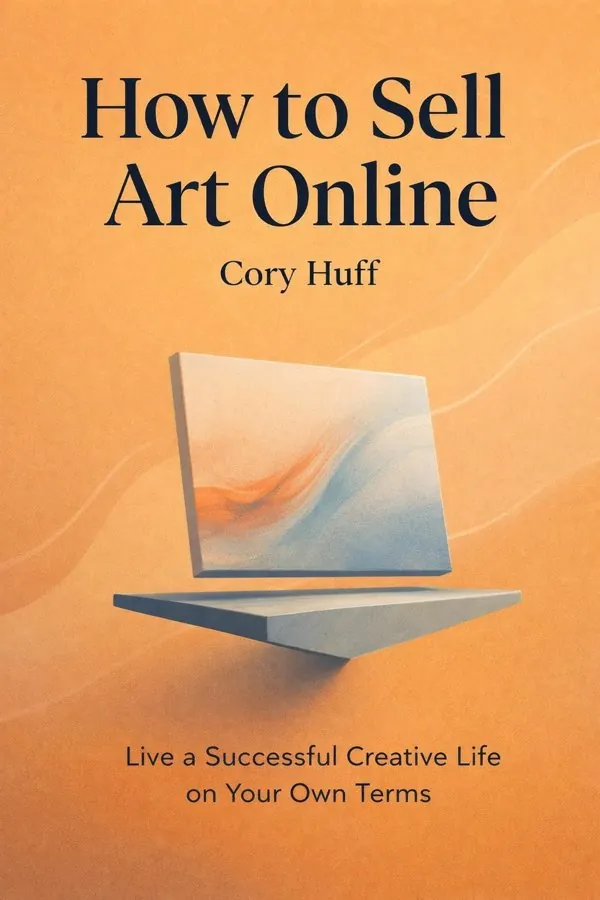
How to Sell Art Online: Live a Successful Creative Life on Your Own Terms: Summary & Key Insights
by Cory Huff
 10 min9 chaptersAudio available
Key Takeaways from How to Sell Art Online: Live a Successful Creative Life on Your Own Terms
One of the most limiting beliefs an artist can hold is that success only happens after being chosen by the traditional art world.
A marketing strategy without a personal definition of success is just borrowed ambition.
Many artists resist the word brand because it sounds corporate, artificial, or manipulative.
Art rarely sells on visual appeal alone.
Social media can help artists get discovered, but rented platforms should never be the foundation of the business.
What Is How to Sell Art Online: Live a Successful Creative Life on Your Own Terms About?
How to Sell Art Online: Live a Successful Creative Life on Your Own Terms by Cory Huff is a marketing book spanning 7 pages. How to Sell Art Online is a practical guide for artists who want to build a real career without waiting for permission from galleries, critics, or gatekeepers. Cory Huff argues that the internet has changed the business of art: creators can now connect directly with collectors, grow loyal audiences, and shape sustainable incomes through thoughtful online marketing. Rather than treating business as something that corrupts creativity, the book shows how marketing can become an extension of the artist’s voice, values, and story. What makes this book especially useful is its focus on both mindset and method. Huff does not simply tell artists to “promote themselves more.” He explains how to define success personally, communicate authenticity, build trust, use digital platforms effectively, and create systems that support long-term growth. His advice is grounded in years of helping artists through The Abundant Artist, a platform dedicated to teaching creatives how to earn a living from their work. For artists who feel intimidated by selling, invisible online, or trapped by outdated industry myths, this book offers a more empowering path: make meaningful work, reach the right people, and build a creative life on your own terms.
This FizzRead summary covers all 9 key chapters of How to Sell Art Online: Live a Successful Creative Life on Your Own Terms in approximately 10 minutes, distilling the most important ideas, arguments, and takeaways from Cory Huff's work. Also available as an audio summary and Key Quotes Podcast.
How to Sell Art Online: Live a Successful Creative Life on Your Own Terms
How to Sell Art Online is a practical guide for artists who want to build a real career without waiting for permission from galleries, critics, or gatekeepers. Cory Huff argues that the internet has changed the business of art: creators can now connect directly with collectors, grow loyal audiences, and shape sustainable incomes through thoughtful online marketing. Rather than treating business as something that corrupts creativity, the book shows how marketing can become an extension of the artist’s voice, values, and story.
What makes this book especially useful is its focus on both mindset and method. Huff does not simply tell artists to “promote themselves more.” He explains how to define success personally, communicate authenticity, build trust, use digital platforms effectively, and create systems that support long-term growth. His advice is grounded in years of helping artists through The Abundant Artist, a platform dedicated to teaching creatives how to earn a living from their work. For artists who feel intimidated by selling, invisible online, or trapped by outdated industry myths, this book offers a more empowering path: make meaningful work, reach the right people, and build a creative life on your own terms.
Who Should Read How to Sell Art Online: Live a Successful Creative Life on Your Own Terms?
This book is perfect for anyone interested in marketing and looking to gain actionable insights in a short read. Whether you're a student, professional, or lifelong learner, the key ideas from How to Sell Art Online: Live a Successful Creative Life on Your Own Terms by Cory Huff will help you think differently.
- ✓Readers who enjoy marketing and want practical takeaways
- ✓Professionals looking to apply new ideas to their work and life
- ✓Anyone who wants the core insights of How to Sell Art Online: Live a Successful Creative Life on Your Own Terms in just 10 minutes
Want the full summary?
Get instant access to this book summary and 100K+ more with Fizz Moment.
Get Free SummaryAvailable on App Store • Free to download
Key Chapters
One of the most limiting beliefs an artist can hold is that success only happens after being chosen by the traditional art world. For decades, many creatives have been taught that galleries, dealers, and elite collectors are the only legitimate route to recognition and income. Cory Huff challenges this assumption directly. He shows that while galleries can still play a role, they are no longer the only path, and for many artists they may not even be the best one.
The internet has fundamentally changed how art is discovered and sold. Artists can now showcase work globally, tell their stories in their own words, and reach buyers without relying entirely on intermediaries. This shift matters because the old system often concentrated power in a few institutions. It rewarded access, geography, and insider relationships as much as talent. Online platforms, by contrast, make it possible for artists to find niche audiences who genuinely connect with their work.
Imagine a painter whose work appeals to nature lovers in several countries. In the gallery model, that artist might need years of networking and local exposure before finding collectors. Online, the same artist can share studio process videos, publish a newsletter, and sell limited editions directly to people already interested in that aesthetic. The result is not only more reach but more control over pricing, presentation, and customer relationships.
Huff’s point is not that artists should reject the traditional market outright. It is that they should stop treating it as the sole measure of legitimacy. A thriving direct-to-collector business can be just as valid, and often more resilient, than waiting for outside validation.
Actionable takeaway: List three ways you currently depend on gatekeepers, then identify one direct channel you can strengthen this month, such as email, Instagram, your website, or an online shop.
A marketing strategy without a personal definition of success is just borrowed ambition. Huff emphasizes that many artists chase goals they never consciously chose: gallery representation, social media fame, a museum show, or a full-time income at any cost. But if you do not know what kind of life you want, it becomes easy to build a business that looks impressive from the outside and feels empty from the inside.
Defining success on your own terms means asking deeper questions. Do you want to make art full-time, or would you rather keep another job and protect your creative freedom? Do you want to sell originals to a small group of collectors, or produce prints for a wider audience? Is flexibility more important than prestige? Are you optimizing for income, impact, recognition, or balance? These questions shape everything from pricing to platform choice to how often you release new work.
For example, an artist who wants to homeschool their children may prioritize a business model with recurring online sales and flexible scheduling. Another may want fewer but higher-value sales to maintain more studio time. A third may care most about reaching a specific community, such as fantasy fans, interior designers, or socially conscious collectors. Each vision requires a different strategy, and none is inherently superior.
This clarity also helps reduce comparison. When you know what you are building, someone else’s career stops being the standard. Their gallery opening or viral post may have little to do with your chosen path.
Huff encourages artists to align business decisions with life design. That alignment leads to greater consistency, less resentment, and more sustainable momentum.
Actionable takeaway: Write a one-paragraph definition of success that includes income goals, lifestyle priorities, creative freedom, and the type of audience you want to serve.
Many artists resist the word brand because it sounds corporate, artificial, or manipulative. Huff reframes branding as clarity rather than performance. A strong artist brand is not a fake persona. It is the consistent expression of who you are, what your work stands for, and why people should care. In a crowded online world, that clarity helps collectors remember you, trust you, and connect emotionally with your work.
An authentic brand usually emerges from a few simple elements: your visual style, your recurring themes, your values, your voice, and the experience people have when they encounter your work. A ceramic artist inspired by rituals of home may use warm photography, reflective captions, and packaging that reinforces intimacy and care. A mixed-media artist focused on urban decay may communicate edge, texture, and social commentary across every touchpoint. The point is not to force uniqueness, but to articulate what already makes your work distinct.
Branding also affects practical decisions. Your website, artist statement, color palette, bios, emails, and social posts should feel like they come from the same person. When these elements are fragmented, potential buyers may admire the work but feel unsure about the artist behind it. Consistency creates confidence.
Huff’s deeper insight is that people do not just buy objects; they buy meaning, identity, and relationship. A collector may be drawn to a painting because it reflects their values or reminds them of a personal memory. Your brand helps that emotional link form more quickly and more deeply.
This does not require perfection or expensive design. It requires self-awareness and repetition. The more clearly you communicate what your art is about, the easier it becomes for the right audience to recognize themselves in it.
Actionable takeaway: Choose three words you want people to associate with your art, then review your website and social profiles to see whether those qualities come through consistently.
Art rarely sells on visual appeal alone. People may first notice a piece because of its color, composition, or subject, but they often decide to buy because of the story attached to it. Huff argues that storytelling is one of the most underused tools available to artists. Stories create context, reveal meaning, and transform a piece from an object into an experience.
Collectors want to know more than dimensions and materials. They want to understand what inspired the work, what questions drove it, what emotions shaped it, and why it matters to the artist. This does not mean every piece needs a dramatic backstory. Even simple narratives can increase connection: the landscape painted after a difficult season, the print series inspired by childhood memories, the sculpture developed through experiments with discarded materials. These stories help buyers feel that they are acquiring something alive with intention.
Storytelling also humanizes the artist. Behind-the-scenes posts, studio updates, sketches, process videos, and reflections on creative challenges all invite audiences into your world. Over time, this builds familiarity and trust. Someone who follows your journey for months may become much more likely to buy than someone who encounters a single polished product shot.
Importantly, good storytelling is not self-indulgent. It serves the audience by giving them an entry point. A collector may not fully understand your technique, but they may deeply respond to a story about belonging, grief, joy, or transformation. Stories bridge the gap between creator and buyer.
Huff encourages artists to talk about their work in ways that are specific, emotionally honest, and accessible. The goal is not to impress with jargon but to make the work easier to feel and remember.
Actionable takeaway: For your next three artworks, write a short story or caption explaining the inspiration, process, and emotional core behind each piece.
Social media can help artists get discovered, but rented platforms should never be the foundation of the business. Huff stresses the importance of building an online presence you control, especially through a professional website and an email list. Algorithms change, platforms decline, and audiences can disappear overnight. A stable creative business needs digital assets that belong to the artist.
Your website acts as your home base. It should clearly show your work, explain who you are, make it easy to buy, and guide visitors toward the next step, whether that is joining your email list, inquiring about commissions, or purchasing a piece. A confusing or outdated site can quietly undermine trust, even if the art itself is strong. Clean navigation, high-quality images, transparent pricing when appropriate, and a clear artist statement can significantly improve conversions.
Email is equally powerful because it creates a direct line to people who have already expressed interest. Unlike a follower count, an email list represents permission-based attention. You can announce new collections, share studio insights, tell stories, and invite purchases without competing entirely at the mercy of a feed algorithm. Even a modest list of engaged subscribers can generate meaningful sales.
This does not mean artists should avoid social media. Platforms like Instagram, Pinterest, YouTube, or TikTok can be valuable discovery tools, especially when used strategically. But the purpose of social media should be to move interested people toward deeper connection on channels you own.
Huff’s broader message is about control. Artists often feel vulnerable because their income depends on external systems. Owning your online presence gives you more stability and bargaining power.
Actionable takeaway: Audit your digital presence this week by ensuring your website is current, your contact information is visible, and every social profile points visitors toward your email list or sales page.
Many artists hesitate to market because they associate selling with pressure, hype, or inauthentic self-promotion. Huff works to dismantle that fear by reframing marketing as an act of service. If your work genuinely enriches people’s lives, then helping the right audience discover it is not sleazy. It is responsible. Marketing, at its best, is simply clear communication about value.
This shift in mindset matters because discomfort around selling often leads artists to remain invisible. They post inconsistently, apologize for sharing their work, or wait until they are desperate for income before asking for a sale. That pattern creates stress for the artist and confusion for the audience. By contrast, service-oriented marketing is regular, confident, and helpful. It focuses on connection rather than coercion.
Practical marketing begins with understanding who your audience is and what they care about. A collector of abstract paintings may care about mood, color, and interior design harmony. A buyer of political illustration may care about message, urgency, and cultural relevance. The more deeply you understand your audience, the more effectively you can communicate why your work matters to them.
Engagement also matters. Responding to messages, asking thoughtful questions, thanking buyers, and sharing meaningful updates all strengthen relationships. Over time, people come to feel invested in your journey. That emotional investment makes sales feel natural rather than abrupt.
Huff encourages consistency over intensity. You do not need a dramatic launch every week. You need a rhythm of visibility that keeps your work present in people’s minds. Helpful content, honest storytelling, and occasional clear offers often outperform sporadic bursts of hard selling.
Actionable takeaway: Create a simple weekly marketing rhythm with one storytelling post, one engagement post, one email update, and one direct invitation to view or buy your work.
Interest alone does not generate sales. Many artists do enough to attract admiration but not enough to make buying easy. Huff highlights an often-overlooked truth: if the path from discovery to purchase is confusing, even enthusiastic collectors may walk away. Selling art online requires removing friction at every stage.
Start with clarity. Potential buyers should quickly understand what is available, how much it costs, and what to do next. If you sell originals, prints, commissions, or workshops, organize these offerings in a straightforward way. If pricing is hidden or inquiry instructions are vague, people may assume the process is too complicated. The same goes for shipping details, return policies, framing information, and expected delivery times. Transparency reduces hesitation.
Presentation matters too. High-quality images, multiple angles, scale references, and mockups showing art in a room help buyers imagine ownership. Descriptions should include dimensions, materials, and a few sentences about the piece’s meaning or mood. Testimonials from previous collectors can also increase confidence, especially for newer buyers purchasing online for the first time.
Huff also suggests thinking beyond a single sale. A buyer might first purchase a small print, later join a collector list, and eventually invest in a larger original. Offering different entry points lets people engage at varying levels of comfort and budget. This ladder of value can make your business more stable while broadening your audience.
The core principle is simple: make it easy for people to say yes. Do not assume that admiration automatically becomes action. Design your sales process with the buyer’s uncertainty in mind.
Actionable takeaway: Walk through your own purchase process as if you were a first-time collector, then fix any point where the next step, price, or policy feels unclear.
A sustainable art business is not built on one-time transactions alone. Huff emphasizes that long-term growth comes from relationships: with collectors, subscribers, followers, collaborators, and peers. The most successful artists often do not just accumulate buyers; they cultivate communities of people who care about the work and return over time.
This matters because trust compounds. Someone who buys once and has a great experience may buy again, recommend you to friends, or become a champion of your work. A newsletter subscriber who has followed your process for years may eventually become a major collector. A curator or designer who appreciates your professionalism may open doors later. These outcomes rarely happen through aggressive selling. They grow through steady communication and genuine care.
Relationship-building can take many forms. Thank buyers personally. Share the story behind shipped pieces. Follow up after delivery. Invite subscribers into previews before public launches. Highlight collectors’ homes when they display your work. Offer occasional educational or inspirational content that gives value even when people are not ready to buy. These gestures create belonging and deepen loyalty.
Huff’s advice also applies to professional networks. Other artists are not only competitors; they can be referral partners, collaborators, and sources of support. Building a creative career can feel isolating, and relationships help sustain both morale and opportunity.
The larger lesson is that audience growth should not be treated as a numbers game alone. Ten deeply engaged supporters may be more valuable than ten thousand passive followers. Quality of connection matters.
Actionable takeaway: Make a list of your last five buyers or most engaged supporters and send each one a thoughtful message that strengthens the relationship without immediately asking for another sale.
Many artists separate art from business so sharply that they end up neglecting the systems needed to support their work. Huff encourages a more integrated identity: not artist versus entrepreneur, but artist and entrepreneur. This does not mean sacrificing artistic integrity. It means recognizing that creative freedom often depends on business competence.
Thinking like a creative entrepreneur involves paying attention to metrics, experiments, and repeatable processes. Which posts lead people to your website? Which email subject lines get opened? Which products sell most often? Which months are strongest for revenue? Instead of treating sales as mysterious or purely emotional, Huff suggests observing patterns and making informed adjustments.
This mindset also includes diversification. An artist might sell originals, prints, commissions, licensing, workshops, or memberships. Not every stream suits every practice, but relying on only one can create fragility. Entrepreneurial thinking asks: how can I preserve the heart of my work while building a more durable business around it?
There is also a psychological component. Entrepreneurs accept that not every experiment will work. A product launch may flop, a new platform may underperform, or a price change may need revision. Rather than interpreting these outcomes as artistic rejection, Huff encourages artists to treat them as feedback. That perspective makes it easier to keep moving.
Ultimately, entrepreneurship is about agency. It allows artists to make strategic choices instead of waiting passively for opportunities. The more intentional your systems become, the more room you create for meaningful creative work.
Actionable takeaway: Track one month of basic business data, including website visits, email subscribers, inquiries, and sales, then use those numbers to choose one focused improvement for the next month.
All Chapters in How to Sell Art Online: Live a Successful Creative Life on Your Own Terms
About the Author
Cory Huff is an artist, writer, educator, and the founder of The Abundant Artist, a well-known platform focused on helping artists build sustainable creative careers. His work centers on teaching practical marketing, audience-building, and sales strategies for artists who want to earn income without compromising their values or relying entirely on traditional gatekeepers. Through articles, coaching, courses, and consulting, Huff has helped hundreds of artists improve their branding, communicate their stories, and sell their work online more effectively. He is especially recognized for translating digital marketing concepts into clear, artist-friendly advice. His perspective combines respect for the creative process with a strong understanding of entrepreneurship, making him a trusted guide for artists seeking greater independence, visibility, and financial stability.
Get This Summary in Your Preferred Format
Read or listen to the How to Sell Art Online: Live a Successful Creative Life on Your Own Terms summary by Cory Huff anytime, anywhere. FizzRead offers multiple formats so you can learn on your terms — all free.
Available formats: App · Audio · PDF · EPUB — All included free with FizzRead
Download How to Sell Art Online: Live a Successful Creative Life on Your Own Terms PDF and EPUB Summary
Key Quotes from How to Sell Art Online: Live a Successful Creative Life on Your Own Terms
“One of the most limiting beliefs an artist can hold is that success only happens after being chosen by the traditional art world.”
“A marketing strategy without a personal definition of success is just borrowed ambition.”
“Many artists resist the word brand because it sounds corporate, artificial, or manipulative.”
“Art rarely sells on visual appeal alone.”
“Social media can help artists get discovered, but rented platforms should never be the foundation of the business.”
Frequently Asked Questions about How to Sell Art Online: Live a Successful Creative Life on Your Own Terms
How to Sell Art Online: Live a Successful Creative Life on Your Own Terms by Cory Huff is a marketing book that explores key ideas across 9 chapters. How to Sell Art Online is a practical guide for artists who want to build a real career without waiting for permission from galleries, critics, or gatekeepers. Cory Huff argues that the internet has changed the business of art: creators can now connect directly with collectors, grow loyal audiences, and shape sustainable incomes through thoughtful online marketing. Rather than treating business as something that corrupts creativity, the book shows how marketing can become an extension of the artist’s voice, values, and story. What makes this book especially useful is its focus on both mindset and method. Huff does not simply tell artists to “promote themselves more.” He explains how to define success personally, communicate authenticity, build trust, use digital platforms effectively, and create systems that support long-term growth. His advice is grounded in years of helping artists through The Abundant Artist, a platform dedicated to teaching creatives how to earn a living from their work. For artists who feel intimidated by selling, invisible online, or trapped by outdated industry myths, this book offers a more empowering path: make meaningful work, reach the right people, and build a creative life on your own terms.
You Might Also Like
Captivology: The Science of Capturing People's Attention
Ben Parr
10 min
Marketing 5.0: Technology for Humanity
Philip Kotler, Hermawan Kartajaya, Iwan Setiawan
10 min
Marketing Strategy
Paul Fifield
10 min
UnMarketing: Stop Marketing. Start Engaging.
Scott Stratten
10 min
$100M Leads: How to Get Strangers to Want to Buy Your Stuff
Alex Hormozi
10 min
80/20 Sales and Marketing: The Definitive Guide to Working Less and Making More
Perry Marshall
10 minBrowse by Category
Ready to read How to Sell Art Online: Live a Successful Creative Life on Your Own Terms?
Get the full summary and 100K+ more books with Fizz Moment.