
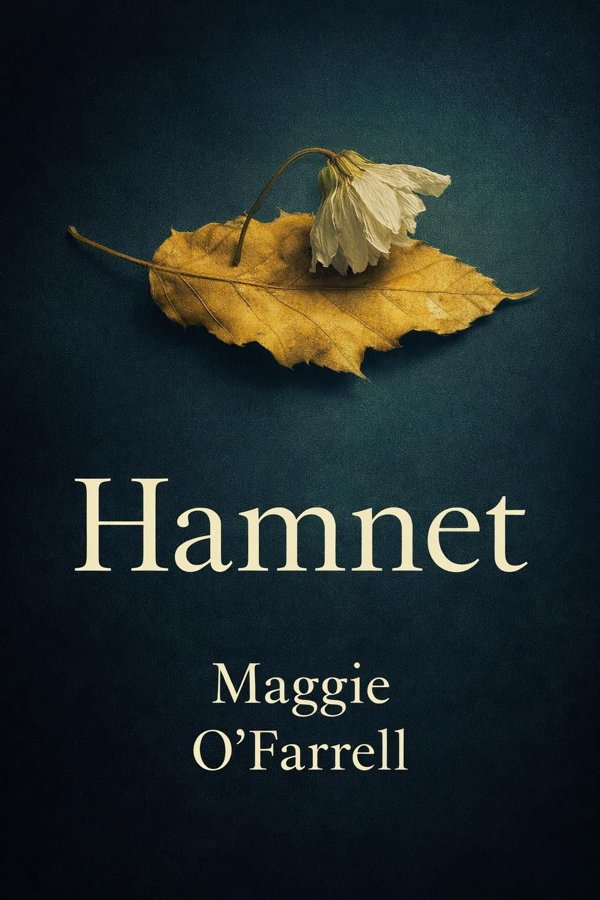
Hamnet: Summary & Key Insights
 10 min9 chaptersAudio available
Key Takeaways from Hamnet
The deepest dramas often begin in kitchens, bedrooms, and small domestic rituals long before the world records them.
Some forms of knowledge are dismissed simply because they do not sound official.
A marriage can be built on passion and still be strained by unequal freedom.
What shapes a family is not only who is present, but who is repeatedly gone.
Disease in Hamnet is not just backdrop; it is a lesson in how intimately connected human lives already were in the early modern world.
What Is Hamnet About?
Hamnet by Maggie O'Farrell is a classics book spanning 11 pages. What if one of the most famous works in English literature grew from a wound inside an ordinary family? In Hamnet, Maggie O’Farrell imagines the life surrounding the death of Shakespeare’s eleven-year-old son, transforming a sparse historical fact into a vivid novel about marriage, motherhood, grief, and the mysterious ways art can arise from loss. Set in 16th-century Stratford-upon-Avon and London, the book centers not on the playwright himself, but on Agnes—his perceptive, unconventional wife—and the children whose lives anchor the household he repeatedly leaves behind. O’Farrell blends historical research with lyrical invention, creating a world that feels intimate, sensory, and emotionally immediate. The novel matters because it shifts the spotlight away from public genius and toward the private costs of ambition, illness, and bereavement. It also asks enduring questions: How does a family survive tragedy? What can love preserve when a body is gone? And how can art both wound and heal? O’Farrell, celebrated for her emotionally intelligent prose and deep attention to family life, brings rare authority and tenderness to this reimagining of a literary shadow.
This FizzRead summary covers all 9 key chapters of Hamnet in approximately 10 minutes, distilling the most important ideas, arguments, and takeaways from Maggie O'Farrell's work. Also available as an audio summary and Key Quotes Podcast.
Hamnet
What if one of the most famous works in English literature grew from a wound inside an ordinary family? In Hamnet, Maggie O’Farrell imagines the life surrounding the death of Shakespeare’s eleven-year-old son, transforming a sparse historical fact into a vivid novel about marriage, motherhood, grief, and the mysterious ways art can arise from loss. Set in 16th-century Stratford-upon-Avon and London, the book centers not on the playwright himself, but on Agnes—his perceptive, unconventional wife—and the children whose lives anchor the household he repeatedly leaves behind. O’Farrell blends historical research with lyrical invention, creating a world that feels intimate, sensory, and emotionally immediate. The novel matters because it shifts the spotlight away from public genius and toward the private costs of ambition, illness, and bereavement. It also asks enduring questions: How does a family survive tragedy? What can love preserve when a body is gone? And how can art both wound and heal? O’Farrell, celebrated for her emotionally intelligent prose and deep attention to family life, brings rare authority and tenderness to this reimagining of a literary shadow.
Who Should Read Hamnet?
This book is perfect for anyone interested in classics and looking to gain actionable insights in a short read. Whether you're a student, professional, or lifelong learner, the key ideas from Hamnet by Maggie O'Farrell will help you think differently.
- ✓Readers who enjoy classics and want practical takeaways
- ✓Professionals looking to apply new ideas to their work and life
- ✓Anyone who wants the core insights of Hamnet in just 10 minutes
Want the full summary?
Get instant access to this book summary and 100K+ more with Fizz Moment.
Get Free SummaryAvailable on App Store • Free to download
Key Chapters
The deepest dramas often begin in kitchens, bedrooms, and small domestic rituals long before the world records them. Hamnet opens by drawing us into the Shakespeare household in Stratford-upon-Avon, not as a museum piece but as a living, breathing family shaped by chores, tensions, jokes, silences, and daily dependence. O’Farrell’s boldest choice is to begin with Hamnet’s urgent search for help when his twin sister Judith falls ill, immediately placing the children’s vulnerability at the center of the story. This is not a novel about monuments or literary reputation at first; it is about a house full of bodies, needs, and relationships.
Within that setting, Agnes emerges as the gravitational force of the family. She is observant, unusual, and emotionally alert in ways others often fail to understand. Around her move the children, the in-laws, and the absent husband whose ambitions pull him toward London. By dwelling on textures of domestic life—food preparation, sleep, child-rearing, herbal remedies, small resentments—O’Farrell shows that history’s “great men” are sustained by unseen labor and emotional ecosystems.
This perspective has practical relevance beyond fiction. Many people think the meaningful part of life is what appears publicly: career success, status, achievement. Hamnet insists that private life is not secondary; it is the foundation on which everything else rests. Families and partnerships are often where courage, sacrifice, and heartbreak are most fully lived.
A useful takeaway is to examine the hidden architecture of your own life. Ask yourself: what daily acts, relationships, and routines quietly support everything I do? Notice and honor them before crisis makes their value unmistakable.
Some forms of knowledge are dismissed simply because they do not sound official. One of Hamnet’s most compelling achievements is its portrayal of Agnes as a woman whose understanding comes through instinct, observation, and intimate contact with the natural world. Before marriage, she is shaped by a childhood of partial isolation, a difficult family structure, and a deep apprenticeship in reading plants, moods, illnesses, and invisible shifts in human behavior. She is not presented as magical in a crude sense, but as someone unusually attentive to patterns others overlook.
Her relationship to herbs, animals, and weather establishes a worldview in which body and environment are inseparable. This makes her both powerful and vulnerable. In a patriarchal society that privileges formal authority, Agnes’s gifts are useful when people need healing, but unsettling when they challenge convention. O’Farrell uses her to explore how women’s intelligence has historically been recoded as strangeness, suspicion, or witch-like otherness.
Modern readers can see in Agnes a reminder that intuition is often disciplined perception rather than irrationality. Caregivers, teachers, nurses, and parents frequently know something is wrong before tests or institutions confirm it. Emotional intelligence, pattern recognition, and bodily awareness are real forms of expertise, even when they are hard to quantify.
The practical application is not to romanticize instinct over evidence, but to let the two work together. Listen when your experience tells you a person, place, or situation requires closer attention. Keep track of recurring signals in your life rather than dismissing them. The actionable takeaway: take your own perceptions seriously, especially in matters of health, relationships, and emotional safety.
A marriage can be built on passion and still be strained by unequal freedom. O’Farrell’s depiction of Agnes’s courtship with the young Latin tutor who will become William Shakespeare presents love as intensely embodied, impulsive, and transformative. Their attraction feels immediate and fateful, yet the novel never mistakes romantic beginning for permanent harmony. From the start, social pressures, family dynamics, and different temperaments press upon the relationship.
William is intelligent, restless, and hungry for a larger life than Stratford seems able to offer. Agnes is rooted, sensory, and deeply tied to place, children, and domestic rhythms. Their union produces tenderness, desire, and genuine attachment, but also a division that grows sharper once he leaves for London to pursue theater. O’Farrell avoids simplistic blame. Instead, she shows how two people can love each other and still inhabit different realities: one defined by mobility and reinvention, the other by constancy and care.
This tension remains highly recognizable today. Many relationships are strained not by lack of feeling but by asymmetry in opportunity, recognition, and obligation. One partner’s ambition may depend on the other’s sacrifice. Emotional distance can widen even when practical responsibilities are being fulfilled.
Readers can apply this insight by looking honestly at the division of labor and freedom in their own partnerships. Who gets to leave, create, travel, or dream? Who absorbs the routine burdens that make those dreams possible? A strong takeaway from Hamnet is to speak openly about invisible imbalances before they harden into loneliness. Love needs not only feeling, but mutual acknowledgment of what each person carries.
What shapes a family is not only who is present, but who is repeatedly gone. As William spends more time in London, pursuing success in the theater, his absence becomes one of the novel’s major emotional facts. He sends money and returns intermittently, but distance changes the household’s chemistry. Agnes must become the center of continuity, decision-making, and emotional regulation while also managing longing, uncertainty, and resentment.
O’Farrell is particularly strong in showing that absence is not empty space; it has consequences. Children grow in relation to it. Twins form compensatory bonds. In-laws interpret it according to their own loyalties and grievances. Spouses construct stories around it: sacrifice, betrayal, necessity, ambition, abandonment. In this way, the novel asks us to rethink the cultural glamour often attached to genius and career achievement. Public accomplishment may be real, but it is never free.
The pattern is familiar in modern life, whether through work travel, migration, long commutes, military service, artistic ambition, or emotional unavailability caused by stress and distraction. A parent or partner can be physically absent, but also mentally elsewhere even when present. Hamnet makes that drift visible.
A practical lesson is to treat recurring absence as something that must be actively managed rather than passively endured. Families need rituals of reconnection, honest explanation, and shared decision-making. If your work or ambition requires distance, ask what support structures your loved ones need, and ask again regularly. The actionable takeaway: do not assume love compensates automatically for absence; repair and presence must be practiced intentionally.
Disease in Hamnet is not just backdrop; it is a lesson in how intimately connected human lives already were in the early modern world. O’Farrell traces the route of plague with remarkable narrative dexterity, following the movement of a flea-infested cloth across trade routes, ports, and households until global commerce arrives in the body of a child in Stratford. The effect is chilling: catastrophe can begin far away and still enter the most private room.
This section expands the novel beyond family drama into a meditation on vulnerability, chance, and interdependence. No household is fully sealed. Wealth, love, intelligence, and good intentions cannot guarantee safety when illness moves invisibly through systems larger than any one person. The novel captures the atmosphere of dread that accompanies contagion: rumor, uncertainty, frantic attempts at prevention, and the terrible speed with which normal life becomes emergency.
For contemporary readers, the relevance is unmistakable. Hamnet resonates powerfully in a post-pandemic world because it dramatizes truths many have recently lived: transmission is often unseen, borders are porous, and private grief is shaped by public crisis. It also reminds us that outbreaks expose social hierarchies, caregiving burdens, and our tendency to oscillate between denial and fear.
The practical application is humility. We are more interconnected than we like to think, and responsible living requires recognizing that our actions affect others. In times of uncertainty, paying attention to credible information, caring for the vulnerable, and preparing without panic are forms of solidarity. The actionable takeaway: treat health crises as collective realities, not merely personal inconveniences.
The emotional power of Hamnet lies in its refusal to treat death as a historical footnote. When illness enters the household and Hamnet dies while Judith survives, the novel reaches its devastating center. O’Farrell stages the event with extraordinary sensitivity, emphasizing not melodrama but helplessness: the frantic search for remedies, the split-second hope that one child might recover, the unbearable randomness of who lives and who does not.
The twin bond intensifies everything. Hamnet and Judith are not merely siblings; they are each other’s mirror and companion. His attempt to protect her at the beginning of the novel gives his death an additional layer of tragic irony. Survival itself becomes complicated. Judith must live with absence where there was once doubleness. The family must continue inside a structure suddenly missing one of its essential parts.
What makes this section so powerful is its honesty about grief’s first stage: disbelief fused with physical fact. Death is at once unimaginable and brutally practical. There is a body, a room, altered routines, changed sounds in the house. O’Farrell captures the way loss is experienced not as an abstract concept but as disruption in time, touch, and pattern.
Readers can draw from this a deeper compassion for bereavement. Those who grieve are not simply “sad”; they are adapting to a changed world. In real life, after any major loss, people often need patience, not pressure to recover quickly. The actionable takeaway: when someone experiences grief, support them concretely—through presence, practical help, and tolerance for the nonlinear way mourning unfolds.
Grief is not only an emotion; it is a change in perception, identity, and physical existence. After Hamnet’s death, Agnes enters a state that is at once spiritual, bodily, and social. O’Farrell portrays mourning not as a series of noble reflections but as disorientation. Agnes feels estranged from ordinary time, from the household, from language, and even from the versions of herself that existed before her son died. Her sorrow is not decorative; it is consuming.
This is one of the novel’s greatest achievements. It honors maternal grief without sentimentalizing it. Agnes does not move neatly toward acceptance. She circles, withdraws, fixates, remembers, and aches. People around her fail to understand the scale of what has happened because social life pressures mourning to become manageable. Yet for Agnes, the loss remains alive in every room, object, and expectation. The dead child is absent, but also omnipresent.
There is an important modern lesson here. Grief often isolates because other people want resolution sooner than the bereaved can provide it. Work resumes, meals are served, obligations return, and the mourner can feel abandoned inside the ongoingness of life. Recognizing this can make us more patient friends, relatives, and colleagues.
The practical application is to resist rushing either yourself or others through sorrow. Build rituals that acknowledge loss over time: anniversaries, conversations, memorial practices, written remembrance. If you are supporting someone grieving, keep showing up after the first wave of condolences has passed. The actionable takeaway: treat grief as an enduring process that deserves space, language, and continued care.
Some works of art feel powerful because they do not simply entertain; they metabolize suffering. Hamnet’s most discussed idea is the implied connection between the death of Shakespeare’s son and the later creation of Hamlet. O’Farrell does not present this as a simplistic equation in which tragedy directly produces genius. Instead, she explores the messier truth that loss may persist within a creator until it finds another form—language, performance, structure, rhythm, image.
William’s response to Hamnet’s death is marked by distance, work, and a difficulty expressing grief directly within the family. That emotional limitation does not mean he feels less. It means feeling emerges elsewhere. The theater becomes a site where private pain is transformed into public art. This transformation is morally complex. Art can preserve memory, but it can also expose intimate wounds to strangers. It can honor the dead while leaving the living unsure whether they have been understood or used.
This idea extends far beyond Shakespeare. Many people process experience through making: writing, music, painting, cooking, organizing, activism, teaching. Creative work can become a vessel for what is otherwise unsayable. Yet Hamnet reminds us that expression does not erase grief; it gives grief shape.
The practical application is to consider what form your own difficult experiences might take if they were given structure. You need not be a professional artist. Journaling, storytelling, craft, conversation, or community work can all become ways of carrying pain without being consumed by it. The actionable takeaway: when loss or confusion overwhelms you, try transforming feeling into form—something made, spoken, or shared.
Memory survives not by remaining untouched, but by being continually reinterpreted. In the novel’s later movement, Agnes travels to London and encounters the theatrical world her husband inhabits. There she witnesses the play Hamlet and gradually realizes that her family’s private wound has entered public performance. This encounter is shocking, painful, and revelatory. The stage does not return her son, but it gives his echo a strange afterlife.
The ending matters because it refuses easy consolation. Agnes does not simply approve of what William has done, nor does the play solve her grief. Instead, she comes to see that remembrance can take forms beyond domestic preservation. A child’s name, nearly identical to that of a tragic prince, now reverberates through audiences who know nothing of the original loss. Art becomes an imperfect but powerful means of endurance.
This insight has practical significance for anyone thinking about legacy. We often imagine remembrance as something static: a grave, a photograph, a fixed story. Hamnet suggests that memory lives through adaptation, retelling, and reinterpretation. Loved ones continue through what they have shaped in us and what we carry forward into the world.
In everyday life, this can mean preserving memory through stories, rituals, creative projects, charitable acts, or traditions that evolve over time. We honor the dead not only by refusing change, but by allowing their influence to keep moving through life. The actionable takeaway: choose one living way to remember someone or something you have lost, and let that act of remembrance grow rather than remain frozen.
All Chapters in Hamnet
About the Author
Maggie O’Farrell is a British novelist born in Coleraine, Northern Ireland, in 1972. She grew up in Wales and Scotland and later studied English literature at the University of Cambridge. O’Farrell built her literary reputation through novels that combine elegant prose with intense emotional insight, often focusing on memory, family relationships, illness, and hidden turning points in ordinary lives. Her notable works include After You’d Gone, The Vanishing Act of Esme Lennox, This Must Be the Place, and I Am, I Am, I Am, a memoir of near-death experiences. With Hamnet, she reached a wide international audience and won the 2020 Women’s Prize for Fiction. Her writing is admired for its lyricism, psychological precision, and ability to bring historical and contemporary inner lives vividly to the page.
Get This Summary in Your Preferred Format
Read or listen to the Hamnet summary by Maggie O'Farrell anytime, anywhere. FizzRead offers multiple formats so you can learn on your terms — all free.
Available formats: App · Audio · PDF · EPUB — All included free with FizzRead
Download Hamnet PDF and EPUB Summary
Key Quotes from Hamnet
“The deepest dramas often begin in kitchens, bedrooms, and small domestic rituals long before the world records them.”
“Some forms of knowledge are dismissed simply because they do not sound official.”
“A marriage can be built on passion and still be strained by unequal freedom.”
“What shapes a family is not only who is present, but who is repeatedly gone.”
“Disease in Hamnet is not just backdrop; it is a lesson in how intimately connected human lives already were in the early modern world.”
Frequently Asked Questions about Hamnet
Hamnet by Maggie O'Farrell is a classics book that explores key ideas across 9 chapters. What if one of the most famous works in English literature grew from a wound inside an ordinary family? In Hamnet, Maggie O’Farrell imagines the life surrounding the death of Shakespeare’s eleven-year-old son, transforming a sparse historical fact into a vivid novel about marriage, motherhood, grief, and the mysterious ways art can arise from loss. Set in 16th-century Stratford-upon-Avon and London, the book centers not on the playwright himself, but on Agnes—his perceptive, unconventional wife—and the children whose lives anchor the household he repeatedly leaves behind. O’Farrell blends historical research with lyrical invention, creating a world that feels intimate, sensory, and emotionally immediate. The novel matters because it shifts the spotlight away from public genius and toward the private costs of ambition, illness, and bereavement. It also asks enduring questions: How does a family survive tragedy? What can love preserve when a body is gone? And how can art both wound and heal? O’Farrell, celebrated for her emotionally intelligent prose and deep attention to family life, brings rare authority and tenderness to this reimagining of a literary shadow.
More by Maggie O'Farrell

You Might Also Like






Browse by Category
Ready to read Hamnet?
Get the full summary and 100K+ more books with Fizz Moment.