
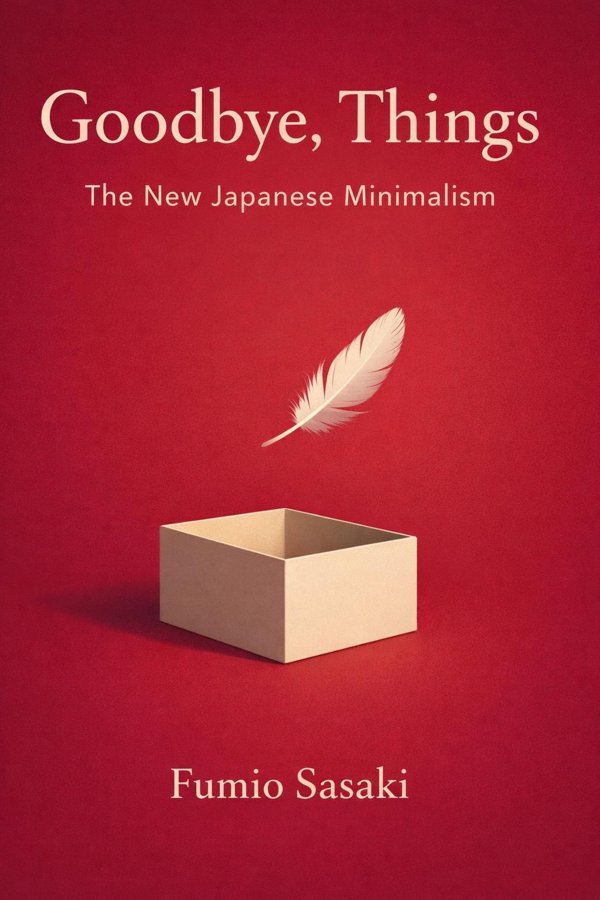
Goodbye, Things: The New Japanese Minimalism: Summary & Key Insights
by Fumio Sasaki
 10 min9 chaptersAudio available
Key Takeaways from Goodbye, Things: The New Japanese Minimalism
Many people mistake minimalism for a look when it is really a relationship to life.
The strangest thing about having too much is that it can feel like having too little.
We do not keep things only because we use them; we keep them because they carry stories.
People often assume that fewer possessions mean less comfort, less convenience, and less enjoyment.
One of the deepest reasons we accumulate is that possessions help us perform a version of ourselves.
What Is Goodbye, Things: The New Japanese Minimalism About?
Goodbye, Things: The New Japanese Minimalism by Fumio Sasaki is a habits book spanning 13 pages. What if the clutter in your home is not just taking up physical space, but also occupying your attention, draining your energy, and quietly shaping your identity? In Goodbye, Things, Fumio Sasaki argues that owning less is not a trendy design choice or a strict lifestyle rule. It is a practical way to reclaim freedom, focus, and peace of mind. Writing from personal experience rather than abstract theory, Sasaki describes how he went from a cramped, chaotic apartment full of unused possessions to a radically simplified life built around intentionality. His story gives the book unusual credibility: he is not preaching perfection, but documenting a transformation. Along the way, he explores why people accumulate more than they need, how possessions become tied to status and insecurity, and why letting go can feel both frightening and liberating. Blending memoir, philosophy, and hands-on advice, Goodbye, Things matters because it challenges one of modern life’s deepest assumptions: that more is better. For anyone feeling overwhelmed, distracted, or trapped by consumer habits, Sasaki offers a compelling case that less can truly become more.
This FizzRead summary covers all 9 key chapters of Goodbye, Things: The New Japanese Minimalism in approximately 10 minutes, distilling the most important ideas, arguments, and takeaways from Fumio Sasaki's work. Also available as an audio summary and Key Quotes Podcast.
Goodbye, Things: The New Japanese Minimalism
What if the clutter in your home is not just taking up physical space, but also occupying your attention, draining your energy, and quietly shaping your identity? In Goodbye, Things, Fumio Sasaki argues that owning less is not a trendy design choice or a strict lifestyle rule. It is a practical way to reclaim freedom, focus, and peace of mind. Writing from personal experience rather than abstract theory, Sasaki describes how he went from a cramped, chaotic apartment full of unused possessions to a radically simplified life built around intentionality. His story gives the book unusual credibility: he is not preaching perfection, but documenting a transformation. Along the way, he explores why people accumulate more than they need, how possessions become tied to status and insecurity, and why letting go can feel both frightening and liberating. Blending memoir, philosophy, and hands-on advice, Goodbye, Things matters because it challenges one of modern life’s deepest assumptions: that more is better. For anyone feeling overwhelmed, distracted, or trapped by consumer habits, Sasaki offers a compelling case that less can truly become more.
Who Should Read Goodbye, Things: The New Japanese Minimalism?
This book is perfect for anyone interested in habits and looking to gain actionable insights in a short read. Whether you're a student, professional, or lifelong learner, the key ideas from Goodbye, Things: The New Japanese Minimalism by Fumio Sasaki will help you think differently.
- ✓Readers who enjoy habits and want practical takeaways
- ✓Professionals looking to apply new ideas to their work and life
- ✓Anyone who wants the core insights of Goodbye, Things: The New Japanese Minimalism in just 10 minutes
Want the full summary?
Get instant access to this book summary and 100K+ more with Fizz Moment.
Get Free SummaryAvailable on App Store • Free to download
Key Chapters
Many people mistake minimalism for a look when it is really a relationship to life. At first glance, the word may suggest empty white rooms, carefully curated furniture, or a fashionable Instagram style. Sasaki rejects that shallow understanding. For him, minimalism is not about making your home appear sparse or elegant. It is about removing what is unnecessary so you can see what matters. The core question is not whether an object fits a style, but whether it genuinely supports your life.
This distinction matters because aesthetics can easily become another form of consumption. Someone can own expensive “minimalist” objects and still be deeply attached, anxious, and distracted. True minimalism is less about owning a certain type of lamp and more about releasing dependence on possessions for identity, comfort, or validation. In that sense, minimalism is deeply personal. One person may need only a few outfits, while another may need tools for creative work. The goal is not uniformity but intentionality.
Sasaki’s version of minimalism also exposes how much of modern life is built around excess by default. We inherit habits of storing, collecting, upgrading, and displaying. Minimalism interrupts those habits and asks us to choose consciously. A clear room can be a result of this process, but not its purpose.
A useful application is to assess your belongings by function and emotional weight. Which items actively improve your days? Which merely sit there because you feel guilty, nostalgic, or socially pressured to keep them? By separating real value from symbolic baggage, you begin to create space not just in your home but in your mind.
Actionable takeaway: Stop asking, “Does this fit my image?” and start asking, “Does this meaningfully serve my life right now?”
The strangest thing about having too much is that it can feel like having too little. Sasaki describes how his life looked normal from the outside: books, clothes, gadgets, and familiar comforts filled his apartment. Yet beneath that accumulation was a persistent dissatisfaction. He kept buying and keeping things in the hope that they would complete him, organize him, or make him happier. Instead, they reminded him of unfinished ambitions, neglected identities, and daily disorder.
This is the emotional turning point of the book. Minimalism begins not with discipline but with honesty. Sasaki realizes that clutter is not simply a practical inconvenience. It becomes a mirror reflecting insecurity, comparison, and restlessness. Unread books symbolize the person you wish you were. Unused tools represent hobbies you imagined having. Clothes you never wear may represent an image you wanted others to see. In this way, our possessions can become archives of self-deception.
The modern marketplace encourages this cycle. We are told that each new purchase is a step toward improvement. A better notebook will make us organized. Better kitchen equipment will make us healthy. Better clothes will make us confident. But when the underlying issue is emotional dissatisfaction, objects rarely solve it. They simply postpone the real question: What am I actually seeking?
You can apply Sasaki’s insight by looking beyond clutter as a storage problem and treating it as feedback. Which categories of possessions multiply fastest in your life? What hope did you attach to them? Instead of buying another solution, identify the feeling underneath the urge.
Actionable takeaway: Choose one cluttered area and ask of every item, “What did I expect this to do for me, and did it actually do it?”
People often assume that fewer possessions mean less comfort, less convenience, and less enjoyment. Sasaki argues the opposite: owning less often creates more room for time, mobility, calm, and appreciation. The benefits of minimalism are not abstract ideals; they show up in daily routines. A smaller wardrobe shortens decisions in the morning. A simpler room is easier to clean. Fewer objects mean fewer repairs, fewer distractions, and fewer opportunities to lose track of what matters.
This creates a subtle but important shift in mental energy. Every possession carries a hidden cost beyond its price. It must be stored, maintained, cleaned, remembered, and mentally tracked. The more we own, the more our attention is fragmented. By reducing possessions, we reduce the number of things competing for that attention. What emerges is not emptiness but relief.
Sasaki also notes that enjoyment can deepen when excess disappears. A single favorite mug is appreciated more than a cupboard full of forgettable ones. A few well-loved books matter more than shelves of unread titles. Minimalism is not about deprivation; it is about making room for direct experience instead of constant management.
This principle applies beyond the home. Digital clutter, overloaded schedules, and overcommitted social obligations create similar mental noise. Minimalism trains you to ask whether each input adds value or merely adds volume. The cumulative effect can be greater spontaneity, more meaningful leisure, and a stronger sense of control over your environment.
Actionable takeaway: Pick one routine that feels heavier than it should, such as dressing, cleaning, or cooking, and reduce the number of objects involved by half.
One of the deepest reasons we accumulate is that possessions help us perform a version of ourselves. Sasaki admits that he once used objects to signal taste, intelligence, and individuality. Books suggested seriousness. Music collections suggested refinement. Clothing suggested personality. Yet much of this display was aimed less at actual living than at how he imagined being seen. Minimalism forced him to question whether he wanted the life itself or merely the image of it.
This is why the comparison problem is central to the book. Consumer culture encourages us to measure ourselves through visible markers: bigger spaces, better brands, more specialized tools, and endless upgrades. Possessions become a language of status and belonging. But because comparison has no finish line, it produces chronic dissatisfaction. There is always someone with more, better, newer, or more stylish.
Minimalism disrupts that game by shifting value inward. If you no longer define yourself by what you display, you become less vulnerable to external judgment. This can be unsettling at first. Without possessions to lean on, you may confront uncertainty about who you are. But that discomfort can also be liberating. Identity becomes grounded more in actions, relationships, and experiences than in collections and symbols.
In practical terms, this means being suspicious of purchases made primarily for impression management. Ask whether you would still want an item if nobody else saw it. The same question applies to hobbies, subscriptions, and even home décor. Sasaki is not saying style is meaningless. He is saying style should express life, not replace it.
Actionable takeaway: Before buying anything nonessential, ask, “Do I want this for my life, or for the story it tells about me?”
Clutter does not stay confined to shelves and closets; it spills into relationships. Sasaki suggests that when possessions dominate our attention, they subtly crowd out other forms of connection. We become preoccupied with buying, organizing, protecting, and discussing things. Homes become storage sites instead of places of ease. Anxiety about possessions can also create tension with partners, family members, or roommates who do not share the same habits.
Minimalism creates a different kind of relational space. When you own less, hospitality becomes easier because your home is less about displaying an identity and more about welcoming people. You may become less defensive, less territorial, and less concerned with maintaining appearances. There is also less conflict over mess, accumulation, and the emotional meaning attached to objects.
Sasaki’s perspective goes further: reducing attachment to possessions can make us more attentive to people. Instead of seeking satisfaction through acquisition, we become more available to conversation, presence, and shared experiences. Gifts can shift from objects to time, care, or memories. Status can shift from visible consumption to invisible quality of life.
This idea is especially relevant in family settings, where possessions often carry inherited expectations. People may keep items out of obligation to parents or fear of disappointing others. Minimalism does not require rejecting loved ones. It means distinguishing the person from the object. Gratitude for a gift does not obligate lifelong storage.
A practical approach is to create rituals that privilege connection over accumulation: shared meals instead of shopping trips, experiences instead of souvenir collecting, regular decluttering conversations in shared homes, and clear boundaries about what enters the space.
Actionable takeaway: Replace one habit of buying for connection, such as gift-giving or impulse outings, with an experience that creates time together instead.
In earlier eras, desire was shaped by local surroundings. Today it is shaped by a nonstop stream of media, advertising, and curated lives. Sasaki recognizes that minimalism is harder because modern technology constantly tells us what we lack. Social platforms present idealized rooms, ideal routines, ideal bodies, and ideal products. Online shopping removes friction from acquisition. Notifications fragment attention and make stillness uncomfortable. In this environment, wanting becomes almost automatic.
Minimalism therefore has a digital dimension. It is not enough to remove physical clutter while continuing to fill your mind with endless prompts to consume and compare. Sasaki’s broader message is that attention is one of our most valuable resources. If possessions occupy physical space, media occupies mental space. Both can overwhelm us.
This insight invites a wider practice of subtraction. Decluttering might include deleting shopping apps, unsubscribing from promotional emails, reducing time on comparison-heavy platforms, and limiting the number of digital files or photos you keep. The goal is not anti-technology purity. It is conscious use. Technology should support your values rather than hijack them.
An everyday example is the difference between using a phone as a tool and using it as an escape. One helps you communicate, navigate, and work. The other floods you with stimulation that leaves you restless and more prone to impulsive consumption. The less mental noise you allow in, the easier it becomes to appreciate what you already have.
Actionable takeaway: For one week, remove the strongest digital triggers for buying and comparison, then notice whether your urge to acquire new things decreases.
When the excess is gone, what remains is often more revealing than expected. Sasaki presents minimalism not merely as a housekeeping method but as a way to understand yourself more honestly. Possessions can hide confusion. They offer quick comfort, symbolic identity, and endless distractions. Once they are reduced, your preferences, fears, habits, and priorities become clearer. You can no longer rely on objects to fill silence or to reassure you about who you are.
This is why minimalism can feel both peaceful and confronting. A quieter room may bring relief, but it may also expose loneliness, boredom, or uncertainty. Sasaki treats this exposure as valuable. It allows you to see what your life actually consists of, rather than what your possessions imply it consists of. From there, more intentional choices become possible.
Minimalism also changes how you define abundance. Instead of measuring wealth by quantity, you begin to notice quality: enough time, enough space, enough money, enough calm. Gratitude becomes easier because the essentials are visible again. A meal, a conversation, sunlight in a clean room, and the freedom to move lightly can feel substantial rather than ordinary.
To apply this insight, use decluttering as reflection, not just disposal. As you simplify, pay attention to what you miss and what you do not. Notice which possessions represented genuine joy and which represented obligation. Over time, patterns emerge that tell you something important about your values. Minimalism then becomes less about having little and more about living deliberately.
Actionable takeaway: After each decluttering session, write down what the items you released reveal about your habits, aspirations, or insecurities.
Letting go once is not the same as living lightly forever. Sasaki emphasizes that minimalism is not a one-time purge but an ongoing discipline of attention. The forces that created excess in the first place do not disappear. Advertising continues, habits return, gifts accumulate, and emotional stress can revive the urge to buy or keep. Without maintenance, clutter slowly rebuilds itself.
This is where many people misunderstand minimalism. They imagine a dramatic weekend of decluttering will permanently solve the problem. But any sustainable lifestyle depends on systems and mindsets. Minimalism is maintained through conscious limits: what enters the home, how often you review possessions, what you do when boredom triggers shopping, and how you respond to social pressure to accumulate.
Sasaki also addresses common misconceptions. Minimalism is not a competition to own the fewest items. It is not self-punishment, moral superiority, or denial of beauty. A practical minimalist can still love books, art, technology, or clothing. The difference is that these things are chosen carefully and held lightly. If an item enriches life, it belongs. If it drains life, it should be questioned.
A useful maintenance practice is the one-in, one-out rule for categories prone to growth, such as clothes, books, kitchen gadgets, or digital apps. Another is the regular reset: once a month, walk through your home and ask what has become invisible through familiarity. Minimalism fades when we stop noticing what we own.
Actionable takeaway: Create a simple personal rule for new possessions this month, such as delaying all nonessential purchases for 72 hours or removing one item whenever a new one enters.
All Chapters in Goodbye, Things: The New Japanese Minimalism
About the Author
Fumio Sasaki is a Japanese author and editor known internationally for his work on minimalism, decluttering, and intentional living. He did not begin as a natural minimalist; in fact, his ideas grew out of his own struggle with clutter, comparison, and dissatisfaction. That personal transformation became the foundation of his writing and helped make his message especially relatable. Through Goodbye, Things, Sasaki introduced many readers to a distinctly practical and psychologically insightful vision of minimalism, one focused less on style and more on freedom. His work explores how possessions shape identity, attention, and happiness, and why letting go can be a path to self-discovery. Sasaki remains one of the most recognizable voices associated with modern Japanese minimalism.
Get This Summary in Your Preferred Format
Read or listen to the Goodbye, Things: The New Japanese Minimalism summary by Fumio Sasaki anytime, anywhere. FizzRead offers multiple formats so you can learn on your terms — all free.
Available formats: App · Audio · PDF · EPUB — All included free with FizzRead
Download Goodbye, Things: The New Japanese Minimalism PDF and EPUB Summary
Key Quotes from Goodbye, Things: The New Japanese Minimalism
“Many people mistake minimalism for a look when it is really a relationship to life.”
“The strangest thing about having too much is that it can feel like having too little.”
“We do not keep things only because we use them; we keep them because they carry stories.”
“People often assume that fewer possessions mean less comfort, less convenience, and less enjoyment.”
“One of the deepest reasons we accumulate is that possessions help us perform a version of ourselves.”
Frequently Asked Questions about Goodbye, Things: The New Japanese Minimalism
Goodbye, Things: The New Japanese Minimalism by Fumio Sasaki is a habits book that explores key ideas across 9 chapters. What if the clutter in your home is not just taking up physical space, but also occupying your attention, draining your energy, and quietly shaping your identity? In Goodbye, Things, Fumio Sasaki argues that owning less is not a trendy design choice or a strict lifestyle rule. It is a practical way to reclaim freedom, focus, and peace of mind. Writing from personal experience rather than abstract theory, Sasaki describes how he went from a cramped, chaotic apartment full of unused possessions to a radically simplified life built around intentionality. His story gives the book unusual credibility: he is not preaching perfection, but documenting a transformation. Along the way, he explores why people accumulate more than they need, how possessions become tied to status and insecurity, and why letting go can feel both frightening and liberating. Blending memoir, philosophy, and hands-on advice, Goodbye, Things matters because it challenges one of modern life’s deepest assumptions: that more is better. For anyone feeling overwhelmed, distracted, or trapped by consumer habits, Sasaki offers a compelling case that less can truly become more.
You Might Also Like
Atomic Habits: An Easy & Proven Way to Build Good Habits and Break Bad Ones
James Clear
10 min
A Complaint Free World: How to Stop Complaining and Start Enjoying the Life You Always Wanted
Will Bowen
10 minBadass Habits: Cultivate the Awareness, Boundaries, and Daily Upgrades You Need to Make Them Stick
Jen Sincero
10 min
Better Than Before: Mastering The Habits Of Our Everyday Lives
Gretchen Rubin
10 min
Change Anything: The New Science of Personal Success
Kerry Patterson
10 min
Discipline Equals Freedom: Field Manual
Jocko Willink
10 minBrowse by Category
Ready to read Goodbye, Things: The New Japanese Minimalism?
Get the full summary and 100K+ more books with Fizz Moment.