
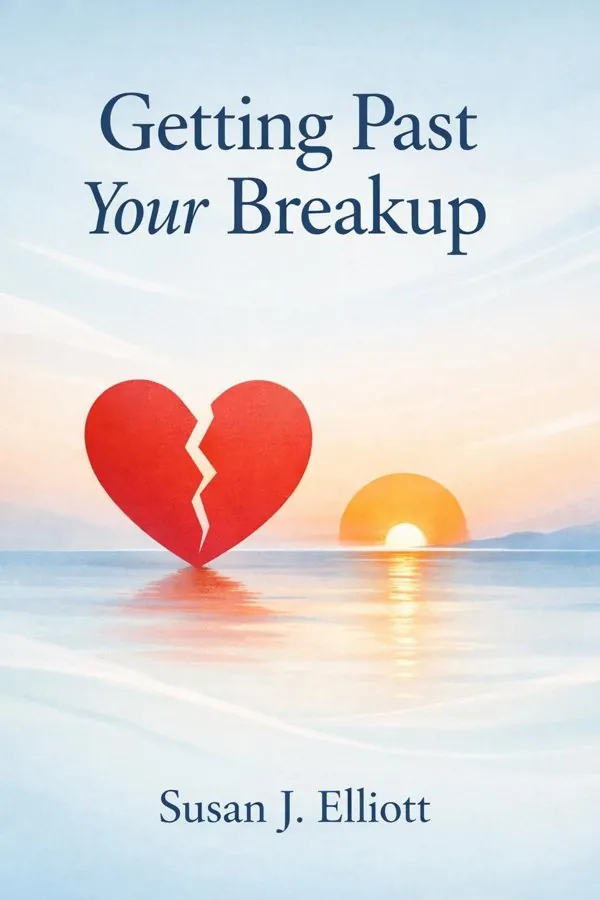
Getting Past Your Breakup: How to Turn a Devastating Loss into the Best Thing That Ever Happened to You: Summary & Key Insights
 10 min9 chaptersAudio available
Key Takeaways from Getting Past Your Breakup: How to Turn a Devastating Loss into the Best Thing That Ever Happened to You
The hardest part of heartbreak is often not the ending itself, but the mind’s refusal to believe it is truly over.
What feels like comfort after a breakup is often the very thing that keeps the wound open.
Her central insight is that many people repeat emotional scripts without realizing it.
Healing is rarely a straight line because heartbreak is full of triggers.
A breakup can either become a repeating wound or a turning point.
What Is Getting Past Your Breakup: How to Turn a Devastating Loss into the Best Thing That Ever Happened to You About?
Getting Past Your Breakup: How to Turn a Devastating Loss into the Best Thing That Ever Happened to You by Susan J. Elliott is a romantic_relationships book spanning 11 pages. Getting over a breakup is rarely just about losing another person. More often, it feels like losing your routines, your future plans, your confidence, and sometimes even your sense of self. In Getting Past Your Breakup, Susan J. Elliott offers a structured, compassionate plan for recovering from romantic loss and using that painful ending as the starting point for a stronger life. Rather than encouraging quick fixes, emotional avoidance, or revenge-driven “moving on,” Elliott focuses on real healing: grieving honestly, ending destructive contact, understanding unhealthy relationship patterns, and rebuilding a life that no longer depends on someone else’s presence. What makes this book so valuable is its combination of emotional understanding and practical guidance. Elliott writes not as a distant theorist but as someone with professional expertise and lived experience. With a background in law, education, and relationship recovery coaching, she brings both credibility and clarity to a topic that often leaves people feeling confused and powerless. The result is a grounded, empowering guide for anyone who wants to stop reliving the breakup and start creating a healthier future.
This FizzRead summary covers all 9 key chapters of Getting Past Your Breakup: How to Turn a Devastating Loss into the Best Thing That Ever Happened to You in approximately 10 minutes, distilling the most important ideas, arguments, and takeaways from Susan J. Elliott's work. Also available as an audio summary and Key Quotes Podcast.
Getting Past Your Breakup: How to Turn a Devastating Loss into the Best Thing That Ever Happened to You
Getting over a breakup is rarely just about losing another person. More often, it feels like losing your routines, your future plans, your confidence, and sometimes even your sense of self. In Getting Past Your Breakup, Susan J. Elliott offers a structured, compassionate plan for recovering from romantic loss and using that painful ending as the starting point for a stronger life. Rather than encouraging quick fixes, emotional avoidance, or revenge-driven “moving on,” Elliott focuses on real healing: grieving honestly, ending destructive contact, understanding unhealthy relationship patterns, and rebuilding a life that no longer depends on someone else’s presence.
What makes this book so valuable is its combination of emotional understanding and practical guidance. Elliott writes not as a distant theorist but as someone with professional expertise and lived experience. With a background in law, education, and relationship recovery coaching, she brings both credibility and clarity to a topic that often leaves people feeling confused and powerless. The result is a grounded, empowering guide for anyone who wants to stop reliving the breakup and start creating a healthier future.
Who Should Read Getting Past Your Breakup: How to Turn a Devastating Loss into the Best Thing That Ever Happened to You?
This book is perfect for anyone interested in romantic_relationships and looking to gain actionable insights in a short read. Whether you're a student, professional, or lifelong learner, the key ideas from Getting Past Your Breakup: How to Turn a Devastating Loss into the Best Thing That Ever Happened to You by Susan J. Elliott will help you think differently.
- ✓Readers who enjoy romantic_relationships and want practical takeaways
- ✓Professionals looking to apply new ideas to their work and life
- ✓Anyone who wants the core insights of Getting Past Your Breakup: How to Turn a Devastating Loss into the Best Thing That Ever Happened to You in just 10 minutes
Want the full summary?
Get instant access to this book summary and 100K+ more with Fizz Moment.
Get Free SummaryAvailable on App Store • Free to download
Key Chapters
The hardest part of heartbreak is often not the ending itself, but the mind’s refusal to believe it is truly over. After a breakup, people commonly bargain with reality: maybe it was a mistake, maybe more time will fix it, maybe one honest conversation will restore everything. Susan J. Elliott argues that healing cannot begin until the relationship is accepted as finished. That acceptance is not cold, cruel, or dramatic. It is the foundation of recovery.
Grief after a breakup is real grief. You are mourning not only the person, but also the habits, hopes, identity, and imagined future attached to them. Elliott encourages readers to stop minimizing this pain. If you try to skip grief by distracting yourself, numbing out, or pretending to be “fine,” those emotions usually return through obsession, depression, or repeated contact with the ex. Acceptance means allowing yourself to feel anger, sadness, shame, fear, and confusion without using those emotions as a reason to go backward.
A practical example is the tendency to keep rereading old messages or replaying the breakup conversation, hoping to find a hidden sign that the relationship can still be saved. Elliott would see this as resistance to loss. A healthier response is to name what is true: the relationship has ended, and now your work is to heal, not to negotiate with reality.
Actionable takeaway: Write a clear statement of acceptance such as, “This relationship is over, and I am choosing to heal,” and read it whenever denial or fantasy begins to pull you back.
What feels like comfort after a breakup is often the very thing that keeps the wound open. One of Elliott’s most powerful principles is the no-contact rule: stop calling, texting, checking social media, asking mutual friends for updates, or finding excuses to stay emotionally connected. Many people believe they need continued contact for closure, friendship, or emotional stability. Elliott argues the opposite. In most cases, contact delays closure because it keeps hope, confusion, and dependency alive.
No contact is not about punishment. It is a boundary designed to interrupt the cycle of craving and pain. Every message from an ex can become an emotional setback. A warm reply may spark false hope; a cold reply may trigger rejection all over again. Even silence can become its own torment. By removing contact, you stop feeding the emotional addiction and create space for your nervous system to calm down.
This can be especially important after on-again, off-again relationships, divorces with emotional entanglement, or breakups where one person still wants reconciliation. Practical steps include deleting chat threads, blocking or muting social accounts, removing photos from immediate view, and asking friends not to report on your ex’s life. If logistical contact is necessary because of children, work, or legal issues, Elliott recommends keeping communication brief, factual, and limited to essentials.
Actionable takeaway: Create a no-contact plan today, including digital boundaries, friend boundaries, and emergency alternatives for moments when you feel tempted to reach out.
A breakup can feel like bad luck, but Elliott pushes readers to ask a more uncomfortable and liberating question: what patterns did I bring into this relationship, and where have I seen them before? Her central insight is that many people repeat emotional scripts without realizing it. They choose familiar partners, tolerate familiar mistreatment, or react in familiar ways because the pattern feels normal, even when it is painful.
Taking responsibility does not mean blaming yourself for everything that happened. It means identifying your part in the dynamic so you can stop recreating it. For one person, the pattern may be chasing emotionally unavailable partners. For another, it may be overgiving, avoiding conflict, ignoring red flags, or confusing intensity with love. Some people enter relationships hoping to be rescued; others choose partners they can rescue. These patterns often begin long before the breakup and may reflect childhood experiences, low self-worth, or fear of abandonment.
Elliott encourages deep honesty here. If every relationship leaves you feeling unseen, controlled, desperate, or depleted, the common denominator deserves attention. Reflection can involve journaling about your last several relationships, noting how they began, what you ignored, how conflict worked, and why you stayed as long as you did. Patterns become easier to change once they are visible.
Actionable takeaway: Make a “relationship pattern inventory” of your past romances and identify at least three recurring behaviors, beliefs, or partner traits you do not want to repeat.
Healing is rarely a straight line because heartbreak is full of triggers. A song, a restaurant, a weekend afternoon, a holiday, or even a certain scent can suddenly throw you back into grief. Elliott explains that setbacks do not mean you are failing. They mean your mind and body are still associating everyday experiences with the lost relationship. The goal is not to eliminate all emotional reactions instantly, but to learn how to respond without spiraling.
Loneliness is one of the strongest triggers because it can make an unhealthy relationship look better in hindsight. People often miss not only the ex, but also the feeling of being chosen, touched, known, or accompanied. In those moments, the brain edits out the problems and magnifies the comfort. Elliott warns against trusting loneliness as a source of truth. Feeling alone does not mean the relationship was right for you.
Practical management starts with preparation. If evenings are hardest, plan them in advance. If social media triggers comparison and longing, step away from it. If weekends feel empty, create new rituals: exercise classes, dinners with friends, volunteer commitments, creative projects, or therapy appointments. It also helps to distinguish between missing a specific person and missing companionship in general. That distinction can stop you from chasing the wrong solution.
Actionable takeaway: Identify your top five triggers and create a written response plan for each one, including who to call, what to do, and how to interrupt the urge to reconnect.
A breakup can either become a repeating wound or a turning point. Elliott believes the difference lies in reflection. Once the initial storm begins to settle, you have an opportunity to understand not just what happened, but why it affected you so deeply. This level of self-awareness helps transform heartbreak from meaningless suffering into useful knowledge.
Reflection is not the same as rumination. Rumination circles endlessly around blame, fantasy, and regret. Reflection asks better questions. What did I need that I never clearly expressed? What warning signs did I ignore? What beliefs kept me in a relationship that was hurting me? What did I confuse with love? These questions reveal how your emotional history, boundaries, and self-image shaped the relationship.
Elliott’s approach encourages readers to become observers of their own behavior. For example, perhaps you notice that when someone withdraws, you become more anxious and accommodating instead of more honest. Or maybe you realize you rely on relationships to feel valuable, which makes it difficult to leave when things turn unhealthy. This insight is not meant to shame you. It is meant to make change possible.
A practical way to develop self-awareness is through journaling, therapy, support groups, or structured exercises that document your emotional habits. Over time, what once felt like chaos begins to form a pattern. And once you can see the pattern, you can choose differently.
Actionable takeaway: Start a breakup reflection journal and answer one honest question each day about your needs, fears, boundaries, and repeated relationship choices.
Breakups often damage more than the heart. They can quietly erode self-esteem, making you question your attractiveness, judgment, lovability, or future. Elliott insists that recovery must include rebuilding confidence, but not through superficial validation or a rushed search for a replacement partner. Real self-esteem grows when you learn to value yourself independently of being wanted.
This is especially important if the relationship involved criticism, betrayal, emotional neglect, or dependency. In such cases, people often emerge feeling diminished. Elliott encourages readers to challenge the distorted beliefs that heartbreak produces: “I was left, so I am not enough,” “I failed, so I cannot trust myself,” or “If I am alone, something is wrong with me.” These beliefs are common, but they are not facts.
Confidence returns through action. You rebuild trust in yourself by doing what you say you will do, maintaining boundaries, caring for your body, restoring neglected friendships, and investing in goals that have nothing to do with your ex. Even small acts matter: cleaning your space, returning to a hobby, managing finances, dressing in a way that makes you feel capable, or completing a difficult task. Each action sends a message that your life is still yours.
Elliott’s deeper point is that self-worth cannot remain dependent on romantic approval. If you know who you are outside a relationship, future rejection will hurt, but it will not destroy your identity.
Actionable takeaway: Choose three confidence-building habits this week—one physical, one social, and one personal-growth activity—and practice them consistently for 30 days.
Many people think healing requires getting an apology, being understood, or seeing the other person finally admit what they did wrong. Elliott challenges this belief. Waiting for an ex to validate your pain gives them continued power over your recovery. Forgiveness, in her framework, is not excusing harmful behavior or pretending the breakup was fair. It is releasing your emotional attachment to the grievance so you can stop carrying it everywhere.
This includes forgiving the other person and, often more importantly, forgiving yourself. Self-forgiveness may be needed for staying too long, ignoring intuition, begging for love, betraying your own standards, or making choices you now regret. Many readers get stuck not because they still love the ex, but because they cannot stop attacking themselves for what happened. Elliott makes clear that shame is not a healing tool.
Letting go also means surrendering the fantasy of a perfect ending. Some breakups never make sense in a satisfying way. Some people leave without clarity, accountability, or kindness. If you insist that your healing depends on a better ending, you remain emotionally trapped. Forgiveness allows you to say: this hurt me, it mattered, and I am no longer building my life around it.
Practical ways to practice forgiveness include writing unsent letters, naming what was lost, identifying the lesson, and consciously releasing the need for revenge or explanation. This is a process, not a single decision.
Actionable takeaway: Write two letters you will never send—one forgiving your ex for what they could not give, and one forgiving yourself for what you did not yet know.
One reason breakups feel so devastating is that many people have wrapped their future around the relationship. When it ends, life can suddenly seem shapeless. Elliott argues that true recovery requires more than emotional survival. You must actively create a new life vision. Healing becomes stronger when you are moving toward something, not just away from pain.
This means asking what kind of life you want independent of any partner. What routines support your well-being? What goals did you postpone? What friendships, interests, or ambitions have been neglected? A breakup can reveal how much of your time and identity had been invested in maintaining the relationship. Reclaiming that energy is one of the book’s most empowering themes.
Practical examples include changing your living space so it reflects your current life, setting financial goals after divorce, traveling somewhere meaningful, returning to school, improving health, or building a social network that does not revolve around couple culture. Even symbolic changes matter. They help the mind stop waiting for the old life to return.
Elliott also emphasizes emotional independence. The aim is not to become closed off or hyper-independent, but to know that your happiness has multiple sources. When your life is anchored in values, work, friendships, creativity, and self-respect, a relationship can enrich you without becoming your entire foundation.
Actionable takeaway: Create a one-page “new life vision” with goals in health, work, home, friendships, and joy, then take one visible step toward each area this month.
People often ask when they will be ready to date again, but Elliott suggests a better question: who will I be when I do? Readiness is not measured by time alone. It is measured by whether you have stopped using dating as an escape hatch from grief, loneliness, or wounded pride. If a new relationship is mainly a way to prove your ex wrong or to avoid being alone, old problems are likely to resurface in a new form.
Healthy dating begins after emotional independence has been rebuilt. That means you can enjoy interest and connection without attaching your worth to someone’s response. It also means you have learned from the last relationship and can recognize red flags sooner. Elliott encourages readers to enter new relationships with standards rather than fantasies. Chemistry matters, but consistency, honesty, emotional availability, and mutual respect matter more.
This chapter of recovery is also about relapse prevention. Even after progress, people can be tempted to return to former partners or repeat familiar dynamics because the old pattern feels emotionally intense. Staying grounded requires boundaries, patience, and a willingness to walk away when something does not align.
In practical terms, healthy dating might mean moving more slowly, noticing how you feel rather than just how attracted you are, keeping your own routines intact, and refusing to overinvest before trust is earned. The goal is not perfection. It is conscious choice.
Actionable takeaway: Before dating again, write a list of nonnegotiable relationship standards and early warning signs, and use it as a guide instead of relying only on chemistry.
All Chapters in Getting Past Your Breakup: How to Turn a Devastating Loss into the Best Thing That Ever Happened to You
About the Author
Susan J. Elliott, JD, MEd, is an author, breakup recovery expert, coach, and motivational speaker best known for helping people heal after the end of romantic relationships. With academic training in both law and education, she brings a structured, practical perspective to emotional recovery. Elliott has earned a wide audience through her writing, coaching, and public speaking on topics such as grief, boundaries, self-esteem, no-contact recovery, and healthier relationship choices. Her work is especially valued for combining compassion with direct, actionable advice. Rather than offering generic encouragement, she focuses on helping readers understand their patterns, reclaim their independence, and build stronger emotional foundations. Through her books and guidance, Elliott has become a trusted voice for people seeking to turn heartbreak into lasting personal growth.
Get This Summary in Your Preferred Format
Read or listen to the Getting Past Your Breakup: How to Turn a Devastating Loss into the Best Thing That Ever Happened to You summary by Susan J. Elliott anytime, anywhere. FizzRead offers multiple formats so you can learn on your terms — all free.
Available formats: App · Audio · PDF · EPUB — All included free with FizzRead
Download Getting Past Your Breakup: How to Turn a Devastating Loss into the Best Thing That Ever Happened to You PDF and EPUB Summary
Key Quotes from Getting Past Your Breakup: How to Turn a Devastating Loss into the Best Thing That Ever Happened to You
“The hardest part of heartbreak is often not the ending itself, but the mind’s refusal to believe it is truly over.”
“What feels like comfort after a breakup is often the very thing that keeps the wound open.”
“A breakup can feel like bad luck, but Elliott pushes readers to ask a more uncomfortable and liberating question: what patterns did I bring into this relationship, and where have I seen them before?”
“Healing is rarely a straight line because heartbreak is full of triggers.”
“A breakup can either become a repeating wound or a turning point.”
Frequently Asked Questions about Getting Past Your Breakup: How to Turn a Devastating Loss into the Best Thing That Ever Happened to You
Getting Past Your Breakup: How to Turn a Devastating Loss into the Best Thing That Ever Happened to You by Susan J. Elliott is a romantic_relationships book that explores key ideas across 9 chapters. Getting over a breakup is rarely just about losing another person. More often, it feels like losing your routines, your future plans, your confidence, and sometimes even your sense of self. In Getting Past Your Breakup, Susan J. Elliott offers a structured, compassionate plan for recovering from romantic loss and using that painful ending as the starting point for a stronger life. Rather than encouraging quick fixes, emotional avoidance, or revenge-driven “moving on,” Elliott focuses on real healing: grieving honestly, ending destructive contact, understanding unhealthy relationship patterns, and rebuilding a life that no longer depends on someone else’s presence. What makes this book so valuable is its combination of emotional understanding and practical guidance. Elliott writes not as a distant theorist but as someone with professional expertise and lived experience. With a background in law, education, and relationship recovery coaching, she brings both credibility and clarity to a topic that often leaves people feeling confused and powerless. The result is a grounded, empowering guide for anyone who wants to stop reliving the breakup and start creating a healthier future.
You Might Also Like

Rebel
Beverly Jenkins
10 min
The Last Letter
Rebecca Yarros
10 min
A Thousand Boy Kisses
Tillie Cole
10 min
Aflame
Penelope Douglas
10 min
After The Bite
Lynsay Sands
10 min
Alchemised
SenLinYu
10 minBrowse by Category
Ready to read Getting Past Your Breakup: How to Turn a Devastating Loss into the Best Thing That Ever Happened to You?
Get the full summary and 100K+ more books with Fizz Moment.