
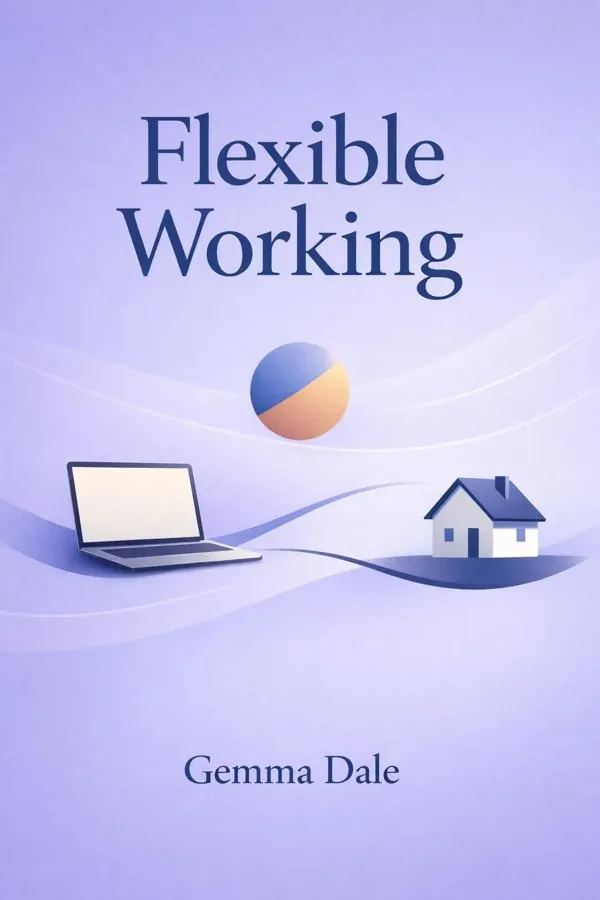
Flexible Working: Summary & Key Insights
by Gemma Dale
 10 min3 chaptersAudio available
What Is Flexible Working About?
Flexible Working by Gemma Dale is a organization book spanning 3 pages. Flexible Working explores how organizations and individuals can successfully implement flexible work arrangements. It provides practical guidance on managing remote teams, hybrid work models, and employee well-being while maintaining productivity and engagement. The book draws on research and case studies to help HR professionals and managers design effective flexible work policies.
This FizzRead summary covers all 3 key chapters of Flexible Working in approximately 10 minutes, distilling the most important ideas, arguments, and takeaways from Gemma Dale's work. Also available as an audio summary and Key Quotes Podcast.
Flexible Working
Flexible Working explores how organizations and individuals can successfully implement flexible work arrangements. It provides practical guidance on managing remote teams, hybrid work models, and employee well-being while maintaining productivity and engagement. The book draws on research and case studies to help HR professionals and managers design effective flexible work policies.
Who Should Read Flexible Working?
This book is perfect for anyone interested in organization and looking to gain actionable insights in a short read. Whether you're a student, professional, or lifelong learner, the key ideas from Flexible Working by Gemma Dale will help you think differently.
- ✓Readers who enjoy organization and want practical takeaways
- ✓Professionals looking to apply new ideas to their work and life
- ✓Anyone who wants the core insights of Flexible Working in just 10 minutes
Want the full summary?
Get instant access to this book summary and 100K+ more with Fizz Moment.
Get Free SummaryAvailable on App Store • Free to download
Key Chapters
To truly grasp the essence of flexible working, one must begin with its history. For much of the twentieth century, work was defined by place and time. The factory clock, the office desk, the nine-to-five day—all of these represented certainty and control. Yet as economies evolved toward information and service industries, that rigid structure began to show its cracks. Gradually, the conversation changed: instead of asking whether employees could be trusted to work from home, progressive employers began asking, 'What environment allows people to do their best work?'
Flexible working encapsulates many arrangements—from part-time schedules, job sharing, and compressed workweeks, to remote work, flexitime, and increasingly, hybrid models that blend physical and virtual presence. But beyond labels, flexibility is a mindset. It’s an invitation for organizations to design work around outputs and outcomes rather than hours or visibility.
In the book, I emphasize that flexibility is not new. What’s new is the widespread realization—accelerated by technological advances and later by global crises such as the COVID-19 pandemic—that work’s traditional constraints are neither inevitable nor efficient. What once seemed exceptional has become the new normal, and organizations that fail to recognize this risk losing both talent and relevance.
Understanding flexibility also requires recognizing differences. Flexibility means different things to different people depending on life stage, caregiving responsibilities, or even personality type. For one person, it might mean earlier start times; for another, job sharing; for yet another, permanent remote work. The goal is not one-size-fits-all policies but creating a system that accommodates individual differences while maintaining fairness and equity.
From an organizational development standpoint, embracing this change means redefining performance expectations, communication norms, and trust dynamics. It means moving from 'control and supervision' to 'empowerment and accountability.' Real flexibility is built on mutual respect—it thrives where both employer and employee understand their shared responsibilities.
One of the most striking patterns across decades of research is that flexibility benefits everyone. For employees, flexible arrangements often translate into improved mental health, greater job satisfaction, and a more sustainable work-life balance. A parent picking up a child from school, a student pursuing further education, or an employee managing health concerns—all find in flexibility a path to balance rather than compromise. The result is retention, motivation, and loyalty.
From the organizational perspective, the business case for flexibility is undeniable. Productivity rises when people are empowered to work in ways aligned with their natural rhythms and personal circumstances. Talent attraction improves because flexibility is consistently identified as one of the most desired benefits, especially among younger workers. Moreover, diverse talent pools—parents, caregivers, older employees, people with disabilities—are more accessible when rigid scheduling and presence requirements are replaced by flexible frameworks.
In this book, I present multiple case studies revealing that flexibility also enhances innovation. Freed from the confines of traditional routines, teams often discover fresh insights and creative solutions. Flexibility nurtures trust, and trust, in turn, fuels engagement. When employees feel trusted, they reciprocate with commitment; when leaders model openness, people perform beyond compliance.
However, these benefits don’t emerge automatically. They come from deliberate design—clear goals, effective communication, and a culture that values results over presenteeism. As I often remind practitioners, flexibility without structure can quickly turn chaotic. It’s not about letting go of expectations but redesigning them to focus on purpose and impact. When done well, flexibility doesn’t erode discipline; it enhances it.
+ 1 more chapters — available in the FizzRead app
All Chapters in Flexible Working
About the Author
Gemma Dale is an HR professional, lecturer, and writer specializing in employee engagement, well-being, and flexible working. She has extensive experience in human resources and regularly contributes to discussions on modern workplace practices.
Get This Summary in Your Preferred Format
Read or listen to the Flexible Working summary by Gemma Dale anytime, anywhere. FizzRead offers multiple formats so you can learn on your terms — all free.
Available formats: App · Audio · PDF · EPUB — All included free with FizzRead
Download Flexible Working PDF and EPUB Summary
Key Quotes from Flexible Working
“To truly grasp the essence of flexible working, one must begin with its history.”
“One of the most striking patterns across decades of research is that flexibility benefits everyone.”
Frequently Asked Questions about Flexible Working
Flexible Working by Gemma Dale is a organization book that explores key ideas across 3 chapters. Flexible Working explores how organizations and individuals can successfully implement flexible work arrangements. It provides practical guidance on managing remote teams, hybrid work models, and employee well-being while maintaining productivity and engagement. The book draws on research and case studies to help HR professionals and managers design effective flexible work policies.
You Might Also Like
A Guide to the Project Management Body of Knowledge (PMBOK® Guide)
Project Management Institute
10 min
Organizational Behavior
Stephen P. Robbins
10 min
Accelerate: The Science of Lean Software and DevOps – Building and Scaling High Performing Technology Organizations
Nicole Forsgren, Jez Humble, Gene Kim
10 min
Awakening Compassion at Work: The Quiet Power That Elevates People and Organizations
Monica C. Worline, Jane E. Dutton
10 min
Building an Inclusive Organization: Leveraging the Power of a Diverse Workforce
Stephen Frost
10 min
Collaborative Intelligence: Thinking with People Who Think Differently
Dawna Markova, Angie McArthur
10 minBrowse by Category
Ready to read Flexible Working?
Get the full summary and 100K+ more books with Fizz Moment.