
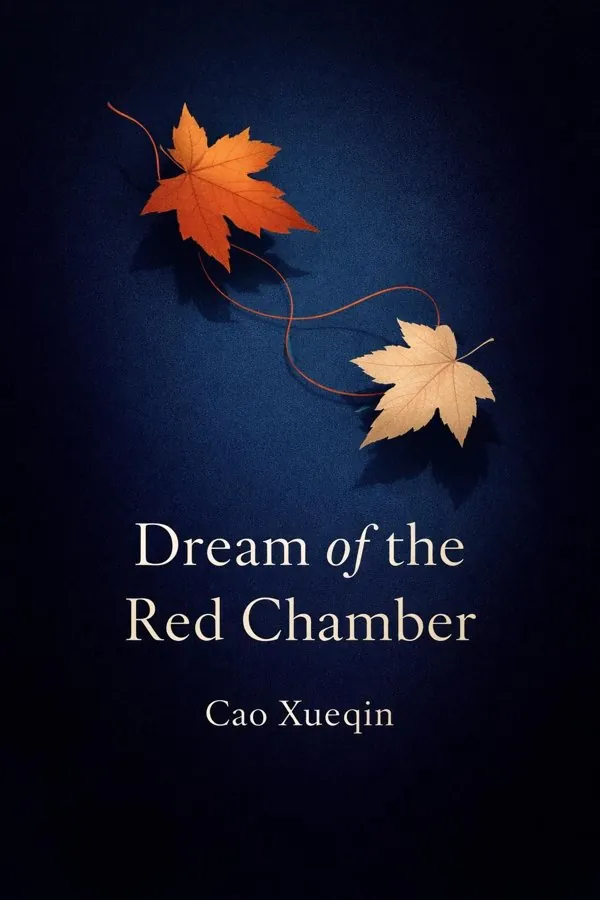
Dream of the Red Chamber: Summary & Key Insights
by Cao Xueqin
 10 min9 chaptersAudio available
Key Takeaways from Dream of the Red Chamber
Grandeur often hides decay long before collapse becomes visible.
Some people enter the world already burdened by expectations they did not choose.
The deepest bonds in life often feel less like beginnings than recognitions.
Not every admirable person is a rebel; some survive by mastering the world as it is.
Beauty can become a temporary shelter against a harsher world, but never a permanent escape from it.
What Is Dream of the Red Chamber About?
Dream of the Red Chamber by Cao Xueqin is a classics book spanning 7 pages. Few novels attempt to hold an entire world in their pages; Dream of the Red Chamber does exactly that. Widely regarded as the greatest work of Chinese classical fiction, Cao Xueqin’s masterpiece follows the glittering rise and heartbreaking decline of the aristocratic Jia family, while placing at its center one of literature’s most moving emotional triangles: Jia Baoyu, the sensitive heir who resists the ambitions laid out for him; Lin Daiyu, brilliant and fragile; and Xue Baochai, graceful, composed, and socially ideal. What begins as a family saga gradually reveals itself as something far richer—a meditation on love, status, illusion, gender, money, mortality, and the collapse of a whole social order. The novel matters not only because of its historical importance, but because of its psychological truth. Cao writes with unmatched delicacy about inner conflict, desire, grief, jealousy, and tenderness. Drawing on the lived memory of aristocratic life and ruin, he transforms personal and social decline into art of astonishing depth. Dream of the Red Chamber is not just a classic to admire; it is a book that teaches us how fragile beauty, privilege, and human happiness really are.
This FizzRead summary covers all 9 key chapters of Dream of the Red Chamber in approximately 10 minutes, distilling the most important ideas, arguments, and takeaways from Cao Xueqin's work. Also available as an audio summary and Key Quotes Podcast.
Dream of the Red Chamber
Few novels attempt to hold an entire world in their pages; Dream of the Red Chamber does exactly that. Widely regarded as the greatest work of Chinese classical fiction, Cao Xueqin’s masterpiece follows the glittering rise and heartbreaking decline of the aristocratic Jia family, while placing at its center one of literature’s most moving emotional triangles: Jia Baoyu, the sensitive heir who resists the ambitions laid out for him; Lin Daiyu, brilliant and fragile; and Xue Baochai, graceful, composed, and socially ideal. What begins as a family saga gradually reveals itself as something far richer—a meditation on love, status, illusion, gender, money, mortality, and the collapse of a whole social order. The novel matters not only because of its historical importance, but because of its psychological truth. Cao writes with unmatched delicacy about inner conflict, desire, grief, jealousy, and tenderness. Drawing on the lived memory of aristocratic life and ruin, he transforms personal and social decline into art of astonishing depth. Dream of the Red Chamber is not just a classic to admire; it is a book that teaches us how fragile beauty, privilege, and human happiness really are.
Who Should Read Dream of the Red Chamber?
This book is perfect for anyone interested in classics and looking to gain actionable insights in a short read. Whether you're a student, professional, or lifelong learner, the key ideas from Dream of the Red Chamber by Cao Xueqin will help you think differently.
- ✓Readers who enjoy classics and want practical takeaways
- ✓Professionals looking to apply new ideas to their work and life
- ✓Anyone who wants the core insights of Dream of the Red Chamber in just 10 minutes
Want the full summary?
Get instant access to this book summary and 100K+ more with Fizz Moment.
Get Free SummaryAvailable on App Store • Free to download
Key Chapters
Grandeur often hides decay long before collapse becomes visible. At the beginning of Dream of the Red Chamber, the Jia clan appears almost untouchable. The Rongguo and Ningguo mansions stand as monuments to inherited prestige, imperial favor, and social authority. Their households are crowded with servants, relatives, rituals, entertainments, and obligations. Everything suggests permanence. Yet Cao Xueqin carefully plants signs that this splendor is unstable: wasteful habits, moral carelessness, dependence on rank rather than discipline, and a growing distance between outward ceremony and inward strength.
The genius of the novel lies in how it turns a family estate into a model of a whole social system. The Jia household is not simply rich; it embodies a feudal order in which titles, gender rules, kinship duties, and court politics shape every relationship. But privilege creates blindness. Because the family is accustomed to abundance, it assumes abundance will continue. Because its status has been inherited, it no longer understands what sustains it.
This idea remains practical today. Families, companies, and institutions can look secure while neglecting the character, accountability, and financial discipline that keep them alive. A successful business may be lavish in image but weak in fundamentals. A powerful family may preserve reputation while losing trust and resilience.
Cao’s warning is subtle but sharp: decline rarely begins with catastrophe. It begins with habits of complacency. We should learn to look beyond appearances and ask what hidden weaknesses lie beneath success. The actionable takeaway is simple: whenever something seems stable—your finances, career, relationships, or organization—examine the unseen structures supporting it, because true strength is built in private long before it is tested in public.
Some people enter the world already burdened by expectations they did not choose. Jia Baoyu’s birth is wrapped in marvel and symbolism: he is born with a piece of jade in his mouth, a mystical object linking him to a spiritual dimension beyond ordinary life. This jade makes him extraordinary from the start, but it also marks him as someone others will interpret, manage, and project upon. He is cherished, watched, indulged, and judged not merely as a boy, but as a sign.
Baoyu’s character develops in striking tension with the world around him. He is intelligent, emotionally sensitive, and instinctively drawn toward women’s company, poetry, intimacy, and beauty rather than formal study and official ambition. In a society that expects elite sons to pursue rank, discipline, and Confucian success, Baoyu’s temperament looks like failure or eccentricity. Yet Cao presents him not as weak, but as profoundly alive to the emotional realities others suppress.
This makes Baoyu one of literature’s most memorable portraits of a person misaligned with social expectations. Many readers recognize the same pressure today: a child expected to take over a family business, a student pushed into prestigious careers, or an employee rewarded for conformity rather than authenticity. The jade becomes a metaphor for inner nature—something precious, mysterious, and difficult to fit into systems designed for obedience.
The novel asks whether social success is always compatible with emotional truth. Baoyu’s life suggests it is not. His struggle reminds us that being gifted does not mean being suited to society’s standard path. The actionable takeaway: identify where your own values differ from imposed expectations, and protect that difference before it is trained out of you in the name of success.
The deepest bonds in life often feel less like beginnings than recognitions. When Lin Daiyu arrives at the Jia household, her connection with Baoyu carries that unmistakable quality. She is not merely a new relative entering a grand mansion; she is a presence that alters the emotional atmosphere of the entire novel. Intelligent, poetic, vulnerable, proud, and intensely perceptive, Daiyu becomes both Baoyu’s closest counterpart and the measure of his emotional seriousness.
Their relationship is powerful because it is built on shared sensibility rather than social convenience. They understand each other through mood, symbol, irony, and unspoken pain. Daiyu’s fragility is not only physical; it is psychological and social. As an orphaned girl dependent on relatives, she lacks secure standing, and this insecurity sharpens her emotional life. She senses slights quickly, protects herself through wit and sensitivity, and loves with total inward intensity.
Cao’s portrayal of Daiyu is remarkable for its psychological nuance. She is neither a simple tragic heroine nor an idealized romantic figure. She is brilliant but wounded, loving but defensive, tender but suspicious. In modern life, many relationships fail because people misread sensitivity as instability or overlook the role insecurity plays in emotional reactions. Daiyu shows how love is often shaped by context: family dependence, status anxiety, health, and unspoken fear.
Her bond with Baoyu also reveals that emotional compatibility does not guarantee worldly success. Two people may understand each other deeply and still be crushed by forces beyond feeling. The actionable takeaway is to listen for the hidden vulnerability beneath emotional intensity—in yourself and others—because genuine connection begins when we respond not just to words, but to the insecurity and longing behind them.
Not every admirable person is a rebel; some survive by mastering the world as it is. Xue Baochai enters the novel as a foil to Lin Daiyu, but she is far more than a rival. Composed, intelligent, practical, and socially adept, Baochai embodies the virtues that aristocratic society rewards. She is measured where Daiyu is spontaneous, balanced where Daiyu is volatile, and tactful where Baoyu is defiant. Her presence asks a difficult question: is adaptation a form of wisdom, compromise, or quiet tragedy?
Baochai understands the rules governing family life, female conduct, and social harmony. She does not merely submit to them blindly; she works within them with elegance and intelligence. That makes her compelling. Cao refuses to make her simplistic. She is not cold, nor merely conventional. Rather, she represents the kind of moral self-control and practical reason that allows people to function in restrictive environments.
In contemporary terms, Baochai resembles those who navigate institutions successfully without openly challenging them. Think of the high-performing employee who knows when to speak and when to stay silent, or the family member who keeps peace through diplomacy. Such people are often praised, yet their success may come at the cost of unexpressed feeling or unrealized freedom.
Baochai’s contrast with Daiyu is not a contest between right and wrong, but between two ways of living under pressure: feeling deeply or functioning smoothly. Most of us alternate between the two. The novel invites readers to respect Baochai’s strengths while noticing the social order that makes those strengths necessary. The actionable takeaway: cultivate emotional intelligence and tact, but regularly ask whether your adaptability is serving your values—or merely helping you endure a system that diminishes them.
Beauty can become a temporary shelter against a harsher world, but never a permanent escape from it. The Grand View Garden is one of the novel’s most enchanting creations: a refined, almost dreamlike space where poetry, companionship, seasonal rituals, and youthful sensitivity flourish. Within its walls, Baoyu, Daiyu, Baochai, and the other young women share a world of literary games, emotional intimacy, aesthetic pleasure, and delicate rivalries. It feels like a paradise of cultivated feeling.
Yet the Garden is not mere decoration. It is the emotional and symbolic heart of the novel. Here, Cao explores an extraordinary female world rich with intelligence, wit, vulnerability, and individuality. The conversations, poetry clubs, teasing exchanges, illnesses, celebrations, and misunderstandings all reveal how subtle and alive human relationships can be when observed closely. The Garden preserves moments of beauty while also intensifying awareness of their impermanence.
Its practical relevance is striking. Many people create modern versions of the Garden: a campus community, a creative circle, a close-knit household, an artistic retreat, or a period of youth that feels protected from ordinary pressures. Such spaces matter because they allow personality to unfold. But they are always vulnerable to money troubles, social demands, aging, illness, and institutional power.
The Grand View Garden teaches that beauty is not trivial simply because it is temporary. On the contrary, its fragility is what makes it precious. We should build spaces in our lives where conversation, art, friendship, and tenderness can thrive—but we should not assume they exist outside history, economics, or power. The actionable takeaway: consciously create and protect environments that nourish reflection and connection, while remembering that preserving beauty requires practical care as much as emotional appreciation.
A society reveals itself most clearly in how it limits the people it most depends on. One of Dream of the Red Chamber’s greatest achievements is its extraordinary portrait of women. The novel is filled with female characters who are witty, capable, artistic, emotionally perceptive, administratively skilled, and morally complex. From Daiyu and Baochai to Wang Xifeng, the maids, attendants, and elder women of the Jia household, Cao presents a world in which women often possess more practical intelligence and emotional depth than the men around them.
And yet their gifts exist inside severe constraints. Their futures depend on marriage arrangements, family strategy, rank, health, reputation, and obedience. Even the most competent women must work through systems they do not control. Wang Xifeng, for instance, is dazzlingly effective in managing household affairs, but her brilliance functions inside a structure that both uses and endangers her. Daiyu’s talent cannot secure her future. Baochai’s intelligence is shaped into acceptability.
This tension gives the novel much of its emotional force. It honors women’s inner lives while exposing the limits imposed on them by patriarchy, class, and family duty. Modern readers can see parallels in workplaces where women carry emotional labor without equal authority, or in households where competence is expected but autonomy is restricted.
Cao does not offer a program for reform, but he documents injustice through attention. He makes readers feel the waste produced when a culture values women’s refinement while restricting their freedom. The actionable takeaway: notice where talent in your environment is being admired but not empowered, and use whatever influence you have to turn appreciation into real opportunity, voice, and support.
Families and institutions rarely collapse from a single blow; they decay through accumulation. As Dream of the Red Chamber progresses, the Jia family’s splendor gives way to signs of internal exhaustion. Financial strain grows, political vulnerability increases, domestic management frays, and moral compromises multiply. What once looked like confidence begins to look like extravagance without foundation. The household is burdened not only by money troubles, but by the inability to reform itself.
Cao shows decline as both structural and ethical. Wasteful spending matters, but so do favoritism, vanity, exploitation, hidden vice, and the assumption that someone else will absorb the consequences. Members of the family cling to appearance long after reality has shifted. This is one of the novel’s most modern insights: people often protect the image of stability instead of confronting instability itself.
The pattern is familiar in contemporary organizations. A company with impressive branding may ignore toxic leadership. A wealthy family may maintain luxury while accumulating debt. A public institution may preserve ceremony while losing credibility. Decline accelerates when no one wants to challenge habits that once brought status but now generate weakness.
At a personal level, moral exhaustion can work the same way. A person may keep up routines that signal success while inwardly burning out. Cao suggests that collapse becomes likely when systems no longer renew themselves through honesty, discipline, and care.
What makes this section of the novel so powerful is its refusal to separate emotional tragedy from social failure. Love stories break down because institutions are rotting. Individual suffering is intensified by collective disorder. The actionable takeaway: if you sense drift in any area of life—financial, organizational, relational—address it early and concretely, because denial is often the true engine of collapse.
We often understand the world most clearly only after it breaks our hearts. The later movement of Dream of the Red Chamber turns increasingly toward disillusionment, grief, and spiritual awakening. The loves, friendships, pleasures, and privileges that once filled the Jia world cannot be preserved. Illness, death, separation, family ruin, and emotional betrayal strip away the illusion that beauty or status can secure permanence. The novel’s title itself points toward dream, illusion, and transience.
Baoyu’s final transformation emerges from this confrontation with impermanence. His earlier sensitivity, once treated as childish eccentricity, becomes the basis for a deeper recognition: worldly life is both precious and unstable, and attachment to status or desire cannot save us from loss. This does not mean the novel dismisses human feeling. On the contrary, it treats feeling with great seriousness. But it frames earthly life as fleeting, like a vision that must be cherished without being mistaken for something eternal.
This insight has enduring practical force. Modern people often live as if achievement, romance, youth, or identity can provide lasting solidity. Then illness, grief, economic reversal, or personal failure shatters that assumption. Dream of the Red Chamber does not offer easy comfort, but it suggests that wisdom begins when we stop demanding permanence from what is temporary.
The novel’s spiritual dimension encourages humility: love deeply, enjoy beauty, and honor relationships, but do not imagine you can possess them forever. Impermanence is not an argument against meaning; it is what gives meaning urgency. The actionable takeaway: hold what you love with gratitude rather than entitlement, and let awareness of transience sharpen your presence instead of deepening your fear.
All Chapters in Dream of the Red Chamber
About the Author
Cao Xueqin (c. 1715–1763) was a Qing dynasty novelist and the author of Dream of the Red Chamber, one of the greatest works in Chinese literature. He was born into a distinguished family connected to the imperial court, but that family later suffered financial and political decline. This experience of lost privilege is widely believed to have shaped his masterpiece, which vividly portrays aristocratic splendor, emotional complexity, and social collapse. Cao is admired for his unmatched psychological insight, his nuanced depiction of women, and his ability to blend realism with symbolism and spiritual reflection. Although he died before seeing his full reputation emerge, his novel became a cornerstone of Chinese literary culture and a major work of world fiction, inspiring generations of readers, scholars, and writers.
Get This Summary in Your Preferred Format
Read or listen to the Dream of the Red Chamber summary by Cao Xueqin anytime, anywhere. FizzRead offers multiple formats so you can learn on your terms — all free.
Available formats: App · Audio · PDF · EPUB — All included free with FizzRead
Download Dream of the Red Chamber PDF and EPUB Summary
Key Quotes from Dream of the Red Chamber
“Grandeur often hides decay long before collapse becomes visible.”
“Some people enter the world already burdened by expectations they did not choose.”
“The deepest bonds in life often feel less like beginnings than recognitions.”
“Not every admirable person is a rebel; some survive by mastering the world as it is.”
“Beauty can become a temporary shelter against a harsher world, but never a permanent escape from it.”
Frequently Asked Questions about Dream of the Red Chamber
Dream of the Red Chamber by Cao Xueqin is a classics book that explores key ideas across 9 chapters. Few novels attempt to hold an entire world in their pages; Dream of the Red Chamber does exactly that. Widely regarded as the greatest work of Chinese classical fiction, Cao Xueqin’s masterpiece follows the glittering rise and heartbreaking decline of the aristocratic Jia family, while placing at its center one of literature’s most moving emotional triangles: Jia Baoyu, the sensitive heir who resists the ambitions laid out for him; Lin Daiyu, brilliant and fragile; and Xue Baochai, graceful, composed, and socially ideal. What begins as a family saga gradually reveals itself as something far richer—a meditation on love, status, illusion, gender, money, mortality, and the collapse of a whole social order. The novel matters not only because of its historical importance, but because of its psychological truth. Cao writes with unmatched delicacy about inner conflict, desire, grief, jealousy, and tenderness. Drawing on the lived memory of aristocratic life and ruin, he transforms personal and social decline into art of astonishing depth. Dream of the Red Chamber is not just a classic to admire; it is a book that teaches us how fragile beauty, privilege, and human happiness really are.
More by Cao Xueqin
You Might Also Like




Browse by Category
Ready to read Dream of the Red Chamber?
Get the full summary and 100K+ more books with Fizz Moment.