
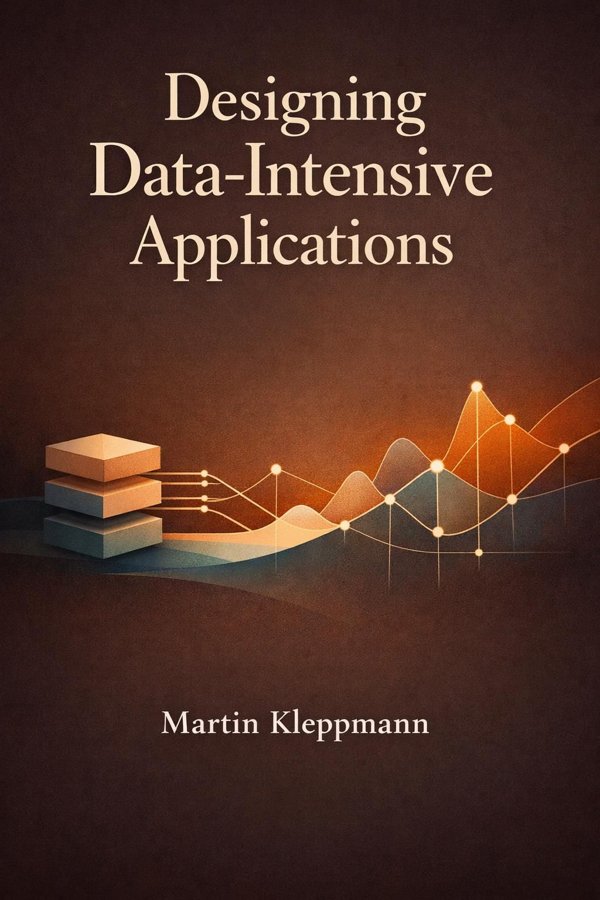
Designing Data-Intensive Applications: The Big Ideas Behind Reliable, Scalable, and Maintainable Systems: Summary & Key Insights
 10 min6 chaptersAudio available
What Is Designing Data-Intensive Applications: The Big Ideas Behind Reliable, Scalable, and Maintainable Systems About?
Designing Data-Intensive Applications: The Big Ideas Behind Reliable, Scalable, and Maintainable Systems by Martin Kleppmann is a data_science book spanning 6 pages. Designing Data-Intensive Applications explores the fundamental principles of building reliable, scalable, and maintainable data systems. It examines how modern databases, distributed systems, and data processing tools work, and how to design architectures that can handle large-scale data efficiently. The book provides a deep understanding of data models, consistency, fault tolerance, and system design trade-offs, making it a key reference for software engineers and architects.
This FizzRead summary covers all 6 key chapters of Designing Data-Intensive Applications: The Big Ideas Behind Reliable, Scalable, and Maintainable Systems in approximately 10 minutes, distilling the most important ideas, arguments, and takeaways from Martin Kleppmann's work. Also available as an audio summary and Key Quotes Podcast.
Designing Data-Intensive Applications: The Big Ideas Behind Reliable, Scalable, and Maintainable Systems
Designing Data-Intensive Applications explores the fundamental principles of building reliable, scalable, and maintainable data systems. It examines how modern databases, distributed systems, and data processing tools work, and how to design architectures that can handle large-scale data efficiently. The book provides a deep understanding of data models, consistency, fault tolerance, and system design trade-offs, making it a key reference for software engineers and architects.
Who Should Read Designing Data-Intensive Applications: The Big Ideas Behind Reliable, Scalable, and Maintainable Systems?
This book is perfect for anyone interested in data_science and looking to gain actionable insights in a short read. Whether you're a student, professional, or lifelong learner, the key ideas from Designing Data-Intensive Applications: The Big Ideas Behind Reliable, Scalable, and Maintainable Systems by Martin Kleppmann will help you think differently.
- ✓Readers who enjoy data_science and want practical takeaways
- ✓Professionals looking to apply new ideas to their work and life
- ✓Anyone who wants the core insights of Designing Data-Intensive Applications: The Big Ideas Behind Reliable, Scalable, and Maintainable Systems in just 10 minutes
Want the full summary?
Get instant access to this book summary and 100K+ more with Fizz Moment.
Get Free SummaryAvailable on App Store • Free to download
Key Chapters
Data modeling isn’t simply about choosing between SQL or NoSQL—it’s about understanding the shape of your data and the operations performed on it. Every model carries implicit assumptions about how information should be represented and connected.
The classical relational model, articulated by Edgar Codd, enforces a strict schema of tables, rows, and foreign keys. It excels at maintaining consistency and provides powerful declarative querying through SQL. But relational systems can strain when confronted with highly variable structures or deeply nested relationships.
Document-oriented models, popularized by systems like MongoDB or CouchDB, introduce flexible, semi-structured data formats such as JSON or BSON. They enable rapid evolution of schemas, making them ideal for applications where data evolves unpredictably. Graph databases, such as Neo4j, treat data as a network—nodes and edges woven together to express relationships that would be cumbersome in tabular form. These models thrive on complex connectivity, supporting queries like shortest path, recommendation traversal, and hierarchical relationships efficiently.
From my perspective, none of these paradigms compete—they complement. They represent different views of data: the relational model optimizes for integrity and transactionality, the document model for flexibility and natural representation, and the graph model for connectivity. The key insight is this: the model you choose should reflect not only the data’s structure but also how that data will evolve, how users will query it, and how you’ll maintain its consistency. Once you see models as languages, not technologies, you begin designing systems that communicate faithfully between data and use case.
To store data effectively is to balance speed, durability, and accessibility. Beneath the surface of every database lies an intricate world of indexes, append-only logs, and data structures designed to reconcile performance with persistence. Storage engines often rely on two major families: log-structured merge trees (LSM) and B-trees.
B-trees, the backbone of traditional relational databases, organize data in hierarchical structures optimized for random reads and writes. They offer predictable performance and immediate consistency at a slight cost in write amplification. LSM trees, prominent in modern distributed data stores such as Cassandra or LevelDB, favor write-heavy workloads. They accumulate updates in memory and periodically merge them onto disk—yielding exceptional write throughput and compression benefits, at the expense of sometimes slower read paths.
The retrieval layer, driven by indexes, is where the art of optimization begins. Indexes trade space for speed—allowing queries to be answered directly rather than sifting through raw storage. But indexing has consequences: every index adds maintenance overhead during writes and consumes memory. What matters is understanding the workload profile. For transactional systems favoring short, frequent writes, minimal indexing is best. For analytical or read-heavy workloads, rich indexes enable insights at scale.
Transactions serve as the contract between storage and retrieval. ACID guarantees—atomicity, consistency, isolation, durability—are not mere academic constructs; they are the safety net that keeps systems from silently corrupting data. Yet enforcing them across distributed nodes leads us to a deeper question of trade-offs: do we value strict correctness or operational availability? The craft of a storage designer lies in explicitly choosing these trade-offs based on system goals.
+ 4 more chapters — available in the FizzRead app
All Chapters in Designing Data-Intensive Applications: The Big Ideas Behind Reliable, Scalable, and Maintainable Systems
About the Author
Martin Kleppmann is a researcher and software engineer specializing in distributed systems and data infrastructure. He has worked at companies such as LinkedIn and Rapportive, and is a researcher at the University of Cambridge focusing on distributed collaboration systems and data consistency.
Get This Summary in Your Preferred Format
Read or listen to the Designing Data-Intensive Applications: The Big Ideas Behind Reliable, Scalable, and Maintainable Systems summary by Martin Kleppmann anytime, anywhere. FizzRead offers multiple formats so you can learn on your terms — all free.
Available formats: App · Audio · PDF · EPUB — All included free with FizzRead
Download Designing Data-Intensive Applications: The Big Ideas Behind Reliable, Scalable, and Maintainable Systems PDF and EPUB Summary
Key Quotes from Designing Data-Intensive Applications: The Big Ideas Behind Reliable, Scalable, and Maintainable Systems
“Data modeling isn’t simply about choosing between SQL or NoSQL—it’s about understanding the shape of your data and the operations performed on it.”
“To store data effectively is to balance speed, durability, and accessibility.”
Frequently Asked Questions about Designing Data-Intensive Applications: The Big Ideas Behind Reliable, Scalable, and Maintainable Systems
Designing Data-Intensive Applications: The Big Ideas Behind Reliable, Scalable, and Maintainable Systems by Martin Kleppmann is a data_science book that explores key ideas across 6 chapters. Designing Data-Intensive Applications explores the fundamental principles of building reliable, scalable, and maintainable data systems. It examines how modern databases, distributed systems, and data processing tools work, and how to design architectures that can handle large-scale data efficiently. The book provides a deep understanding of data models, consistency, fault tolerance, and system design trade-offs, making it a key reference for software engineers and architects.
You Might Also Like
Data Science from Scratch: First Principles with Python
Joel Grus
10 min
Applied Predictive Modeling
Max Kuhn, Kjell Johnson
10 min
Better Data Visualizations: A Guide for Scholars, Researchers, and Wonks
Jonathan Schwabish
10 min
Big Data: A Revolution That Will Transform How We Live, Work, and Think
Viktor Mayer-Schönberger, Kenneth Cukier
10 min
Big Data: Principles and Best Practices of Scalable Real-Time Data Systems
Nathan Marz
10 min
Data Points: Visualization That Means Something
Nathan Yau
10 minBrowse by Category
Ready to read Designing Data-Intensive Applications: The Big Ideas Behind Reliable, Scalable, and Maintainable Systems?
Get the full summary and 100K+ more books with Fizz Moment.