
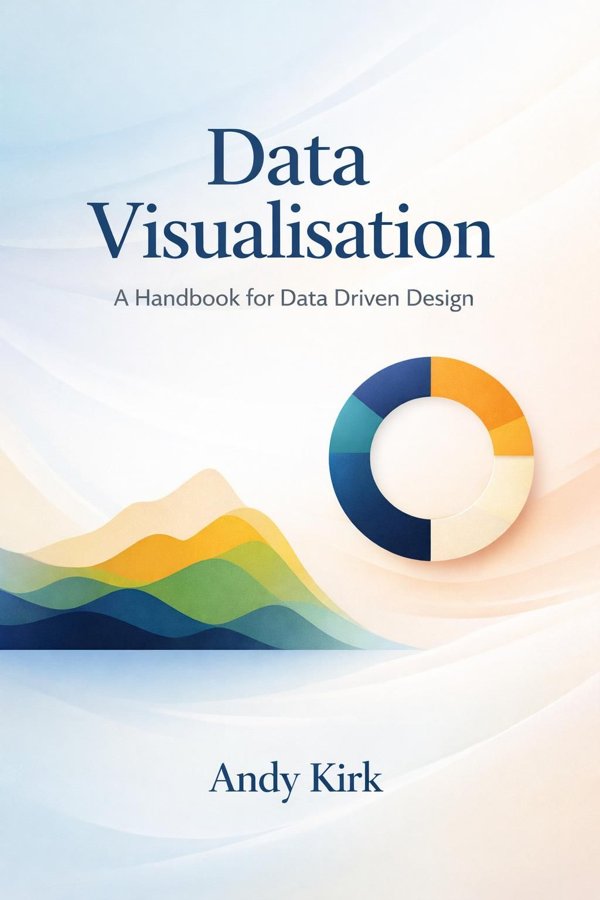
Data Visualisation: A Handbook for Data Driven Design: Summary & Key Insights
by Andy Kirk
 10 min8 chaptersAudio available
What Is Data Visualisation: A Handbook for Data Driven Design About?
Data Visualisation: A Handbook for Data Driven Design by Andy Kirk is a data_science book spanning 8 pages. Data Visualisation: A Handbook for Data Driven Design is a comprehensive guide to the principles, methods, and practical techniques of data visualization. Andy Kirk provides readers with a structured approach to designing effective and engaging visual representations of data, covering topics such as visual perception, chart selection, color theory, and storytelling with data. The book combines theoretical foundations with real-world examples and case studies, making it a valuable resource for both beginners and experienced practitioners in data visualization and communication.
This FizzRead summary covers all 8 key chapters of Data Visualisation: A Handbook for Data Driven Design in approximately 10 minutes, distilling the most important ideas, arguments, and takeaways from Andy Kirk's work. Also available as an audio summary and Key Quotes Podcast.
Data Visualisation: A Handbook for Data Driven Design
Data Visualisation: A Handbook for Data Driven Design is a comprehensive guide to the principles, methods, and practical techniques of data visualization. Andy Kirk provides readers with a structured approach to designing effective and engaging visual representations of data, covering topics such as visual perception, chart selection, color theory, and storytelling with data. The book combines theoretical foundations with real-world examples and case studies, making it a valuable resource for both beginners and experienced practitioners in data visualization and communication.
Who Should Read Data Visualisation: A Handbook for Data Driven Design?
This book is perfect for anyone interested in data_science and looking to gain actionable insights in a short read. Whether you're a student, professional, or lifelong learner, the key ideas from Data Visualisation: A Handbook for Data Driven Design by Andy Kirk will help you think differently.
- ✓Readers who enjoy data_science and want practical takeaways
- ✓Professionals looking to apply new ideas to their work and life
- ✓Anyone who wants the core insights of Data Visualisation: A Handbook for Data Driven Design in just 10 minutes
Want the full summary?
Get instant access to this book summary and 100K+ more with Fizz Moment.
Get Free SummaryAvailable on App Store • Free to download
Key Chapters
Every effective visualization begins with clarity—not of data, but of intent. The first question I always ask is, 'Why am I visualizing this data?' Without purpose, design becomes decoration. Purpose defines every subsequent choice: the choice of chart, the level of detail, the degree of interactivity.
Purpose is always shaped by context. Context includes where the visualization will appear (a printed report, a dashboard, a public website), who will view it, what they already know, and what they need to understand. A chart designed for executives may emphasize summary and clarity, while the same data for an analyst might be most valuable when it reveals nuance and invites exploration.
And then there is audience. Data visualization is not made for data—it is made for people. Different audiences interpret visuals differently, depending on their literacy in reading charts, their familiarity with the subject matter, and even cultural conventions of color or reading direction. Recognizing audience diversity means designing with empathy: choosing encodings that align with how users perceive and think, minimizing unnecessary complexity, and offering cues that guide interpretation.
When I work with clients, I frequently use what I call the 'why–who–how' reflection. Why are we visualizing? Who needs it? How will it be used? This framing pushes design away from mere aesthetics into intentional communication. A visual that works perfectly in one setting can fail entirely in another when context shifts. Staying attuned to purpose, context, and audience ensures that data visualizations remain adaptive, communicative, and humane.
No amount of design expertise can compensate for poor data understanding. In the visualization process, preparing the data is often the most time-consuming step. Before a single chart is drawn, we must truly 'meet' the data—understand how it was collected, what it measures, what it omits, and how reliable it is.
Data literacy begins with curiosity. In my own work, I always ask: what questions does the data attempt to answer? Which assumptions are embedded within it? Cleaning and transforming data—removing errors, standardizing formats, handling missing values—is not glamorous, but it is the foundation of trustworthy visualization.
Equally important is understanding data types and relationships. Whether values are categorical, ordinal, or continuous directly determines which visual encodings make sense. For example, color hue is best for categorical comparisons, while position and length work better for quantitative data. Misalignment between data type and encoding is one of the most common causes of misleading visual communication.
This preparatory stage is not about perfection but about clarity. I encourage designers to keep a notebook of data observations: patterns that surprise, limitations that matter, stories that might emerge. By developing a close relationship with your data, you’re not merely a designer—you’re a translator of reality.
+ 6 more chapters — available in the FizzRead app
All Chapters in Data Visualisation: A Handbook for Data Driven Design
About the Author
Andy Kirk is a UK-based data visualization specialist, author, and educator. He is the founder of Visualising Data Ltd, through which he delivers training and consultancy services to organizations worldwide. Kirk is known for his expertise in transforming complex data into accessible and meaningful visual stories, and he has contributed extensively to the field through his writing, teaching, and public speaking.
Get This Summary in Your Preferred Format
Read or listen to the Data Visualisation: A Handbook for Data Driven Design summary by Andy Kirk anytime, anywhere. FizzRead offers multiple formats so you can learn on your terms — all free.
Available formats: App · Audio · PDF · EPUB — All included free with FizzRead
Download Data Visualisation: A Handbook for Data Driven Design PDF and EPUB Summary
Key Quotes from Data Visualisation: A Handbook for Data Driven Design
“Every effective visualization begins with clarity—not of data, but of intent.”
“No amount of design expertise can compensate for poor data understanding.”
Frequently Asked Questions about Data Visualisation: A Handbook for Data Driven Design
Data Visualisation: A Handbook for Data Driven Design by Andy Kirk is a data_science book that explores key ideas across 8 chapters. Data Visualisation: A Handbook for Data Driven Design is a comprehensive guide to the principles, methods, and practical techniques of data visualization. Andy Kirk provides readers with a structured approach to designing effective and engaging visual representations of data, covering topics such as visual perception, chart selection, color theory, and storytelling with data. The book combines theoretical foundations with real-world examples and case studies, making it a valuable resource for both beginners and experienced practitioners in data visualization and communication.
You Might Also Like
Data Science from Scratch: First Principles with Python
Joel Grus
10 min
Applied Predictive Modeling
Max Kuhn, Kjell Johnson
10 min
Better Data Visualizations: A Guide for Scholars, Researchers, and Wonks
Jonathan Schwabish
10 min
Big Data: A Revolution That Will Transform How We Live, Work, and Think
Viktor Mayer-Schönberger, Kenneth Cukier
10 min
Big Data: Principles and Best Practices of Scalable Real-Time Data Systems
Nathan Marz
10 min
Data Points: Visualization That Means Something
Nathan Yau
10 minBrowse by Category
Ready to read Data Visualisation: A Handbook for Data Driven Design?
Get the full summary and 100K+ more books with Fizz Moment.