
Think and Grow Rich vs The Richest Man in Babylon: Which Should You Read?
A detailed comparison of Think and Grow Rich by Napoleon Hill and The Richest Man in Babylon by George Clason. Discover the key differences, strengths, and which book is right for you.
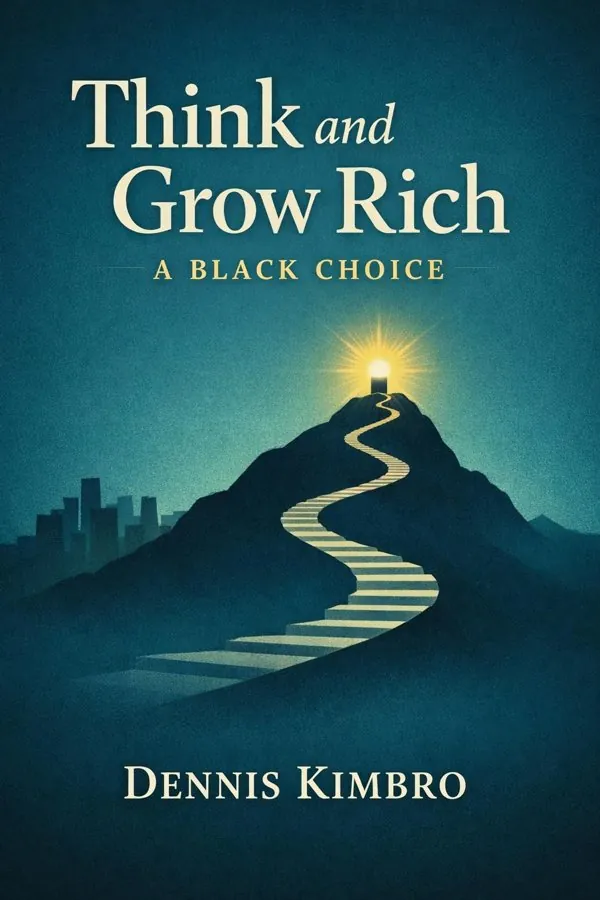
Think and Grow Rich
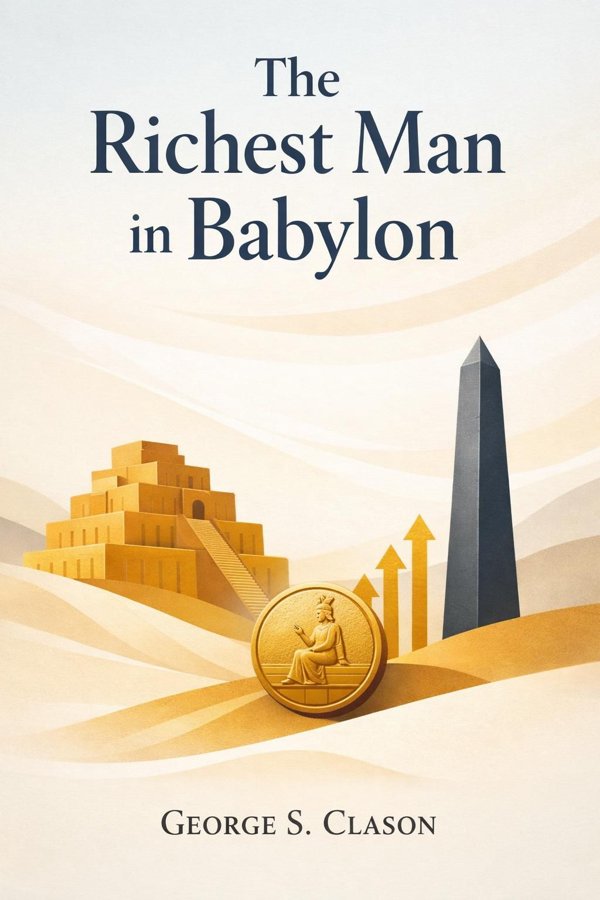
The Richest Man in Babylon
In-Depth Analysis
At first glance, Think and Grow Rich and The Richest Man in Babylon seem to occupy the same shelf: both are classic-seeming finance books that promise wealth through timeless principles rather than technical complexity. But in practice, they operate on different levels of the wealth-building journey. Think and Grow Rich, especially in the adaptation described here, is fundamentally a psychology-of-success book with financial implications. The Richest Man in Babylon is a behavior-of-money book with moral overtones. One tries to change the person; the other tries to change the person’s habits.
The most important difference is where each book locates the origin of wealth. Think and Grow Rich begins internally. Its chapters on “The Power of Thought,” “Defining Desire and Purpose,” and “Faith and Visualization” argue that achievement starts before action, in the construction of belief. This adaptation adds a crucial layer by placing those ideas in African American historical context. That changes the meaning of Hill’s philosophy. Desire is not presented merely as wanting more money; it becomes a deliberate refusal to accept narratives of limitation. Persistence is not just entrepreneurial grit; it is framed against generations of structural adversity. In other words, the book’s wealth philosophy is inseparable from dignity, identity, and historical consciousness.
By contrast, The Richest Man in Babylon begins externally, with cash flow and conduct. Arkad, the central success figure, does not become wealthy because he visualizes abundance more intensely than others. He becomes wealthy because he learns specific rules: keep a portion of earnings, control expenditures, make savings multiply, and seek advice from people who understand money. The famous principle “Start Thy Purse to Fattening,” usually summarized as saving at least 10 percent of income, is quintessential Clason. It is plain, measurable, and portable. You can follow it whether you are inspired or not.
This leads to a second major contrast: abstraction versus concreteness. Think and Grow Rich offers high-level success architecture. “Desire” must become specific. “Faith” must be practiced until it shapes conduct. “Persistence” must outlast discouragement. These are important ideas, but they require interpretation. A reader may finish a chapter energized but still unsure how to structure a bank account, manage debt, or assess an investment. The Richest Man in Babylon rarely has that problem. The “Seven Cures for a Lean Purse” are essentially a compact personal finance system: save first, budget intelligently, put money to work, protect capital, improve earning ability. Even “Meet the Goddess of Good Luck,” though allegorical, lands on a practical point: opportunity favors timely action, not passive wishing.
Another difference lies in emotional function. Think and Grow Rich is built to ignite. Its language is aspirational, repetitive, and emotionally charged because repetition is part of its method. The reader is supposed to internalize a new mental climate. In this adaptation, that emotional force is intensified by examples of Black achievement under pressure, making the text feel like both a success manual and a corrective to exclusionary narratives about who gets to imagine wealth. For readers who need encouragement after repeated setbacks, this can be more powerful than any spreadsheet.
The Richest Man in Babylon, on the other hand, calms and instructs. Its emotional appeal comes from clarity and order. Someone anxious about money may find relief in the book’s parables because they reduce complexity to memorable laws. Clason’s “Five Laws of Gold” are especially effective in this way. They warn that money grows for the careful owner but flees from speculation and ignorance. This is not thrilling advice, but it is stabilizing. It shifts the reader from fantasy to stewardship.
In terms of literary form, the books also teach differently. Think and Grow Rich uses principle-driven exposition, building a worldview chapter by chapter. The adaptation’s emphasis on historical context likely gives those principles greater narrative grounding than some generic self-help books provide. The Richest Man in Babylon uses story as a delivery system. Arkad, the debt-burdened characters, and the would-be lucky all embody financial mistakes and corrections. That makes Clason’s lessons easier to remember in daily life. Readers often forget abstract motivational language but remember a parable about a man who earns well and still stays poor because his purse leaks.
Neither book is scientifically rigorous by modern standards, but they differ in how vulnerable they are to skepticism. Think and Grow Rich can invite criticism because ideas like visualization and faith are hard to verify and can sound like they overstate the power of mindset. Yet even skeptical readers may find value if they interpret these concepts behaviorally: clear goals improve focus, belief increases persistence, and identity shapes decision-making. The Richest Man in Babylon is easier to defend because its principles overlap with standard financial advice. Save consistently, spend less than you earn, avoid investments you do not understand, and seek expertise before risking capital. These are not mystical claims; they are durable patterns.
So which book is better depends on the reader’s bottleneck. If the problem is discouragement, diffuse ambition, or an inability to sustain effort in the face of adversity, Think and Grow Rich may be the more transformative book. It helps readers create the internal conditions for long-term striving. If the problem is disordered financial behavior, chronic overspending, or confusion about the basics of wealth accumulation, The Richest Man in Babylon is superior. It gives direct rules that can be implemented immediately.
Ultimately, the books are most complementary when read together. Think and Grow Rich can supply the emotional engine; The Richest Man in Babylon can provide the steering system. One teaches why you must believe wealth is possible and worth pursuing. The other teaches what to do with money once that belief is activated. In that sense, they do not merely compete. They complete each other.
Side-by-Side Comparison
| Aspect | Think and Grow Rich | The Richest Man in Babylon |
|---|---|---|
| Core Philosophy | Think and Grow Rich argues that wealth begins with inner transformation: desire, faith, visualization, and persistence create the mindset that makes achievement possible. In this adaptation, that philosophy is grounded in African American historical struggle, making success a moral and psychological act of self-definition as well as a financial one. | The Richest Man in Babylon teaches that wealth is built through disciplined financial habits such as saving, budgeting, and prudent investing. Its core claim is less about mental reprogramming and more about timeless money management rules that apply across eras. |
| Writing Style | Book 1 is motivational, direct, and inspirational, using success principles in a reflective, affirming tone. Its language aims to strengthen conviction and agency, often framing wealth-building as a battle against limiting beliefs and structural adversity. | Book 2 uses parables and pseudo-ancient dialogue, turning financial advice into memorable moral tales. Its stylized storytelling can feel old-fashioned, but that same simplicity helps its lessons stick. |
| Practical Application | Its practical value comes through translating abstract principles into self-discipline, purpose-setting, and resilience in adverse circumstances. However, many of its applications are indirect: it tells readers how to think and persist more than exactly how to allocate money. | Its advice is immediately concrete: save a tenth, control spending, avoid reckless speculation, and seek counsel from people who understand money. Readers can turn its chapters into a budget and savings plan almost immediately. |
| Target Audience | This version especially speaks to readers who want wealth advice connected to identity, historical reality, and psychological empowerment. It is particularly resonant for readers who need motivation that acknowledges barriers rather than pretending everyone starts from the same place. | Book 2 suits broad personal-finance readers, especially beginners who want foundational rules without jargon. It is ideal for people looking for universal money habits rather than culture-specific or deeply psychological framing. |
| Scientific Rigor | Its claims are largely philosophical and anecdotal rather than research-driven. Concepts like visualization and faith may be powerful for many readers, but the book does not build its case through modern behavioral finance or empirical evidence. | Book 2 is also not scientifically rigorous in a formal sense, but its recommendations align more closely with broadly accepted financial fundamentals like saving regularly, living below your means, and investing cautiously. Its folk wisdom often maps better onto practical economic behavior. |
| Emotional Impact | Book 1 tends to have the stronger emotional charge because it links ambition to dignity, historical perseverance, and personal belief. The sections on thought, faith, and overcoming adversity can feel empowering beyond the financial domain. | Book 2 is emotionally lighter and more detached, aiming for clarity and moral instruction rather than deep inspiration. Its emotional appeal comes from the elegance of its lessons and the satisfaction of seeing order brought to financial chaos. |
| Actionability | The book gives actionable habits around clarifying purpose, repeating goals, sustaining belief, and refusing to quit when progress is slow. Still, readers may need another resource for detailed mechanics like debt payoff, investing vehicles, or cash-flow systems. | Its action steps are among the clearest in classic finance writing: keep part of what you earn, cap unnecessary expenses, make savings earn more, and avoid investments you do not understand. It functions almost like a minimalist rulebook for financial stability. |
| Depth of Analysis | Book 1 reaches deeper into the psychology of ambition, examining how internal belief interacts with social obstacles and inherited narratives. Its strongest analytical depth lies in motivation, identity, and persistence rather than technical finance. | Book 2 is narrower but sharper: it analyzes recurring financial mistakes such as lifestyle inflation, passivity, and greed. Its depth is practical rather than psychological, focusing on what causes lean purses and how to cure them. |
| Readability | Its modern motivational framing makes it accessible to readers familiar with self-help language. Because some ideas are abstract and repetitive by design, readers seeking straightforward financial instruction may find it less immediately digestible. | The episodic parable structure makes it easy to read in short sections, and its key phrases are highly memorable. Some readers may need time to adjust to the archaic tone, but the concepts themselves are simple and clear. |
| Long-term Value | Its long-term value lies in repeated rereading during periods of doubt, transition, or discouragement, when readers need to renew purpose and persistence. It can serve as a mindset manual for sustained ambition. | Its long-term value lies in its durable financial rules, which remain useful at nearly every income level. Many readers return to it as a behavioral reset whenever spending, saving, or investing habits drift. |
Key Differences
Mindset Engine vs Money Rulebook
Think and Grow Rich is primarily concerned with the mental conditions of success: desire, faith, visualization, and persistence. The Richest Man in Babylon is primarily concerned with behavioral rules, such as paying yourself first and making savings grow through prudent investment.
Historical Identity Framing vs Universal Parable Framing
This adaptation of Think and Grow Rich roots its message in African American history, making wealth-building inseparable from social reality and inherited obstacles. Clason’s book avoids social specificity and instead presents universal archetypes like the saver, borrower, and speculator through Babylonian parables.
Emotional Motivation vs Financial Discipline
Hill’s book tries to stir conviction and persistence, especially when progress is slow or barriers are real. Clason’s book tries to establish discipline, as seen in lessons like limiting expenditures and seeking wise counsel before investing.
Abstract Principles vs Concrete Habits
Ideas like faith and visualization in Think and Grow Rich require personal interpretation and translation into action. In The Richest Man in Babylon, advice such as saving one-tenth of earnings or avoiding investments outside your competence is already operationalized.
Adversity as Central Theme vs Mismanagement as Central Theme
A major theme in Think and Grow Rich is succeeding despite adversity, with persistence framed as a response to systemic and personal obstacles. In The Richest Man in Babylon, the central enemy is usually not oppression or discouragement but poor financial behavior: overspending, inaction, debt, and greed.
Transformational Reading vs Reset Reading
Think and Grow Rich is often read when someone wants a larger shift in self-concept and ambition. The Richest Man in Babylon is often read as a reset when someone’s spending or saving habits have drifted and they need a simple system again.
Success Narrative Breadth vs Financial Focus
Think and Grow Rich extends beyond money into confidence, identity, leadership, and long-term achievement. The Richest Man in Babylon stays more tightly focused on earning, saving, lending, and investing, which makes it narrower but often more practical.
Who Should Read Which?
The overwhelmed financial beginner
→ The Richest Man in Babylon
This reader needs fewer abstractions and more usable rules. Clason’s simple principles like paying yourself first and controlling expenditures provide a clear entry point into personal finance without requiring prior knowledge.
The ambitious reader facing discouragement or systemic barriers
→ Think and Grow Rich
This reader may already know basic money advice but struggle with belief, persistence, or a sense of possibility. The book’s emphasis on thought, purpose, faith, and adversity makes it particularly effective as a motivational framework.
The reader who wants both self-development and financial stability
→ The Richest Man in Babylon
Although both books could help, this reader benefits most from starting with a stable financial base. Once Clason’s habits are in place, Think and Grow Rich can deepen motivation and expand the reader’s sense of long-term purpose.
Which Should You Read First?
For most readers, The Richest Man in Babylon should come first. Its lessons are concrete, foundational, and easy to act on immediately: save part of every paycheck, control expenses, avoid risky schemes, and get advice from knowledgeable people. That gives you a working financial structure before you move into broader questions of motivation and identity. If you start with Think and Grow Rich, you may feel inspired, but you may still lack a clear system for handling money. That said, there is one major exception. If you are blocked by discouragement, low confidence, repeated setbacks, or the feeling that success is psychologically out of reach, begin with Think and Grow Rich. This adaptation’s emphasis on historical context, self-belief, and persistence can help readers build the internal readiness to actually follow financial rules. The strongest sequence for most people is: read Babylon first for habits, then Think and Grow Rich for endurance. One establishes discipline; the other helps you sustain it when life becomes difficult.
Want the full summary?
Get instant access to this book summary and 100K+ more with Fizz Moment.
Get Free SummaryAvailable on App Store • Free to download
Frequently Asked Questions
Is Think and Grow Rich better than The Richest Man in Babylon for beginners?
For most pure finance beginners, The Richest Man in Babylon is the easier starting point because its advice is concrete and immediately usable. Clason gives simple rules like saving 10 percent, controlling expenses, and avoiding investments you do not understand. Think and Grow Rich is better for beginners who struggle more with motivation, confidence, or clarity of purpose than with money mechanics. If you are asking, "Is Think and Grow Rich better than The Richest Man in Babylon for beginners?" the answer is usually no for budgeting and saving basics, but yes for readers who first need to develop belief, ambition, and persistence.
Which book is more practical for building wealth: Think and Grow Rich or The Richest Man in Babylon?
The Richest Man in Babylon is more practical in the narrow sense of day-to-day wealth building. Its lessons can be turned into concrete behaviors immediately: automate savings, limit spending, protect principal, and pursue sensible returns. Think and Grow Rich is practical in a different way: it helps readers define a goal, sustain effort, and keep going through setbacks. If you want a direct answer to "Which book is more practical for building wealth: Think and Grow Rich or The Richest Man in Babylon?" Clason’s book wins on financial procedures, while Hill’s wins on psychological preparation and long-term drive.
Is The Richest Man in Babylon still worth reading if I have already read modern personal finance books?
Yes, because its value lies less in novelty than in compression. Many modern money books expand on ideas Clason already expressed in parable form: pay yourself first, avoid lifestyle creep, seek expert advice, and make money earn more money. The Richest Man in Babylon is especially useful as a behavioral refresher when you know what to do but are not doing it consistently. Even if you have read newer books with more detail on index funds, debt snowballs, or retirement accounts, Clason’s framework remains relevant because human tendencies toward impulse, greed, and passivity have not changed much.
What makes this adaptation of Think and Grow Rich different from the original finance self-help framing?
This adaptation stands out by placing success principles inside African American historical and social realities. That means ideas like desire, faith, and persistence are not treated as abstract universal slogans detached from history. Instead, they are shown as tools for self-definition and advancement under conditions shaped by slavery, segregation, exclusion, and unequal opportunity. This gives the book a richer emotional and ethical dimension than a generic success manual. Readers who want a finance-adjacent self-help book that acknowledges context, identity, and structural barriers may find this version more resonant and credible.
Should I read Think and Grow Rich or The Richest Man in Babylon first if I want both mindset and money habits?
If your main obstacle is inconsistency with money, read The Richest Man in Babylon first. Its rules create immediate structure: save first, budget better, and become cautious with investments. If your main obstacle is discouragement, low confidence, or a lack of purpose, start with Think and Grow Rich because it can create the internal momentum needed to stick with any financial plan. For readers who want both mindset and money habits, the ideal sequence is often Clason first for behavioral foundations, then Hill for ambition, resilience, and long-term self-direction.
Which book has aged better: Think and Grow Rich or The Richest Man in Babylon?
In a strict personal-finance sense, The Richest Man in Babylon has arguably aged better because its core lessons still align with modern financial common sense. Saving a portion of income, controlling expenses, and avoiding reckless speculation remain universally sound. Think and Grow Rich has also endured, but more as a motivational and entrepreneurial classic than as a finance manual. Some readers today are more skeptical of its stronger claims about thought and visualization. Still, its emphasis on purpose, belief, and persistence remains useful, especially when read as a psychology-of-achievement text rather than a literal formula.
The Verdict
If you want one book to improve your money behavior immediately, choose The Richest Man in Babylon. It is the cleaner finance book: its principles are concrete, memorable, and easy to implement. Saving 10 percent of your income, controlling expenditures, protecting capital, and avoiding speculation are habits that remain valid across generations. For readers who need a practical foundation, Clason offers more direct value per page. Choose Think and Grow Rich if your deeper problem is not knowledge but mindset. This adaptation is especially compelling because it ties ambition and wealth creation to African American historical experience, turning personal success into an act of resilience and self-assertion. Its strongest contribution is not technical financial instruction but the cultivation of belief, purpose, and persistence under pressure. It is the better book for readers who need motivation, emotional reinforcement, and a broader vision of what success means. The best recommendation, however, is not either-or. Read The Richest Man in Babylon for the financial rules and Think and Grow Rich for the internal fuel to follow them. Clason teaches how not to mishandle money; Hill teaches how not to abandon your goals. If forced to pick just one, beginners should usually start with Babylon. But readers facing discouragement, identity-based barriers, or repeated adversity may find Think and Grow Rich more transformative on a personal level.
Related Comparisons
Want to read both books?
Get AI-powered summaries of both Think and Grow Rich and The Richest Man in Babylon in just 20 minutes total.