
The 5 Love Languages vs Men Are from Mars, Women Are from Venus: Which Should You Read?
A detailed comparison of The 5 Love Languages by Gary Chapman and Men Are from Mars, Women Are from Venus by John Gray. Discover the key differences, strengths, and which book is right for you.

The 5 Love Languages
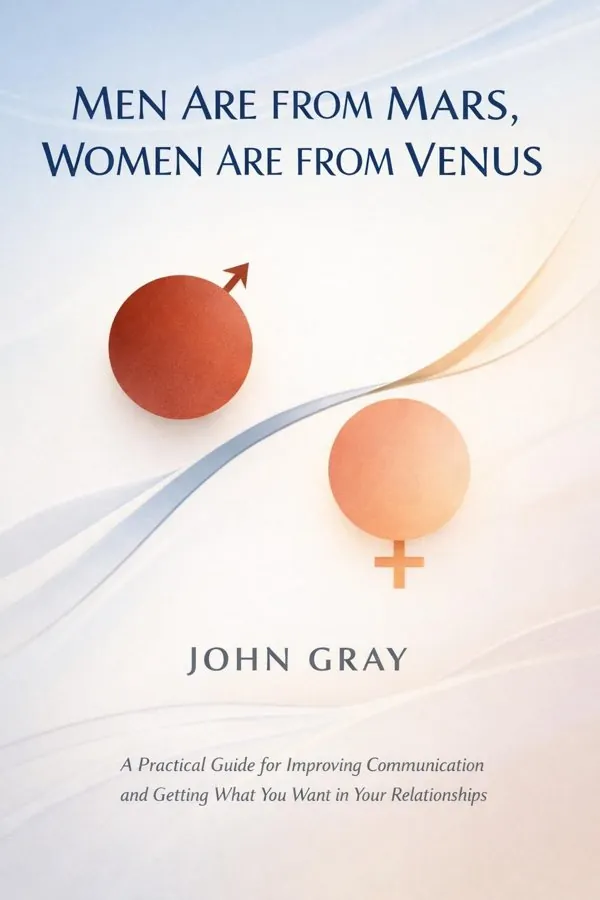
Men Are from Mars, Women Are from Venus
In-Depth Analysis
Gary Chapman’s The 5 Love Languages and John Gray’s Men Are from Mars, Women Are from Venus became relationship bestsellers for a similar reason: both promise to explain why sincere love so often fails to feel like love. Each book offers a decoding system for romantic misunderstanding. But they diagnose the problem differently. Chapman says couples suffer because they express affection in mismatched forms; Gray says they suffer because men and women often interpret emotion, stress, and support through different relational logics. The result is that Chapman gives readers a compact behavioral framework, while Gray offers a broader, more theatrical map of recurring conflict patterns.
Chapman’s key strength is precision. His central metaphor of the “emotional love tank” is simple but effective: when people feel loved in the way that matters to them, they become more secure, patient, and generous. From there, he identifies five recurring channels of emotional meaning: words of affirmation, quality time, receiving gifts, acts of service, and physical touch. The power of this model lies in its practical clarity. A partner may believe, for example, that working long hours, fixing household problems, and taking on chores obviously demonstrate devotion. But if the other partner’s primary language is quality time, those acts may register as responsibility rather than intimacy. Chapman’s insight is that intent and impact often diverge because the message is encoded in the wrong form.
Gray, by contrast, is less interested in categorizing how love is received than in explaining why interaction itself so often goes wrong. His most famous distinction is between male problem-solving and female desire for empathic listening. In his framework, a woman describing a difficult day may not be asking for advice at all; she may be asking for emotional companionship. A man who responds with immediate solutions may think he is being loving, while she experiences him as dismissive. Conversely, when a man withdraws under pressure into what Gray calls the “cave,” he may see that retreat as a natural stress-management process, while his partner interprets it as indifference or rejection. Gray’s gift is pattern recognition: he dramatizes misunderstandings couples recognize instantly.
The books therefore differ in what level of relationship life they illuminate. The 5 Love Languages is strongest at the level of ongoing maintenance. It helps with questions like: Why does my partner say I never show love when I am constantly doing things for them? Why do flowers matter so much? Why does multitasking during conversation feel hurtful to one person but normal to the other? Chapman offers a framework that can be applied almost immediately and repeatedly. If your spouse lights up when you write a note of appreciation, that is actionable information. If your partner keeps complaining that you are never really present, Chapman would say the complaint itself may reveal a need for quality time.
Men Are from Mars, Women Are from Venus is stronger at the level of conflict choreography. It gives language to common escalations: one partner pursues conversation, the other retreats; one wants validation, the other offers fixes; both become convinced they are being generous while feeling unseen. Gray is especially effective on timing and tone. He argues that many arguments are not just about content but about when a request is made and how it is phrased. A badly timed emotional conversation or a criticism delivered in a sharp tone can trigger defensiveness before the underlying issue is even heard. In this sense, Gray often feels more dynamic than Chapman: he describes relationship motion rather than just emotional preference.
That said, both books simplify, and they simplify in different ways. Chapman’s five-language model can become too tidy. Many people feel loved through several channels depending on context; someone may crave physical touch during stress, words of affirmation during self-doubt, and acts of service during overload. The model is useful as a heuristic, not as a full psychology of intimacy. Gray’s simplification is more controversial because it is rooted in broad gender generalizations. His Mars/Venus metaphor helps many heterosexual couples feel seen, but it can also flatten individuality, reinforce stereotypes, and age poorly in a cultural moment more alert to personality variation, attachment patterns, and social conditioning.
In terms of emotional effect, Chapman tends to reduce blame. Readers often feel immediate relief at the idea that their partner has not been loveless, only untranslated. Gray can also reduce blame, but in a more dramatic way: he reframes repetitive conflict as an almost predictable clash of differing emotional systems. For some readers this is liberating; for others it feels constraining. A woman may think, “Yes, I do want to be heard before I want solutions,” while a man may think, “Yes, I do pull away when stressed.” But just as often, readers may resist the implication that these are inherently gendered traits rather than learned or individual patterns.
For beginners, Chapman is usually the more reliable entry point because his advice is easier to test. Speak your partner’s preferred language for two weeks and observe what changes. Gray requires more interpretation: one has to decide which gendered patterns genuinely fit and which should be discarded. Yet Gray may be more illuminating for couples whose main problem is not feeling unloved in the abstract but getting trapped in recurring arguments about closeness, stress, and communication style.
Ultimately, these books are best understood as solving different parts of the same puzzle. The 5 Love Languages explains why love can be present yet misdelivered. Men Are from Mars, Women Are from Venus explains why conversations about love can become mismanaged. Chapman helps couples change what they do; Gray helps them reinterpret what happens when they collide. If read critically, each remains useful. If read rigidly, each can become reductive. Their enduring popularity comes from a real truth both capture: relationships often fail not from absence of care, but from patterned misunderstanding.
Side-by-Side Comparison
| Aspect | The 5 Love Languages | Men Are from Mars, Women Are from Venus |
|---|---|---|
| Core Philosophy | The 5 Love Languages argues that relationship dissatisfaction often comes from mismatched modes of giving and receiving love. Chapman’s core claim is that people feel loved most clearly through one or two primary channels, such as words of affirmation, quality time, gifts, acts of service, or physical touch. | Men Are from Mars, Women Are from Venus frames romantic conflict as a result of broad differences in male and female emotional tendencies. Gray’s central metaphor suggests that men and women often misread each other because they process stress, support, and communication in fundamentally different ways. |
| Writing Style | Chapman writes in a pastoral, straightforward, and highly structured style. Each love language is clearly defined, illustrated with counseling anecdotes, and followed by practical suggestions that make the book easy to navigate. | Gray uses a more theatrical and conversational style built around memorable metaphors like the cave, the rubber band, and the scorekeeping dynamic. His tone is energetic and accessible, but also more sweeping and generalized than Chapman’s. |
| Practical Application | The book is built for immediate use: readers are encouraged to identify their own primary love language, observe their partner’s complaints, and adjust behavior accordingly. For example, a spouse who values quality time may respond more positively to undivided attention than to expensive gifts. | Gray’s advice is practical in a different way, focusing on interaction patterns rather than preference categories. He offers concrete strategies such as not pushing a withdrawing partner too aggressively, validating feelings before offering solutions, and paying attention to tone and timing during conflict. |
| Target Audience | The 5 Love Languages works well for couples who want a simple framework without heavy theory. It is also useful for readers new to relationship books because its categories are intuitive and easy to remember. | Men Are from Mars, Women Are from Venus is aimed especially at heterosexual couples trying to decode recurring misunderstandings around communication and stress. Readers interested in gender-based relational patterns are more likely to connect with its framework. |
| Scientific Rigor | Chapman’s model is based largely on pastoral counseling experience rather than rigorous psychological research. The framework is compelling and sticky, but it simplifies human attachment and personality into five broad categories. | Gray’s claims are also not strongly grounded in contemporary empirical science and are often criticized for relying on gender stereotypes. Its memorable insights can feel true at the anecdotal level, but many readers will find the book less defensible as a research-based guide. |
| Emotional Impact | Many readers find Chapman’s book relieving because it replaces moral blame with the idea of crossed emotional signals. Realizing that a partner’s acts of service may be sincere love rather than emotional distance can feel transformative. | Gray’s book often lands powerfully when readers recognize familiar conflict scenes, especially around problem-solving versus empathy. Its emotional effect comes from making recurring arguments feel less personal and more patterned, though some readers may feel boxed in by its gender assumptions. |
| Actionability | Its action steps are unusually clear: learn your partner’s language and speak it consistently. A husband can shift from generic affection to regular verbal appreciation if words of affirmation are what his spouse actually hears as love. | Gray gives actionable scripts for stressful moments, such as allowing space when a partner retreats or responding with validation instead of immediate fixes. The advice can be highly usable in live conversations, though it requires more situational judgment than Chapman’s typology. |
| Depth of Analysis | Chapman goes deep on one central lens rather than offering a broad theory of relationship dynamics. That narrow focus is a strength for clarity, but it means the book says less about power, attachment wounds, conflict escalation, or social conditioning. | Gray covers a wider range of recurring relational scenarios, including emotional distance, resentment, support, timing, and stress responses. However, the broader scope sometimes comes at the expense of nuance, especially when individual differences are folded into male-female binaries. |
| Readability | The 5 Love Languages is highly readable because its structure is repetitive in a useful way and each chapter reinforces a single memorable concept. Readers can finish it quickly and still retain the main framework. | Men Are from Mars, Women Are from Venus is also very readable, but its metaphor-heavy style can feel more dated. Still, many readers remember the cave and empathy-versus-solutions distinction long after finishing the book. |
| Long-term Value | Chapman’s framework has strong long-term value as a diagnostic shorthand couples can revisit during transitions like parenting, work stress, or emotional drift. Even critics often admit that the love-language vocabulary remains useful in everyday check-ins. | Gray’s book has enduring value when used as a prompt for noticing communication habits rather than as a literal map of men and women. Its long-term usefulness depends heavily on whether readers can extract the relational patterns without overcommitting to the gender essentialism. |
Key Differences
Preference Model vs Gender Model
Chapman organizes relationship problems around individual preferences in giving and receiving love. Gray organizes them around broad male-female patterns, such as men withdrawing under stress and women seeking connection through conversation.
Behavioral Simplicity vs Interactional Complexity
The 5 Love Languages offers a simpler intervention: identify the language and speak it more often. Men Are from Mars, Women Are from Venus addresses more moving parts, including stress cycles, timing, emotional validation, and conflict escalation.
Affection Delivery vs Conflict Interpretation
Chapman focuses on how affection gets communicated and misread—for example, gifts versus quality time. Gray focuses more on what happens during emotionally charged exchanges, such as when one partner wants empathy and the other offers advice.
Universality of Framework
Chapman’s ideas are easier to adapt across many kinds of couples because they are not inherently tied to one gender script. Gray’s framework is most legible for readers willing to engage a heterosexual, binary model of difference.
Counseling Tone vs Pop-Psych Metaphor
Chapman writes like a counselor or pastor, calmly moving through categories and examples. Gray leans on memorable pop-psych imagery like caves and planets, which makes the book vivid but also more prone to feeling dated.
Diagnostic Usefulness
Chapman is often better for diagnosing why a partner feels unappreciated despite visible effort. Gray is often better for diagnosing why the same arguments keep repeating even when both people claim to be trying.
Risk of Oversimplification
The 5 Love Languages can reduce complex emotional life to a small set of preferences, which may miss context and personality nuance. Men Are from Mars, Women Are from Venus risks an even larger simplification by treating many individual differences as gendered patterns.
Who Should Read Which?
A couple that feels loving but chronically unappreciated
→ The 5 Love Languages
This reader is likely struggling less with hostility than with mismatch. Chapman is ideal because it helps each partner identify which behaviors actually register as care, such as quality time instead of gifts or words of affirmation instead of acts of service.
A heterosexual couple stuck in repetitive communication fights
→ Men Are from Mars, Women Are from Venus
Gray is stronger on recurring tension patterns like emotional pursuit, withdrawal, unsolicited advice, and feeling unheard. Readers who repeatedly say, "That is exactly our argument," often respond well to his conflict scripts and stress-response framework.
A skeptical self-help reader who wants one practical concept
→ The 5 Love Languages
Chapman’s book asks for less theoretical buy-in and offers one memorable tool that can be tested immediately. Even if the reader rejects parts of the model, the central insight about differing expressions of care usually remains useful.
Which Should You Read First?
Read The 5 Love Languages first, then Men Are from Mars, Women Are from Venus. Chapman provides the cleaner foundation because his framework is easier to test in daily life. You can quickly ask: What does my partner actually count as love? Do they want verbal appreciation, focused time, practical help, touch, or symbolic gifts? That question immediately improves observation and reduces defensive guesswork. Once you have that baseline, Gray becomes more useful. His book helps explain why, even after good intentions are present, emotionally charged conversations can still go wrong. The empathy-versus-solutions distinction, the stress-withdrawal “cave,” and his attention to tone and timing make more sense after you already understand that love can be sincerely felt yet poorly translated. This order also protects against Gray’s biggest weakness. Reading Chapman first grounds you in individual difference before you encounter Gray’s broad gender claims. That makes it easier to take what is perceptive in Mars/Venus without overgeneralizing. In short: start with Chapman for a usable core tool, then read Gray for conflict dynamics and communication patterns.
Want the full summary?
Get instant access to this book summary and 100K+ more with Fizz Moment.
Get Free SummaryAvailable on App Store • Free to download
Frequently Asked Questions
Is The 5 Love Languages better than Men Are from Mars, Women Are from Venus for beginners?
For most beginners, The 5 Love Languages is the easier starting point. Its framework is compact, concrete, and immediately testable: identify what makes your partner feel most loved, then do more of that. Men Are from Mars, Women Are from Venus can also be accessible, but it asks readers to buy into broader claims about male and female behavior before applying the advice. If you are new to relationship books and want a practical tool without much theory, Chapman is usually more beginner-friendly. If your main issue is recurring communication conflict rather than uncertainty about how to show affection, Gray may feel more relevant despite being more interpretive.
Which book is more useful for communication problems in marriage: The 5 Love Languages or Men Are from Mars, Women Are from Venus?
If the problem is that partners keep missing each other emotionally, The 5 Love Languages is very useful because it clarifies how affection is best received. But if the problem is conversation breakdowns during stress, conflict, or emotional disclosure, Men Are from Mars, Women Are from Venus often speaks more directly to that. Gray focuses on dynamics like withdrawing versus pursuing, listening versus fixing, and the impact of timing and tone. In practice, couples who say, "We love each other but every serious talk goes badly," may get more immediate insight from Gray. Couples who say, "We rarely feel appreciated," may get more from Chapman.
Does Men Are from Mars, Women Are from Venus feel outdated compared with The 5 Love Languages?
Many contemporary readers do find Men Are from Mars, Women Are from Venus more dated because its central framework depends on broad gender distinctions that can feel stereotyped or exclusionary. The 5 Love Languages has also been criticized for oversimplification, but its basic idea is less tied to a specific cultural theory of men and women. Chapman’s model tends to travel more easily across different relationship styles because it focuses on preferences rather than gender essence. That said, Gray still resonates with readers who strongly recognize the empathy-versus-solutions pattern or the stress-withdrawal cycle in their own marriages.
Which is more practical for couples therapy homework: The 5 Love Languages or Men Are from Mars, Women Are from Venus?
The 5 Love Languages is usually easier to turn into therapy homework because it lends itself to direct behavioral experiments. A therapist can ask each partner to identify their primary language and then practice one specific behavior daily, such as verbal appreciation or intentional quality time. Men Are from Mars, Women Are from Venus is practical too, but in a more situational way. Its exercises are often about responding differently during moments of tension: listening without fixing, not pursuing during a withdrawal phase, or choosing better timing for emotionally loaded conversations. Chapman gives clearer weekly assignments; Gray gives better real-time interaction coaching.
Is The 5 Love Languages or Men Are from Mars, Women Are from Venus better for long-term relationships?
For long-term relationships, The 5 Love Languages often has stronger day-to-day staying power because couples can keep revisiting the same shared vocabulary over years of changing circumstances. A partner might need more acts of service during a stressful parenting season and more quality time once life calms down. Men Are from Mars, Women Are from Venus can also be helpful over the long term, especially when a couple repeatedly encounters the same stress-response patterns. However, its usefulness depends on reading it flexibly rather than treating every conflict as a fixed male-female script. Chapman tends to age better as an ongoing maintenance tool.
Which book should men read first if they want to understand their partner better?
If a male reader wants a quick, practical way to improve his relationship, The 5 Love Languages is usually the best first read because it makes one core question unavoidable: what actually makes my partner feel loved? It can quickly redirect effort away from assumptions and toward observable impact. If he already senses that the biggest issue is not affection but miscommunication during emotionally charged moments, Men Are from Mars, Women Are from Venus may feel more eye-opening. Gray is particularly useful for men who default to solving problems when their partner is really seeking empathy and presence.
The Verdict
If you have to choose only one, The 5 Love Languages is the safer and more durable recommendation for most readers. Its framework is narrower, but that is part of its strength: it gives couples a shared vocabulary for understanding why genuine care does not always land as care. The categories are memorable, the examples are concrete, and the advice is easy to apply without buying into a large theory about gender. Even readers who dislike self-help books often find Chapman’s central insight useful in daily life. Men Are from Mars, Women Are from Venus is more ambitious and, in some ways, more dramatically insightful about relationship conflict. Gray is often better at describing what happens during misunderstandings: the pursuer-distancer rhythm, the clash between validation and problem-solving, and the role of timing and tone. If a couple keeps having the same emotionally loaded arguments, his book may feel uncannily recognizable. However, its biggest limitation is also obvious: it relies on generalized claims about men and women that many contemporary readers will find reductive. So the best recommendation is this: choose Chapman if you want a practical communication tool for expressing love more effectively. Choose Gray if you want a broader map of recurring heterosexual communication conflicts and can read gender claims critically. Read together, the books complement each other well—Chapman explains how love is missed, and Gray explains how conversations about love get derailed.
Want to read both books?
Get AI-powered summaries of both The 5 Love Languages and Men Are from Mars, Women Are from Venus in just 20 minutes total.