
Letters from a Stoic vs Beyond Good and Evil: Which Should You Read?
A detailed comparison of Letters from a Stoic by Seneca and Beyond Good and Evil by Friedrich Nietzsche. Discover the key differences, strengths, and which book is right for you.

Letters from a Stoic
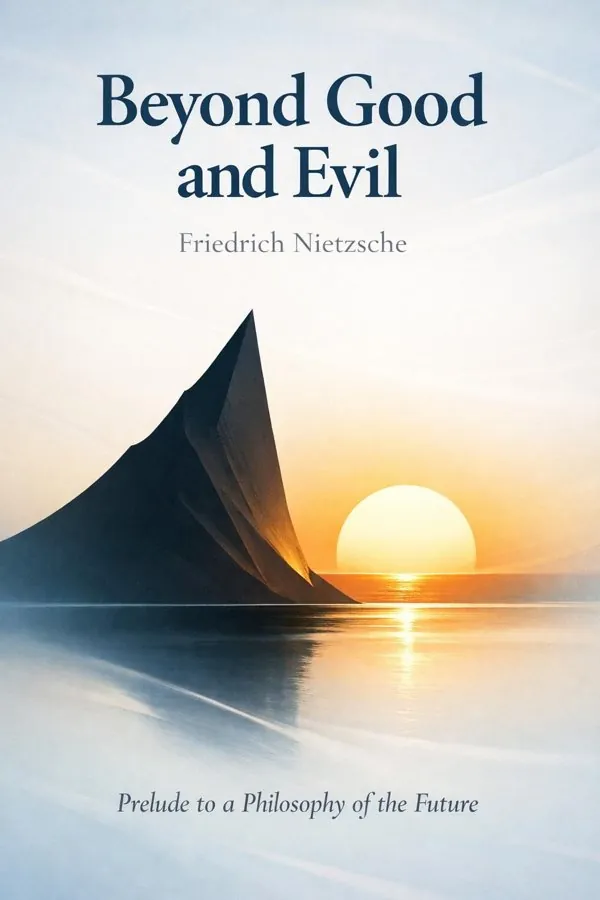
Beyond Good and Evil
In-Depth Analysis
Letters from a Stoic and Beyond Good and Evil are both books about freedom, but they imagine freedom in fundamentally different ways. Seneca seeks freedom through self-command: the wise person becomes independent of fortune by learning to value only virtue. Nietzsche seeks freedom through revaluation: the higher type escapes not fortune but inherited moral language itself, especially moral binaries that flatten strength, creativity, and difference. Read together, the books illuminate two enduring possibilities in philosophy: ethics as disciplined inner mastery and philosophy as radical critique.
Seneca's Letters from a Stoic is anchored in the Stoic claim that externals are not genuine goods. Wealth, reputation, health, and comfort may be preferred, but they do not make a life good in the deepest sense. This perspective appears throughout the letters on time, adversity, and luxury. In the famous reflections on time, Seneca argues that people protect property more carefully than the days of their lives; the real scandal is not poverty but unconscious living. That argument is philosophical, but it is also practical: if time is life, then distraction, status anxiety, and social performance are forms of self-loss. Seneca's book repeatedly returns the reader to a single question: what is under your control, and what kind of person are you becoming?
Nietzsche's Beyond Good and Evil begins from suspicion toward exactly the kind of confidence that ancient and modern moral philosophers often display. In Part I, "On the Prejudices of Philosophers," he challenges the idea that philosophers are neutral truth-seekers. Their systems, he suggests, often rationalize temperaments, instincts, and cultural preferences. This is one of the deepest contrasts with Seneca. Seneca openly advocates a moral ideal, but he still assumes that reason can identify the good and train us toward it. Nietzsche asks whether such appeals to reason and the good are already laden with hidden moral prejudice. For him, philosophy is not just argument; it is also symptom.
Their different styles reflect these commitments. Seneca writes as a moral physician treating a friend. The letter form matters because it softens doctrine into counsel. When he discusses anger, for example, he does not merely define it; he treats it as a recurring disturbance that can be anticipated, interrupted, and weakened through reflection. Likewise, in letters about wealth, he advises a balanced stance: possession itself is not corruption, but dependence is. One may own without being owned. His voice is corrective without being annihilating.
Nietzsche's style is adversarial, even theatrical. He uses aphorism to destabilize complacency, not to soothe it. In Part II on the free spirit, he praises those who can endure uncertainty without retreating into consoling dogma. This is where Beyond Good and Evil most clearly departs from Stoic consolation. Seneca wants to reduce fear by locating security within virtue. Nietzsche often heightens discomfort by removing familiar assurances. He does not tell the reader how to become tranquil; he asks whether tranquility itself may sometimes be a disguised wish for safety, conformity, or exhaustion.
On morality, the split is sharper still. Seneca defends a universal ethical standard rooted in virtue, rationality, and the common human condition. Friendship, for him, is not utility but a meeting in virtue. This gives the letters a humane breadth: self-mastery is inseparable from justice, generosity, and reliability toward others. Nietzsche, by contrast, is wary of universal moral claims, especially when they erase rank, distinction, and difference in the name of equality or pity. In the sections associated with the natural history of morals, he suggests that moral systems emerge from historical and psychological struggles, not from timeless rational insight. What looks universal may actually be local, strategic, and reactive.
Yet the books are not simple opposites. Seneca's critique of luxury, vanity, and social imitation overlaps with Nietzsche's contempt for herd-like conformity. Both despise unexamined living. Both insist that most people are more governed than they realize, whether by passions in Seneca's case or by inherited moral scripts in Nietzsche's. Both also admire hardness, though they define it differently. Seneca's hardness is disciplined endurance guided by reason; Nietzsche's is the capacity to confront unsettling truths and create values beyond inherited moral comfort.
For practical use, Seneca is more immediately serviceable. A reader dealing with stress, grief, overwork, or fear of loss can apply his principles at once: rehearse mortality, simplify desires, treat insults as judgments rather than injuries, and guard time as one's most precious possession. The letters can function almost devotionally, one theme at a time. Nietzsche offers fewer daily exercises. His practical force is larger but less direct. He is for readers ready to ask whether their moral vocabulary itself is second-hand. Why do they call something good? Is humility always noble, or can it conceal weakness? Is truth always desired for its own sake, or because it satisfies a deeper instinct? These are transformative questions, but they do not easily become a morning routine.
In terms of accessibility, Seneca is the better entry point. His aims are explicit, his examples concrete, and his tone often companionable. Nietzsche demands more historical awareness and more tolerance for unresolved tension. He can be deliberately unfair in order to provoke insight, and readers who expect orderly doctrine may misread his method as inconsistency. But that difficulty is also part of his power: Beyond Good and Evil changes not just what one thinks, but how one reads moral claims.
Ultimately, Letters from a Stoic is the stronger book for living steadily, while Beyond Good and Evil is the stronger book for thinking dangerously. Seneca helps readers inhabit a life with more composure, ethical seriousness, and independence from circumstance. Nietzsche helps readers interrogate the very standards by which composure, ethics, and independence are defined. One teaches mastery of the self within a moral framework; the other tests whether the framework itself deserves allegiance. Together, they form a remarkable dialogue between moral discipline and philosophical suspicion.
Side-by-Side Comparison
| Aspect | Letters from a Stoic | Beyond Good and Evil |
|---|---|---|
| Core Philosophy | Seneca argues that virtue is the only true good and that peace comes from governing one's judgments, desires, and fears. In the letters on time, anger, and self-sufficiency, he presents ethics as a discipline of inner freedom amid unstable external conditions. | Nietzsche rejects inherited moral absolutes and interrogates the motives behind philosophical claims to truth, goodness, and objectivity. He urges a revaluation of values and praises the 'free spirit' who can live beyond herd morality and simplistic oppositions like good versus evil. |
| Writing Style | Letters from a Stoic is intimate, aphoristic, and often surprisingly conversational because it is framed as advice to Lucilius. Seneca uses vivid moral examples, practical reminders, and compact formulations that make abstract ethics feel personal. | Beyond Good and Evil is sharper, more polemical, and more deliberately unsettling. Nietzsche moves through aphorism, satire, provocation, and conceptual critique, often forcing the reader to question not only ideas but the psychological needs behind them. |
| Practical Application | Seneca repeatedly translates philosophy into daily exercises: rehearse poverty, guard your time, examine anger before it takes hold, and choose friends on the basis of character. His ethics is designed for ordinary living under pressure. | Nietzsche is less interested in offering a routine for daily calm than in reshaping a reader's moral and intellectual orientation. The practical effect is transformative rather than therapeutic: he asks readers to scrutinize their values, resentments, and dependence on inherited moral systems. |
| Target Audience | This book suits readers seeking moral clarity, emotional steadiness, and immediately usable reflection on stress, ambition, and mortality. It is especially welcoming to newcomers to philosophy because the epistolary format lowers the barrier to entry. | This book suits readers comfortable with ambiguity, paradox, and aggressive critique. It is especially rewarding for readers interested in moral philosophy, intellectual history, and challenges to Christianity, egalitarian morality, and philosophical dogmatism. |
| Scientific Rigor | Seneca's claims arise from Stoic ethics and observation of human behavior rather than empirical science. His psychological insights about anger, fear, and desire remain perceptive, but they are moral-philosophical arguments rather than experimentally grounded findings. | Nietzsche also does not proceed scientifically in the modern sense, though he often sounds genealogical and proto-psychological in tracing beliefs to drives, instincts, and power relations. His rigor lies in conceptual suspicion and interpretive force, not in evidence-based methodology. |
| Emotional Impact | Seneca often steadies and consoles, especially when discussing mortality, friendship, adversity, and the misuse of time. The emotional effect is clarifying: he reduces panic by reframing loss and suffering as tests of character. | Nietzsche tends to unsettle, energize, and provoke. Rather than calming the reader, he often produces intellectual shock, exposing comforting moral ideals as masks for weakness, fear, or resentment. |
| Actionability | Highly actionable: its counsel can be turned into immediate habits such as journaling, voluntary discomfort, selective companionship, and reflection on death. Seneca consistently asks how one should live today, not merely what one should think. | Moderately actionable but in a different register: Nietzsche inspires self-overcoming, independent judgment, and suspicion toward received values, yet he rarely offers a stable step-by-step discipline. His actionability depends on the reader's willingness to undertake difficult self-revaluation. |
| Depth of Analysis | Seneca's depth lies in moral psychology and ethical consistency, especially his treatment of externals, time, and emotional governance. He is less concerned with demolishing entire moral traditions than with refining the soul through repeated examination. | Nietzsche operates on a broader critical plane, analyzing philosophers, religion, morality, truth-seeking, and cultural hierarchy. His depth is often systemic and genealogical, probing the origins and hidden interests behind apparently noble ideals. |
| Readability | Generally more readable because each letter develops a focused theme and can be read independently. Even when paradoxical, Seneca usually states his moral aim clearly. | Less immediately readable because its aphorisms often depend on irony, inversion, and implied targets. Readers may need slower, more interpretive reading to grasp how one section reframes another. |
| Long-term Value | Its long-term value lies in revisitation: different letters become newly relevant in periods of grief, ambition, illness, or career stress. It functions almost like a manual for recurring human problems. | Its long-term value lies in intellectual re-reading and reinterpretation. As readers mature, Nietzsche's critiques of truth, morality, religion, and philosophical prejudice often deepen rather than settle into a single meaning. |
Key Differences
Virtue vs Revaluation
Seneca assumes that virtue is the only genuine good and builds his ethics around that stable center. Nietzsche questions whether such moral centers are discoveries at all, arguing that values often reflect historical struggle, temperament, and hidden power dynamics.
Counsel vs Critique
Letters from a Stoic reads like personal guidance from a philosophical mentor; its purpose is to improve judgment and conduct. Beyond Good and Evil reads like an assault on complacent thinking, exposing philosopher's prejudices and destabilizing inherited ideals.
Calm Through Reason vs Freedom Through Suspicion
Seneca uses reason to quiet fear, anger, and desire, treating philosophy as a medicine for disturbed emotion. Nietzsche uses suspicion to free the reader from dogma, often creating productive discomfort instead of emotional calm.
Universal Ethics vs Historical Morality
For Seneca, the standards of good living are broadly universal because human rational nature is shared. For Nietzsche, morality has a history; what appears universal may actually be contingent, strategic, and shaped by religious or social forces.
Accessible Structure vs Demanding Aphorism
Seneca's letter form allows readers to enter at almost any point, whether the subject is friendship, time, or wealth. Nietzsche's aphoristic method is more compressed and layered, often requiring rereading to understand irony, target, and implication.
Daily Discipline vs Existential Self-Overcoming
Seneca recommends practices that can be implemented immediately, such as reflecting on mortality or reducing dependence on luxury. Nietzsche is less interested in routine discipline than in cultivating a stronger, freer type of person capable of creating and affirming values.
Moral Friendship vs Intellectual Rank
Seneca treats friendship as one of life's highest goods when grounded in virtue and mutual trust. Nietzsche is more preoccupied with distinctions of strength, independence, and rank, and less with moral fellowship as an ultimate ethical ideal.
Who Should Read Which?
The anxious high-achiever seeking clarity and emotional steadiness
→ Letters from a Stoic
Seneca directly addresses ambition, wasted time, fear, anger, and dependence on reputation. His advice is concrete enough to apply immediately, making the book ideal for readers who want philosophy that reduces internal chaos rather than intensifies it.
The intellectually adventurous reader interested in morality, religion, and critique
→ Beyond Good and Evil
Nietzsche is ideal for readers who enjoy having their assumptions challenged. His attacks on philosophical prejudice, herd morality, and inherited ideals reward those who are energized by difficult, destabilizing thought rather than straightforward guidance.
The reflective reader building a long-term philosophy practice
→ Letters from a Stoic
As a foundation text, Seneca offers a durable ethical framework and a habit-forming approach to self-examination. Even if such a reader later moves toward Nietzschean critique, Seneca provides a practical baseline against which more radical philosophies can be meaningfully tested.
Which Should You Read First?
Read Letters from a Stoic first, then Beyond Good and Evil. Seneca gives you a stable philosophical vocabulary: virtue, self-command, emotional discipline, indifference to externals, and the wise use of time. Because his examples are concrete and his aims explicit, he helps build the habits of reading philosophy carefully while also offering immediate personal value. You will understand how a classical moral system presents itself from the inside. Then read Nietzsche as a deliberate disruption. Beyond Good and Evil becomes far more powerful once you have inhabited a coherent ethical worldview like Seneca's. Nietzsche's critique of philosophers' hidden prejudices, his account of the free spirit, and his suspicion toward moral universals will land with greater force when you can compare them against Stoic confidence in reason and virtue. In that sequence, Seneca teaches ethical orientation; Nietzsche teaches interrogation. The result is not cancellation but deepened understanding. You first learn how a moral framework guides life, and then you learn how such frameworks can be questioned, historicized, and revalued.
Want the full summary?
Get instant access to this book summary and 100K+ more with Fizz Moment.
Get Free SummaryAvailable on App Store • Free to download
Frequently Asked Questions
Is Letters from a Stoic better than Beyond Good and Evil for beginners?
For most beginners, yes. Letters from a Stoic is far more approachable because Seneca writes in short, focused letters on concrete themes like anger, friendship, time, grief, and wealth. A new reader can grasp his central claim—that virtue matters more than circumstance—without extensive background knowledge. Beyond Good and Evil is richer if you already enjoy philosophical argument and provocation, but Nietzsche often writes indirectly, assumes familiarity with moral and religious traditions, and deliberately destabilizes the reader. If your goal is to start with a philosophy book you can immediately use in daily life, Seneca is usually the better first choice.
Which is more practical: Letters from a Stoic or Beyond Good and Evil?
Letters from a Stoic is more practical in the ordinary sense of the word. Seneca repeatedly turns philosophy into habits: guard your time, examine your desires, rehearse adversity, and measure yourself by character rather than status. Many readers treat individual letters almost like meditations for daily life. Beyond Good and Evil is practical in a deeper but less structured way. Nietzsche does not give a calm routine for living; he pushes readers to question their moral assumptions, resist herd thinking, and become intellectually independent. If you want actionable guidance, choose Seneca; if you want philosophical self-overcoming, choose Nietzsche.
How do Seneca and Nietzsche differ on morality in Letters from a Stoic vs Beyond Good and Evil?
Seneca believes morality is anchored in virtue, rational self-command, and a universal human capacity for ethical improvement. He treats anger, greed, and fear as distortions of judgment, and he regards friendship and justice as expressions of a life governed by reason. Nietzsche is suspicious of moral universals. In Beyond Good and Evil, he asks where moral values come from and whose interests they serve. Rather than assuming that humility, pity, or equality are self-evidently good, he investigates their historical and psychological origins. Seneca builds a moral framework; Nietzsche interrogates the foundations of frameworks themselves.
Should I read Beyond Good and Evil after Letters from a Stoic?
That is an excellent sequence for many readers. Reading Seneca first gives you a clear model of classical ethical philosophy: virtue over externals, discipline over impulse, and inner freedom over social approval. Then Beyond Good and Evil becomes more vivid because you can see Nietzsche pushing against exactly the kind of confidence moral systems often express. He is not simply 'anti-Seneca,' but he does challenge the assumption that reason transparently discovers universal goods. In that order, Seneca provides moral structure, while Nietzsche teaches critical suspicion. The pairing creates a productive tension between ethical guidance and philosophical critique.
Which book is more useful for anxiety and overthinking: Letters from a Stoic or Beyond Good and Evil?
Letters from a Stoic is much more useful if your immediate concern is anxiety, stress, or overthinking. Seneca directly addresses fear, emotional disturbance, wasted time, and dependence on approval. His advice to separate what is in your power from what is not can be stabilizing, especially during uncertainty or loss. Beyond Good and Evil may help indirectly by challenging inherited beliefs and exposing hidden motives, but it is not designed to calm the mind. Nietzsche can even intensify discomfort, since he removes easy moral certainties. For emotional steadiness, Seneca is the more therapeutic and reliable choice.
Is Beyond Good and Evil more intellectually challenging than Letters from a Stoic?
Yes, in most cases. Seneca can be profound, but his structure is generous: each letter addresses a recognizable human problem and usually states its lesson clearly. Nietzsche is harder because he writes aphoristically, uses irony, attacks implicit opponents, and often leaves conclusions partially unstated. Beyond Good and Evil also engages larger philosophical targets such as metaphysics, religion, truth, and morality, requiring readers to infer context. That said, difficulty is part of its reward. Nietzsche trains readers to become more alert interpreters, while Seneca trains them to become more disciplined practitioners of philosophy.
The Verdict
If you want a philosophy book that will improve the texture of your daily life almost immediately, Letters from a Stoic is the stronger recommendation. Seneca offers a durable ethic of self-command, perspective, and moral seriousness. His discussions of time, anger, wealth, and friendship remain startlingly applicable because they address permanent human pressures: distraction, ambition, fear of loss, and dependence on other people's judgments. Few philosophical works move so naturally from principle to practice. If, however, you want a book that challenges the foundations of moral thinking itself, Beyond Good and Evil is the more exhilarating and disruptive choice. Nietzsche is less a guide to serenity than a critic of inherited certainty. He does not help you settle into virtue so much as ask whether your ideals of virtue, truth, and goodness conceal unexamined drives and historical prejudices. For readers drawn to critique, intellectual risk, and radical reinterpretation, it can be transformative. Overall, Seneca is the better book for stability, ethical formation, and practical wisdom; Nietzsche is the better book for philosophical provocation, originality, and deep moral skepticism. If forced to choose one for the average reader, especially someone seeking both accessibility and usefulness, choose Letters from a Stoic. If you are already philosophically curious and want a book that will challenge your categories rather than comfort them, choose Beyond Good and Evil.
Related Comparisons


Want to read both books?
Get AI-powered summaries of both Letters from a Stoic and Beyond Good and Evil in just 20 minutes total.