
Man's Search for Meaning vs The Way of the Superior Man: Which Should You Read?
A detailed comparison of Man's Search for Meaning by Viktor Frankl and The Way of the Superior Man by David Deida. Discover the key differences, strengths, and which book is right for you.
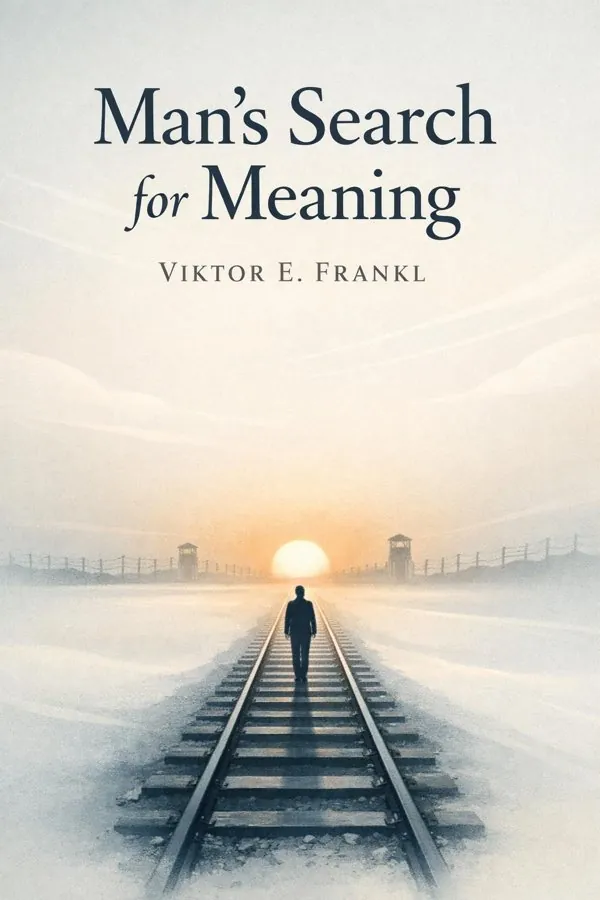
Man's Search for Meaning
The Way of the Superior Man
In-Depth Analysis
Viktor Frankl's Man's Search for Meaning and David Deida's The Way of the Superior Man are both sold as self-help, but they belong to very different moral and intellectual worlds. Frankl writes from the edge of human catastrophe. Deida writes from the everyday crisis of modern drift: loss of purpose, fear of commitment, emotional evasiveness, and confused intimacy. Both books ask how a person should live under pressure, but the pressure they imagine is radically different, and that difference shapes everything from tone to credibility to usefulness.
Frankl's central claim is that meaning, not pleasure or power, is the deepest human motive. He develops this not as abstract theory first but as a conclusion forced on him by life in concentration camps. In the camp sections, the argument is inseparable from concrete observations: the shock of arrival at Auschwitz, the stripping of name and possessions, the progression into apathy, and the eerie narrowing of life to bread, beatings, weather, and work. The key insight is not that suffering is inherently noble, but that if suffering cannot be avoided, one's stance toward it still matters. This is where Frankl's famous idea of a “last freedom” enters: the ability to choose one's attitude under conditions where nearly every external freedom has been destroyed.
That claim is psychologically and morally demanding because Frankl does not present it as motivational optimism. He shows how fragile the self becomes under degradation. Apathy, in his account, is not a character flaw but a survival adaptation. Likewise, his discussion of spiritual resistance is grounded in particulars: a memory of his wife, an interior conversation, a sense that love remains real even in absence. Meaning is not reduced to productivity. It can be found in creative work, in love, or in the dignity with which unavoidable suffering is borne. Even liberation is not romanticized; Frankl notes that freedom after chronic dehumanization can feel emotionally flat, disorienting, and morally complicated.
Deida's book shares with Frankl the language of purpose and inner discipline, but it translates those concerns into a very different register. The Way of the Superior Man is a prescriptive manual aimed largely at men who feel split between mission, comfort, and intimacy. Deida repeatedly argues that a man should stop waiting to feel ready and instead commit to his deepest purpose now. Fear is not a stop sign but evidence that one is near something important. Presence matters more than analysis. Emotional truth matters more than polished self-image. These are genuinely useful provocations, especially for readers trapped in endless self-monitoring or passivity.
The book's strength is its directness. Where Frankl gives a framework for interpreting suffering, Deida gives behavioral challenges. He asks the reader to notice where he uses work, entertainment, indecision, or niceness to avoid a more demanding life. He also insists that relationships expose purpose: if a man is ungrounded, he will seek comfort, control, or validation instead of bringing full presence. In this sense, Deida's advice can be immediately actionable. A reader can test it by clarifying priorities, reducing distraction, speaking more honestly, and enduring discomfort without retreat.
Yet Deida's weaknesses are as central as his strengths. Much of the book depends on generalized claims about masculine and feminine energies, sexual polarity, and how men and women characteristically behave. For some readers, this language feels archetypal and illuminating. For others, it feels reductive, dated, or insufficiently attentive to individual variation, queer relationships, or contemporary psychological nuance. Unlike Frankl, Deida does not earn his authority through either extreme witness or sustained analytic argument. He persuades mainly through resonance: the reader either feels seen and challenged, or feels pushed into a framework that does not fit.
This contrast matters when comparing their self-help value. Frankl is less tactical but more foundational. He asks questions that apply to every life: What gives existence meaning when success disappears? How should one suffer without becoming spiritually empty? What responsibility does life ask of me now? These questions remain alive whether one is facing grief, illness, imprisonment, burnout, or ordinary disappointment. Frankl's examples are extreme, but his framework scales downward to common hardship without trivializing the original context.
Deida is narrower but often more kinetic. If Frankl helps readers endure and interpret suffering, Deida helps certain readers confront avoidance. His best insights concern the way fear, thought, and procrastination masquerade as complexity. He is especially useful for readers who already understand themselves intellectually but still evade decisive living. However, his framework can overstate certainty. Frankl's humility before suffering gives his book a tragic seriousness; Deida's certainty can make his book feel at times like revelation and at times like overreach.
In terms of literary power, Frankl clearly surpasses Deida. Man's Search for Meaning is not merely helpful; it is historically, ethically, and philosophically weighty. It carries the authority of lived extremity transformed into disciplined reflection. Deida's book is more like a spiritual performance manual: sharp, memorable, often energizing, but not equally universal or durable.
The most illuminating way to compare them is this: Frankl asks how a person preserves humanity when stripped of everything, while Deida asks how a person stops squandering life when freedom still exists. Frankl is about meaning under annihilating constraint. Deida is about purpose under self-created diffusion. Both can change behavior, but they do so through different human dramas. If you need a philosophy that can survive tragedy, Frankl is indispensable. If you need a push out of hesitation, Deida may be the more immediate spark.
Side-by-Side Comparison
| Aspect | Man's Search for Meaning | The Way of the Superior Man |
|---|---|---|
| Core Philosophy | Man's Search for Meaning argues that meaning is the primary human drive and that even in extreme suffering a person retains the freedom to choose an attitude. Frankl builds this through concentration-camp testimony and then formalizes it in logotherapy, where purpose, responsibility, and values become anchors for survival. | The Way of the Superior Man centers on living from purpose with unwavering presence, especially in work, intimacy, and masculine development. Deida frames growth less as endurance through suffering and more as disciplined embodiment, sexual polarity, and refusing comfort-driven drift. |
| Writing Style | Frankl writes with restraint, clarity, and moral seriousness. The prose is compact and unsensational, which makes moments like the description of arrival at Auschwitz, emotional numbing, and complicated liberation hit harder. | Deida writes in aphorisms, commands, and provocations. His style is intentionally confrontational and concise, often sounding like a spiritual coach issuing challenges rather than a memoirist or psychologist making a measured case. |
| Practical Application | Frankl's practical value lies in reframing pain, responsibility, and purpose: readers are asked to identify meaning through work, love, and dignified suffering. Its application is inward and interpretive rather than step-by-step, making it powerful but less procedural. | Deida is more immediately behavioral, urging readers to stop postponing purpose, tell the truth in relationships, sit with discomfort, and create disciplined habits of presence. The advice often translates quickly into daily experiments in work, dating, sexuality, and emotional honesty. |
| Target Audience | Frankl speaks to a broad audience: readers of memoir, philosophy, psychology, trauma literature, and anyone confronting grief or hardship. The book is not gender-specific and works across life stages because its central concern is universal human meaning. | Deida is aimed primarily at men, especially men interested in masculinity, purpose, romantic polarity, and spiritualized relationship advice. Some readers outside that audience still find value, but the framing is narrower and more culturally loaded. |
| Scientific Rigor | Frankl draws on psychiatry and clinical concepts, and the logotherapy section offers a coherent therapeutic framework, though it is not presented as modern empirical psychology in today's research-heavy sense. Its authority comes from lived extremity plus philosophical psychology. | Deida relies far less on research and far more on intuition, spiritual generalization, and experiential claims about masculine and feminine energy. Readers looking for evidence-based psychological method may find it suggestive but not rigorous. |
| Emotional Impact | The emotional force is profound because Frankl's ideas emerge from starvation, humiliation, loss, and the struggle to preserve inner freedom under Nazi terror. The scenes of dehumanization, apathy, love remembered in absence, and uneasy liberation make the book morally weighty. | Deida's impact is more catalytic than heartbreaking. It can feel energizing, exposing, or even irritating, especially when it challenges readers to abandon excuses, confront fear, and examine the ways they avoid purpose and intensity. |
| Actionability | Frankl gives readers lenses rather than routines: ask what life expects from you, locate meaning in responsibility, and reinterpret unavoidable suffering. The actions are existential and reflective, requiring self-examination more than tactical execution. | Deida is highly actionable in a coaching sense: prioritize mission, practice presence, stop outsourcing direction to mood, and bring honesty into intimacy. Even when one disagrees with his gender premises, the behavioral directives are easy to test in real life. |
| Depth of Analysis | Frankl reaches unusual depth because he connects atrocity, psychology, ethics, and spirituality without trivializing suffering. His analysis of camp stages, apathy as survival, and post-liberation disorientation gives the book layered psychological insight. | Deida offers depth through intensity and pattern recognition rather than systematic analysis. He is strongest when diagnosing avoidance, fear, and diluted purpose, but the conceptual framework can feel sweeping and under-argued compared with Frankl's moral-psychological precision. |
| Readability | Frankl is highly readable despite the severity of the subject because the book is short, clear, and structured around memorable experiences and distilled principles. Some readers, however, may need emotional space because of the Holocaust setting. | Deida is quick to read and deliberately punchy, with short sections that encourage dipping in and underlining. At the same time, its tone and assumptions can alienate readers who dislike absolutist or gender-essential language. |
| Long-term Value | Man's Search for Meaning tends to deepen with age and adversity; it remains relevant whenever readers face grief, failure, illness, moral challenge, or questions of vocation. It is the kind of book people return to in different seasons and find newly demanding. | The Way of the Superior Man has strong long-term value for readers actively working through purpose and relationships, especially men in periods of drift or romantic confusion. Its usefulness depends more on fit: for the right reader it becomes a recurring wake-up call, for the wrong reader it dates quickly. |
Key Differences
Source of Authority
Frankl's authority comes from surviving Auschwitz and other camps, then reflecting on those experiences as a psychiatrist. Deida's authority comes from teaching, spiritual coaching, and his ability to articulate patterns of avoidance and desire rather than from historical witness or clinical evidence.
Meaning vs. Mission
Frankl is concerned with meaning in the broadest existential sense: what makes life worth living even amid loss, humiliation, or pain. Deida is more focused on mission, edge, and purposeful masculine direction, often asking whether you are living in alignment with your deepest task right now.
View of Suffering
In Frankl, suffering is unavoidable reality that can become spiritually significant if met with dignity; he never glamorizes it, but he insists it can be meaningful. In Deida, discomfort is often a developmental challenge to be leaned into because fear marks important growth, especially in love and vocation.
Relationship Framework
Frankl treats love as a profound inner and spiritual connection, memorably describing how the image of a beloved person can sustain life even in a camp. Deida treats relationships more as a field for polarity, truth, and energetic testing, where purpose and masculine presence shape romantic dynamics.
Psychological Method
Frankl offers a recognizable therapeutic framework in logotherapy, including the idea that humans can orient toward meaning rather than collapse into despair. Deida offers concise principles and challenges, but not a comparably systematic psychological method.
Universality of Audience
Man's Search for Meaning speaks across gender, age, profession, and belief system because suffering and purpose are universal concerns. The Way of the Superior Man is much more audience-specific, especially for men interested in masculine identity and heterosexual or polarity-based relationship advice.
Tone and Reader Experience
Frankl's tone is sober, restrained, and humane, which gives the book gravity without melodrama. Deida's tone is forceful and provocative; many readers find it energizing, while others experience it as oversimplified or ideologically loaded.
Who Should Read Which?
A reader facing grief, burnout, illness, or a crisis of meaning
→ Man's Search for Meaning
Frankl is uniquely suited for readers whose question is not how to optimize life but how to endure it without spiritual collapse. His account of suffering, inner freedom, and responsibility offers perspective that is both compassionate and demanding.
A man who feels stuck in procrastination, passivity, or muddled relationships
→ The Way of the Superior Man
Deida is often effective when the real problem is hesitation disguised as complexity. His blunt insistence on purpose, presence, and honesty can jolt a reader out of drift and into practical change, especially in work and romance.
A thoughtful reader who wants the strongest single book from this pair
→ Man's Search for Meaning
It has broader relevance, greater literary and philosophical weight, and more durable long-term value. Even readers who later appreciate Deida will usually benefit from Frankl's moral framework first.
Which Should You Read First?
Read Man's Search for Meaning first. It gives you the deeper foundation: purpose is not just ambition, productivity, or romantic confidence, but a response to life's demands, including suffering, loss, and responsibility. Frankl's discussion of dehumanization, apathy, moral choice, and love clarifies what is actually at stake when we talk about meaning. That grounding matters because it prevents later self-help from becoming merely performative or ego-driven. Then read The Way of the Superior Man as a more specialized, practical, and arguable second step. Once Frankl has anchored you in a serious concept of meaning, Deida's challenges around procrastination, fear, purpose, and intimate honesty become easier to evaluate. You can use what is energizing without uncritically accepting every claim about masculinity or polarity. In short: Frankl first for depth and universality, Deida second for activation and experimentation. That sequence gives you both a philosophy that can survive hardship and a sharper push toward decisive action.
Want the full summary?
Get instant access to this book summary and 100K+ more with Fizz Moment.
Get Free SummaryAvailable on App Store • Free to download
Frequently Asked Questions
Is Man's Search for Meaning better than The Way of the Superior Man for beginners?
For most beginners, yes. Man's Search for Meaning is shorter, more universal, and easier to trust because Frankl builds his ideas from lived experience in Nazi camps and from his psychiatric framework of logotherapy. Even though the subject matter is heavy, the argument is clear: meaning can be found through work, love, and courageous suffering. The Way of the Superior Man is also accessible in style, but its assumptions about masculinity, feminine energy, and relationships can feel polarizing right away. If you are new to self-help and want a book with broader human relevance and greater moral depth, Frankl is usually the better starting point.
Which book is more practical: Man's Search for Meaning or The Way of the Superior Man?
The Way of the Superior Man is more practical in the immediate, behavioral sense. Deida tells readers to stop delaying their purpose, tell the truth more directly, face fear, and cultivate presence daily. Those are instructions you can test this week in work and relationships. Man's Search for Meaning is practical at a deeper existential level: it helps you reinterpret suffering, ask what life expects from you, and locate meaning beyond comfort. Frankl changes the way you frame life; Deida more often changes what you do next. So the answer depends on whether you want actionable habits or a durable philosophy of meaning.
Is The Way of the Superior Man too dated compared with Man's Search for Meaning?
Many readers will find The Way of the Superior Man more dated, mainly because its language about masculine and feminine essence can sound rigid by contemporary standards. Its framework often assumes heterosexual polarity and broad gender patterns that do not fit every reader. Man's Search for Meaning, by contrast, feels more timeless because it addresses suffering, dignity, freedom, and purpose at a fundamental human level. Frankl's historical setting is specific, but his core questions remain universally legible. Deida still has value, especially for readers who connect with archetypal masculine-development language, but Frankl has aged more gracefully across audiences.
Which book is better for purpose and discipline: Man's Search for Meaning or The Way of the Superior Man?
For purpose in the broadest and most enduring sense, Man's Search for Meaning is stronger. Frankl does not define purpose as ambition alone; he treats it as responsibility to life, love, and moral choice even under suffering. That makes his vision of purpose deeper and more resilient. For day-to-day discipline, however, The Way of the Superior Man often feels more activating. Deida repeatedly attacks procrastination, comfort addiction, and emotional evasiveness. If you already know you need to act and want a sharper push, Deida may serve you better. If you want to understand why purpose matters beyond achievement, Frankl is the richer guide.
Should men read Man's Search for Meaning before The Way of the Superior Man?
In most cases, yes. Reading Frankl first gives a stronger foundation because it grounds purpose in meaning rather than ego, performance, or sexual identity. His emphasis on inner freedom, moral choice, and responsibility helps prevent later advice about mission and intensity from becoming shallow self-optimization. Then, if you move to The Way of the Superior Man, you can evaluate Deida more critically: keep what genuinely sharpens your presence and discard what feels dogmatic or mismatched to your life. This order also helps readers distinguish existential seriousness from motivational bravado. Frankl builds depth; Deida can then add urgency, if his framework suits you.
Which book helps more with relationships: Man's Search for Meaning or The Way of the Superior Man?
If your main goal is improving romantic dynamics, attraction, and emotional candor in intimate relationships, The Way of the Superior Man is more directly targeted. Deida talks about truth-telling, presence, sexual polarity, and how purpose affects connection. However, if you mean relationships in the broader sense of love, loyalty, and what another person's existence means to your life, Frankl may affect you more deeply. His reflections on love as a spiritual reality, even in separation and deprivation, are unforgettable. Deida offers tactics and frameworks; Frankl offers a profound vision of what love can mean when stripped of convenience.
The Verdict
If you are choosing only one, Man's Search for Meaning is the stronger, more enduring book. It is not simply more famous; it is more universal, more morally serious, and more intellectually grounded. Frankl's reflections on dehumanization, apathy, inner freedom, and meaning under extreme suffering give the book a depth that extends far beyond conventional self-help. It can meet readers in grief, burnout, illness, failure, or ordinary confusion without sounding trendy or narrow. The Way of the Superior Man is best understood as a high-intensity niche classic. At its best, it is bracing and useful: it pushes readers, especially men, to stop drifting, confront fear, tell the truth, and orient life around purpose rather than comfort. For someone stuck in indecision or diluted ambition, that can be exactly the right medicine. But it is also much easier to bounce off. Its claims about gender and polarity are less universally persuasive, and it lacks Frankl's combination of witness, humility, and philosophical durability. So the recommendation is clear: choose Frankl if you want a foundational book about meaning, resilience, and the human condition. Choose Deida if you specifically want a provocative manual on masculine purpose and relationships, and you are willing to engage critically with its assumptions. Read together, Frankl gives the depth and Deida supplies the shove.
Related Comparisons



Want to read both books?
Get AI-powered summaries of both Man's Search for Meaning and The Way of the Superior Man in just 20 minutes total.