
When Breath Becomes Air vs Born a Crime: Which Should You Read?
A detailed comparison of When Breath Becomes Air by Paul Kalanithi and Born a Crime by Trevor Noah. Discover the key differences, strengths, and which book is right for you.
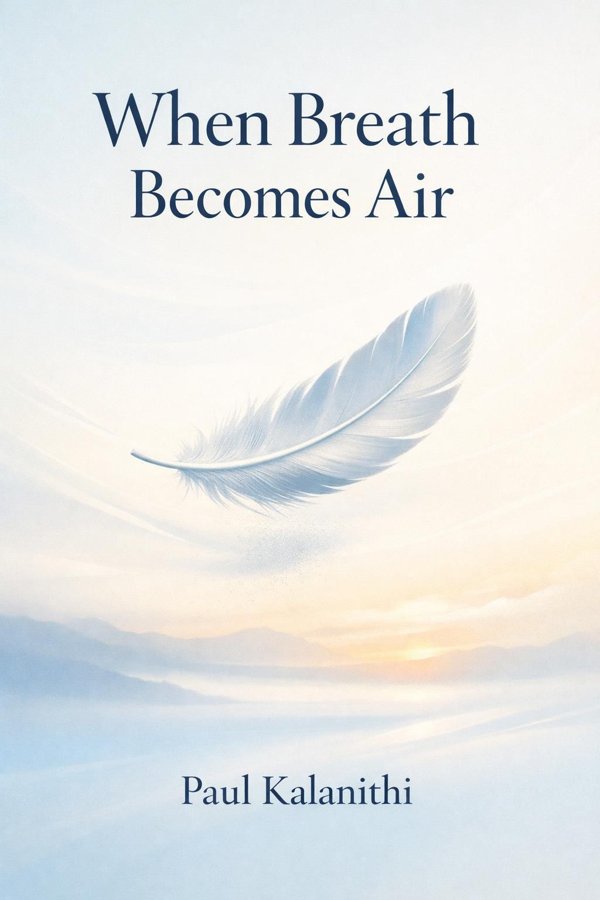
When Breath Becomes Air
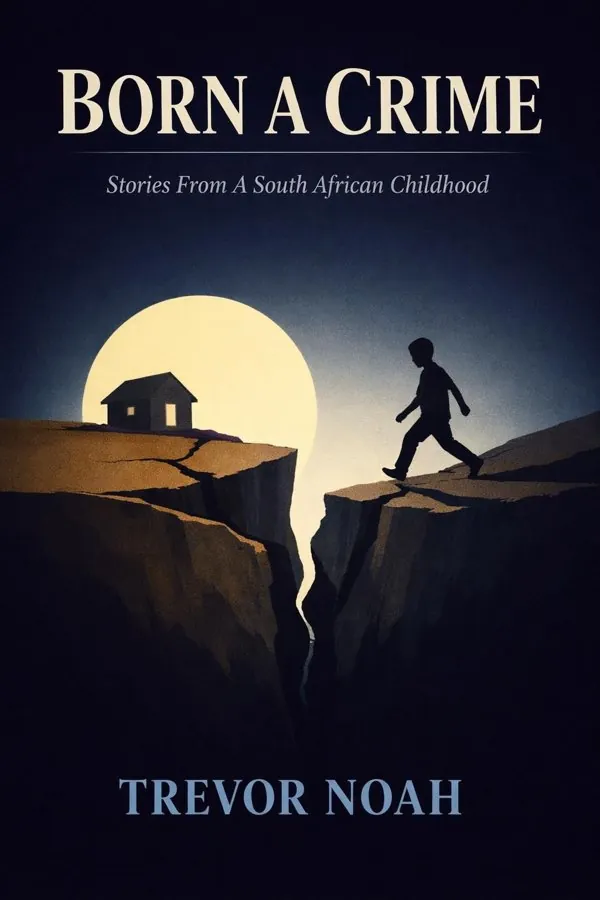
Born a Crime
In-Depth Analysis
Paul Kalanithi’s When Breath Becomes Air and Trevor Noah’s Born a Crime are both memoirs, but they operate on strikingly different scales of experience and inquiry. Kalanithi writes from the intimate edge of mortality; Noah writes from the unstable social terrain of apartheid and post-apartheid South Africa. One book asks how a person should live when death is no longer hypothetical. The other asks how a child learns to exist when society has declared his very birth illegal. Read together, they reveal two complementary powers of memoir: the ability to turn private experience into philosophical meditation, and the ability to turn personal anecdote into social history.
The central contrast lies in what each narrator is up against. In When Breath Becomes Air, the antagonist is time itself, sharpened by disease. Kalanithi begins as a student pulled between literature and biology, eventually finding in neurosurgery the place where questions of meaning become literal. He is not merely interested in the brain as an organ; he is fascinated by the fact that the brain generates identity, memory, and consciousness. This intellectual background gives the memoir unusual density. When he later becomes a patient with stage IV lung cancer, the book’s earlier philosophical concerns are no longer academic. The doctor who once interpreted scans now sees his own future in them. The transformation from physician to patient is the book’s emotional and structural hinge.
Born a Crime begins from a different kind of threat: the law, the state, and the absurd violence of racial classification. Noah’s very existence as the son of a black mother and white father violated apartheid legislation. This premise gives the memoir its title, but also its method. Noah repeatedly shows how public systems reach into private life. A child cannot walk openly with his mother. A family must perform false relationships to survive. Race is shown not as a natural category but as a bureaucratic fiction enforced through policing, neighborhood segregation, and daily fear. Where Kalanithi’s memoir compresses inward toward metaphysical questions, Noah’s expands outward into a social map of South Africa.
Their styles mirror these different ambitions. Kalanithi writes with a polished, almost classical restraint. His prose is shaped by his training in literature and medicine, so scenes often carry both clinical precision and philosophical resonance. When he describes surgery, he evokes not only technical mastery but moral burden: decisions in the operating room can preserve speech, movement, personality, or erase them. Even before illness enters fully, the book is already about the fragility of personhood. This makes the later diagnosis devastating because it is filtered through someone uniquely aware of what bodily failure means.
Noah, by contrast, relies on velocity, humor, and anecdotal structure. His chapters often read like self-contained stories, but they accumulate into a sophisticated account of identity under oppression. His famous observations about language are a key example. Noah explains that speaking someone’s language can instantly shift social dynamics; language lets him move among black, colored, and other communities in ways racial appearance alone cannot. This is more than charming social insight. It is Noah’s argument that identity is negotiated through performance, accent, and code, not just imposed from above. His humor serves analysis. He makes readers laugh, then realize the joke has exposed a brutal system.
Both books are deeply shaped by family, but in different registers. In Kalanithi’s memoir, marriage becomes central once illness strikes. His relationship with Lucy is tested by prognosis, treatment, and the impossible question of whether to have a child. Their decision to welcome a daughter despite his terminal diagnosis becomes one of the book’s clearest statements about meaning: life is worth choosing even when its duration is uncertain. Family here becomes a commitment made in the shadow of death.
In Noah’s memoir, the dominant figure is his mother, Patricia. She is not only a parent but the moral force of the book: fearless, improvisational, devout, and defiant. Her insistence on education, churchgoing, and self-belief forms Trevor’s sense of possibility. The memoir’s later episodes of domestic violence, particularly her shooting by his stepfather and miraculous survival, reveal the limits of humor as shield while also confirming her extraordinary resilience. If Lucy in Kalanithi’s memoir represents intimate partnership under mortal pressure, Patricia in Noah’s represents maternal courage under political and domestic violence.
The books also differ in what they ask from readers. When Breath Becomes Air demands contemplation. It is brief, but not light. Readers must sit with ambiguity: Kalanithi does not provide neat conclusions about God, justice, or why suffering happens. Instead, he models a disciplined honesty about uncertainty. His achievement is not inspiration in the simplistic sense, but clarity without false comfort.
Born a Crime is more immediately accessible. Its episodic form, humor, and vivid scenes make it easier to enter, especially for readers new to memoir. Yet accessibility should not be mistaken for shallowness. Noah’s account of poverty, informal entrepreneurship, and multilingual navigation offers a sophisticated education in how systems shape consciousness and opportunity. He makes structural inequality legible through ordinary incidents: school, transport, dating, neighborhood movement, music, and money.
Ultimately, these books complement one another because they show two essential dimensions of human life: finitude and context. Kalanithi asks what it means to be a self moving toward death. Noah asks what it means to become a self inside a world organized by unjust categories. One is a meditation on mortality from inside medicine; the other is a study of survival from inside history. Both are exceptional because they refuse simplification. They are not merely stories of suffering overcome. They are acts of interpretation, turning lived experience into frameworks for understanding how humans endure, choose, and create meaning.
Side-by-Side Comparison
| Aspect | When Breath Becomes Air | Born a Crime |
|---|---|---|
| Core Philosophy | When Breath Becomes Air is anchored in the question of how to live meaningfully in the face of death. Kalanithi uses his transition from neurosurgeon to terminal patient to examine vocation, selfhood, and mortality as existential realities rather than abstract ideas. | Born a Crime centers on survival, identity, and adaptability within oppressive social systems. Noah’s philosophy is that language, humor, and maternal love become practical tools for resisting apartheid’s categories and preserving dignity. |
| Writing Style | Kalanithi writes in a reflective, elegant, often lyrical prose shaped by medicine, philosophy, and literature. His tone is controlled and meditative, especially when he describes neurosurgery, diagnosis, and the narrowing horizon of time. | Noah’s style is conversational, vivid, and sharply comic even when dealing with danger, poverty, and abuse. He moves fluidly between anecdote and social commentary, using punchlines to deepen rather than dilute the seriousness of the material. |
| Practical Application | Its practical value lies less in step-by-step advice and more in reframing how readers think about purpose, career, illness, and family. It is especially useful for readers confronting uncertainty, burnout, or questions about what makes a life meaningful. | Noah offers practical insight into how people navigate structural inequality through code-switching, entrepreneurial instinct, and social intelligence. Readers can directly apply his lessons about language, resilience, and perspective-taking to real-world relationships and environments. |
| Target Audience | This memoir particularly suits readers drawn to medical humanities, philosophy, serious memoir, and end-of-life reflection. It also resonates strongly with physicians, students, caregivers, and readers facing illness in themselves or loved ones. | Born a Crime has broader crossover appeal, reaching readers interested in race, politics, social history, family memoir, and humor. It is highly accessible for general readers, including younger audiences and those new to memoir. |
| Scientific Rigor | Kalanithi brings substantial scientific credibility through his training as a neurosurgeon and his precise descriptions of disease, prognosis, and the body’s decline. Even when philosophical, the book remains grounded in clinical reality and firsthand medical knowledge. | Noah’s memoir is not scientific in method, but it is sociologically rich and historically informed. Its rigor comes from lived testimony about apartheid and post-apartheid South Africa, not from formal research or technical explanation. |
| Emotional Impact | The emotional force comes from its intimacy with mortality: the young doctor who spent years mastering the brain becomes a patient with metastatic lung cancer. Scenes involving his wife Lucy, his daughter, and the loss of future possibility are devastating in a quiet, cumulative way. | Noah’s emotional power is more dynamic, moving from hilarious childhood misadventures to episodes of abandonment, hunger, and domestic violence. The chapter involving his mother’s survival after being shot gives the memoir one of its most unforgettable emotional crescendos. |
| Actionability | Its lessons are inward and reflective rather than procedural: clarify your values, accept contingency, and distinguish achievement from meaning. Readers leave with questions to live by rather than habits to implement. | Noah provides more visibly actionable lessons through stories about speaking multiple languages, reading social cues, hustling under constraint, and finding leverage inside rigid systems. The book models adaptive behavior in everyday life. |
| Depth of Analysis | Kalanithi operates at a high level of philosophical depth, especially when connecting consciousness, literature, medicine, and mortality. His memoir asks what remains of identity when the future collapses and the body becomes unreliable. | Noah’s analysis is social and cultural rather than metaphysical. He is particularly strong at showing how apartheid shaped ordinary behavior, family structures, and even the meanings of language, race, and neighborhood belonging. |
| Readability | The prose is beautiful but sometimes intellectually dense, especially in its early autobiographical and philosophical passages. Readers looking for fast pacing may find it more contemplative than propulsive. | Born a Crime is highly readable, episodic, and energetic, with short chapters and a strong narrative drive. Its humor makes difficult subject matter approachable without making it feel simplified. |
| Long-term Value | This is a book many readers return to at different life stages because its concerns deepen with age, illness, parenthood, and professional identity. Its value grows as one’s sense of fragility and responsibility becomes more real. | Noah’s memoir retains long-term value through its historical insight, memorable storytelling, and durable lessons about identity and resilience. It is also a strong re-read because its jokes often conceal deeper social observations that become clearer over time. |
Key Differences
Mortality vs Social Construction
When Breath Becomes Air is driven by terminal illness and the shrinking future it creates. Born a Crime is driven by apartheid’s legal and social machinery, showing how race is manufactured and enforced in everyday life.
Philosophical Inquiry vs Anecdotal Social Critique
Kalanithi often moves from experience to abstract reflection, especially on consciousness, vocation, and death. Noah tends to begin with a vivid story—about language, church, transport, or hustling—and use it to reveal larger social truths.
Medical Precision vs Comic Storytelling
Kalanithi’s background as a neurosurgeon gives his memoir technical credibility and clinical exactness, especially in scenes involving diagnosis and treatment. Noah’s strength lies in timing, voice, and the ability to make systemic injustice legible through humor.
Marriage and Adult Identity vs Childhood Formation
Much of Kalanithi’s memoir concerns adulthood: professional calling, spousal partnership, and parenthood under the pressure of death. Noah’s book is primarily about childhood and adolescence, showing how identity forms under fractured families and racialized laws.
Quiet Tragedy vs Tonal Range
When Breath Becomes Air maintains a restrained, elegiac tone even at its most painful moments. Born a Crime swings deliberately between comedy, suspense, tenderness, and shock, which gives it a more varied emotional texture.
Internal Meaning-Making vs External Adaptation
Kalanithi asks how one can preserve meaning when one’s body and future are collapsing. Noah shows how to adapt externally—through language, wit, and hustle—when the surrounding world is hostile or absurd.
Universal Existential Questions vs Historically Specific Context
Kalanithi’s subject matter feels universal because death, purpose, and identity concern all readers regardless of era. Noah’s memoir is rooted in a very specific historical context, but that specificity is precisely what gives it educational and political power.
Who Should Read Which?
Readers interested in medicine, mortality, and philosophical memoir
→ When Breath Becomes Air
Kalanithi’s memoir is ideal for readers who want literary nonfiction that wrestles directly with consciousness, vocation, and death. Its scenes from neurosurgery and its reflections after diagnosis offer rare depth for anyone drawn to medical humanities or existential literature.
Readers seeking a highly readable memoir about race, identity, and resilience
→ Born a Crime
Noah’s book is better for readers who want historical insight delivered through vivid storytelling, humor, and memorable family scenes. It is especially strong for those interested in apartheid, multilingual identity, and the practical ways people navigate oppressive systems.
Book club readers or general nonfiction readers wanting both substance and accessibility
→ Born a Crime
While both books are discussable, Noah’s memoir offers more entry points for a wider group: politics, religion, parenting, violence, education, and comedy. It tends to spark lively conversation without requiring the same tolerance for philosophical density as Kalanithi’s memoir.
Which Should You Read First?
For most readers, the best order is Born a Crime first, followed by When Breath Becomes Air. Noah’s memoir is more immediately accessible: the chapters are episodic, the voice is energetic, and the humor carries readers through complex material about apartheid, race, poverty, and family. Starting there builds momentum and confidence, especially if you are new to memoir or want a book that teaches while entertaining. Then read When Breath Becomes Air as the more inward, meditative counterpart. After Noah’s socially expansive narrative, Kalanithi’s memoir feels like a deliberate narrowing of focus—from a nation’s history to one individual life confronting death. That contrast is powerful. You move from learning how a person survives hostile systems to considering how any person finds meaning when time itself becomes the enemy. The only reason to reverse the order is if you are especially interested in medicine, philosophy, or end-of-life writing. In that case, Kalanithi’s memoir may be the more urgent starting point. But for emotional pacing and readability, Noah first is the stronger sequence.
Want the full summary?
Get instant access to this book summary and 100K+ more with Fizz Moment.
Get Free SummaryAvailable on App Store • Free to download
Frequently Asked Questions
Is When Breath Becomes Air better than Born a Crime for beginners?
For most beginners to memoir, Born a Crime is the easier entry point. Trevor Noah uses short, vivid chapters, strong storytelling momentum, and humor to guide readers through difficult themes like apartheid, poverty, and violence. When Breath Becomes Air is shorter, but it is also denser and more philosophical, especially in its reflections on consciousness, literature, medicine, and mortality. If you want a memoir that reads quickly and still teaches a lot, start with Noah. If you are comfortable with reflective prose and want a deeper existential meditation, Kalanithi may be more rewarding, though less immediately accessible.
Which memoir is more emotional: When Breath Becomes Air or Born a Crime?
They are emotional in very different ways. When Breath Becomes Air builds quiet devastation through Kalanithi’s diagnosis, his shift from doctor to patient, and his effort to reconstruct meaning as his future disappears. Its pain is intimate, restrained, and cumulative, especially in relation to Lucy and their child. Born a Crime is more emotionally varied: it can be hilarious one page and terrifying the next. The sections on Trevor’s mother, especially her endurance through abuse and violence, carry enormous emotional force. If you respond to elegiac reflection, choose Kalanithi; if you prefer emotional range and narrative dynamism, choose Noah.
What are the main themes in When Breath Becomes Air vs Born a Crime?
When Breath Becomes Air focuses on mortality, meaning, vocation, consciousness, and the instability of identity when illness interrupts ambition. Kalanithi asks what makes life worth living when time is radically shortened. Born a Crime explores race, language, survival, maternal influence, poverty, and the absurdity of apartheid’s classifications. Noah shows how identity is shaped not only by inner questions but by legal and social systems. Both books are about resilience, but Kalanithi’s resilience is existential and inward, while Noah’s is social, improvisational, and often communal.
Which book offers more practical life lessons: Born a Crime or When Breath Becomes Air?
Born a Crime offers more directly practical lessons for everyday life. Noah demonstrates how language can build trust, how humor can defuse tension, and how adaptability helps people survive in rigid systems. His stories about entrepreneurship, code-switching, and reading social environments feel immediately usable. When Breath Becomes Air is practical in a more reflective sense. It helps readers clarify values, rethink ambition, and confront uncertainty without denial. If you want behavioral examples and social strategies, choose Noah. If you want help thinking about purpose, mortality, and what matters when plans collapse, choose Kalanithi.
Is Born a Crime or When Breath Becomes Air better for book clubs?
Both are excellent for book clubs, but they generate different kinds of conversation. Born a Crime is often better for groups that want lively discussion because it combines humor, history, race, family dynamics, religion, and politics in highly memorable episodes. People can enter the conversation from many angles. When Breath Becomes Air tends to produce deeper, quieter discussions about death, medicine, marriage, career, and meaning. It is especially strong for groups comfortable discussing illness and philosophical questions. If your book club prefers breadth and accessibility, choose Noah; if it prefers depth and existential reflection, choose Kalanithi.
Which memoir should I read first if I want both social insight and literary depth?
Read Born a Crime first, then When Breath Becomes Air. Noah’s memoir provides immediate narrative energy and strong social analysis, especially around apartheid, language, and the lived realities of race. It opens the door with humor and vivid storytelling. Kalanithi’s memoir, read second, deepens the experience by shifting from social survival to philosophical and medical introspection. That sequence works well because Noah builds momentum and empathy, while Kalanithi slows the reader into contemplation. If, however, you are already drawn to medical humanities or end-of-life writing, you could reverse the order and move from existential depth to broader social context.
The Verdict
If you want the more universally accessible and immediately engaging memoir, Born a Crime is the stronger recommendation. Trevor Noah combines comic timing, historical clarity, and emotional depth in a way that makes difficult material highly readable without trivializing it. The book excels at showing how apartheid shaped daily life, while also telling a compelling coming-of-age story centered on language, improvisation, and a remarkable mother. It is the better choice for most general readers, book clubs, and people new to memoir. When Breath Becomes Air, however, is the more contemplative and philosophically ambitious work. Paul Kalanithi’s memoir is not just about cancer; it is about what happens when an identity built on mastery, intellect, and vocation is confronted by mortality. Its reflections on consciousness, medicine, marriage, and meaning are unusually refined, and its emotional impact deepens after the final page. For readers interested in serious literary nonfiction, medical humanities, or existential questions, it may well be the more profound book. So the final recommendation depends on what kind of reading experience you want. Choose Born a Crime for narrative momentum, social insight, and emotional range. Choose When Breath Becomes Air for introspection, beauty of language, and a searching meditation on how to live when time runs out. If possible, read both: Noah teaches how to survive a world; Kalanithi asks what makes a life worth surviving for.
Want to read both books?
Get AI-powered summaries of both When Breath Becomes Air and Born a Crime in just 20 minutes total.