
The Body Keeps the Score vs Attached: Which Should You Read?
A detailed comparison of The Body Keeps the Score by Bessel van der Kolk and Attached by Amir Levine. Discover the key differences, strengths, and which book is right for you.
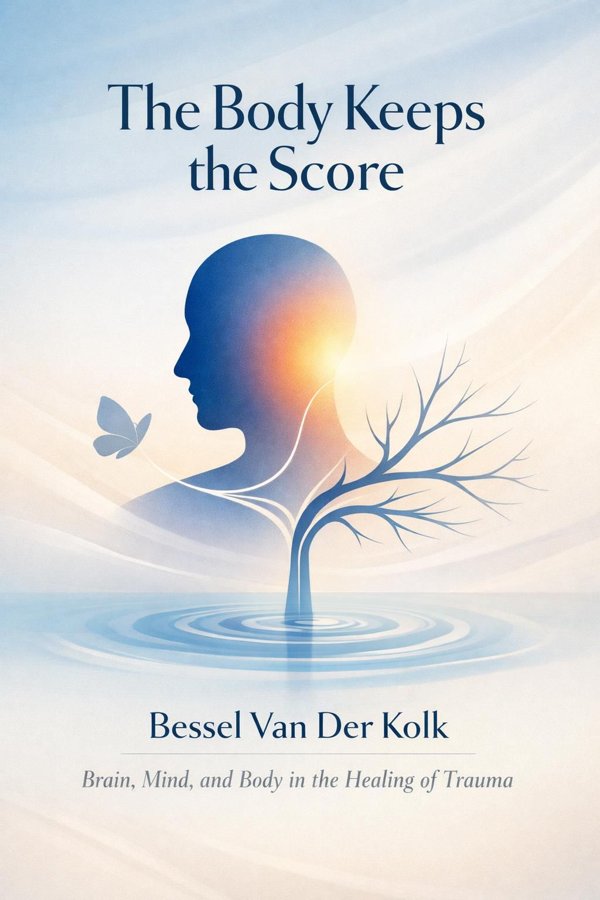

The Body Keeps the Score
Attached
In-Depth Analysis
Although both The Body Keeps the Score and Attached belong to popular psychology, they operate at very different depths, scales, and emotional temperatures. Bessel van der Kolk is concerned with what happens when overwhelming experience ruptures the organism’s capacity to feel safe, integrated, and present. Amir Levine and Rachel Heller, by contrast, focus on how people seek connection in adult love and how recurring relationship patterns can be clarified through attachment style. One book is about trauma as a whole-body condition; the other is about attachment as a relational operating system. They occasionally overlap, especially around early experience and regulation, but they are not substitutes for one another.
The clearest difference lies in scope. The Body Keeps the Score asks readers to understand trauma not as a bad memory but as an altered state of being. Van der Kolk repeatedly shows that survivors may know intellectually that they are safe while their bodies remain organized around danger. This is where his discussions of the amygdala, prefrontal functioning, and fragmented memory become central. He is not merely saying that trauma affects mood; he is saying that trauma changes perception, arousal, embodiment, and the ability to construct a coherent narrative. His distinction between ordinary autobiographical memory and traumatic memory is especially important: trauma often returns not as a story but as sensation, panic, image, or bodily reaction.
Attached, on the other hand, works through simplification. Its three-style framework—secure, anxious, avoidant—gives readers a fast and useful language for describing why one person seeks closeness, another withdraws, and a third can communicate needs without destabilizing the bond. The book’s signature contribution is not deep neurobiology but pattern recognition. For example, the anxious-avoidant pairing is explained as a mutually reinforcing trap: one partner protests distance through pursuit, hypervigilance, or overanalysis, while the other deactivates through withdrawal, mixed signals, or discomfort with dependence. That explanation has been transformative for many readers because it converts romantic confusion into an interpretable structure.
Their writing styles reflect these differences. Van der Kolk writes with the authority of a psychiatrist and researcher who has spent decades watching institutions misunderstand suffering. His chapters often move from Vietnam veterans to abused children to advances in brain imaging to body-based therapies such as yoga or EMDR. That breadth gives the book unusual intellectual weight, but it also makes reading it feel demanding. Attached is far lighter on the page. It uses examples from dating and marriage, practical checklists, and highly recognizable emotional episodes: waiting for a text, misreading silence, feeling trapped by closeness, or overfunctioning to preserve a bond. It is designed for immediate self-recognition.
Another major difference concerns what each book asks the reader to do. The Body Keeps the Score is practical, but indirectly so. It gives readers a map of treatment possibilities—EMDR, theater work, neurofeedback, movement, breath, yoga, and therapies that restore self-regulation—but it does not pretend healing is quick or simple. In fact, one of its central messages is that trauma cannot always be talked away because the systems affected are pre-verbal, sensory, and physiological. A reader may finish the book with a radically improved understanding of panic, dissociation, numbness, or chronic shame, yet still need a skilled therapist and sustained care to act on that knowledge.
Attached is more behaviorally immediate. It gives concrete guidance: identify your attachment style, learn your triggers, do not romanticize inconsistency, communicate needs clearly, and favor secure partners over chemistry that reproduces instability. Its usefulness lies in helping people stop mislabeling activation as love. A person who feels electrified by unpredictability may, through Levine’s framework, realize they are repeatedly entering attachment panic rather than intimacy. That is an actionable insight, especially for daters.
The two books also differ in emotional effect. The Body Keeps the Score can be profoundly validating for trauma survivors because it explains symptoms that are often moralized or misunderstood. Hypervigilance, emotional numbing, startle responses, memory fragmentation, and bodily shutdown are reframed not as weakness but as adaptations to overwhelming stress. Yet the same material can feel heavy, even overwhelming. Attached usually produces a different emotion: relief. Readers often feel less broken once they see that their relationship patterns are widely studied and somewhat predictable.
Importantly, the books intersect around development. Van der Kolk’s discussions of childhood trauma and developmental disruption provide a deeper substrate beneath the attachment patterns that Attached popularizes. If Attached tells you that someone becomes anxiously preoccupied or avoidantly self-protective, The Body Keeps the Score helps explain how chronic fear, neglect, or inconsistent caregiving may shape a nervous system that expects danger or disconnection. In that sense, van der Kolk offers the deeper etiological account, while Levine offers the more everyday relational translation.
That said, Attached has limits that The Body Keeps the Score makes more visible. Because Levine simplifies people into three broad styles, some readers may overapply the framework and underappreciate trauma, dissociation, personality structure, or cultural context. A partner who seems “avoidant” may also be traumatized, depressed, emotionally immature, or simply incompatible. Van der Kolk is more attentive to complexity, but he pays for that complexity with reduced accessibility.
So which is better? That depends entirely on the reader’s problem. If you want to understand why your body overreacts, why trauma memories do not feel like ordinary memories, or why childhood adversity echoes through adulthood, The Body Keeps the Score is the stronger and more consequential book. If you want a clear, practical framework for dating and adult intimacy, Attached is more efficient and immediately useful. Together, they form a powerful pairing: one explains the deep architecture of dysregulation, and the other shows how those relational patterns often play out in love.
Side-by-Side Comparison
| Aspect | The Body Keeps the Score | Attached |
|---|---|---|
| Core Philosophy | The Body Keeps the Score argues that trauma is not merely a past event recalled by the mind but an ongoing physiological and neurological reality carried in the body. Its central claim is that healing must involve the nervous system, memory, and bodily experience—not just insight or talk. | Attached argues that adult romantic behavior is deeply shaped by attachment patterns developed through relational experience and expressed in intimacy. Its core philosophy is that understanding whether someone is secure, anxious, or avoidant can dramatically improve partner choice, conflict patterns, and emotional stability. |
| Writing Style | Van der Kolk writes in an expansive, case-driven, often clinical style, weaving neuroscience, patient histories, and the institutional history of trauma research. The prose is compelling but sometimes dense because it moves between brain science, therapeutic models, and social critique. | Levine and Heller use a highly accessible, popular-psychology style with direct explanations, dating examples, quizzes, and practical summaries. The tone is brisk and reader-friendly, designed to create immediate recognition rather than intellectual immersion. |
| Practical Application | The Body Keeps the Score offers practical value mainly through treatment frameworks such as yoga, EMDR, neurofeedback, theater, and body-based therapies. Its applications are strongest for readers trying to understand trauma symptoms or evaluate treatment options, though it is less like a step-by-step self-help manual. | Attached is explicitly practical in everyday relationship terms: it helps readers identify attachment style, notice protest behavior, interpret mixed signals, and choose more compatible partners. Its advice can be applied quickly in dating, communication, and boundary-setting. |
| Target Audience | This book is best suited for trauma survivors, therapists, clinicians, caregivers, and readers interested in how adversity reshapes development and embodiment. It especially speaks to people dealing with PTSD, childhood trauma, dissociation, or chronic dysregulation. | Attached is aimed at general readers navigating dating, partnership, breakups, or recurring romantic confusion. It is especially useful for people who keep finding themselves in anxious-avoidant cycles and want a clear framework for understanding why. |
| Scientific Rigor | Van der Kolk draws heavily on psychiatry, neuroscience, developmental psychology, and clinical observation, including discussions of PTSD, ACE-related developmental disruption, memory fragmentation, and brain imaging. While some treatment recommendations remain debated, the book is more academically ambitious and multidisciplinary than most trade psychology books. | Attached is grounded in attachment theory and relationship research, especially Bowlby and later adult attachment studies, but it simplifies a complex field for a mass audience. Its science is useful and legitimate, though less nuanced and less exhaustive than van der Kolk’s treatment of trauma. |
| Emotional Impact | The Body Keeps the Score often lands with considerable emotional force because it describes how abuse, war, neglect, and terror become embedded in ordinary bodily life. Many readers feel both devastated and validated by its descriptions of flashbacks, hypervigilance, numbness, and developmental injury. | Attached has a more immediately recognizable emotional impact for readers frustrated by dating or unstable relationships. Instead of devastation, it more often produces relief—the feeling that confusing romantic patterns finally make sense. |
| Actionability | Its actionability is meaningful but uneven: readers come away with therapeutic directions and conceptual clarity, yet many interventions require trained professionals or long-term work. It is more of a roadmap to healing modalities than a simple behavioral program. | Attached is highly actionable because it translates theory into decisions: whom to date, how to communicate needs, when to interpret distance as avoidant deactivation, and why secure functioning matters. Readers can change behavior almost immediately after understanding the framework. |
| Depth of Analysis | Van der Kolk offers greater depth, especially in linking trauma to neurobiology, memory, child development, self-regulation, and treatment innovation. The book’s scope is broad enough to show trauma as a whole-system disorder rather than a single symptom cluster. | Attached is narrower and intentionally more schematic, focusing primarily on romantic attachment dynamics. Its strength is not maximal depth but the clarity of a strong organizing model applied consistently across relationship situations. |
| Readability | Despite vivid storytelling, the book can be heavy because of its subject matter and conceptual density. Readers without prior exposure to trauma psychology may need time to absorb its neurological and developmental discussions. | Attached is significantly easier to read and absorb, with short explanations, relatable scenarios, and a coaching-like structure. It is one of the more approachable entry points into relationship psychology. |
| Long-term Value | The Body Keeps the Score has lasting value as a foundational lens on trauma, especially for readers whose understanding deepens over time or who revisit it during therapy. Its insights often continue unfolding long after the first reading. | Attached has excellent long-term value for partner selection and relationship self-awareness, especially because readers can return to it during dating transitions or recurring conflicts. However, its framework is narrower, so its usefulness depends more on one’s current relational stage. |
Key Differences
Trauma Framework vs Relationship Framework
The Body Keeps the Score is organized around trauma as a psychobiological condition, examining PTSD, developmental trauma, dissociation, and bodily dysregulation. Attached is organized around relationship functioning, especially why secure, anxious, and avoidant people behave differently in dating and intimacy.
Body-Based Healing vs Behavioral Relationship Guidance
Van der Kolk emphasizes interventions such as EMDR, yoga, neurofeedback, and other approaches aimed at restoring nervous-system regulation. Levine and Heller focus more on recognizing attachment triggers, choosing compatible partners, and communicating needs clearly.
Clinical Breadth vs Conceptual Simplicity
The Body Keeps the Score moves across war trauma, child abuse, memory research, neurobiology, and therapeutic innovation, making it broad and layered. Attached intentionally narrows complexity into a few memorable categories so readers can apply the model quickly to everyday relationships.
Historical and Institutional Analysis vs Everyday Recognition
Van der Kolk spends significant time showing how trauma was historically misunderstood in psychiatry, including the struggles to recognize veterans’ and survivors’ symptoms. Attached spends much less time on disciplinary history and more time helping readers identify themselves in common romantic scenarios.
Heavy Emotional Weight vs Accessible Relief
The Body Keeps the Score can be emotionally intense because it deals directly with abuse, terror, fragmentation, and lasting injury. Attached often feels lighter because its examples revolve around dating frustration, misattunement, mixed signals, and recurring but more familiar interpersonal pain.
Understanding Root Causes vs Managing Present Patterns
Van der Kolk is more interested in where dysregulation comes from and how early adversity shapes the whole organism over time. Levine is more interested in how those tendencies show up now—for example, why one partner pursues reassurance while another distances under pressure.
Therapy-Oriented Reading vs Self-Help-Oriented Reading
The Body Keeps the Score often functions as a companion to therapy, giving readers language for symptoms and possible treatment paths. Attached feels more like a classic self-help guide, useful even without professional support because many of its recommendations can be implemented immediately.
Who Should Read Which?
The confused dater who keeps overanalyzing mixed signals and unstable chemistry
→ Attached
This reader needs immediate clarity about anxious, avoidant, and secure dynamics. Attached helps decode protest behaviors, inconsistency, and compatibility so the reader can make better romantic decisions quickly.
The trauma survivor trying to understand panic, shutdown, hypervigilance, or childhood emotional injury
→ The Body Keeps the Score
Van der Kolk directly addresses how trauma reshapes the brain, body, and sense of self. The book is especially useful when symptoms feel bigger than relationship style alone and require a more serious explanatory framework.
The therapist, coach, or psychologically curious reader who wants both practical insight and conceptual depth
→ The Body Keeps the Score
Although Attached is highly usable, The Body Keeps the Score offers the stronger theoretical foundation and wider clinical range. A reader in this profile will likely appreciate its integration of neuroscience, development, memory, and treatment approaches.
Which Should You Read First?
For most readers, the best reading order is Attached first, then The Body Keeps the Score. Attached gives you a clean, accessible framework for noticing how closeness, distance, anxiety, and avoidance work in adult relationships. Because it is easy to grasp and highly practical, it creates immediate traction: you can identify your style, understand a partner’s behavior, and stop personalizing certain recurring dynamics. Then read The Body Keeps the Score to deepen the picture. Once you have seen the surface-level relationship patterns, van der Kolk helps you understand what may be underneath them—especially if your attachment reactions feel extreme, bodily, or rooted in childhood adversity. His work adds complexity by showing how trauma affects memory, arousal, and the sense of safety itself. The exception is readers with obvious trauma histories, PTSD symptoms, or severe dysregulation. In that case, start with The Body Keeps the Score, because Attached may describe the pattern without addressing the magnitude of the underlying wound. In general, though, Attached is the easier door in, and van der Kolk is the deeper room beyond it.
Want the full summary?
Get instant access to this book summary and 100K+ more with Fizz Moment.
Get Free SummaryAvailable on App Store • Free to download
Frequently Asked Questions
Is The Body Keeps the Score better than Attached for beginners?
For absolute beginners to psychology, Attached is usually easier to start with. It introduces one central framework—secure, anxious, and avoidant attachment—and applies it to familiar dating and relationship situations, so readers quickly understand how the theory fits their lives. The Body Keeps the Score is more foundational and ultimately deeper, but it is heavier, more clinical, and emotionally more intense. It discusses PTSD, childhood abuse, dissociation, brain function, and treatment modalities in a way that can feel demanding for first-time readers. If you want the gentlest entry point, choose Attached; if your primary concern is trauma rather than dating, start with van der Kolk.
Which book is more useful for healing childhood trauma: The Body Keeps the Score or Attached?
The Body Keeps the Score is far more useful if your main goal is understanding and healing childhood trauma. Van der Kolk directly addresses developmental trauma, including how chronic neglect, fear, abuse, and emotional inconsistency shape the nervous system, memory, self-regulation, and even bodily experience. Attached can still help by showing how those early patterns may later appear in adult relationships—for example, anxious pursuit or avoidant withdrawal—but it does not provide the same depth on trauma mechanisms or treatment. A good way to think about it is this: Attached helps describe relational symptoms; The Body Keeps the Score examines the deeper injuries beneath them.
Should I read Attached or The Body Keeps the Score if I keep ending up in anxious-avoidant relationships?
If your immediate problem is repeated anxious-avoidant relationship dynamics, Attached is the better first read. It gives a direct vocabulary for protest behaviors, deactivation strategies, compatibility, and why anxious and avoidant partners often create unstable chemistry. You will likely recognize concrete patterns quickly, which can help with dating decisions and communication. However, if those patterns feel intense, compulsive, or tied to earlier abuse, neglect, or chronic fear, The Body Keeps the Score may become essential afterward. In that case, Attached explains the relationship pattern, while van der Kolk helps explain why the pattern feels so charged in your body and psyche.
How do The Body Keeps the Score and Attached differ in scientific depth?
The Body Keeps the Score is broader and more scientifically ambitious. It integrates psychiatry, developmental psychology, neuroscience, memory research, and clinical casework to explain how trauma affects the brain and body. Van der Kolk also surveys treatment approaches such as EMDR, yoga, neurofeedback, and theater-based work, making the book feel almost like a cross-disciplinary trauma primer. Attached is research-based too, especially in its use of attachment theory and adult relationship studies, but it is more streamlined and selective. Its goal is not to map the full scientific landscape; it is to translate a useful body of relationship research into practical, memorable guidance.
Is Attached too simplistic compared with The Body Keeps the Score?
Compared with The Body Keeps the Score, Attached is definitely more simplified, but that is partly why it is effective. Levine and Heller reduce relational complexity into a clear framework that ordinary readers can use quickly, especially in dating and partnership decisions. The trade-off is that some situations may require more nuance than the secure-anxious-avoidant model provides. The Body Keeps the Score is more complex because trauma itself is more complex: it involves physiology, memory, development, identity, and regulation. So yes, Attached is simpler—but often usefully so. It becomes a limitation only when readers try to force every difficult relationship problem into attachment language alone.
Which book has more practical advice for relationships: Attached or The Body Keeps the Score?
Attached has much more direct advice for relationships. It helps readers identify their own attachment style, recognize problematic partner dynamics, communicate needs more effectively, and prioritize secure functioning over unstable attraction. Its guidance is especially useful for dating, choosing compatible partners, and understanding conflict cycles. The Body Keeps the Score can improve relationships indirectly by helping readers understand trauma triggers, emotional flooding, dissociation, and bodily dysregulation, but it is not mainly a relationship manual. If your question is specifically about romantic strategy and relational decision-making, Attached is the more practical book.
The Verdict
These books are both valuable, but they serve different levels of the same human problem. If you are trying to understand trauma, chronic dysregulation, childhood injury, or why your body reacts as if the past is still happening, The Body Keeps the Score is the more substantial and important book. It is richer, more scientifically layered, and far more ambitious in explaining how suffering gets embedded in memory, physiology, and identity. It is not always easy to read, but it can permanently change how you understand psychological pain. If your immediate concern is dating, partner compatibility, or recurring cycles of anxiety and withdrawal in adult love, Attached is the better practical tool. It is clearer, faster, and easier to apply. Many readers will get more immediate day-to-day benefit from Levine’s framework because it helps them make better relational choices right away. Overall, The Body Keeps the Score is the stronger book in terms of depth, seriousness, and long-term intellectual value. Attached is the more efficient self-help book for romantic relationships. If you can read only one, choose based on your primary problem: trauma and healing, choose van der Kolk; dating and attachment dynamics, choose Levine. If you read both, they complement each other extremely well: Attached shows the pattern, while The Body Keeps the Score explains the wound beneath it.
Related Comparisons

Want to read both books?
Get AI-powered summaries of both The Body Keeps the Score and Attached in just 20 minutes total.