
A Brief History of Time vs The Elegant Universe: Superstrings, Hidden Dimensions, and the Quest for the Ultimate Theory: Which Should You Read?
A detailed comparison of A Brief History of Time by Stephen Hawking and The Elegant Universe: Superstrings, Hidden Dimensions, and the Quest for the Ultimate Theory by Brian Greene. Discover the key differences, strengths, and which book is right for you.
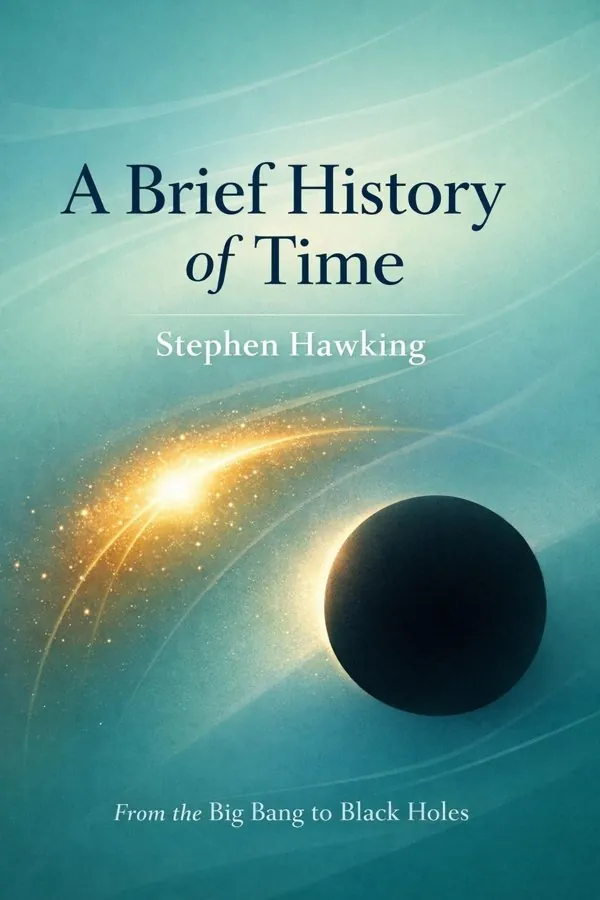
A Brief History of Time
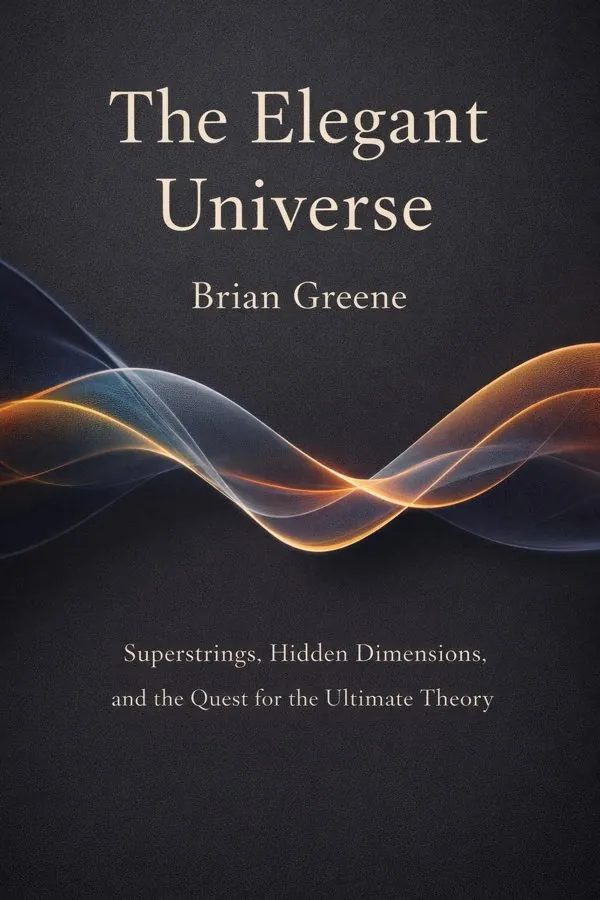
The Elegant Universe: Superstrings, Hidden Dimensions, and the Quest for the Ultimate Theory
In-Depth Analysis
Stephen Hawking’s "A Brief History of Time" and Brian Greene’s "The Elegant Universe" are seminal works that have shaped public understanding of modern physics, yet they differ profoundly in methodology, scope, and philosophical orientation. Both aim to make the complexities of cosmology and theoretical physics accessible to non-specialists, but their approaches reflect distinct eras and ambitions in scientific thought.
Hawking’s "A Brief History of Time," first published in 1988, is structured as a guided tour through the most significant discoveries and questions in cosmology. Hawking begins by outlining humanity’s evolving picture of the universe, tracing ideas from Aristotle through Newton to Einstein. He introduces readers to the expansion of the universe, the nature of black holes, the uncertainty principle, and the interplay between general relativity and quantum mechanics. Importantly, Hawking writes with the intention of demystifying the universe without resorting to heavy mathematics, a decision that opens the door to a general audience. His explanations of the Big Bang, singularities, and the arrow of time are underpinned by the most robust empirical evidence available at the time.
Philosophically, Hawking is deeply concerned with the limits of scientific explanation. He continually asks whether science can ever provide a complete understanding of the universe, or whether some questions—such as the reason for the universe’s existence—are inherently unanswerable. Hawking’s tone is measured and, at times, almost Socratic: he invites readers to contemplate not only what we know, but also what we may never know. For example, his discussion of imaginary time and the boundary conditions of the universe pushes readers to consider the nature of beginnings and causality without providing reductionist answers.
In contrast, Brian Greene’s "The Elegant Universe" (1999) is a product of the next wave in theoretical physics. Greene’s narrative is driven by the quest for unification—a theory that will reconcile general relativity with quantum mechanics. The book traces the history of this quest from Einstein’s general relativity to the quantum revolution, culminating in the rise of string theory. Greene’s explanations are notably more detailed when it comes to the mathematics and physical principles underlying string theory, yet he employs vivid analogies to keep readers engaged. For instance, he compares strings to vibrating violin strings and uses the image of a garden hose viewed from afar (appearing one-dimensional) versus up close (revealing extra dimensions) to explain hidden dimensions.
Greene’s methodology is more speculative than Hawking’s. While he does a masterful job of explaining established physics, much of "The Elegant Universe" explores the possibilities—rather than the certainties—of string theory. Greene candidly acknowledges the lack of experimental evidence for strings or extra dimensions, emphasizing the beauty and mathematical consistency of the theory as a motivation for further research. This places his book in a different philosophical register: while Hawking ponders the boundaries of knowledge, Greene is focused on the fertile ground of the unknown, encouraging readers to embrace scientific imagination.
Both books are deeply educational, but their practical implications differ. Hawking’s work provides a framework for understanding the universe’s past, present, and possible futures, giving readers a sense of the grandeur and fragility of existence. Greene’s book, by contrast, is a call to adventure: it invites readers to consider how the universe might be fundamentally different from our everyday experience, with implications for the future of physics. Greene’s detailed exposition of string theory, the concept of multiple dimensions, and the idea that reality might be shaped by tiny, vibrating loops of energy is more technical, but also more forward-looking.
Structurally, "A Brief History of Time" is more linear, guiding readers from one concept to the next in a logical sequence, while "The Elegant Universe" is more recursive, often revisiting earlier ideas in light of new developments. This reflects their core missions: Hawking’s book is a primer on what we know; Greene’s is an invitation to explore what might be.
In sum, the two books are united by a shared desire to make the universe accessible, but they diverge in tone, ambition, and scope. Hawking’s classic is a foundation for anyone seeking to understand the broad outlines of cosmology, while Greene’s work is essential for those eager to follow the latest theoretical adventures at the frontiers of physics.
Side-by-Side Comparison
| Aspect | A Brief History of Time | The Elegant Universe: Superstrings, Hidden Dimensions, and the Quest for the Ultimate Theory |
|---|---|---|
| Core Philosophy | A Brief History of Time seeks to unravel the fundamental nature of the universe, focusing on understanding space, time, and cosmological phenomena for a broad audience. | The Elegant Universe is driven by the quest for a unified theory, delving into string theory as a bridge between general relativity and quantum mechanics, emphasizing how all forces might be connected. |
| Writing Style | Hawking employs concise, lucid prose with occasional dry wit, prioritizing clarity when explaining abstract concepts such as black holes and the arrow of time. | Greene uses vivid analogies, narrative storytelling, and engaging metaphors to demystify highly technical ideas, often drawing on pop culture and everyday experiences. |
| Scientific Rigor | The science is carefully distilled, focusing on established theories like general relativity and quantum mechanics, with an emphasis on the empirical basis of current cosmological knowledge. | Greene ventures further into speculative territory with string theory and extra dimensions, balancing rigorous scientific detail with the uncertainties inherent in cutting-edge theoretical physics. |
| Target Audience | Ideal for readers with curiosity about the universe who may not have a scientific background, thanks to its accessible language and minimal mathematics. | Best suited for those with some familiarity with physics concepts or a particular interest in the latest theoretical developments, as the material can be abstract and occasionally dense. |
| Depth of Analysis | Offers a sweeping overview of foundational topics in cosmology, providing historical context and exploring key principles without venturing deeply into speculative theories. | Dives deeply into the mechanics of string theory, the history of physics' unification attempts, and the mathematical ideas behind extra dimensions and quantum gravity. |
| Readability | Renowned for making challenging ideas approachable, though some concepts (like imaginary time) may still stretch casual readers. | More demanding due to the complexity of string theory, but Greene’s analogies and step-by-step explanations help demystify the subject for determined readers. |
| Philosophical Underpinnings | Explores the philosophical implications of time, determinism, and the limits of scientific knowledge, with a focus on what science can and cannot explain. | Raises questions about the nature of reality, extra dimensions, and the meaning of unification, often reflecting on the elegance and beauty of mathematical explanations. |
| Practical Application | Primarily theoretical, offering little practical application but providing a framework for understanding the universe and our place in it. | Likewise theoretical, but with an emphasis on the potential for string theory to revolutionize our grasp of fundamental physics, even if practical applications remain speculative. |
| Emotional Impact | Provokes awe and wonder by showing readers the vastness and strangeness of the cosmos, often with a humbling effect. | Inspires curiosity through the imaginative possibilities of hidden dimensions and the ultimate unity of nature, encouraging readers to marvel at the universe’s complexity. |
Key Differences
Scope and Focus
'A Brief History of Time' covers the broad sweep of cosmology, from the Big Bang to black holes, focusing on established scientific theories. 'The Elegant Universe' narrows in on string theory and the quest for unification, providing detailed explanations of concepts like extra dimensions and quantum gravity.
Level of Speculation
Hawking’s book is grounded in well-supported scientific knowledge, while Greene’s work ventures further into speculative territory, discussing string theory and ideas not yet confirmed by experiment.
Writing Style and Accessibility
Hawking uses straightforward language and minimal mathematics, making his book highly accessible; Greene employs richer analogies and narrative, which, while engaging, may require more effort for readers unfamiliar with physics.
Philosophical Emphasis
'A Brief History of Time' often reflects on the limits of scientific knowledge and the nature of time. 'The Elegant Universe' is more focused on the promise of mathematical unification and the aesthetic elegance of theoretical frameworks.
Historical Context
Hawking provides a historical overview of cosmological thought from antiquity to modern times. Greene concentrates on recent history, especially the late 20th-century developments in theoretical physics.
Practical Implications
Hawking’s work is more about understanding our cosmic context, while Greene’s book explores how future discoveries in string theory could revolutionize our understanding of the universe, though practical applications remain speculative.
Who Should Read Which?
The Curious Newcomer
→ A Brief History of Time
This reader is new to physics and cosmology, seeking a clear and accessible introduction to the universe's big questions. Hawking’s straightforward explanations and minimal use of technical jargon make this book an ideal starting point.
The Aspiring Physicist
→ The Elegant Universe
With some background knowledge or a strong interest in theoretical physics, this reader is ready for deeper exploration. Greene’s detailed discussion of string theory and unification theories provides the conceptual challenge and intellectual stimulation they seek.
The Philosophically Minded Reader
→ A Brief History of Time
Interested in the broader implications of scientific discovery, this reader will appreciate Hawking’s reflections on the limits of knowledge, the nature of time, and the philosophical dimensions of cosmology.
Which Should You Read First?
For most readers, the optimal sequence is to start with 'A Brief History of Time.' Hawking’s book provides the essential groundwork: it introduces the history of cosmology, fundamental principles like general relativity and quantum mechanics, and the major questions facing physicists, all in an accessible style. This foundation is invaluable for making sense of the more advanced and speculative topics covered in 'The Elegant Universe.' Once readers are comfortable with the basics of space, time, and the structure of the universe, they will be better equipped to appreciate Greene’s exploration of string theory, extra dimensions, and the quest for unification. However, readers who already have a solid background in physics or who are particularly interested in the latest theories may choose to approach Greene’s book first. For those seeking a comprehensive journey from foundational concepts to the forefront of modern theoretical physics, reading Hawking before Greene ensures the smoothest and most rewarding experience.
Want the full summary?
Get instant access to this book summary and 100K+ more with Fizz Moment.
Get Free SummaryAvailable on App Store • Free to download
Frequently Asked Questions
Is 'A Brief History of Time' better than 'The Elegant Universe' for beginners?
Yes, 'A Brief History of Time' is generally more accessible for beginners. Stephen Hawking deliberately avoids heavy mathematics and focuses on clear, straightforward explanations of foundational concepts in cosmology, such as the Big Bang, black holes, and the nature of time. While some topics are challenging, the book is designed to be readable for those without a scientific background. In contrast, 'The Elegant Universe' dives deeper into complex, speculative topics like string theory, which may be overwhelming for readers who are new to physics. Beginners would likely find Hawking’s approach more approachable and less intimidating.
Which book provides a better introduction to string theory?
'The Elegant Universe' by Brian Greene is the definitive popular introduction to string theory. The book not only explains the basics of string theory but also provides detailed historical and conceptual context, including the difficulties of unifying gravity with quantum mechanics. Greene’s analogies, such as comparing strings to musical instruments and discussing extra dimensions in everyday terms, make the abstract ideas more tangible. While 'A Brief History of Time' mentions fundamental forces, it does not delve into string theory or its implications, making Greene’s book the clear choice for this topic.
Do either of these books require advanced mathematics to understand?
No, both 'A Brief History of Time' and 'The Elegant Universe' are written for a general audience and do not require advanced mathematics. Hawking famously decided to include as little math as possible, only presenting one equation (E=mc²) in the entire book. Greene, while explaining more technical material, relies on analogies, stories, and diagrams rather than equations. Readers with curiosity and patience can enjoy both books without a physics or mathematics background, though some sections in Greene’s book may require rereading due to conceptual complexity.
How do the philosophical approaches of Hawking and Greene differ?
Hawking’s philosophical approach is contemplative and cautious, often reflecting on the limits of scientific knowledge and the nature of unanswered questions, such as the ultimate reason for the universe's existence. He is comfortable admitting what science does not yet know. Greene, on the other hand, is more speculative and optimistic about the potential of theoretical frameworks like string theory to provide a unified explanation for everything. Greene’s narrative is more about the beauty and promise of mathematical models, even when empirical evidence is lacking. This difference shapes the tone and focus of each book.
Which book is more up-to-date with current scientific theories?
'The Elegant Universe' is more current in terms of exploring the frontiers of theoretical physics, as it focuses on string theory and later developments in unification efforts. 'A Brief History of Time,' while a timeless introduction to cosmology, predates many advances in string theory and the experimental search for extra dimensions. However, both books remain relevant: Hawking’s for foundational understanding, and Greene’s for insights into ongoing debates and speculative theories at the leading edge of physics.
Do these books complement each other, or is it redundant to read both?
These books are highly complementary rather than redundant. 'A Brief History of Time' provides a broad, accessible foundation in cosmology, focusing on established principles and the philosophical implications of scientific discovery. 'The Elegant Universe' builds on this foundation by exploring the next steps in theoretical physics, especially the quest for a unified theory through string theory. Reading both offers a comprehensive view: Hawking grounds readers in what is known, while Greene inspires them to imagine what might be possible.
The Verdict
Both 'A Brief History of Time' and 'The Elegant Universe' are essential reads for anyone curious about the universe, but they serve different purposes and audiences. If your primary interest is to gain a solid, accessible foundation in cosmology and the fundamental laws that govern the universe, Hawking’s classic is unparalleled. Its clear explanations, historical perspective, and philosophical musings make it the perfect starting point for readers new to the subject or those who appreciate a broad overview without technical distractions. On the other hand, if you already possess some familiarity with basic physics and are eager to venture into the frontiers of theoretical physics, 'The Elegant Universe' is the natural next step. Brian Greene’s engaging style and in-depth exploration of string theory make complex ideas approachable for determined readers. This book is particularly valuable for those interested in the ongoing quest to unify the laws of nature. In summary, start with 'A Brief History of Time' for foundational understanding, then read 'The Elegant Universe' to appreciate the current challenges and imaginative possibilities in physics. Both books together provide a panoramic view of how humanity seeks to comprehend the cosmos.
Want to read both books?
Get AI-powered summaries of both A Brief History of Time and The Elegant Universe: Superstrings, Hidden Dimensions, and the Quest for the Ultimate Theory in just 20 minutes total.