
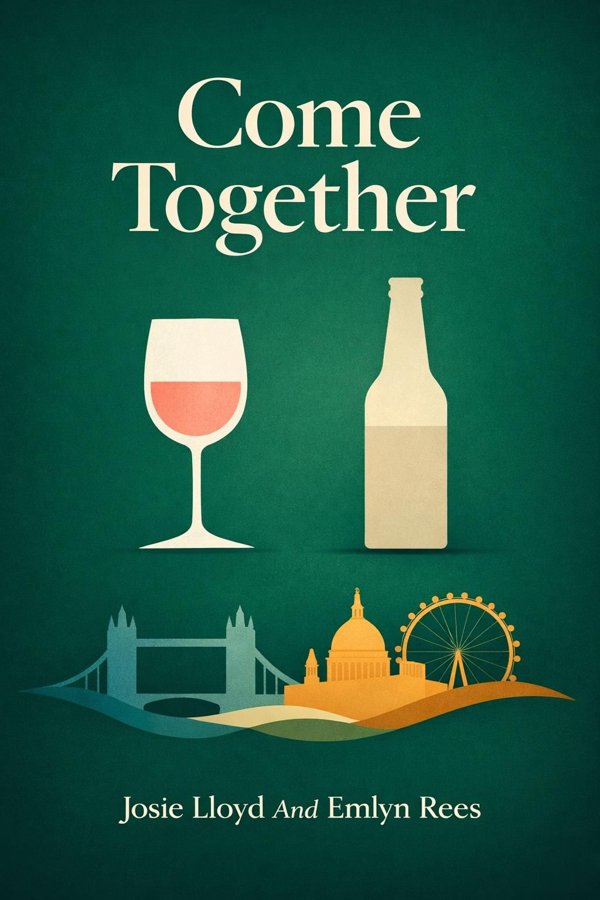
Come Together: Summary & Key Insights
 10 min9 chaptersAudio available
Key Takeaways from Come Together
Sometimes the people who look most relaxed about love are the ones working hardest to avoid its risks.
After disappointment, people rarely stop wanting love; they simply become more careful about how they approach it.
A relationship often begins not with clear understanding, but with confident misinterpretation.
Conflict does not just show what people disagree about; it exposes what they most need but struggle to request.
No love story is complete when told by only one person.
What Is Come Together About?
Come Together by Josie Lloyd And Emlyn Rees is a romantic_relationships book spanning 4 pages. Come Together is a sharp, funny, and surprisingly perceptive romantic comedy about what really happens when two people with very different expectations of love try to build a relationship in the middle of modern city life. Set in London and told through alternating perspectives, the novel follows Jack and Amy as they navigate attraction, misunderstandings, emotional baggage, social pressure, and the exhausting comedy of dating culture. What begins as a lively opposites-attract story grows into something richer: a portrait of how men and women often speak past each other even when they want the same thing. What makes the book stand out is not only its humor, but its structure. By letting readers inhabit both Jack’s and Amy’s inner worlds, Josie Lloyd and Emlyn Rees reveal how romance is shaped as much by private insecurity and self-protection as by chemistry. Their dual-author approach gives the novel its signature balance, capturing contrasting emotional rhythms with wit and credibility. More than a light love story, Come Together matters because it turns familiar relationship chaos into insight, showing that love rarely fails because people do not care, but because they do not fully understand themselves or each other.
This FizzRead summary covers all 9 key chapters of Come Together in approximately 10 minutes, distilling the most important ideas, arguments, and takeaways from Josie Lloyd And Emlyn Rees's work. Also available as an audio summary and Key Quotes Podcast.
Come Together
Come Together is a sharp, funny, and surprisingly perceptive romantic comedy about what really happens when two people with very different expectations of love try to build a relationship in the middle of modern city life. Set in London and told through alternating perspectives, the novel follows Jack and Amy as they navigate attraction, misunderstandings, emotional baggage, social pressure, and the exhausting comedy of dating culture. What begins as a lively opposites-attract story grows into something richer: a portrait of how men and women often speak past each other even when they want the same thing.
What makes the book stand out is not only its humor, but its structure. By letting readers inhabit both Jack’s and Amy’s inner worlds, Josie Lloyd and Emlyn Rees reveal how romance is shaped as much by private insecurity and self-protection as by chemistry. Their dual-author approach gives the novel its signature balance, capturing contrasting emotional rhythms with wit and credibility. More than a light love story, Come Together matters because it turns familiar relationship chaos into insight, showing that love rarely fails because people do not care, but because they do not fully understand themselves or each other.
Who Should Read Come Together?
This book is perfect for anyone interested in romantic_relationships and looking to gain actionable insights in a short read. Whether you're a student, professional, or lifelong learner, the key ideas from Come Together by Josie Lloyd And Emlyn Rees will help you think differently.
- ✓Readers who enjoy romantic_relationships and want practical takeaways
- ✓Professionals looking to apply new ideas to their work and life
- ✓Anyone who wants the core insights of Come Together in just 10 minutes
Want the full summary?
Get instant access to this book summary and 100K+ more with Fizz Moment.
Get Free SummaryAvailable on App Store • Free to download
Key Chapters
Sometimes the people who look most relaxed about love are the ones working hardest to avoid its risks. When we first meet Jack, he appears to be thriving in the freedom of single life. London’s bars, jokes, casual encounters, and easy banter all reinforce his self-image as someone who has figured relationships out by refusing to take them too seriously. He treats commitment like a trap and emotional intensity like a punchline. On the surface, he is confident, charming, and socially fluent.
But the brilliance of Come Together lies in how it gradually exposes that this performance of carefree masculinity is also a defense mechanism. Jack’s wit protects him from awkwardness, but it also shields him from honesty. He avoids vulnerability by staying one step ahead of sincerity, turning potentially meaningful moments into comedy before they can demand anything of him. In that sense, he is not simply a commitment-phobe; he is someone afraid of being seen clearly.
This dynamic is recognizable far beyond the novel. Many people present themselves as independent when they are really afraid of disappointment. They call detachment maturity, or frame emotional distance as realism. Jack shows how easy it is to confuse social success with emotional readiness.
As readers, we begin to understand that his growth will not come from finding the perfect woman who magically changes him. It will come from recognizing the cost of his own habits: missed connection, shallow intimacy, and a life curated to feel safe rather than meaningful.
Actionable takeaway: Notice where humor, busyness, or cool detachment may be helping you avoid emotional honesty, and ask what you might gain by speaking more plainly.
After disappointment, people rarely stop wanting love; they simply become more careful about how they approach it. Amy begins her story in the unsettled emotional territory between heartbreak and recovery. She is intelligent, observant, and determined not to repeat old mistakes. Having been let down before, she tells herself she is done with unreliable men, impulsive romance, and the emotional confusion that follows hoping too much. Yet her self-protection is not the same as peace.
Amy’s sections of the novel show how heartbreak lingers not only as sadness, but as interpretation. Every new interaction gets filtered through past experience. A delayed call can feel like a warning. A charming line can sound rehearsed. A promising connection can trigger doubt before it has the chance to deepen. She wants sincerity, but she is also alert to signs of future hurt. That tension makes her relatable: she is not cynical by nature, but caution has become a way of surviving.
The authors handle her perspective with empathy and humor. Amy is never reduced to a stereotype of the wounded romantic. Instead, she is presented as someone trying to rebuild trust in a world that encourages mixed signals. Her internal commentary reveals just how exhausting it can be to balance openness with self-respect.
In real life, Amy’s arc speaks to anyone re-entering relationships after disappointment. Healing does not mean becoming fearless. It means learning to distinguish between healthy discernment and reflexive withdrawal. Amy’s challenge is not just to find someone trustworthy, but to remain available to possibility without surrendering her standards.
Actionable takeaway: If past hurt is shaping present choices, write down the specific behaviors you now consider red flags so you can separate grounded boundaries from fear-driven assumptions.
A relationship often begins not with clear understanding, but with confident misinterpretation. When Jack meets Amy, chemistry sparks quickly, but the emotional story each person tells about that meeting is very different. He sees possibility mixed with challenge. She sees promise mixed with caution. They are both reading the same moments through entirely different internal scripts, and that gap becomes one of the novel’s central engines.
This is where Come Together becomes more than a straightforward romance. The alternating viewpoints reveal how easily attraction can coexist with misunderstanding. A joke meant to impress can sound evasive. A thoughtful pause can be mistaken for lack of interest. One person’s spontaneity is another person’s unreliability. By placing readers inside both minds, the novel demonstrates that many romantic problems do not begin with bad intentions. They begin with partial information.
That insight has wide relevance. Early dating is full of projection. People fill in blanks using hopes, fears, prior experiences, and cultural scripts about what men and women are supposed to be like. The result is that two people can feel drawn to one another while still failing to grasp what the other person actually means.
Jack and Amy’s first connection is compelling precisely because it is believable. They are not perfect soulmates recognizing destiny. They are flawed, curious adults trying to decode each other while also managing their own insecurities. Their friction gives the relationship energy, but it also creates the conditions for disappointment unless both become more direct.
Actionable takeaway: In the early stages of any relationship, replace guessing with one clarifying question that tests assumptions before they harden into conclusions.
No love story is complete when told by only one person. One of the most effective features of Come Together is its alternating narrative structure, which gives readers direct access to both Jack’s and Amy’s thoughts. This technique does more than create comic contrast. It reveals the blind spots built into every relationship. Each person believes their reactions are reasonable, their intentions understandable, and their frustrations justified. Only by seeing both sides do we appreciate how incomplete any single version of events can be.
The dual perspective also mirrors real life, where people constantly act on assumptions they never verify. Readers watch a single date, argument, or passing comment generate two entirely different emotional experiences. The result is often funny, but it is also revealing. We see how individuals narrate themselves as sensible and the other person as confusing, inconsistent, or difficult. Yet when the viewpoint shifts, those judgments become less secure.
This narrative design is especially effective because Josie Lloyd and Emlyn Rees write with distinct tonal energy while maintaining coherence. The differences in voice reinforce the idea that men and women may not simply have different opinions, but different interpretive habits. Still, the novel wisely avoids reducing everything to simplistic gender binaries. Personality, history, and insecurity matter too.
For readers, the structural lesson is powerful: understanding improves when we stop treating our perspective as the whole story. In romance, friendship, and work, most avoidable conflict grows in the space between what we intended and what the other person experienced.
Actionable takeaway: When replaying a difficult interaction, retell it once from the other person’s point of view and note what new explanations become plausible.
The messiness of romance in Come Together is not just personal; it is cultural. London, with its speed, distractions, nightlife, and social overload, becomes more than a setting. It functions as a pressure system that rewards charm, immediacy, and flexibility while making sustained emotional clarity harder to achieve. Jack and Amy are not trying to connect in a quiet vacuum. They are navigating a world full of temptation, performance, peer influence, and endless alternatives.
The novel understands that modern dating often pushes people toward contradictory behavior. They are expected to be emotionally expressive but not needy, available but independent, romantic but unbothered, self-aware but effortlessly cool. These mixed messages create confusion. People censor themselves to appear desirable, delay honesty to avoid looking vulnerable, and interpret ambiguity as sophistication even when it causes anxiety.
Jack fits easily into environments where spontaneity and surface ease are socially rewarded. Amy, meanwhile, feels more acutely the emotional instability such environments can generate. Together, they embody a broader tension in contemporary relationships: the desire for meaningful intimacy inside a culture that often prizes optionality over commitment.
This remains relevant for readers today. Dating apps, busy schedules, social media, and urban overstimulation may differ in form from the novel’s original context, but the emotional mechanics are similar. The more choices and signals people manage, the easier it becomes to delay definition and avoid difficult conversations.
Actionable takeaway: If a relationship feels confusing, reduce the noise by focusing less on mixed signals and more on consistent behavior over time, especially around effort, honesty, and follow-through.
People often absorb difficult truths more readily when they arrive wrapped in laughter. One reason Come Together works so well is that it uses humor not as decoration, but as method. The jokes, awkward observations, and social absurdities make the novel entertaining, yet they also create a safe space for readers to recognize uncomfortable patterns in themselves. We laugh at Jack’s evasions and Amy’s overanalysis because both feel painfully familiar.
Romantic fiction can become sentimental or moralizing when it pushes too hard toward a lesson. This novel avoids that trap by keeping its insights grounded in comic realism. Embarrassing dates, mismatched expectations, internal overreactions, and conversational misfires are all rendered with affectionate precision. The humor lowers defenses. Once readers are amused, they are more willing to admit, “I have done that,” or “I have thought that too.”
This is especially important in stories about gender and relationships, where people can become defensive if they feel accused. By exaggerating certain habits while preserving emotional truth, the authors invite recognition rather than judgment. Humor becomes a form of generosity. It acknowledges that human beings are contradictory, insecure, and often ridiculous, without implying that they are hopeless.
In everyday life, this idea has practical value. Couples who can laugh together about recurring patterns often create more space for change than couples who approach every flaw as a character indictment. Humor does not solve serious issues, but it can reduce shame enough to make honest conversation possible.
Actionable takeaway: The next time a recurring relationship pattern surfaces, try naming it lightly and kindly before discussing it seriously, so the conversation begins with shared humanity rather than blame.
Falling in love is not only about accepting another person; it is also about updating the story you tell about yourself. Both Jack and Amy enter the novel with identities that feel settled. Jack believes he is the kind of man who thrives without real attachment. Amy believes she is wiser now, more guarded, and no longer susceptible to charming instability. As the relationship develops, both are forced to confront evidence that these self-definitions are incomplete.
This is one of the book’s deeper themes. People often approach relationships with fixed narratives: “I’m not the jealous type,” “I always choose badly,” “I need space,” “I’m too independent,” “I’m the one who cares more.” These labels provide coherence, but they can also become cages. Jack uses his image of himself as casual and freedom-loving to avoid growth. Amy uses her image of herself as cautious and perceptive to justify defensiveness. Neither identity is false, but neither is sufficient.
The tension of the novel comes partly from this slow revision process. To build something real, both characters must admit that desire has changed them. Wanting another person exposes needs, softness, fears, and hopes they would prefer to keep hidden. That exposure is uncomfortable because it destabilizes who they thought they were.
Readers can apply this insight directly. Relationship problems are not always solved by finding a better partner; sometimes they are solved by loosening a rigid self-concept. Love often asks not, “Who are you really?” but “Who are you becoming in connection with someone else?”
Actionable takeaway: Identify one label you use to explain your relationship behavior and ask whether it still serves you, or whether it protects an outdated version of yourself.
Grand romantic gestures attract attention, but relationships are usually built or broken in ordinary interactions. Come Together understands that intimacy develops through small moments: how people respond after a misunderstanding, whether they follow through on plans, how they speak when they feel insecure, and whether they can remain present when the mood turns uncomfortable. Jack and Amy’s story is full of these modest turning points.
This focus makes the novel emotionally persuasive. Rather than relying only on big declarations, it shows how connection accumulates through repeated opportunities for honesty. A sincere apology matters. So does a returned call, a moment of patience, or the decision not to hide behind irony. Likewise, damage often occurs not because of one dramatic betrayal, but because little acts of carelessness pile up until trust thins.
For many readers, this may be the book’s most useful lesson. Popular ideas about romance often emphasize intensity: chemistry, dramatic pursuit, spectacular gestures. But long-term closeness depends more on reliability and emotional responsiveness than on excitement alone. Jack and Amy are compelling not because they are swept along by fate, but because they keep confronting the tiny choices that either deepen or weaken mutual trust.
This perspective is refreshing because it makes love feel less mystical and more practicable. Connection is not merely found; it is maintained through attention. The people who seem naturally compatible are often the ones willing to do the unglamorous work of clarification, repair, and consistency.
Actionable takeaway: Strengthen a relationship this week through one small act of dependable care, such as a clear message, a thoughtful check-in, or following through exactly as promised.
All Chapters in Come Together
About the Authors
Josie Lloyd and Emlyn Rees are British co-authors known for their witty, accessible, and emotionally observant fiction about modern relationships. Writing together, they developed a distinctive style that blends romantic comedy with sharp insight into how men and women often interpret the same experiences differently. Their collaborative approach gives their novels an unusual energy, especially when exploring dual perspectives, misunderstandings, and the social rituals of dating and commitment. Over the years, they have built a strong readership through bestselling contemporary novels that are both entertaining and psychologically recognizable. Their work stands out for capturing the humor, awkwardness, and vulnerability of everyday love without losing warmth. In books like Come Together, they show a gift for turning familiar relationship chaos into smart, engaging storytelling.
Get This Summary in Your Preferred Format
Read or listen to the Come Together summary by Josie Lloyd And Emlyn Rees anytime, anywhere. FizzRead offers multiple formats so you can learn on your terms — all free.
Available formats: App · Audio · PDF · EPUB — All included free with FizzRead
Download Come Together PDF and EPUB Summary
Key Quotes from Come Together
“Sometimes the people who look most relaxed about love are the ones working hardest to avoid its risks.”
“After disappointment, people rarely stop wanting love; they simply become more careful about how they approach it.”
“A relationship often begins not with clear understanding, but with confident misinterpretation.”
“Conflict does not just show what people disagree about; it exposes what they most need but struggle to request.”
“No love story is complete when told by only one person.”
Frequently Asked Questions about Come Together
Come Together by Josie Lloyd And Emlyn Rees is a romantic_relationships book that explores key ideas across 9 chapters. Come Together is a sharp, funny, and surprisingly perceptive romantic comedy about what really happens when two people with very different expectations of love try to build a relationship in the middle of modern city life. Set in London and told through alternating perspectives, the novel follows Jack and Amy as they navigate attraction, misunderstandings, emotional baggage, social pressure, and the exhausting comedy of dating culture. What begins as a lively opposites-attract story grows into something richer: a portrait of how men and women often speak past each other even when they want the same thing. What makes the book stand out is not only its humor, but its structure. By letting readers inhabit both Jack’s and Amy’s inner worlds, Josie Lloyd and Emlyn Rees reveal how romance is shaped as much by private insecurity and self-protection as by chemistry. Their dual-author approach gives the novel its signature balance, capturing contrasting emotional rhythms with wit and credibility. More than a light love story, Come Together matters because it turns familiar relationship chaos into insight, showing that love rarely fails because people do not care, but because they do not fully understand themselves or each other.
You Might Also Like

Rebel
Beverly Jenkins
10 min
The Last Letter
Rebecca Yarros
10 min
A Thousand Boy Kisses
Tillie Cole
10 min
Aflame
Penelope Douglas
10 min
After The Bite
Lynsay Sands
10 min
Alchemised
SenLinYu
10 minBrowse by Category
Ready to read Come Together?
Get the full summary and 100K+ more books with Fizz Moment.