
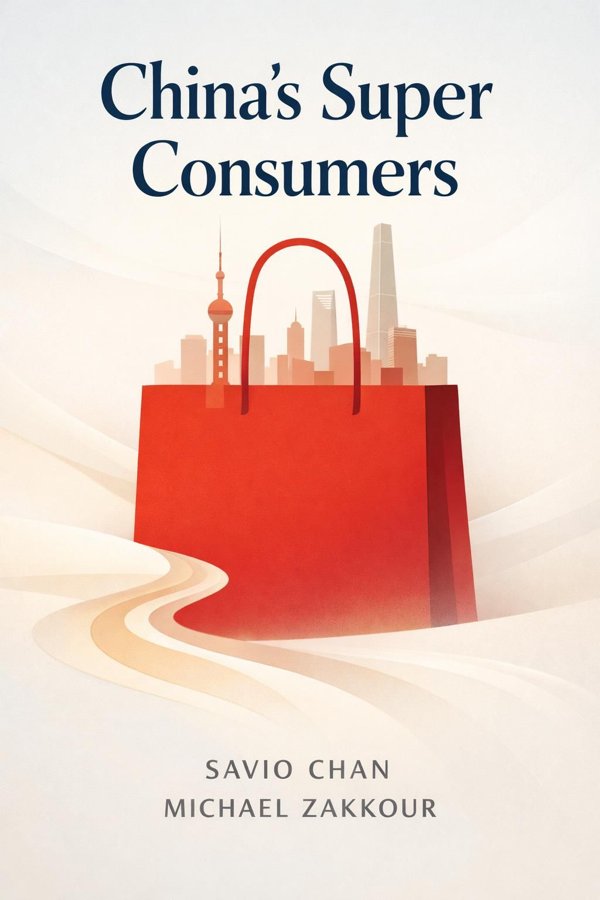
China's Super Consumers: What 1 Billion Customers Want and How to Sell It to Them: Summary & Key Insights
by Savio Chan, Michael Zakkour
 10 min5 chaptersAudio available
What Is China's Super Consumers: What 1 Billion Customers Want and How to Sell It to Them About?
China's Super Consumers: What 1 Billion Customers Want and How to Sell It to Them by Savio Chan, Michael Zakkour is a marketing book spanning 5 pages. China's Super Consumers explores the rise of China's middle class and its transformation into one of the most powerful consumer markets in the world. The book provides insights into Chinese consumer behavior, cultural influences, and strategies for Western companies seeking to succeed in China’s rapidly evolving retail and e-commerce landscape.
This FizzRead summary covers all 5 key chapters of China's Super Consumers: What 1 Billion Customers Want and How to Sell It to Them in approximately 10 minutes, distilling the most important ideas, arguments, and takeaways from Savio Chan, Michael Zakkour's work. Also available as an audio summary and Key Quotes Podcast.
China's Super Consumers: What 1 Billion Customers Want and How to Sell It to Them
China's Super Consumers explores the rise of China's middle class and its transformation into one of the most powerful consumer markets in the world. The book provides insights into Chinese consumer behavior, cultural influences, and strategies for Western companies seeking to succeed in China’s rapidly evolving retail and e-commerce landscape.
Who Should Read China's Super Consumers: What 1 Billion Customers Want and How to Sell It to Them?
This book is perfect for anyone interested in marketing and looking to gain actionable insights in a short read. Whether you're a student, professional, or lifelong learner, the key ideas from China's Super Consumers: What 1 Billion Customers Want and How to Sell It to Them by Savio Chan, Michael Zakkour will help you think differently.
- ✓Readers who enjoy marketing and want practical takeaways
- ✓Professionals looking to apply new ideas to their work and life
- ✓Anyone who wants the core insights of China's Super Consumers: What 1 Billion Customers Want and How to Sell It to Them in just 10 minutes
Want the full summary?
Get instant access to this book summary and 100K+ more with Fizz Moment.
Get Free SummaryAvailable on App Store • Free to download
Key Chapters
Before we talk about modern consumption, we must travel back in time. Chinese consumption patterns did not emerge overnight; they are deeply intertwined with cultural legacies that span thousands of years. Confucianism, collectivism, and the historical cycles of scarcity and abundance have all left profound marks on how people think about wealth, status, and identity. The Confucian emphasis on harmony and social order means that consumption in China often carries a social dimension — it’s rarely about individual indulgence alone. Buying, in the Chinese context, often communicates respect, belonging, and social credibility.
Over the years, modernization altered the traditional landscape. The state-directed economy of the late 20th century began opening up under Deng Xiaoping’s reforms, and for the first time, personal wealth was not just tolerated but celebrated. This created a generation of consumers who were both ambitious and cautious, eager to enjoy the fruits of their labor while mindful of reputation and family expectations. In our analysis, what distinguishes Chinese consumption is its collective consciousness — people buy not only for themselves but for how their choices affect their relationships and reflect their success.
Globalization brought Western brands, lifestyles, and aesthetics, but Chinese consumers never accepted them uncritically. Instead, they localize and reimagine them. A luxury handbag, for example, is not merely an accessory; it’s a statement of diligence rewarded, a symbol of quality, and an index of modern identity. This cultural grounding means that successful foreign brands must engage both the aspirational and the emotional layers of consumption. You cannot simply sell luxury; you must sell meaning consistent with Chinese values of harmony, pride, and family continuity.
Thus, understanding the cultural roots of consumption is crucial. The Chinese consumer doesn’t merely buy — they participate in a complex dance between heritage and progress. Every transaction is an act of storytelling that unites Confucian ethics, modern ambitions, and the evolving sense of self in a rapidly transforming society.
The Chinese middle class is the backbone of this new consumer civilization. Over the past three decades, more than 400 million people have moved into this demographic, with incomes and lifestyles comparable to their Western counterparts. These individuals represent a consumer force unlike any seen before in human history — they are urban, educated, and incredibly pragmatic yet open to new experiences. When we use the term 'super consumers', we’re talking about a group that is not only affluent but also influential, digitally connected, and increasingly sophisticated in taste.
China’s super consumers are redefining global brand dynamics. They are the reason luxury brands like Louis Vuitton, Apple, and BMW flourished in China. But they’re also the reason those same brands had to reinvent themselves to stay culturally relevant. The Chinese middle class demands authenticity but also innovation. They expect convenience but also personal attention. They reward brands that respect their cultural intelligence while offering international prestige.
One of the key insights we discovered is that the rise of 'super consumers' corresponds directly to a psychological transformation. For decades, Chinese citizens associated consumption with survival; now, it is about self-expression. Shopping malls are not just commercial spaces but social theaters. Online platforms are not mere marketplaces but cultural communities where identity is shaped through interaction. Consumption has become an act of performance — a way to project belonging to a modern China while also displaying individuality.
These consumers are increasingly global in their outlook. They travel abroad, use digital wallets, compare international pricing, and demand transparency. They are deeply involved in China’s digital revolution, and as such, they live in ecosystems created by companies like Alibaba, JD.com, and Tencent. Understanding them means entering a world where data, social influence, and emotional branding are the levers of success. The Chinese middle class does not simply purchase — they curate. They shape trends, define credibility, and hold immense power in determining what succeeds within the world’s largest marketplace.
+ 3 more chapters — available in the FizzRead app
All Chapters in China's Super Consumers: What 1 Billion Customers Want and How to Sell It to Them
About the Authors
Savio Chan is the president and CEO of U.S. China Partners Inc., specializing in market entry strategies for American companies in China. Michael Zakkour is a principal at Tompkins International, focusing on global retail and e-commerce strategies, with extensive experience in China’s consumer markets.
Get This Summary in Your Preferred Format
Read or listen to the China's Super Consumers: What 1 Billion Customers Want and How to Sell It to Them summary by Savio Chan, Michael Zakkour anytime, anywhere. FizzRead offers multiple formats so you can learn on your terms — all free.
Available formats: App · Audio · PDF · EPUB — All included free with FizzRead
Download China's Super Consumers: What 1 Billion Customers Want and How to Sell It to Them PDF and EPUB Summary
Key Quotes from China's Super Consumers: What 1 Billion Customers Want and How to Sell It to Them
“Before we talk about modern consumption, we must travel back in time.”
“The Chinese middle class is the backbone of this new consumer civilization.”
Frequently Asked Questions about China's Super Consumers: What 1 Billion Customers Want and How to Sell It to Them
China's Super Consumers: What 1 Billion Customers Want and How to Sell It to Them by Savio Chan, Michael Zakkour is a marketing book that explores key ideas across 5 chapters. China's Super Consumers explores the rise of China's middle class and its transformation into one of the most powerful consumer markets in the world. The book provides insights into Chinese consumer behavior, cultural influences, and strategies for Western companies seeking to succeed in China’s rapidly evolving retail and e-commerce landscape.
You Might Also Like

Captivology: The Science of Capturing People's Attention
Ben Parr
10 min
Marketing 5.0: Technology for Humanity
Philip Kotler, Hermawan Kartajaya, Iwan Setiawan
10 min
Marketing Strategy
Paul Fifield
10 min
UnMarketing: Stop Marketing. Start Engaging.
Scott Stratten
10 min
$100M Leads: How to Get Strangers to Want to Buy Your Stuff
Alex Hormozi
10 min
80/20 Sales and Marketing: The Definitive Guide to Working Less and Making More
Perry Marshall
10 minBrowse by Category
Ready to read China's Super Consumers: What 1 Billion Customers Want and How to Sell It to Them?
Get the full summary and 100K+ more books with Fizz Moment.