
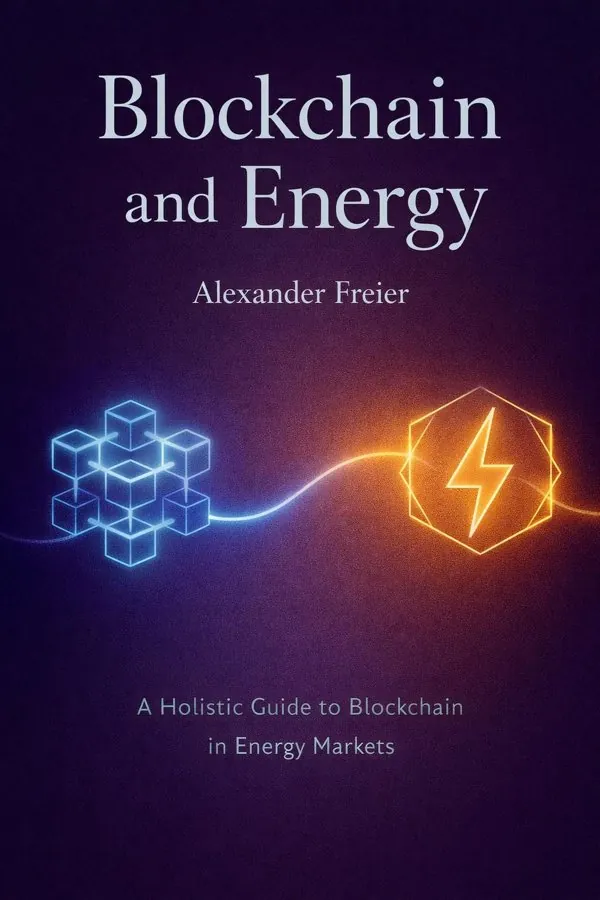
Blockchain and Energy: A Holistic Guide to Blockchain in Energy Markets: Summary & Key Insights
 10 min6 chaptersAudio available
What Is Blockchain and Energy: A Holistic Guide to Blockchain in Energy Markets About?
Blockchain and Energy: A Holistic Guide to Blockchain in Energy Markets by Alexander Freier is a emerging_tech book spanning 6 pages. This book explores the intersection of blockchain technology and the energy sector, providing a comprehensive overview of how decentralized systems can transform energy trading, grid management, and renewable integration. It discusses the fundamentals of blockchain, its potential to enhance transparency and efficiency in energy markets, and presents case studies and models for practical implementation.
This FizzRead summary covers all 6 key chapters of Blockchain and Energy: A Holistic Guide to Blockchain in Energy Markets in approximately 10 minutes, distilling the most important ideas, arguments, and takeaways from Alexander Freier's work. Also available as an audio summary and Key Quotes Podcast.
Blockchain and Energy: A Holistic Guide to Blockchain in Energy Markets
This book explores the intersection of blockchain technology and the energy sector, providing a comprehensive overview of how decentralized systems can transform energy trading, grid management, and renewable integration. It discusses the fundamentals of blockchain, its potential to enhance transparency and efficiency in energy markets, and presents case studies and models for practical implementation.
Who Should Read Blockchain and Energy: A Holistic Guide to Blockchain in Energy Markets?
This book is perfect for anyone interested in emerging_tech and looking to gain actionable insights in a short read. Whether you're a student, professional, or lifelong learner, the key ideas from Blockchain and Energy: A Holistic Guide to Blockchain in Energy Markets by Alexander Freier will help you think differently.
- ✓Readers who enjoy emerging_tech and want practical takeaways
- ✓Professionals looking to apply new ideas to their work and life
- ✓Anyone who wants the core insights of Blockchain and Energy: A Holistic Guide to Blockchain in Energy Markets in just 10 minutes
Want the full summary?
Get instant access to this book summary and 100K+ more with Fizz Moment.
Get Free SummaryAvailable on App Store • Free to download
Key Chapters
Before diving into applications, we need to understand what blockchain really is—and more importantly, what it is not. In its essence, blockchain is a distributed ledger: a shared database replicated across multiple computers or nodes that maintain consensus about the validity of transactions. No single entity owns the ledger; instead, the network collectively maintains its integrity. This architecture eliminates the need for centralized verification, drastically reducing transaction costs in systems where trust is traditionally enforced by intermediaries.
In the context of energy, where countless actors exchange not only electrons but also data, trust is everything. When we apply blockchain principles—immutability, transparency, auditability—to this environment, they become tools to address chronic inefficiencies. Consensus mechanisms like Proof of Work or Proof of Stake determine how agreement about ledger states is achieved, while smart contracts enable automatic execution of terms once predefined conditions are met. For example, imagine a solar generator automatically selling excess energy to a neighbor’s battery as soon as a smart meter detects surplus production. That transaction can be recorded on the blockchain without human or corporate oversight.
Of course, blockchain alone cannot produce energy or distribute electricity. But it can serve as the digital layer connecting generation, consumption, and storage in a seamless, verifiable manner. When applied thoughtfully, this technology can differentiate between renewable and nonrenewable energy sources with absolute transparency, allocate financial rewards instantly, and keep regulators informed, all from one unified data layer.
To understand the appeal of blockchain in energy, we must first confront the status quo. Traditional energy markets are complex hierarchies of generation companies, transmission operators, distributors, and retailers. While these centralized systems have delivered stability for decades, they suffer from information asymmetry and bureaucratic inertia. Transparency often stops at the boundaries of corporate responsibility, while consumers rarely see where their energy comes from or how prices are formed.
The rise of decentralized renewable generation—solar rooftops, wind turbines, small hydro—has revealed the limitations of this old model. Instead of managing one-directional power flows from a few big plants to millions of households, grid operators now face two-way exchanges among thousands of small producers. The administrative systems built for the 20th century cannot keep pace with the transactional complexity of the 21st.
Blockchain steps in as a tool to create shared truth in these interactions. Every kilowatt-hour, every environmental credit, every price adjustment can be registered transparently. Instead of relying on centralized clearinghouses, local or regional markets can autonomously match supply and demand. This doesn’t mean discarding all existing institutions, but reconfiguring them into roles that add real value—system balancing, infrastructure maintenance, and regulation.
+ 4 more chapters — available in the FizzRead app
All Chapters in Blockchain and Energy: A Holistic Guide to Blockchain in Energy Markets
About the Author
Alexander Freier is a researcher and consultant specializing in blockchain applications in energy systems. His work focuses on the integration of decentralized technologies to improve sustainability and efficiency in global energy infrastructures.
Get This Summary in Your Preferred Format
Read or listen to the Blockchain and Energy: A Holistic Guide to Blockchain in Energy Markets summary by Alexander Freier anytime, anywhere. FizzRead offers multiple formats so you can learn on your terms — all free.
Available formats: App · Audio · PDF · EPUB — All included free with FizzRead
Download Blockchain and Energy: A Holistic Guide to Blockchain in Energy Markets PDF and EPUB Summary
Key Quotes from Blockchain and Energy: A Holistic Guide to Blockchain in Energy Markets
“Before diving into applications, we need to understand what blockchain really is—and more importantly, what it is not.”
“To understand the appeal of blockchain in energy, we must first confront the status quo.”
Frequently Asked Questions about Blockchain and Energy: A Holistic Guide to Blockchain in Energy Markets
Blockchain and Energy: A Holistic Guide to Blockchain in Energy Markets by Alexander Freier is a emerging_tech book that explores key ideas across 6 chapters. This book explores the intersection of blockchain technology and the energy sector, providing a comprehensive overview of how decentralized systems can transform energy trading, grid management, and renewable integration. It discusses the fundamentals of blockchain, its potential to enhance transparency and efficiency in energy markets, and presents case studies and models for practical implementation.
You Might Also Like
Blockchain Technology Guide (Chinese Edition)
Li Qilei
10 min
21st Century Technologies Revisited: What is Happening and What is Next
Organisation for Economic Co-operation and Development (OECD)
10 min
Autonomous Vehicles: Opportunities, Strategies, and Challenges
Various Authors
10 min
Autonomy
Lawrence Burns
10 min
Blockchain Basics: A Non-Technical Introduction in 25 Steps
Daniel Drescher
10 min
Blockchain Revolution: How the Technology Behind Bitcoin and Other Cryptocurrencies Is Changing the World
Don Tapscott & Alex Tapscott
10 minBrowse by Category
Ready to read Blockchain and Energy: A Holistic Guide to Blockchain in Energy Markets?
Get the full summary and 100K+ more books with Fizz Moment.