
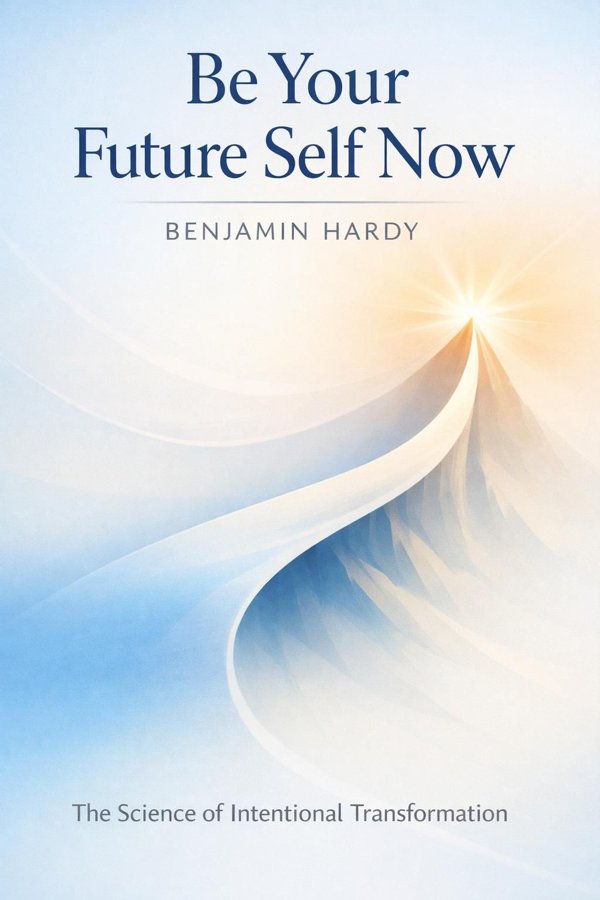
Be Your Future Self Now: The Science of Intentional Transformation: Summary & Key Insights
 10 min9 chaptersAudio available
Key Takeaways from Be Your Future Self Now: The Science of Intentional Transformation
Most people make poor decisions not because they are lazy or unintelligent, but because their future feels emotionally distant.
People do not rise into transformation by accident; they move toward what they can see and why it matters.
One of the strongest forces holding people back is not lack of talent but loyalty to an outdated identity.
A future self is only powerful when it changes what you do today.
Willpower is overrated when your surroundings are constantly training you to stay the same.
What Is Be Your Future Self Now: The Science of Intentional Transformation About?
Be Your Future Self Now: The Science of Intentional Transformation by Benjamin Hardy is a self_awareness book spanning 7 pages. Be Your Future Self Now is a practical guide to becoming the person you want to be by letting your future identity shape your present decisions. In this book, organizational psychologist Benjamin Hardy argues that real transformation does not begin with willpower alone. It begins when you build a vivid relationship with your future self and allow that relationship to direct your habits, commitments, environment, and goals. Instead of treating change as a slow, accidental process, Hardy presents it as something you can design intentionally. What makes the book especially compelling is its blend of psychological research, identity theory, and actionable self-development strategies. Hardy draws on ideas from behavioral science, trauma research, goal setting, and personal agency to show why people often stay trapped in outdated versions of themselves—and how they can break free. His central claim is simple but powerful: the clearer and more emotionally real your future self becomes, the easier it is to make courageous decisions in the present. For readers who feel stuck, divided, or overly defined by their past, this book offers a hopeful and structured path toward reinvention.
This FizzRead summary covers all 9 key chapters of Be Your Future Self Now: The Science of Intentional Transformation in approximately 10 minutes, distilling the most important ideas, arguments, and takeaways from Benjamin Hardy's work. Also available as an audio summary and Key Quotes Podcast.
Be Your Future Self Now: The Science of Intentional Transformation
Be Your Future Self Now is a practical guide to becoming the person you want to be by letting your future identity shape your present decisions. In this book, organizational psychologist Benjamin Hardy argues that real transformation does not begin with willpower alone. It begins when you build a vivid relationship with your future self and allow that relationship to direct your habits, commitments, environment, and goals. Instead of treating change as a slow, accidental process, Hardy presents it as something you can design intentionally.
What makes the book especially compelling is its blend of psychological research, identity theory, and actionable self-development strategies. Hardy draws on ideas from behavioral science, trauma research, goal setting, and personal agency to show why people often stay trapped in outdated versions of themselves—and how they can break free. His central claim is simple but powerful: the clearer and more emotionally real your future self becomes, the easier it is to make courageous decisions in the present. For readers who feel stuck, divided, or overly defined by their past, this book offers a hopeful and structured path toward reinvention.
Who Should Read Be Your Future Self Now: The Science of Intentional Transformation?
This book is perfect for anyone interested in self_awareness and looking to gain actionable insights in a short read. Whether you're a student, professional, or lifelong learner, the key ideas from Be Your Future Self Now: The Science of Intentional Transformation by Benjamin Hardy will help you think differently.
- ✓Readers who enjoy self_awareness and want practical takeaways
- ✓Professionals looking to apply new ideas to their work and life
- ✓Anyone who wants the core insights of Be Your Future Self Now: The Science of Intentional Transformation in just 10 minutes
Want the full summary?
Get instant access to this book summary and 100K+ more with Fizz Moment.
Get Free SummaryAvailable on App Store • Free to download
Key Chapters
Most people make poor decisions not because they are lazy or unintelligent, but because their future feels emotionally distant. Hardy builds on a powerful psychological insight: when you do not feel connected to who you will become, it is easy to prioritize short-term comfort over long-term meaning. You procrastinate, overspend, neglect your health, and delay difficult conversations because the person who will pay the price later feels like someone else.
The book argues that transformation begins when your future self becomes psychologically real. This is more than setting goals. It means developing a vivid sense of the person you are becoming, what that person values, and how that version of you behaves under pressure. The stronger this connection, the more naturally your current choices align with what matters most.
For example, someone trying to improve their finances may fail if they only focus on budgeting rules. But if they deeply identify with their future self as calm, responsible, and free from debt, saving money becomes an act of loyalty rather than deprivation. The same principle applies to health, relationships, and career decisions.
Hardy also suggests that your current identity is shaped as much by your imagined future as by your remembered past. If your future is blurry, your present becomes reactive. If your future is clear, your present becomes intentional.
Actionable takeaway: Write a detailed description of your future self three to five years from now, including habits, standards, relationships, and emotional qualities, then review it daily before making important decisions.
People do not rise into transformation by accident; they move toward what they can see and why it matters. Hardy emphasizes that a compelling future is not a luxury for ambitious people. It is a requirement for meaningful change. Without a clear vision, the mind defaults to familiar routines, old environments, and inherited expectations. You may stay busy, but you drift.
Vision gives direction, while purpose gives energy. A future self without purpose becomes fantasy. Purpose without vision becomes vague effort. Hardy shows that the two must work together. You need a picture of where you are going and a deeply personal reason for going there. When these are joined, sacrifice becomes easier, discipline feels more meaningful, and setbacks lose some of their emotional weight.
Consider a professional who wants to leave an unfulfilling job. If their motivation is only to escape discomfort, they may hesitate or settle for another role that repeats the same pattern. But if they have a vivid vision of the work they want to do and a strong sense of contribution they want to make, their decisions become more focused. They can better judge opportunities, say no to distractions, and endure uncertainty.
Hardy challenges readers to stop asking, “What should I do next?” and start asking, “Who am I committed to becoming?” That question creates a higher-level orientation. It shifts attention from immediate tasks to identity-based direction.
Actionable takeaway: Create a one-page personal vision statement that explains the life you are building, why it matters, and what non-negotiable values must guide the journey.
One of the strongest forces holding people back is not lack of talent but loyalty to an outdated identity. Hardy argues that many individuals unconsciously organize their lives around old stories: “I am not disciplined,” “I always quit,” “I am too late,” or “People like me do not succeed at that level.” These beliefs feel factual because they are tied to past experiences, but they are often interpretations rather than truths.
The problem is that people tend to protect their current identity, even when it causes pain. Familiar limitations can feel safer than unknown growth. If your self-concept was built in environments of criticism, chaos, or low expectations, you may continue behaving in ways that confirm those conditions long after they are gone. This is one reason self-sabotage persists.
Hardy invites readers to stop treating the past as a fixed definition of who they are. The past should be a reference point, not a prison. Your previous behavior may explain your current position, but it does not have to predict your future. Transformation requires consciously separating from beliefs that no longer serve the person you want to become.
For instance, someone who grew up being told they were irresponsible might avoid leadership roles despite having strong capabilities. Unless they question that inherited identity, they will keep selecting smaller opportunities that fit the story. By replacing the old belief with evidence of present growth and future intention, they make room for a different life.
Actionable takeaway: Identify three beliefs that belong to your past self, challenge each with contrary evidence, and replace them with statements aligned with your future identity.
A future self is only powerful when it changes what you do today. Hardy repeatedly stresses that identity is not built through occasional inspiration but through repeated, aligned behavior. If your calendar, spending, attention, and routines do not reflect your stated future, then your present self is still in charge.
This idea helps explain why many people consume self-improvement content without changing. They love the language of growth but continue reinforcing the same identity through daily choices. Reading about confidence does not build confidence. Making the calls, setting the boundaries, practicing the skill, and keeping promises to yourself does.
Hardy recommends thinking in terms of congruence. Are your actions consistent with the person you claim you want to become? If your future self is healthy, your routines should include sleep, movement, and recovery. If your future self is a thoughtful leader, your daily behavior should include preparation, learning, and difficult conversations. Small acts matter because they train self-trust.
Practical application can be simple. A writer who wants to publish a book should not wait for long blocks of ideal time. They should design a daily writing ritual that proves their commitment now. A person building emotional maturity should practice pausing before reacting, even in minor moments. These actions may seem small, but they are identity votes.
Actionable takeaway: Choose three recurring behaviors your future self would consider normal, schedule them into your week, and treat them as expressions of identity rather than optional tasks.
Willpower is overrated when your surroundings are constantly training you to stay the same. Hardy highlights a principle supported by behavioral science: environment often determines behavior more reliably than motivation does. People like to imagine they are choosing freely, but much of what they do is influenced by cues, norms, relationships, and systems around them.
If you remain in spaces that reinforce your old identity, change becomes unnecessarily difficult. A cluttered workspace can support distraction. Friends who mock ambition can keep you small. A schedule filled with low-value commitments can block the deep work your future requires. On the other hand, environments can be designed to reduce friction for the behaviors you want and increase friction for the behaviors you are leaving behind.
This applies socially as well. Relationships either expand or compress your sense of possibility. Hardy encourages readers to notice who helps them act like their future self and who continually pulls them back into roles, habits, and emotional patterns they are trying to outgrow. This does not always mean ending relationships, but it often means renegotiating access, boundaries, and expectations.
A practical example is someone trying to become healthier. They may fail repeatedly when relying on motivation alone. But if they stock their home differently, exercise with a supportive friend, join a community with similar standards, and remove common temptations, the desired identity becomes easier to live.
Actionable takeaway: Audit your physical spaces, digital inputs, and key relationships, then make one immediate change in each area that better supports your future self.
Many people assume transformation is mainly about strategy, but Hardy shows that emotional capacity is just as important. You cannot consistently act as your future self if you are repeatedly hijacked by fear, shame, resentment, or impulsive reaction. Growth requires the ability to feel discomfort without collapsing into old patterns.
When you attempt to change, emotional resistance often increases. Old identities defend themselves. New standards create tension. You may feel exposed when setting boundaries, uncertain when taking bigger risks, or discouraged when progress is slower than expected. Without emotional regulation, these normal experiences can trigger retreat. You tell yourself the goal was unrealistic when the real issue is that the discomfort felt unfamiliar.
Hardy frames resilience not as toughness but as integration. Instead of denying pain or pretending confidence, you learn to process emotions in ways that preserve agency. This may include journaling, therapy, meditation, honest conversations, or simply creating space between stimulus and response. The goal is not emotional perfection. It is emotional maturity.
A leader trying to become more decisive, for example, may discover that indecision is not a time-management issue but a fear of disappointing others. Until that fear is addressed, no productivity system will solve the real problem. Likewise, someone trying to stop unhealthy coping habits must learn new ways to handle stress, loneliness, or uncertainty.
Actionable takeaway: Identify the emotion that most often pulls you back into your old self, then create a specific response plan for how you will handle it the next time it appears.
One of Hardy’s boldest claims is that you do not become your future self someday; you access that identity in the present through decision and behavior. This does not mean pretending to have achievements you have not earned. It means operating from the standards, mindset, and values of the person you intend to become before external evidence fully catches up.
This principle changes the sequence most people follow. They believe results must come first, then confidence, then identity. Hardy reverses it. Identity comes first. You begin making decisions as the person who already honors their commitments, protects their time, values their health, and chooses growth over comfort. Those decisions then generate the results that reinforce the identity.
For example, someone waiting to feel successful before setting firmer boundaries may never change. But if they ask, “What would my future self allow in this situation?” they may stop overcommitting, communicate more directly, and preserve energy for meaningful work. A person who wants to become financially strong starts spending and saving according to the principles of that future identity now, not after they receive a higher income.
This approach creates immediate power. You do not need permission from the past to live differently. The future self becomes a guide for present conduct. With repetition, what once felt aspirational begins to feel natural.
Actionable takeaway: Before one important choice each day, pause and ask, “What would my future self do here?” then follow that answer even if it feels uncomfortable.
Real change often begins when a possibility becomes a commitment. Hardy distinguishes between preference and decision. Many people prefer growth, health, confidence, or success, but they remain uncommitted. Preferences bend when life becomes inconvenient. Commitments reorganize behavior, attention, and resources.
A commitment narrows the field. It reduces internal negotiation because a real decision has already been made. This is why transformative periods in life often follow moments of clarity: ending a harmful relationship, choosing sobriety, launching a business, returning to school, or setting a firm standard for self-respect. The external action matters, but the deeper shift is internal. You stop keeping one foot in your old identity.
Hardy explains that commitment generates momentum because it forces adaptation. Once you truly decide, you begin noticing opportunities, changing routines, and solving problems that seemed invisible before. Ambiguity drains energy. Commitment channels it.
Take someone who says they want to write more. As long as it is a vague preference, writing competes with everything else. But once they commit to becoming an author, they create a writing schedule, protect creative time, seek feedback, and start acting differently around distractions. The commitment changes not just behavior but self-concept.
Actionable takeaway: Choose one area where you have been lingering in preference rather than commitment, make a clear decision, and define one concrete standard that proves the decision is real.
Becoming your future self is not only about adding better habits; it is also about removing identities, roles, and narratives that no longer fit. Hardy presents personal growth as a process of strategic editing. You must decide what gets carried forward and what must be released. Without subtraction, your future gets crowded by obligations and meanings that belong to an earlier chapter.
People often resist this because they equate consistency with integrity. But true integrity is alignment with truth, not endless loyalty to former versions of yourself. You may need to let go of an old ambition, a social role, a coping mechanism, or even a version of success that no longer reflects your values. Growth becomes possible when you stop asking how to preserve every part of your current identity.
This idea is especially relevant for high achievers. Sometimes the traits that produced earlier success become obstacles later. Hustle can become burnout. Agreeableness can become self-betrayal. Independence can become isolation. The question is not whether something once worked. The question is whether it serves the future you are building now.
In practical terms, identity editing may involve quitting draining commitments, deleting digital distractions, changing your self-description, or grieving an old dream that no longer fits your deeper purpose. These acts can feel uncomfortable, but they create the psychological and practical space transformation needs.
Actionable takeaway: Make a “stop doing” list for your future self, including one habit, one role, and one expectation you are ready to release.
All Chapters in Be Your Future Self Now: The Science of Intentional Transformation
About the Author
Benjamin Hardy is an organizational psychologist, speaker, and bestselling author whose work focuses on personal transformation, identity development, and intentional living. He is known for translating psychological research into practical frameworks that help readers make meaningful changes in their lives. Hardy has written extensively on behavior, motivation, future-oriented thinking, and self-improvement, and his ideas have appeared in major publications including Harvard Business Review and Forbes. His books often explore how individuals can redesign their environment, reshape their beliefs, and align daily action with long-term purpose. With a style that combines research, clarity, and encouragement, Hardy has become a prominent voice in modern personal development, especially for readers interested in growth grounded in psychology rather than inspiration alone.
Get This Summary in Your Preferred Format
Read or listen to the Be Your Future Self Now: The Science of Intentional Transformation summary by Benjamin Hardy anytime, anywhere. FizzRead offers multiple formats so you can learn on your terms — all free.
Available formats: App · Audio · PDF · EPUB — All included free with FizzRead
Download Be Your Future Self Now: The Science of Intentional Transformation PDF and EPUB Summary
Key Quotes from Be Your Future Self Now: The Science of Intentional Transformation
“Most people make poor decisions not because they are lazy or unintelligent, but because their future feels emotionally distant.”
“People do not rise into transformation by accident; they move toward what they can see and why it matters.”
“One of the strongest forces holding people back is not lack of talent but loyalty to an outdated identity.”
“A future self is only powerful when it changes what you do today.”
“Willpower is overrated when your surroundings are constantly training you to stay the same.”
Frequently Asked Questions about Be Your Future Self Now: The Science of Intentional Transformation
Be Your Future Self Now: The Science of Intentional Transformation by Benjamin Hardy is a self_awareness book that explores key ideas across 9 chapters. Be Your Future Self Now is a practical guide to becoming the person you want to be by letting your future identity shape your present decisions. In this book, organizational psychologist Benjamin Hardy argues that real transformation does not begin with willpower alone. It begins when you build a vivid relationship with your future self and allow that relationship to direct your habits, commitments, environment, and goals. Instead of treating change as a slow, accidental process, Hardy presents it as something you can design intentionally. What makes the book especially compelling is its blend of psychological research, identity theory, and actionable self-development strategies. Hardy draws on ideas from behavioral science, trauma research, goal setting, and personal agency to show why people often stay trapped in outdated versions of themselves—and how they can break free. His central claim is simple but powerful: the clearer and more emotionally real your future self becomes, the easier it is to make courageous decisions in the present. For readers who feel stuck, divided, or overly defined by their past, this book offers a hopeful and structured path toward reinvention.
More by Benjamin Hardy
The Gap and the Gain: The High Achievers' Guide to Happiness, Confidence, and Success
Dan Sullivan, Benjamin Hardy
10 min
Who Not How: The Formula to Achieve Bigger Goals Through Accelerating Teamwork
Dan Sullivan, Benjamin Hardy
10 min
Personality Isn't Permanent: Break Free from Self-Limiting Beliefs and Rewrite Your Story
Benjamin Hardy
10 min
Willpower Doesn't Work: Discover the Hidden Keys to Success
Benjamin Hardy
10 minYou Might Also Like

Rising Strong
Brené Brown
10 min
You Do You
Sarah Knight
10 min
Master Your Emotions: A Practical Guide to Overcome Negativity and Better Manage Your Feelings
Thibaut Meurisse
10 min
The Mountain Is You: Transforming Self-Sabotage Into Self-Mastery
Brianna Wiest
10 min
101 Essays That Will Change The Way You Think
Brianna Wiest
10 min
A Radical Awakening: Turn Pain into Power, Embrace Your Truth, Live Free
Shefali Tsabary
10 minFeatured In
Browse by Category
Ready to read Be Your Future Self Now: The Science of Intentional Transformation?
Get the full summary and 100K+ more books with Fizz Moment.