
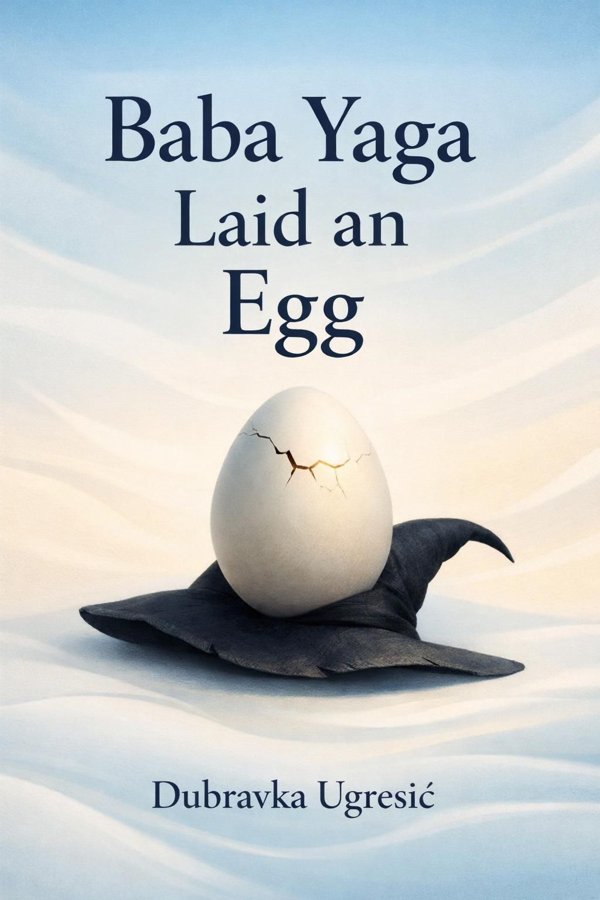
Baba Yaga Laid an Egg: Summary & Key Insights
 10 min9 chaptersAudio available
Key Takeaways from Baba Yaga Laid an Egg
A spa may look like a place of rest, but in Ugresic’s hands it becomes a laboratory where culture’s anxieties about age are exposed.
Sometimes a myth survives not in temples or legends, but in people we are taught not to notice.
A myth gains power when people stop examining it.
One of the book’s deepest provocations is that old age is not only a biological process; it is also a social disappearance.
Laughter can be a survival strategy, especially when dignity is under assault.
What Is Baba Yaga Laid an Egg About?
Baba Yaga Laid an Egg by Dubravka Ugresic is a classics book spanning 3 pages. What if the old woman in folklore—the crone mocked, feared, or dismissed—were not a leftover figure from the past, but one of literature’s most radical truths? In Baba Yaga Laid an Egg, Dubravka Ugresic takes the Slavic witch Baba Yaga and transforms her into a lens for examining aging, femininity, motherhood, exile, beauty, and cultural prejudice. Part novel, part essay, part mythographic meditation, the book moves restlessly between personal reflection, comic fiction, and scholarly commentary, refusing any neat category. That formal strangeness is exactly the point: women’s lives, especially older women’s lives, rarely fit the stories society gives them. Ugresic writes with wit, irony, and intellectual force. A major Croatian writer and essayist shaped by exile and post-Yugoslav history, she brings both literary sophistication and political sharpness to the subject. Rather than retelling a myth in a conventional way, she asks what myths reveal about the bodies and fears cultures try to control. The result is a deeply original classic: a book that is funny, unsettling, compassionate, and fiercely intelligent. It matters because it dares to give old age back its mystery, dignity, and disruptive power.
This FizzRead summary covers all 9 key chapters of Baba Yaga Laid an Egg in approximately 10 minutes, distilling the most important ideas, arguments, and takeaways from Dubravka Ugresic's work. Also available as an audio summary and Key Quotes Podcast.
Baba Yaga Laid an Egg
What if the old woman in folklore—the crone mocked, feared, or dismissed—were not a leftover figure from the past, but one of literature’s most radical truths? In Baba Yaga Laid an Egg, Dubravka Ugresic takes the Slavic witch Baba Yaga and transforms her into a lens for examining aging, femininity, motherhood, exile, beauty, and cultural prejudice. Part novel, part essay, part mythographic meditation, the book moves restlessly between personal reflection, comic fiction, and scholarly commentary, refusing any neat category. That formal strangeness is exactly the point: women’s lives, especially older women’s lives, rarely fit the stories society gives them.
Ugresic writes with wit, irony, and intellectual force. A major Croatian writer and essayist shaped by exile and post-Yugoslav history, she brings both literary sophistication and political sharpness to the subject. Rather than retelling a myth in a conventional way, she asks what myths reveal about the bodies and fears cultures try to control. The result is a deeply original classic: a book that is funny, unsettling, compassionate, and fiercely intelligent. It matters because it dares to give old age back its mystery, dignity, and disruptive power.
Who Should Read Baba Yaga Laid an Egg?
This book is perfect for anyone interested in classics and looking to gain actionable insights in a short read. Whether you're a student, professional, or lifelong learner, the key ideas from Baba Yaga Laid an Egg by Dubravka Ugresic will help you think differently.
- ✓Readers who enjoy classics and want practical takeaways
- ✓Professionals looking to apply new ideas to their work and life
- ✓Anyone who wants the core insights of Baba Yaga Laid an Egg in just 10 minutes
Want the full summary?
Get instant access to this book summary and 100K+ more with Fizz Moment.
Get Free SummaryAvailable on App Store • Free to download
Key Chapters
A spa may look like a place of rest, but in Ugresic’s hands it becomes a laboratory where culture’s anxieties about age are exposed. In the book’s opening section, the narrator is drawn into a world of treatments, rituals, and aging bodies in an Eastern European spa. This is not a glamorous retreat. It is a borderland where the physical realities of pain, weakness, maintenance, and decline meet the symbolic power of myth. Women gather there to be repaired, managed, soothed, or hidden, and the setting quietly asks a difficult question: why does society tolerate aging in men as wisdom but cast aging in women as failure?
The spa works as a modern fairy-tale forest. Strange routines replace magic spells; doctors, beauticians, and wellness experts become secular priests of rejuvenation. Underneath the humor is a serious observation: contemporary culture often treats the female body as a project that must never visibly move toward old age. The spa therefore becomes a stage on which fear, vanity, care, shame, and endurance all play out at once.
This idea remains practical far beyond the novel. Think about anti-aging advertising, workplace assumptions about older women, or the pressure to appear “fresh” at any age. Ugresic teaches us to see these not as isolated annoyances but as part of a larger mythology that determines who gets to remain visible. Once you notice this, ordinary spaces—clinics, salons, gyms, even social media—start to reveal hidden values about worth and desirability.
Actionable takeaway: Pay attention to any space that promises improvement or rejuvenation, and ask what kind of story about aging it is selling you.
Sometimes a myth survives not in temples or legends, but in people we are taught not to notice. In the novel’s fictional center, three older women—Beba, Kukla, and Pupa—arrive at a hotel for an eccentric, unsettling holiday. They are comic, awkward, excessive, vulnerable, and unforgettable. At first they may seem like caricatures of old age, but Ugresic slowly reveals them as fragmented embodiments of Baba Yaga herself: grotesque to some eyes, powerful in ways that are not immediately legible, and resistant to being reduced to polite social roles.
Each woman carries a different version of female aging. One is needy and dramatic, another damaged by long histories of emotional compromise, another stubbornly theatrical and unruly. Together they expose how older women are often seen as absurd when they cease to perform usefulness, sweetness, or invisibility. Yet the brilliance of the section lies in its refusal to sentimentalize them. These women are not noble victims. They are messy, contradictory, and alive.
That complexity matters in everyday life. Modern culture likes digestible archetypes: the graceful elder, the sexy ageless woman, the comic grandmother. Ugresic resists all of them. She suggests that women do not become easier to understand with age; they become denser, stranger, and less willing to conform. In practical terms, the book encourages readers to think beyond labels when dealing with older relatives, colleagues, or even their future selves.
Actionable takeaway: The next time you catch yourself reducing an older woman to a type—fragile, difficult, irrelevant, cute—pause and replace the stereotype with curiosity.
A myth gains power when people stop examining it. In the book’s final section, Ugresic introduces a pseudo-scholarly voice that analyzes Baba Yaga through folklore, symbolism, literary references, and cultural history. This shift may feel surprising after the personal and fictional sections, but it is essential. The novel does not merely retell a myth; it dissects the machinery by which myths are built, circulated, and used to classify women.
Baba Yaga is not one fixed figure. She is a patchwork of contradictory meanings: devourer and guide, monster and grandmother, threat and source of wisdom. By tracing these unstable meanings, Ugresic shows that myths are never innocent. They encode social fears, especially fears around female autonomy, sexuality, age, and bodily difference. The old woman in folklore often appears as a warning: become too independent, too desiring, too knowledgeable, too old, and you will be cast outside the human community.
This analytical section has practical value because it trains readers to read all cultural stories critically. Fairy tales, films, advertisements, and even family narratives rely on stock figures that tell us who is lovable, dangerous, or disposable. Once you understand Baba Yaga as a cultural construction, you begin to see how many modern “witches” still exist—women mocked for being childless, outspoken, eccentric, aging, or socially inconvenient.
Actionable takeaway: When you encounter a recurring female stereotype in culture, ask what fear it disguises and whose interests it serves.
One of the book’s deepest provocations is that old age is not only a biological process; it is also a social disappearance. Ugresic repeatedly returns to the way aging women become difficult for culture to place. Once they are no longer read primarily as sexual objects, mothers of young children, or workers in their “prime,” they are often stripped of symbolic value. The insult is double: society fears them and ignores them at the same time.
Baba Yaga becomes the perfect counter-symbol because she embodies what culture tries to exile. She is old, unsightly, powerful, and unassimilated. Ugresic argues that the horror attached to such a figure says less about old women themselves than about a social order built on youthful attractiveness, smooth surfaces, and controllable femininity. This is why the novel is so politically sharp beneath its humor. It reveals invisibility as a form of cultural violence.
You can observe this in ordinary life. Consider how rarely older women appear as protagonists in mainstream fiction or film unless they are comic, tragic, or inspirational. Think about office cultures that quietly sideline older female employees, or beauty standards that treat signs of age as emergencies. The novel does not simply complain about this; it asks readers to perceive the hidden rules that make such exclusion seem natural.
The practical implication is powerful. If invisibility is socially produced, it can also be resisted through language, representation, and attention. To see older women fully is already to challenge a dominant script.
Actionable takeaway: Notice who is absent from the stories and images around you, and consciously seek out perspectives centered on older women’s lives.
Laughter can be a survival strategy, especially when dignity is under assault. One of Ugresic’s great achievements is her use of humor to approach subjects many writers handle with solemnity: aging, bodily breakdown, loneliness, failed intimacy, vanity, and decline. The comedy in Baba Yaga Laid an Egg is not decorative. It is a method of reclaiming experience from shame. Awkward encounters, absurd treatments, emotional excess, and grotesque details all become ways of refusing the polished lie that life should remain graceful and controlled.
This humor matters because old age is often discussed in tones that flatten people into medical cases or moral lessons. Ugresic rejects both. She allows older women to be ridiculous without becoming disposable. In fact, the very qualities that provoke laughter—stubbornness, theatricality, strange appetites, social clumsiness—make the characters more fully human. Humor breaks the spell of pity.
In everyday terms, this insight applies to how we navigate embarrassment and vulnerability. Many people respond to aging, illness, or bodily change with silence because they fear humiliation. Ugresic suggests another option: comic candor. Naming the absurdity of one’s condition can lessen its power and create solidarity with others facing similar realities.
This is not about trivializing pain. It is about resisting the idea that suffering must always be expressed in respectable ways. Sometimes mockery, exaggeration, and irony offer a freer form of truth than seriousness.
Actionable takeaway: When confronting an uncomfortable change in your life, experiment with describing it honestly and humorously rather than hiding it behind silence or perfection.
A conventional story promises order; Ugresic is more interested in truth. Baba Yaga Laid an Egg is deliberately fragmented, moving from memoir-like reflection to fiction to scholarly commentary. This structure can feel disorienting, but that disorientation is meaningful. The book’s form reflects the fractured ways women’s lives are narrated by others: as domestic anecdote, social stereotype, medical case, fairy tale, family burden, erotic absence, or anthropological curiosity. No single style can contain the subject, so Ugresic breaks the frame.
The fragmented structure also challenges readers’ habits. We often expect stories about women, especially older women, to be intimate and emotionally transparent. Ugresic gives us intimacy, but she also gives us irony, theory, play, and intellectual distance. She refuses to let her characters or themes become consumable in a simple way. That refusal is itself feminist, because it rejects the demand that women’s experience be packaged neatly for easy empathy.
There is a practical lesson here for readers and thinkers: complexity is not a flaw. In work, family, and self-understanding, people often feel pressure to present a clean narrative—who they are, what happened, what it means. But many truths arrive in fragments, contradictions, and mixed tones. Ugresic models a way of honoring that messiness without forcing false coherence.
For anyone navigating identity, migration, caregiving, aging, or grief, this formal lesson can be liberating. You do not always need one tidy story. Sometimes a collage tells the truth better.
Actionable takeaway: When reflecting on a difficult experience, allow yourself multiple forms—memory, analysis, humor, even contradiction—instead of forcing a single polished version.
The obsession with youth is rarely just about beauty. Ugresic shows that anti-aging culture is a socially acceptable way of expressing a deeper terror: mortality, decay, and the body’s refusal to remain manageable. Women are asked to carry this fear more visibly than men. Wrinkles, weight changes, weakness, and altered sexuality become symbols of failure rather than ordinary aspects of embodied life. The result is a culture that markets control while deepening anxiety.
In Baba Yaga Laid an Egg, bodily maintenance is often comic, but the comedy points to a serious trap. If aging is framed as a personal defect to be corrected, then women are kept busy fighting time instead of questioning the values that make visible age shameful. Beauty culture thus becomes ideological. It converts collective fear into individual self-discipline.
This idea applies everywhere: skin-care industries that promise reversal, media narratives celebrating “agelessness,” and language that praises women for not looking their age as if age itself were offensive. Ugresic asks us to hear the violence hidden inside these compliments. To reject this logic does not require rejecting pleasure, adornment, or self-care. It requires seeing the difference between enjoyment and compulsory self-erasure.
A practical response might involve changing the language we use. Rather than treating age as something to hide, we can speak about bodily change with neutrality or curiosity. That shift is small but meaningful.
Actionable takeaway: Notice when beauty advice is really fear management, and choose at least one routine or belief based on care rather than panic.
It is tempting to think of myth as an escape from modern life, but Ugresic uses myth as a tool for seeing modern life more clearly. Baba Yaga is not imported into the present as quaint folklore. She functions as a resistant figure who reveals what contemporary society still cannot tolerate: female age, unruliness, appetite, and noncompliance. Myth here is not nostalgic. It is diagnostic.
This matters because modern readers often imagine themselves beyond superstition while still living inside inherited symbolic systems. We may no longer believe in witches literally, yet we continue to stigmatize women who appear too strange, too old, too loud, too solitary, or too powerful. Myth survives in attitude, in insult, in visual codes, in narrative punishment. Ugresic uncovers these continuities.
The book’s larger contribution is to show that reclaiming a demonized figure can be politically energizing. Instead of asking how older women can become more acceptable, the novel asks what becomes visible when they stop asking for acceptance. Baba Yaga’s power lies partly in her refusal to be beautified into harmlessness.
This has practical relevance for anyone marginalized by social expectations. Sometimes resistance begins not with proving normality, but with questioning why normality is the standard at all. Ugresic’s use of myth reminds readers that symbols can be reused, reinterpreted, and weaponized against the structures that produced them.
Actionable takeaway: Revisit a negative label or stereotype you have inherited, and ask whether reinterpreting it could become a source of strength rather than shame.
All Chapters in Baba Yaga Laid an Egg
About the Author
Dubravka Ugresic (1949–2023) was a Croatian writer, essayist, and literary scholar whose work earned an international reputation for its originality, irony, and political courage. Born in Kutina, in former Yugoslavia, she studied and later taught literature before becoming one of the region’s most distinctive literary voices. During the 1990s, after criticizing nationalism and the cultural climate surrounding the Yugoslav wars, she was publicly attacked and eventually chose a life in exile. That experience shaped much of her writing, which often explored displacement, identity, memory, popular culture, and the pressures placed on women. Ugresic wrote across genres, combining fiction, criticism, and autobiographical reflection with remarkable agility. Her books were translated widely, and she received numerous literary honors, establishing her as a major figure in contemporary European literature.
Get This Summary in Your Preferred Format
Read or listen to the Baba Yaga Laid an Egg summary by Dubravka Ugresic anytime, anywhere. FizzRead offers multiple formats so you can learn on your terms — all free.
Available formats: App · Audio · PDF · EPUB — All included free with FizzRead
Download Baba Yaga Laid an Egg PDF and EPUB Summary
Key Quotes from Baba Yaga Laid an Egg
“A spa may look like a place of rest, but in Ugresic’s hands it becomes a laboratory where culture’s anxieties about age are exposed.”
“Sometimes a myth survives not in temples or legends, but in people we are taught not to notice.”
“A myth gains power when people stop examining it.”
“One of the book’s deepest provocations is that old age is not only a biological process; it is also a social disappearance.”
“Laughter can be a survival strategy, especially when dignity is under assault.”
Frequently Asked Questions about Baba Yaga Laid an Egg
Baba Yaga Laid an Egg by Dubravka Ugresic is a classics book that explores key ideas across 9 chapters. What if the old woman in folklore—the crone mocked, feared, or dismissed—were not a leftover figure from the past, but one of literature’s most radical truths? In Baba Yaga Laid an Egg, Dubravka Ugresic takes the Slavic witch Baba Yaga and transforms her into a lens for examining aging, femininity, motherhood, exile, beauty, and cultural prejudice. Part novel, part essay, part mythographic meditation, the book moves restlessly between personal reflection, comic fiction, and scholarly commentary, refusing any neat category. That formal strangeness is exactly the point: women’s lives, especially older women’s lives, rarely fit the stories society gives them. Ugresic writes with wit, irony, and intellectual force. A major Croatian writer and essayist shaped by exile and post-Yugoslav history, she brings both literary sophistication and political sharpness to the subject. Rather than retelling a myth in a conventional way, she asks what myths reveal about the bodies and fears cultures try to control. The result is a deeply original classic: a book that is funny, unsettling, compassionate, and fiercely intelligent. It matters because it dares to give old age back its mystery, dignity, and disruptive power.
More by Dubravka Ugresic

You Might Also Like






Browse by Category
Ready to read Baba Yaga Laid an Egg?
Get the full summary and 100K+ more books with Fizz Moment.