
Yasmin Khan Books
Yasmin Khan is a British historian and associate professor of history at the University of Oxford. Her research focuses on the history of the British Empire, South Asia, and decolonization.
Known for: The Great Partition: The Making of India and Pakistan
Books by Yasmin Khan
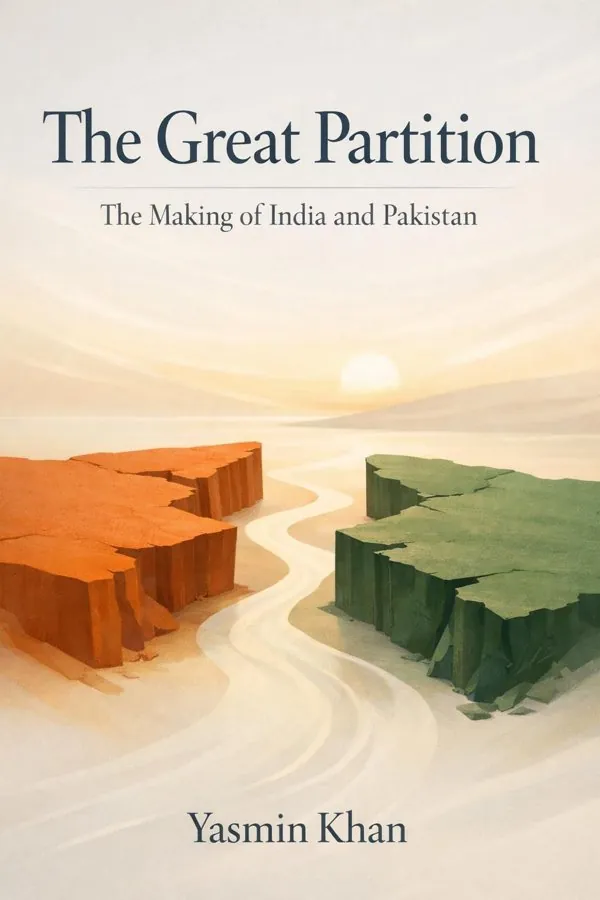
The Great Partition: The Making of India and Pakistan
Some historical events are so vast that they seem impossible to grasp until a careful historian shows how national decisions entered ordinary homes, villages, trains, and bodies. Yasmin Khan’s The Great Partition: The Making of India and Pakistan does exactly that. The book examines the 1947 division of British India into the independent states of India and Pakistan, tracing how imperial retreat, political rivalry, administrative haste, and communal fear combined to produce one of the largest and bloodiest forced migrations in modern history. Rather than treating Partition as an inevitable constitutional outcome, Khan reveals it as a messy, contingent, and deeply human catastrophe. What makes this book especially important is its balance. Khan moves from high politics—Mountbatten, Jinnah, Nehru, Congress, the Muslim League—to the everyday experiences of refugees, women, civil servants, soldiers, and families suddenly trapped on the wrong side of a border that barely existed before it was enforced. The result is not just a political history, but a social and moral one. As a historian of empire and decolonization, Khan writes with authority, clarity, and empathy, making this book essential for anyone who wants to understand how states are made, how societies break, and why Partition still shapes South Asia today.
Read SummaryKey Insights from Yasmin Khan
Empire Ended in Weakness and Haste
One of Khan’s most powerful insights is that Partition was not simply the birth of two nations; it was also the disorderly ending of an exhausted empire. Britain emerged from the Second World War financially strained, politically weakened, and increasingly unable to justify or sustain imperial rule ...
From The Great Partition: The Making of India and Pakistan
Nationalism Produced Rival Political Futures
A nation is often imagined as a shared dream, but Khan reminds us that in the 1940s India contained competing dreams of sovereignty. The Indian National Congress and the All-India Muslim League both claimed to speak for India’s future, yet they imagined that future in fundamentally different ways. C...
From The Great Partition: The Making of India and Pakistan
British Decisions Accelerated Political Breakdown
History often blames local rivals for violence, but Khan insists that imperial decision-making played a direct role in deepening the crisis. British policy in the final years of empire was inconsistent, reactive, and often detached from realities on the ground. Successive plans for constitutional tr...
From The Great Partition: The Making of India and Pakistan
Negotiations Failed Before Borders Were Drawn
By the time borders were drawn, much of the trust needed to live with them had already collapsed. Khan shows that Partition emerged from a long sequence of failed negotiations in which leaders debated federation, provincial autonomy, minority safeguards, power-sharing, and the distribution of author...
From The Great Partition: The Making of India and Pakistan
Borders Were Made With Dangerous Abstraction
Few episodes in modern history better show the violence hidden inside cartography than the drawing of the Partition borders. Khan examines the work of the Boundary Commissions and the role of Cyril Radcliffe, who was tasked with dividing Punjab and Bengal despite limited local knowledge, inadequate ...
From The Great Partition: The Making of India and Pakistan
Migration Turned Fear Into Catastrophe
Partition became one of the largest forced migrations in history not because all movement was planned, but because fear spread faster than authority. Khan vividly shows how violence, rumor, revenge, and collapsing trust pushed millions of Hindus, Muslims, and Sikhs to abandon homes they had occupied...
From The Great Partition: The Making of India and Pakistan
About Yasmin Khan
Yasmin Khan is a British historian and associate professor of history at the University of Oxford. Her research focuses on the history of the British Empire, South Asia, and decolonization. She has written extensively on the Partition of India and the social history of the Second World War in South ...
Read more
Yasmin Khan is a British historian and associate professor of history at the University of Oxford. Her research focuses on the history of the British Empire, South Asia, and decolonization. She has written extensively on the Partition of India and the social history of the Second World War in South ...
Yasmin Khan is a British historian and associate professor of history at the University of Oxford. Her research focuses on the history of the British Empire, South Asia, and decolonization. She has written extensively on the Partition of India and the social history of the Second World War in South Asia.



Frequently Asked Questions
Yasmin Khan is a British historian and associate professor of history at the University of Oxford. Her research focuses on the history of the British Empire, South Asia, and decolonization.
Read Yasmin Khan's books in 15 minutes
Get AI-powered summaries with key insights from 1 book by Yasmin Khan.