
Various Scholars Books
The contributors are distinguished historians and scholars specializing in Islamic studies, Middle Eastern history, and world civilizations. Their collective expertise provides a balanced and authoritative account of the Islamic world's evolution.
Known for: The Islamic World: A History
Books by Various Scholars
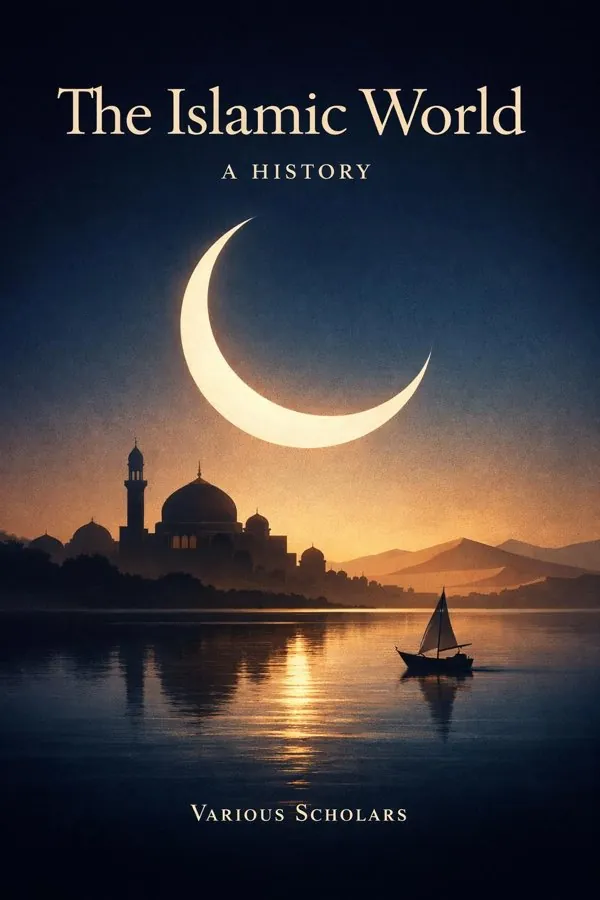
The Islamic World: A History
The Islamic World: A History offers a sweeping account of one of the most influential civilizations in human history, tracing its development from the rise of Islam in seventh-century Arabia to the political, intellectual, and social transformations of the modern age. Rather than reducing Islamic history to dynasties, battles, or theology alone, this volume shows how faith, law, trade, art, scholarship, and empire interacted to shape a vast world stretching from Spain to Southeast Asia and beyond. It matters because the Islamic world has been central to global history: preserving and expanding knowledge, building commercial networks across continents, and generating rich traditions in philosophy, science, architecture, and governance. Just as important, the book helps readers move beyond stereotypes by revealing Islam’s internal diversity and its long record of dialogue, conflict, adaptation, and renewal. Written by distinguished historians and specialists in Islamic studies, the volume brings together deep expertise and a balanced scholarly perspective. The result is an authoritative, accessible guide for readers who want to understand how Islamic civilization emerged, flourished, diversified, and continues to shape the modern world.
Read SummaryKey Insights from Various Scholars
Islam Emerged in a Fractured Arabia
Great civilizations often begin not in stability, but in crisis. The story of Islam starts in seventh-century Arabia, a region marked by tribal rivalries, caravan trade, social inequality, and a religious landscape shaped by polytheism, Judaism, Christianity, and local spiritual traditions. Mecca st...
From The Islamic World: A History
The Early Caliphates Built Imperial Foundations
What happens after a founder dies often determines whether a movement endures or fragments. After Muhammad’s death in 632, the Muslim community faced a pressing question: who would lead, and how would unity be preserved? The Rashidun Caliphs, Abu Bakr, Umar, Uthman, and Ali, guided the community thr...
From The Islamic World: A History
The Abbasid Age Fueled Intellectual Brilliance
A civilization reaches maturity when it becomes confident enough to learn from others. The Abbasid period, especially from the eighth to the tenth centuries, is often seen as a golden age because it turned the Islamic world into a center of intellectual, scientific, and cultural production. With Bag...
From The Islamic World: A History
Islamic Law Unified Diverse Societies
Empires are held together not only by armies, but by shared rules and trusted institutions. One of the most enduring contributions of the Islamic world was the development of Islamic law, or sharia, as a framework for religious practice, ethics, commerce, family life, and governance. Across centurie...
From The Islamic World: A History
Trade and Cities Spread Islam Globally
Religions do not spread only by conquest; often they travel most effectively through trust, exchange, and daily example. The expansion of the Islamic world was deeply connected to trade routes, port cities, migration, and urban culture. Muslim merchants, scholars, and travelers linked the Mediterran...
From The Islamic World: A History
Regional Diversity Shaped Many Islamic Worlds
There has never been just one Islamic world; there have always been many Islamic worlds connected by faith yet shaped by region, language, and local history. As Islam spread beyond Arabia, it entered Persian, Berber, Turkic, African, South Asian, and Malay environments, among others. The result was ...
From The Islamic World: A History
About Various Scholars
The contributors are distinguished historians and scholars specializing in Islamic studies, Middle Eastern history, and world civilizations. Their collective expertise provides a balanced and authoritative account of the Islamic world's evolution.


Frequently Asked Questions
The contributors are distinguished historians and scholars specializing in Islamic studies, Middle Eastern history, and world civilizations. Their collective expertise provides a balanced and authoritative account of the Islamic world's evolution.
Read Various Scholars's books in 15 minutes
Get AI-powered summaries with key insights from 1 book by Various Scholars.