
Tony White Books
Tony White is an award-winning British animator, director, and educator known for his work in traditional hand-drawn animation. He has directed numerous commercials and short films, authored several books on animation, and taught animation at various institutions.
Known for: The Animator's Sketchbook: How to See, Interpret & Draw Like a Master Animator
Books by Tony White
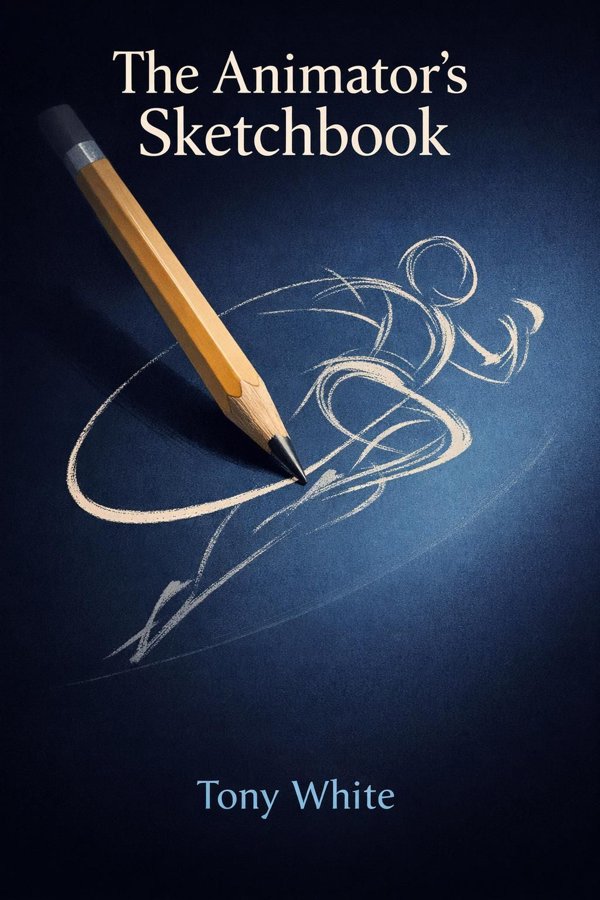
The Animator's Sketchbook: How to See, Interpret & Draw Like a Master Animator
The Animator's Sketchbook: How to See, Interpret & Draw Like a Master Animator is a hands-on guide to developing the most fundamental skill in animation: the ability to observe life and translate it into expressive drawings. Rather than treating drawing as a separate artistic hobby, Tony White presents it as the core training system for animators who want to create believable movement, appealing characters, and visual storytelling that feels alive. The book is structured like a working studio companion, filled with exercises, prompts, and practical principles that sharpen both the eye and the hand. What makes this book especially valuable is its emphasis on process over polish. White encourages readers to sketch constantly, study gesture, analyze anatomy, simplify forms, and build a habit of seeing motion everywhere. His approach is rooted in the traditions of classical hand-drawn animation, but the lessons apply equally well to digital animators, storyboard artists, illustrators, and designers. As an award-winning animator, director, and educator, White brings decades of professional experience to the page, making this book both an artistic manifesto and a disciplined training manual for anyone serious about animation.
Read SummaryKey Insights from Tony White
Drawing Is the Root of Animation
Animation begins long before software, rigs, or polished frames. It starts with the animator’s ability to understand motion, weight, rhythm, and intent through drawing. Tony White treats sketching not as a decorative side skill but as the foundation of the entire animation craft. If you cannot draw ...
From The Animator's Sketchbook: How to See, Interpret & Draw Like a Master Animator
Build a Daily Sketchbook Discipline
Creative growth rarely comes from occasional inspiration; it comes from repetition with intent. One of Tony White’s most practical lessons is that the sketchbook should become a constant companion and a regular training ground. He rejects the idea that a sketchbook must contain beautiful, finished w...
From The Animator's Sketchbook: How to See, Interpret & Draw Like a Master Animator
Gesture Captures Life Before Detail
A lifeless drawing can be anatomically correct, while a powerful gesture drawing can feel alive with only a few lines. White emphasizes gesture as the fastest route to capturing energy, emotion, and directional movement. In animation, this matters enormously because audiences respond first to vitali...
From The Animator's Sketchbook: How to See, Interpret & Draw Like a Master Animator
Anatomy Supports Expression, Not Perfection
An animator needs anatomical knowledge, but not for the sake of showing off academic precision. White presents anatomy as a functional tool that supports believable motion, clearer construction, and stronger design choices. The goal is not to render every muscle; the goal is to understand how the bo...
From The Animator's Sketchbook: How to See, Interpret & Draw Like a Master Animator
Observation Fuels Visual Storytelling
Great animation does not come only from imagination; it comes from close attention to real life. White insists that observation is one of the animator’s most valuable skills because storytelling depends on believable behavior, convincing staging, and meaningful visual choices. A character feels true...
From The Animator's Sketchbook: How to See, Interpret & Draw Like a Master Animator
Exaggeration Makes Truth More Readable
In animation, realism alone is rarely enough. White highlights exaggeration as one of the most important artistic tools for making action, character, and emotion clear. Exaggeration does not mean random distortion or cartoon chaos. It means selecting the most important truth in a pose or movement an...
From The Animator's Sketchbook: How to See, Interpret & Draw Like a Master Animator
About Tony White
Tony White is an award-winning British animator, director, and educator known for his work in traditional hand-drawn animation. He has directed numerous commercials and short films, authored several books on animation, and taught animation at various institutions. White is recognized for his dedicat...
Read more
Tony White is an award-winning British animator, director, and educator known for his work in traditional hand-drawn animation. He has directed numerous commercials and short films, authored several books on animation, and taught animation at various institutions. White is recognized for his dedicat...
Tony White is an award-winning British animator, director, and educator known for his work in traditional hand-drawn animation. He has directed numerous commercials and short films, authored several books on animation, and taught animation at various institutions. White is recognized for his dedication to preserving and teaching the art of classical animation.

Frequently Asked Questions
Tony White is an award-winning British animator, director, and educator known for his work in traditional hand-drawn animation. He has directed numerous commercials and short films, authored several books on animation, and taught animation at various institutions.
Read Tony White's books in 15 minutes
Get AI-powered summaries with key insights from 1 book by Tony White.