
Edward R. Tufte Books
Edward Rolf Tufte is an American statistician, artist, and professor emeritus of political science, statistics, and computer science at Yale University. He is widely recognized for his pioneering work in data visualization and information design.
Known for: Envisioning Information, The Visual Display of Quantitative Information, Visual Explanations: Images and Quantities, Evidence and Narrative
Books by Edward R. Tufte
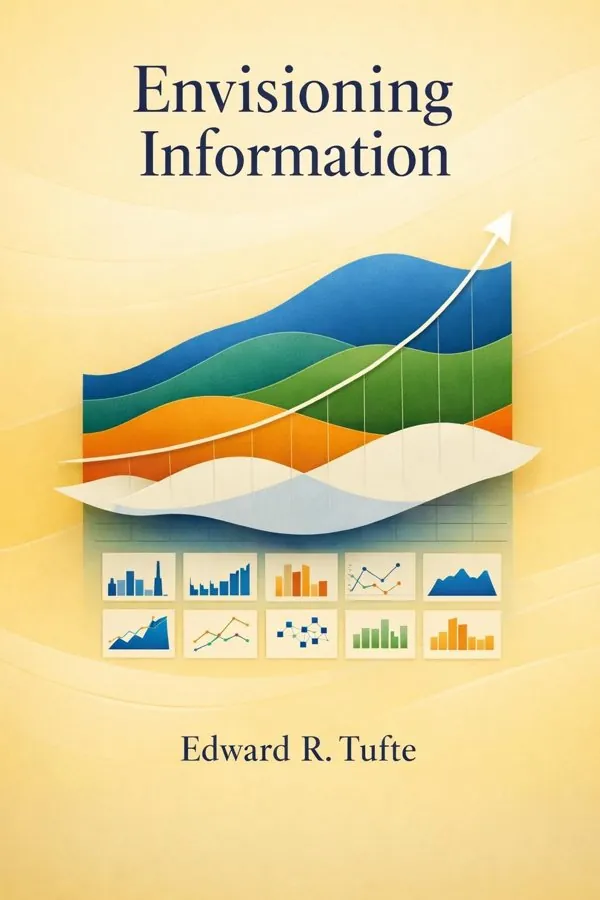
Envisioning Information
Envisioning Information is Edward R. Tufte’s elegant and influential exploration of how to display complex ideas with visual clarity. Rather than treating charts, maps, diagrams, and interfaces as dec...
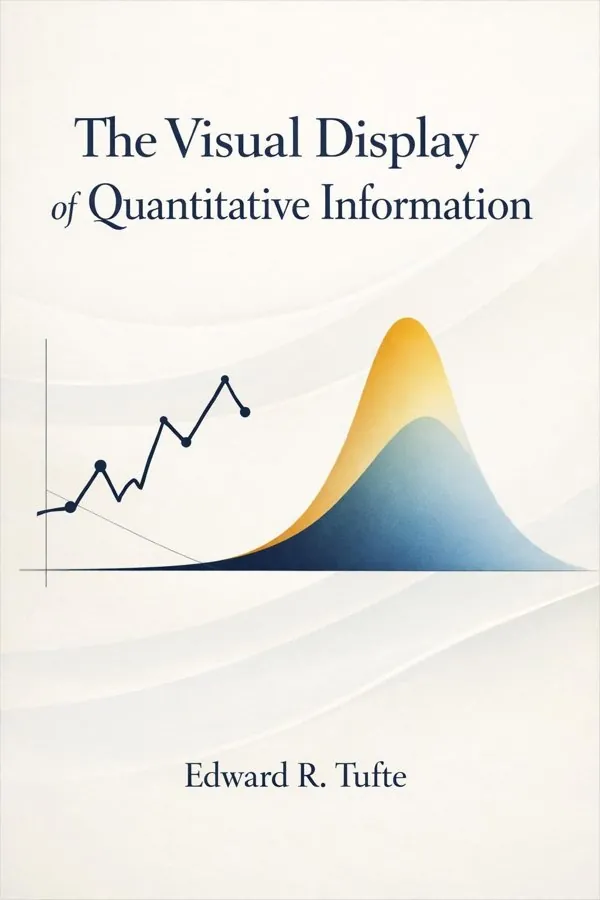
The Visual Display of Quantitative Information
This classic work by Edward R. Tufte explores the theory and practice of data graphics, emphasizing clarity, precision, and efficiency in the visual presentation of quantitative information. It analyz...
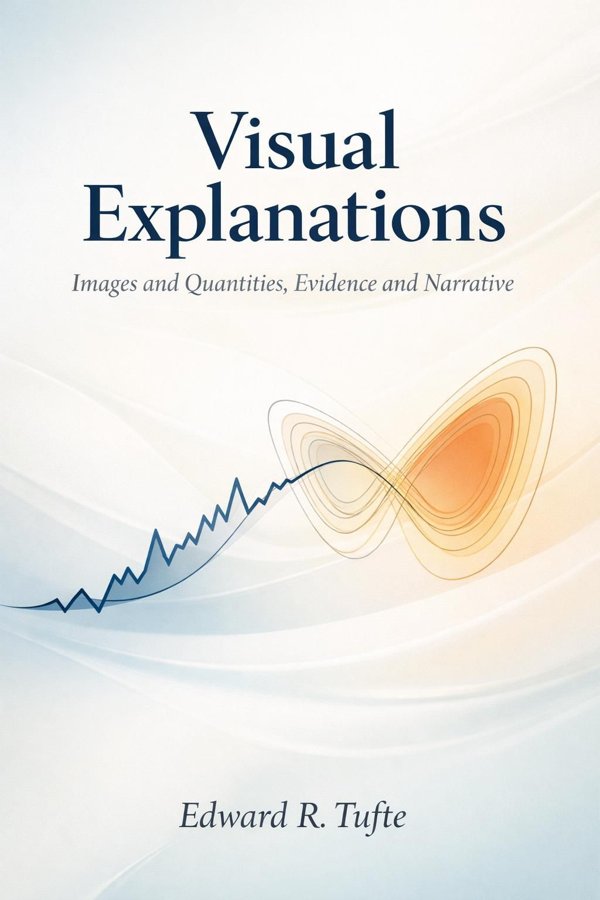
Visual Explanations: Images and Quantities, Evidence and Narrative
Visual Explanations explores how to effectively present complex information through visual means. Edward R. Tufte demonstrates how graphics can clarify or obscure data, using historical examples such ...
Key Insights from Edward R. Tufte
Escaping Flatland on Two-Dimensional Surfaces
Every information display begins with a paradox: reality is richly multidimensional, yet the page and screen are flat. Tufte calls this challenge “escaping flatland.” The task of information design is not to deny complexity, but to invent visual strategies that allow two-dimensional media to suggest...
From Envisioning Information
Micro and Macro Must Coexist
The most powerful visuals reward both a glance and a close reading. Tufte describes this as the interplay between micro and macro readings: the viewer should be able to perceive the overall pattern instantly while also discovering fine-grained detail upon inspection. Great information design does no...
From Envisioning Information
Layering and Separation Create Order
Clarity often comes not from removing information, but from organizing it into visual layers. Tufte argues that complex displays become legible when their components are separated by visual hierarchy, contrast, spacing, and structure. Layering and separation help viewers distinguish what is central ...
From Envisioning Information
Small Multiples Enable Honest Comparison
One of Tufte’s most celebrated ideas is the power of small multiples: a series of similar graphics shown side by side, each using the same structure so that differences in the data become immediately visible. Small multiples turn comparison into perception. Instead of describing changes verbally or ...
From Envisioning Information
Color Should Clarify, Not Decorate
Color is one of the most emotionally charged tools in design, which is exactly why Tufte treats it with caution. His central point is simple: color should carry information, not merely add excitement. When used well, color can separate layers, signal categories, highlight exceptions, and create cohe...
From Envisioning Information
Narratives of Space and Time Matter
Information does not merely describe static things; it often tells stories about movement, sequence, and transformation. Tufte shows that good visual design can integrate space and time so that viewers understand not only where things are, but how they change. This is one of the highest achievements...
From Envisioning Information
About Edward R. Tufte
Edward Rolf Tufte is an American statistician, artist, and professor emeritus of political science, statistics, and computer science at Yale University. He is widely recognized for his pioneering work in data visualization and information design.

Frequently Asked Questions
Edward Rolf Tufte is an American statistician, artist, and professor emeritus of political science, statistics, and computer science at Yale University. He is widely recognized for his pioneering work in data visualization and information design.
Read Edward R. Tufte's books in 15 minutes
Get AI-powered summaries with key insights from 3 books by Edward R. Tufte.