
Tony Judt Books
Tony Judt (1948–2010) was a British historian and essayist known for his works on European history and political thought. He was a professor at New York University and the founding director of the Remarque Institute.
Known for: Postwar: A History of Europe Since 1945
Books by Tony Judt
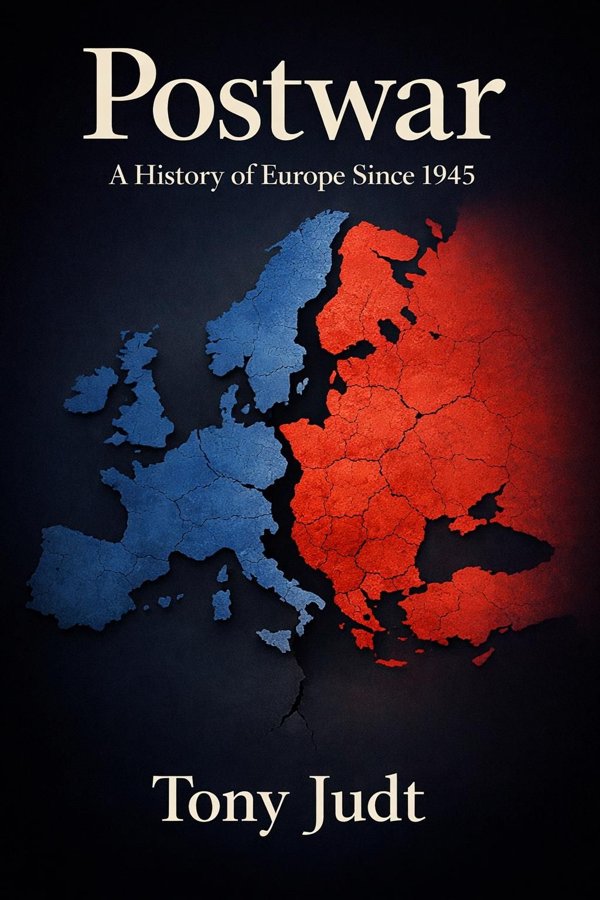
Postwar: A History of Europe Since 1945
Europe after 1945 was not merely rebuilding cities, economies, and governments; it was rebuilding meaning. In Postwar: A History of Europe Since 1945, Tony Judt delivers a sweeping, deeply human account of how a devastated continent emerged from war, genocide, occupation, and ideological division to become one of the modern world’s most prosperous, self-reflective, and politically integrated regions. This is not just a chronology of events. It is a history of memory, welfare, power, identity, and the uneasy compromises that made peace possible. Judt shows how Europe’s postwar order rested on difficult bargains: forgetting as much as remembering, dependence on American power, acceptance of welfare capitalism in the West, and coercive stability in the East. He follows the story through reconstruction, the Cold War, decolonization, student revolt, economic crisis, the collapse of communism, and the uncertain promise of European integration. The book matters because Europe’s postwar experience shaped the political vocabulary of the present: democracy, social solidarity, nationalism, migration, and supranational cooperation. Judt, one of the most respected historians of modern Europe, writes with unusual range, moral seriousness, and analytical clarity, making this a landmark work for understanding both Europe’s past and today’s tensions.
Read SummaryKey Insights from Tony Judt
Europe in Ruins, Morally and Materially
A continent can survive military defeat more easily than moral collapse. Judt begins with Europe in 1945 as a landscape of wreckage: bombed cities, broken transport networks, food shortages, and millions of refugees, prisoners, and displaced persons moving across shattered borders. Yet the physical ...
From Postwar: A History of Europe Since 1945
The Cold War Made Two Europes
Europe’s postwar future was not discovered; it was imposed through power. In Judt’s account, the late 1940s transformed a temporarily occupied continent into two rival political civilizations. In Western Europe, the Marshall Plan, American military protection, and the containment of communist partie...
From Postwar: A History of Europe Since 1945
Welfare States Bought Peace and Legitimacy
Prosperity after catastrophe can be a political achievement, not just an economic outcome. One of Judt’s central themes is that Western Europe’s postwar success depended on the construction of welfare states that reduced insecurity and broadened citizenship. Governments expanded public housing, heal...
From Postwar: A History of Europe Since 1945
Memory Was Repressed Before It Returned
What nations remember immediately after tragedy is often less revealing than what they choose to forget. Judt argues that postwar Europe initially depended on strategic amnesia. Countries focused on rebuilding and downplayed painful questions about collaboration, anti-Semitism, wartime opportunism, ...
From Postwar: A History of Europe Since 1945
Prosperity Transformed Everyday Western Life
Revolutions are not always made in streets; sometimes they arrive in kitchens, highways, and supermarkets. Judt describes how Western Europe between the 1950s and early 1970s underwent an extraordinary social transformation. Rising wages, mass consumer goods, automobile ownership, television, suburb...
From Postwar: A History of Europe Since 1945
1968 Exposed the Limits of Consensus
A stable society can still be deeply dissatisfied beneath the surface. Judt treats the protests and unrest of the 1960s, especially around 1968, as a warning that postwar success had not solved every problem. In Western Europe, students and intellectuals rebelled against hierarchy, consumer conformi...
From Postwar: A History of Europe Since 1945
About Tony Judt
Tony Judt (1948–2010) was a British historian and essayist known for his works on European history and political thought. He was a professor at New York University and the founding director of the Remarque Institute. His scholarship combined deep historical insight with moral clarity and public enga...
Read more
Tony Judt (1948–2010) was a British historian and essayist known for his works on European history and political thought. He was a professor at New York University and the founding director of the Remarque Institute. His scholarship combined deep historical insight with moral clarity and public enga...
Tony Judt (1948–2010) was a British historian and essayist known for his works on European history and political thought. He was a professor at New York University and the founding director of the Remarque Institute. His scholarship combined deep historical insight with moral clarity and public engagement.


Frequently Asked Questions
Tony Judt (1948–2010) was a British historian and essayist known for his works on European history and political thought. He was a professor at New York University and the founding director of the Remarque Institute.
Read Tony Judt's books in 15 minutes
Get AI-powered summaries with key insights from 1 book by Tony Judt.