
Thomas S. Kuhn Books
Thomas Samuel Kuhn (1922–1996) was an American physicist, historian, and philosopher of science. He is best known for his influential analysis of scientific revolutions and the concept of paradigms, which reshaped modern understanding of scientific development.
Known for: The Structure of Scientific Revolutions, The Copernican Revolution: Planetary Astronomy in the Development of Western Thought
Books by Thomas S. Kuhn

The Structure of Scientific Revolutions
What if science does not advance mainly by steadily piling up facts, but by periodically overturning its own deepest assumptions? In The Structure of Scientific Revolutions, Thomas S. Kuhn challenged ...
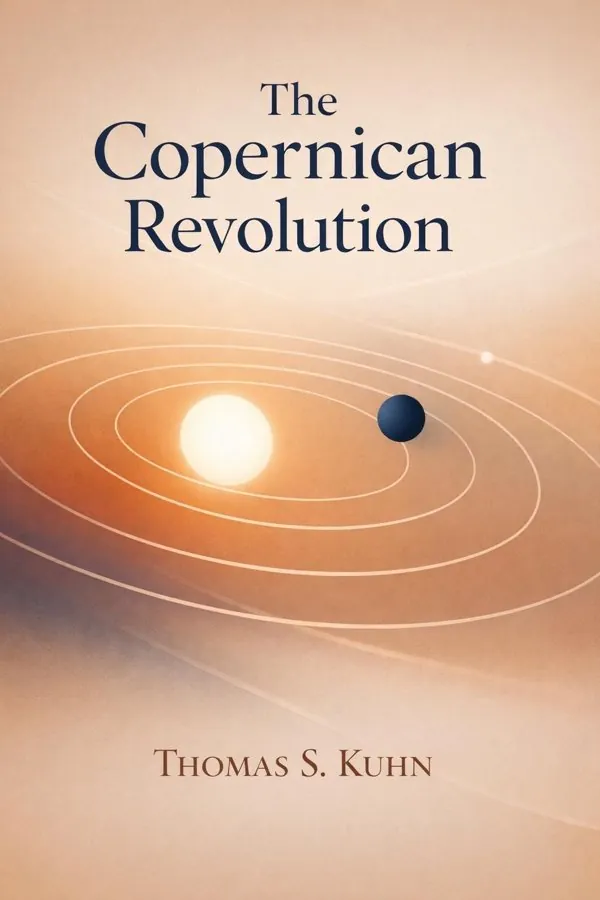
The Copernican Revolution: Planetary Astronomy in the Development of Western Thought
Thomas S. Kuhn’s The Copernican Revolution is far more than a history of astronomy. It is an account of how one change in cosmic theory helped reorder philosophy, religion, science, and humanity’s sel...
Key Insights from Thomas S. Kuhn
Normal Science Solves Approved Puzzles
Scientific work is often less about wild originality than disciplined problem-solving inside an accepted framework. Kuhn calls this phase normal science: the period in which a scientific community shares a common paradigm and devotes itself to extending, refining, and applying it. Under normal scien...
From The Structure of Scientific Revolutions
Paradigms Shape What Scientists Can See
We do not simply observe the world; we observe it through concepts we have learned. Kuhn’s idea of a paradigm is therefore much richer than a single theory. A paradigm includes exemplary experiments, preferred methods, standards of evidence, accepted questions, and a shared sense of what a successfu...
From The Structure of Scientific Revolutions
Anomalies Begin Where Confidence Weakens
Breakthroughs often begin as irritations. During normal science, not every mismatch between theory and reality causes alarm. Many anomalies are treated as minor exceptions, measurement errors, or unresolved technical problems. Kuhn’s crucial point is that anomalies become important only in relation ...
From The Structure of Scientific Revolutions
Crisis Opens Space For New Theories
People rarely abandon a successful worldview just because it has flaws; they do so when the flaws become impossible to contain. Kuhn describes crisis as the period in which a paradigm’s authority weakens under the pressure of unresolved anomalies. During crisis, the rules that once guided normal res...
From The Structure of Scientific Revolutions
Scientific Revolutions Reorder Entire Worlds
A scientific revolution is not just a new answer to an old question; it often changes what the question means. Kuhn argues that revolutions occur when one paradigm is replaced by another that reorganizes the field’s concepts, standards, methods, and accepted realities. This is why revolutionary chan...
From The Structure of Scientific Revolutions
Incommensurability Makes Paradigms Hard To Compare
One of Kuhn’s most debated ideas is that rival paradigms can be incommensurable, meaning they are not easily measured by a single neutral standard. This does not mean comparison is impossible, nor that truth is irrelevant. It means that competing paradigms often define problems, evidence, and succes...
From The Structure of Scientific Revolutions
About Thomas S. Kuhn
Thomas Samuel Kuhn (1922–1996) was an American physicist, historian, and philosopher of science. He is best known for his influential analysis of scientific revolutions and the concept of paradigms, which reshaped modern understanding of scientific development.



Frequently Asked Questions
Thomas Samuel Kuhn (1922–1996) was an American physicist, historian, and philosopher of science. He is best known for his influential analysis of scientific revolutions and the concept of paradigms, which reshaped modern understanding of scientific development.
Read Thomas S. Kuhn's books in 15 minutes
Get AI-powered summaries with key insights from 2 books by Thomas S. Kuhn.