
Thomas Nagel Books
Thomas Nagel is an American philosopher known for his work in philosophy of mind, ethics, and political philosophy. He has taught at Princeton University and New York University, and is widely recognized for his influential essays on consciousness and moral reasoning.
Known for: What Does It All Mean?: A Very Short Introduction to Philosophy
Books by Thomas Nagel
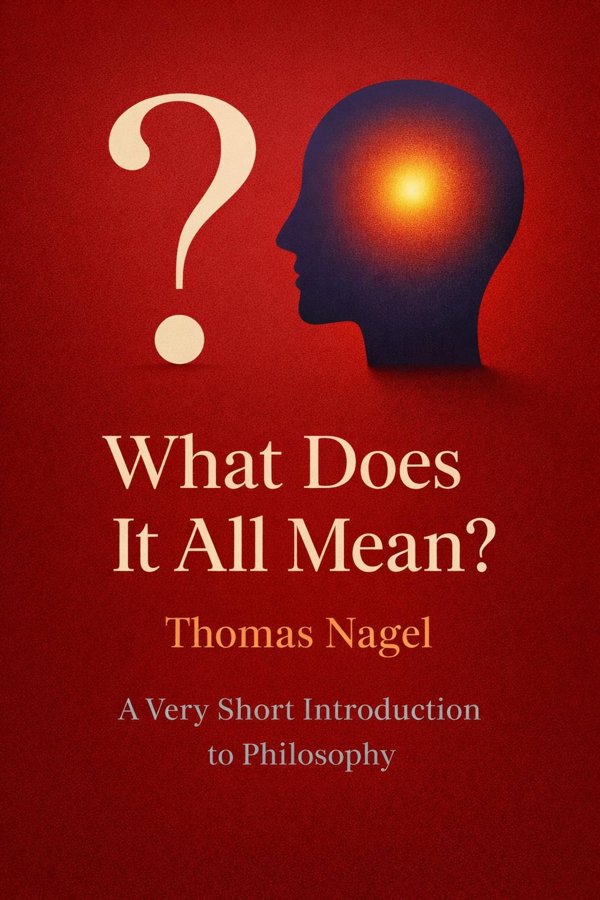
What Does It All Mean?: A Very Short Introduction to Philosophy
Thomas Nagel’s What Does It All Mean? is one of the clearest and most inviting introductions to philosophy ever written. Rather than beginning with jargon, schools of thought, or historical disputes, Nagel starts where philosophy really begins: with ordinary questions that suddenly become puzzling when we think about them seriously. How do you know the world outside your mind is real? Are you just a body, or something more? Do you truly choose your actions? What makes something right or wrong? Why does death matter so much, and can life have meaning at all? What makes this short book powerful is its combination of simplicity and depth. Nagel does not offer easy answers or pretend that philosophy can eliminate uncertainty. Instead, he shows how careful reasoning can sharpen confusion into insight. His examples are concrete, his language is accessible, and his questions remain intellectually demanding. Nagel is uniquely qualified to guide this journey. A major American philosopher known for influential work on consciousness, ethics, and the limits of objectivity, he brings both scholarly authority and unusual clarity. This book matters because it teaches readers not what to think, but how to think.
Read SummaryKey Insights from Thomas Nagel
Subjective Life and Objective Reality
Many philosophical problems begin with a simple but unsettling fact: each of us experiences the world from the inside, yet we also believe there is a world that exists independently of our private viewpoint. This tension between the subjective and the objective sits at the heart of Nagel’s book. You...
From What Does It All Mean?: A Very Short Introduction to Philosophy
Can We Really Know Anything?
The moment you seriously ask whether the world outside your mind truly exists, philosophy stops feeling abstract. Nagel uses skepticism to show how fragile our claims to knowledge can be. You believe there is a table in front of you because you see and touch it. But how do you know you are not dream...
From What Does It All Mean?: A Very Short Introduction to Philosophy
Mind Is More Than Matter
One of philosophy’s oldest puzzles is also one of its most intimate: how can a physical body produce a conscious mind? Nagel explores the problem by distinguishing between what can be observed from the outside and what can only be known from the inside. A brain can be studied scientifically. Neurons...
From What Does It All Mean?: A Very Short Introduction to Philosophy
Freedom Under the Shadow of Causation
We usually live as if our choices are up to us, yet we also believe that everything in nature has causes. Nagel uses this tension to frame the problem of free will. If every event has prior causes—your genes, upbringing, brain states, social pressures, and immediate circumstances—then in what sense ...
From What Does It All Mean?: A Very Short Introduction to Philosophy
Right and Wrong Need Reasons
Moral disagreement feels personal, but Nagel argues that ethics is not merely a matter of taste. Saying that cruelty is wrong is not like saying you dislike olives. Moral judgments claim a kind of general validity: they imply that anyone in relevantly similar circumstances has reason to act the same...
From What Does It All Mean?: A Very Short Introduction to Philosophy
Justice Beyond Personal Advantage
Questions of justice arise when we move from individual morality to the organization of society. Nagel asks how benefits and burdens should be distributed, what rights people have, and what makes political arrangements fair rather than merely efficient or traditional. Justice is difficult because so...
From What Does It All Mean?: A Very Short Introduction to Philosophy
About Thomas Nagel
Thomas Nagel is an American philosopher known for his work in philosophy of mind, ethics, and political philosophy. He has taught at Princeton University and New York University, and is widely recognized for his influential essays on consciousness and moral reasoning.


Frequently Asked Questions
Thomas Nagel is an American philosopher known for his work in philosophy of mind, ethics, and political philosophy. He has taught at Princeton University and New York University, and is widely recognized for his influential essays on consciousness and moral reasoning.
Read Thomas Nagel's books in 15 minutes
Get AI-powered summaries with key insights from 1 book by Thomas Nagel.