
Thomas More Books
Thomas More (1478–1535) was an English philosopher, lawyer, and statesman best known for his book 'Utopia'. He served as counselor to King Henry VIII and later as Lord Chancellor of England.
Known for: Utopia
Books by Thomas More
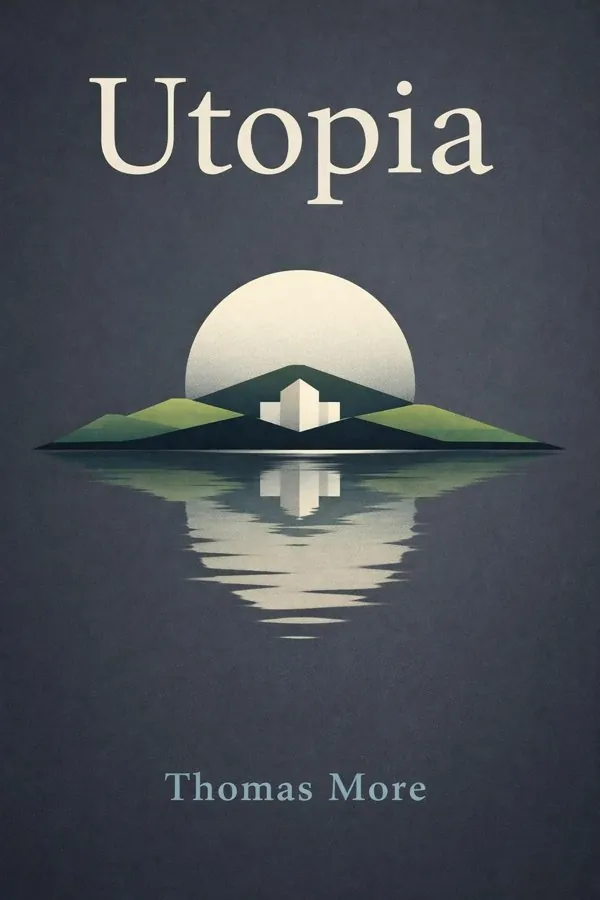
Utopia
First published in 1516, Thomas More’s Utopia is one of the foundational texts of political philosophy, social criticism, and speculative fiction. Framed as a conversation between More himself and the seasoned traveler Raphael Hythloday, the book describes an imagined island commonwealth where private property is abolished, labor is shared, religion is broadly tolerated, and public life is organized around reason rather than greed. Yet Utopia is far more than a blueprint for a perfect society. It is also a sharp critique of the Europe More knew: a world marked by enclosure, poverty, harsh punishments, political vanity, and endless war. What makes the book endure is its ambiguity. More invites readers to admire Utopia’s fairness while also questioning whether any society can truly eliminate pride, conflict, or coercion. That tension gives the work its power. More wrote not only as a literary humanist but as a lawyer, diplomat, and statesman deeply familiar with the realities of government. His authority comes from that double vision: he understands political ideals and political compromise. Utopia remains essential reading because it asks a timeless question: how should human beings organize society if justice, dignity, and the common good truly mattered?
Read SummaryKey Insights from Thomas More
Raphael Hythloday as Truth-Telling Outsider
Sometimes the clearest view of a society comes from someone who stands outside it. Raphael Hythloday is not merely a narrator in Utopia; he is More’s device for testing political assumptions that most people accept without question. A widely traveled philosopher-sailor, reportedly companion to Ameri...
From Utopia
Europe Under the Lens of Satire
A society reveals its moral priorities by the suffering it tolerates. Before describing Utopia itself, Hythloday offers a blistering critique of sixteenth-century Europe, especially England. He attacks enclosure, the process by which common lands were converted into private pastures, displacing peas...
From Utopia
The Problem of Serving Power
Good ideas do little good if they never reach the rooms where decisions are made. One of Utopia’s most important debates is whether a wise person should enter public service. More, appearing as a character, argues for practical engagement: advisers should work within flawed governments, offering the...
From Utopia
An Island Designed for the Common Good
The shape of a society is never accidental; institutions teach people what to value. More gives Utopia a carefully ordered geography and civic structure to show that justice depends not only on laws but on design. The island contains fifty-four similar cities, each organized according to shared prin...
From Utopia
Property, Work, and Shared Prosperity
Nothing in Utopia is more radical than its attack on private property. More suggests that many social evils arise when wealth accumulation becomes the organizing principle of life. In Utopia, goods are held in common, money has little practical role, and everyone works. Because labor is distributed ...
From Utopia
Family Life, Education, and Moral Formation
No political order can endure if it ignores how character is formed at home. Utopia pays close attention to family structure, child-rearing, education, and daily discipline because More knows that institutions depend on habits. Households are the basic units of social organization, led by elders and...
From Utopia
About Thomas More
Thomas More (1478–1535) was an English philosopher, lawyer, and statesman best known for his book 'Utopia'. He served as counselor to King Henry VIII and later as Lord Chancellor of England. More was executed for refusing to acknowledge the king’s supremacy over the Church of England and was canoniz...
Read more
Thomas More (1478–1535) was an English philosopher, lawyer, and statesman best known for his book 'Utopia'. He served as counselor to King Henry VIII and later as Lord Chancellor of England. More was executed for refusing to acknowledge the king’s supremacy over the Church of England and was canoniz...
Thomas More (1478–1535) was an English philosopher, lawyer, and statesman best known for his book 'Utopia'. He served as counselor to King Henry VIII and later as Lord Chancellor of England. More was executed for refusing to acknowledge the king’s supremacy over the Church of England and was canonized by Pope Pius XI in 1935.


Frequently Asked Questions
Thomas More (1478–1535) was an English philosopher, lawyer, and statesman best known for his book 'Utopia'. He served as counselor to King Henry VIII and later as Lord Chancellor of England.
Read Thomas More's books in 15 minutes
Get AI-powered summaries with key insights from 1 book by Thomas More.