
Rose D. Friedman Books
Milton Friedman (1912–2006) fue un economista estadounidense, ganador del Premio Nobel de Economía en 1976, conocido por su defensa del libre mercado y su influencia en la política económica del siglo XX. Friedman (1910–2009) fue economista y colaboradora habitual de su esposo, coautora de varios libros sobre economía y política pública.
Known for: Free To Choose: A Personal Statement
Books by Rose D. Friedman
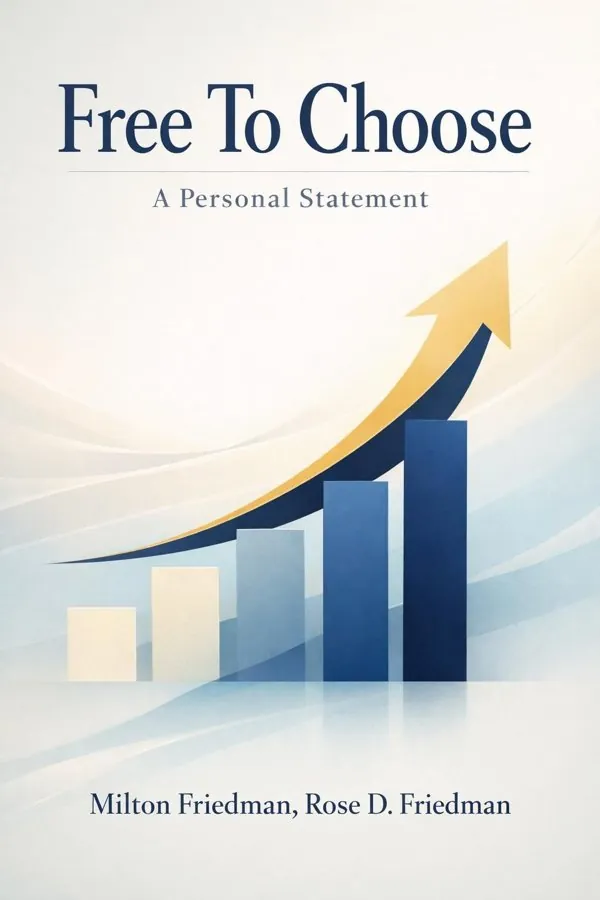
Free To Choose: A Personal Statement
Free To Choose: A Personal Statement is Milton and Rose D. Friedman’s bold defense of economic freedom as the foundation of personal freedom, prosperity, and social cooperation. First published in 1980, the book argues that many of society’s most persistent problems—from inflation and poor schooling to labor restrictions and consumer protection failures—are made worse, not better, by excessive government control. Drawing on history, economics, and public policy, the Friedmans show how voluntary exchange, competition, and limited government create both wealth and room for individuals to shape their own lives. What makes this book endure is its combination of moral clarity and practical analysis. The Friedmans do not merely praise markets in the abstract; they examine real policies, real institutions, and real trade-offs. Milton Friedman, winner of the 1976 Nobel Prize in Economics, was one of the most influential economists of the twentieth century, and Rose Friedman was a serious economist and indispensable intellectual partner in their joint work. Together, they produced a book that is accessible to general readers yet powerful enough to reshape how people think about freedom, responsibility, and the proper role of the state.
Read SummaryKey Insights from Rose D. Friedman
The Power of Voluntary Exchange
Most social cooperation does not begin with orders; it begins with choice. That is the Friedmans’ central insight about markets. A free market is not chaos, greed, or a moral vacuum. It is a system in which millions of people, each pursuing their own goals, coordinate peacefully through voluntary ex...
From Free To Choose: A Personal Statement
The Tyranny of Economic Controls
Policies meant to protect people often end up trapping them. The Friedmans show how price controls, tariffs, quotas, subsidies, and licensing rules are frequently introduced with noble language—fairness, stability, security—but produce shortages, inefficiency, and special privileges. Controls distor...
From Free To Choose: A Personal Statement
Government Failure Can Cause Crisis
Economic crises are often blamed on markets, but the Friedmans insist that many severe disruptions are worsened—or even created—by bad government policy. One of their major contributions is to challenge the comforting idea that officials stand outside the economy as neutral fixers. In reality, gover...
From Free To Choose: A Personal Statement
Welfare Can Undermine Self-Reliance
Compassion is essential, but compassion badly designed can backfire. In discussing the modern welfare state, the Friedmans do not deny the importance of helping people in need. Their argument is subtler: systems built to provide security from cradle to grave often weaken initiative, create dependenc...
From Free To Choose: A Personal Statement
Schooling Improves When Families Choose
When a system serves institutions before individuals, quality declines. That is the Friedmans’ critique of government-run schooling. They argue that education is too important to be monopolized by bureaucracies that are insulated from competition and parental choice. In most sectors, poor performanc...
From Free To Choose: A Personal Statement
Competition Protects Consumers Better Than Bureaucrats
The usual question is who protects the consumer from business. The Friedmans turn the question around: who protects the consumer from the people claiming to protect them? Their answer is that, in many cases, competitive markets do a better job than regulatory agencies. Businesses survive by attracti...
From Free To Choose: A Personal Statement
About Rose D. Friedman
Milton Friedman (1912–2006) fue un economista estadounidense, ganador del Premio Nobel de Economía en 1976, conocido por su defensa del libre mercado y su influencia en la política económica del siglo XX. Friedman (1910–2009) fue economista y colaboradora habitual de su esposo, coautora de varios l...
Read more
Milton Friedman (1912–2006) fue un economista estadounidense, ganador del Premio Nobel de Economía en 1976, conocido por su defensa del libre mercado y su influencia en la política económica del siglo XX. Friedman (1910–2009) fue economista y colaboradora habitual de su esposo, coautora de varios l...
Milton Friedman (1912–2006) fue un economista estadounidense, ganador del Premio Nobel de Economía en 1976, conocido por su defensa del libre mercado y su influencia en la política económica del siglo XX. Friedman (1910–2009) fue economista y colaboradora habitual de su esposo, coautora de varios libros sobre economía y política pública.


Frequently Asked Questions
Milton Friedman (1912–2006) fue un economista estadounidense, ganador del Premio Nobel de Economía en 1976, conocido por su defensa del libre mercado y su influencia en la política económica del siglo XX. Friedman (1910–2009) fue economista y colaboradora habitual de su esposo, coautora de varios libros sobre economía y política pública.
Read Rose D. Friedman's books in 15 minutes
Get AI-powered summaries with key insights from 1 book by Rose D. Friedman.