
Robin Williams Books
Robin Williams is an American designer, educator, and author known for her accessible books on design and typography. She has taught design principles to non-designers for decades and is recognized for making visual communication approachable and practical.
Known for: The Non-Designer’s Design Book: Design and Typographic Principles for the Visual Novice
Books by Robin Williams
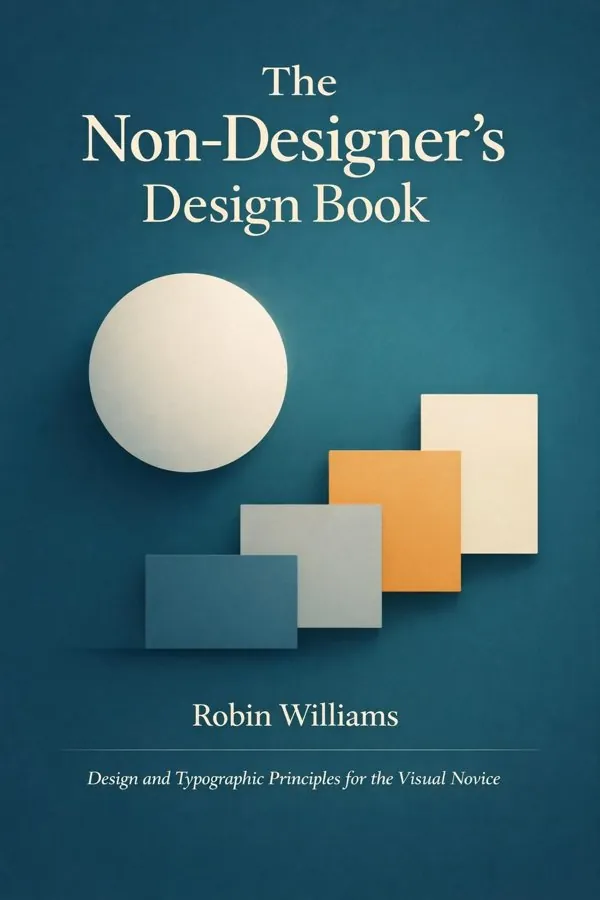
The Non-Designer’s Design Book: Design and Typographic Principles for the Visual Novice
Design often feels intimidating because people confuse it with talent, taste, or artistic instinct. Robin Williams dismantles that myth. In The Non-Designer’s Design Book, she argues that strong visual communication is not mysterious at all: it is built on a small set of clear, repeatable principles that anyone can learn. Written for people without formal training, the book turns everyday design tasks—flyers, newsletters, resumes, presentations, websites, invitations, and business materials—into manageable problems with practical solutions. What makes the book so enduring is its rare combination of simplicity and depth. Williams does not drown readers in jargon or theory. Instead, she shows how a few visual choices can instantly make a page feel cluttered or professional, confusing or inviting. Her famous four principles—contrast, repetition, alignment, and proximity—give readers a memorable framework for evaluating and improving almost any layout. She also extends that foundation into typography, hierarchy, and visual judgment. As a longtime designer, teacher, and author, Robin Williams has helped generations of non-designers gain confidence. This book matters because in a world saturated with visual messages, knowing how to communicate clearly is no longer optional—it is a practical advantage.
Read SummaryKey Insights from Robin Williams
Design Is Learned, Not Innate
Many people believe bad design is the result of not being “creative enough,” but Williams begins with a more liberating idea: most weak layouts come from not knowing what to look for. Once you understand a handful of principles, design becomes less like guessing and more like solving a problem. That...
From The Non-Designer’s Design Book: Design and Typographic Principles for the Visual Novice
Contrast Creates Focus and Energy
If everything on a page looks similar, nothing feels important. Williams treats contrast as one of the fastest ways to bring life and clarity to a design. Contrast means difference—large versus small, bold versus light, serif versus sans serif, dark versus light, formal versus casual. The point is n...
From The Non-Designer’s Design Book: Design and Typographic Principles for the Visual Novice
Repetition Builds Unity and Identity
A design feels professional when its parts look like they belong together. Williams explains that repetition is what creates that sense of cohesion. By repeating visual elements—fonts, colors, line styles, shapes, spacing patterns, bullets, or layout structures—you transform a collection of separate...
From The Non-Designer’s Design Book: Design and Typographic Principles for the Visual Novice
Alignment Brings Order and Professionalism
Nothing should be placed on a page arbitrarily. That is one of Williams’s most practical lessons, and it sits at the heart of alignment. Every element—headline, paragraph, image, caption, logo, page number—should have a visual connection to something else. When items align with one another, the page...
From The Non-Designer’s Design Book: Design and Typographic Principles for the Visual Novice
Proximity Organizes Information Instantly
People understand relationships visually before they read details. Williams uses the principle of proximity to show how simple spacing choices can make information instantly clearer. Items that belong together should be placed near one another; items that are unrelated should be separated. This soun...
From The Non-Designer’s Design Book: Design and Typographic Principles for the Visual Novice
Great Layouts Combine All Four Principles
Any one principle can improve a design, but the real transformation happens when contrast, repetition, alignment, and proximity work together. Williams emphasizes that effective layouts are rarely the result of one clever choice. They emerge from the interaction of multiple principles reinforcing on...
From The Non-Designer’s Design Book: Design and Typographic Principles for the Visual Novice
About Robin Williams
Robin Williams is an American designer, educator, and author known for her accessible books on design and typography. She has taught design principles to non-designers for decades and is recognized for making visual communication approachable and practical.

Frequently Asked Questions
Robin Williams is an American designer, educator, and author known for her accessible books on design and typography. She has taught design principles to non-designers for decades and is recognized for making visual communication approachable and practical.
Read Robin Williams's books in 15 minutes
Get AI-powered summaries with key insights from 1 book by Robin Williams.