
Richard J. Evans Books
Richard J. Evans is a British historian specializing in modern European history, particularly Germany.
Known for: The Pursuit of Power: Europe 1815–1914
Books by Richard J. Evans
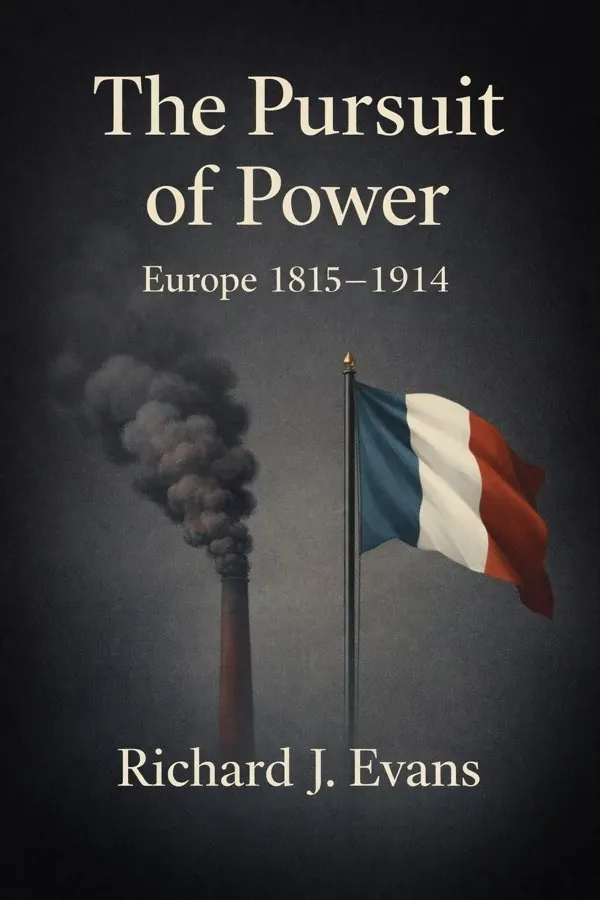
The Pursuit of Power: Europe 1815–1914
What made modern Europe: battlefield victory, diplomatic skill, industrial might, popular movements, or imperial conquest? In The Pursuit of Power, historian Richard J. Evans argues that all of these forces interacted across a turbulent century, reshaping Europe from the ruins of the Napoleonic Wars to the brink of World War I. This is not simply a political history of rulers and treaties. It is a broad, richly textured account of how states were rebuilt, economies transformed, empires expanded, and ordinary people drawn into public life through cities, factories, schools, newspapers, and elections. Evans shows how nationalism, liberalism, socialism, religion, science, and mass culture all helped create a new Europe while also deepening tensions within it. The book matters because it explains the foundations of the modern world: the rise of nation-states, the power of industry, the growth of democracy, and the deadly rivalries that made catastrophe possible in 1914. As one of Britain’s leading historians of modern Europe, Evans brings exceptional authority, clarity, and narrative energy to a century defined by ambition, upheaval, and relentless change.
Read SummaryKey Insights from Richard J. Evans
Vienna Rebuilt Europe After Napoleon
Peace is often shaped less by idealism than by fear. In 1815, Europe’s rulers emerged from the Napoleonic Wars determined not just to end conflict but to prevent another revolutionary upheaval from overturning the continent. The Congress of Vienna was their answer: a diplomatic effort to restore sta...
From The Pursuit of Power: Europe 1815–1914
Metternich Guarded Order Through Control
Conservatism is strongest when it presents itself as common sense. In the decades after 1815, Austrian statesman Klemens von Metternich became the symbol of a Europe determined to suppress revolution, censor dissent, and preserve monarchical authority. Evans presents the so-called Age of Metternich ...
From The Pursuit of Power: Europe 1815–1914
Industry Remade Work, Wealth, and Society
Power in the nineteenth century increasingly came not from land alone but from coal, iron, steam, and machinery. Evans treats industrialization as one of the central engines of Europe’s transformation. Beginning unevenly in Britain and spreading gradually across the continent, the Industrial Revolut...
From The Pursuit of Power: Europe 1815–1914
The Revolutions of 1848 Exposed Fragility
Sometimes a political order looks stable right before it starts collapsing. The revolutions of 1848 erupted across much of Europe with astonishing speed, revealing how deeply dissatisfaction had spread beneath conservative rule. Economic hardship, food shortages, unemployment, demands for constituti...
From The Pursuit of Power: Europe 1815–1914
Nationalism Created States and Conflicts
Nations are not timeless facts; they are political projects built through stories, institutions, and struggle. Evans shows that nationalism became one of the most powerful forces in nineteenth-century Europe because it offered people a language of belonging and a claim to sovereignty. It could inspi...
From The Pursuit of Power: Europe 1815–1914
Empires Expanded Through Competition and Confidence
As Europe grew more powerful at home, it reached outward with increasing aggression abroad. Evans places imperialism at the center of nineteenth-century European history, not at its margins. Industrial growth, strategic rivalry, missionary zeal, racial ideology, and the search for markets and resour...
From The Pursuit of Power: Europe 1815–1914
About Richard J. Evans
Richard J. Evans is a British historian specializing in modern European history, particularly Germany. He is a former Regius Professor of History at the University of Cambridge and author of numerous influential works on the Third Reich and European history.


Frequently Asked Questions
Richard J. Evans is a British historian specializing in modern European history, particularly Germany.
Read Richard J. Evans's books in 15 minutes
Get AI-powered summaries with key insights from 1 book by Richard J. Evans.