
Plutarch Books
Plutarch (c. 46–120 CE) was a Greek biographer, philosopher, and moralist from Chaeronea in Boeotia.
Known for: The Age Of Alexander: Nine Greek Lives
Books by Plutarch
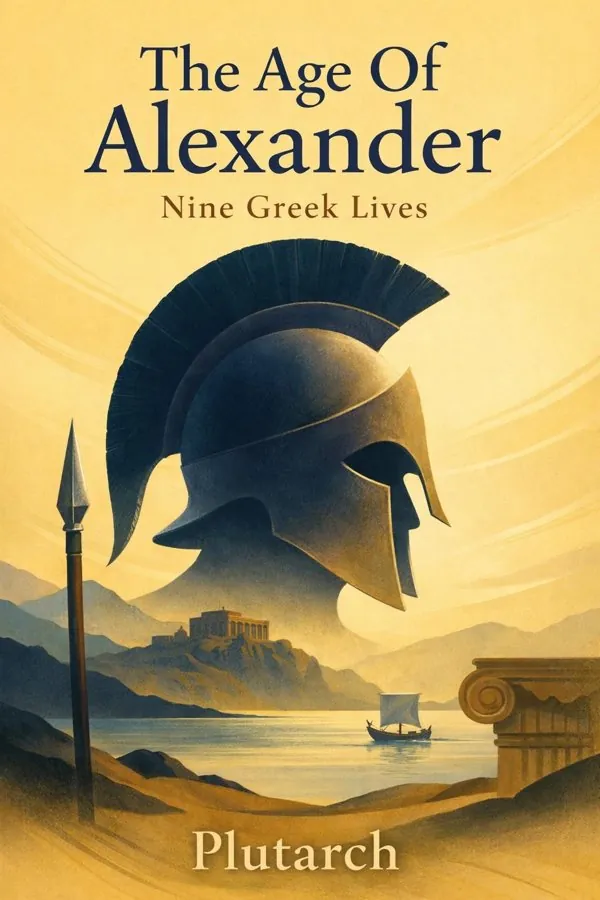
The Age Of Alexander: Nine Greek Lives
The Age Of Alexander: Nine Greek Lives brings together some of Plutarch’s most compelling biographies from the Greek world, tracing the political, moral, and military upheavals that shaped the age of Macedonian expansion and its aftermath. Rather than offering a straightforward chronological history, Plutarch studies nine remarkable individuals—Agesilaus, Pelopidas, Dion, Timoleon, Demosthenes, Phocion, Alexander, Eumenes, and Artaxerxes—to ask a deeper question: what kind of character creates greatness, and what kind destroys it? Through kings, generals, statesmen, and orators, the book examines ambition, integrity, courage, self-mastery, and the corrupting pressures of power. What makes this work endure is Plutarch’s distinctive method. He is less interested in military detail for its own sake than in the habits, choices, and moral temperament revealed through action. A witty remark, an act of restraint, or a moment of reckless pride may matter more than the outcome of a battle. Plutarch, a Greek intellectual and moral philosopher writing under Rome, had both historical distance and philosophical purpose. The result is a classic that reads as biography, political reflection, and ethical instruction all at once—an essential window into leadership and the human costs of power.
Read SummaryKey Insights from Plutarch
Agesilaus and the Limits of Spartan Virtue
Discipline can build greatness, but when discipline hardens into narrowness, it can also trap a leader in old habits. That tension lies at the heart of Plutarch’s portrait of Agesilaus, the Spartan king who seems at first to embody every admired civic virtue: endurance, simplicity, courage, obedienc...
From The Age Of Alexander: Nine Greek Lives
Pelopidas and the Power of Courageous Friendship
Political liberation rarely begins with systems; it begins with people willing to risk themselves for one another. In Plutarch’s Life of Pelopidas, courage is inseparable from friendship, loyalty, and a shared sense of civic duty. Pelopidas emerges as a man of ardent action, bold enough to challenge...
From The Age Of Alexander: Nine Greek Lives
Dion and Philosophy Tested by Power
Ideas sound noble in exile; they become truly meaningful only when exposed to power. That is the challenge at the center of Plutarch’s Life of Dion. A student of philosophy and an associate of Plato, Dion enters politics believing that reason, education, and moral discipline can reform Syracuse. He ...
From The Age Of Alexander: Nine Greek Lives
Timoleon and the Renewal of Civic Virtue
A broken political community can recover, but only when leadership serves restoration rather than self-glorification. In Timoleon, Plutarch presents one of his clearest portraits of healing statesmanship. Timoleon enters Sicily at a moment of exhaustion: tyranny, civil conflict, and foreign pressure...
From The Age Of Alexander: Nine Greek Lives
Demosthenes and the Voice of Freedom
Words can be a form of action when they awaken a people to dangers they would rather ignore. Plutarch’s Demosthenes is not merely an orator of technical brilliance; he is the voice of a threatened political freedom. Rising through effort rather than natural advantage, Demosthenes trains himself rele...
From The Age Of Alexander: Nine Greek Lives
Phocion and Integrity in a Corrupt Age
Sometimes the most radical public act is simply remaining honest when everyone else is bargaining away principle. In Phocion, Plutarch offers one of antiquity’s sharpest studies of integrity under political decay. Phocion is austere, plainspoken, and resistant to flattery. He cannot be bought, and h...
From The Age Of Alexander: Nine Greek Lives
About Plutarch
Plutarch (c. 46–120 CE) was a Greek biographer, philosopher, and moralist from Chaeronea in Boeotia. Best known for his Parallel Lives, which pairs Greek and Roman figures to explore virtue and character, his writings have profoundly influenced Western biography, ethics, and historical thought.


Frequently Asked Questions
Plutarch (c. 46–120 CE) was a Greek biographer, philosopher, and moralist from Chaeronea in Boeotia.
Read Plutarch's books in 15 minutes
Get AI-powered summaries with key insights from 1 book by Plutarch.