
Masanobu Fukuoka Books
Masanobu Fukuoka (1913–2008) was a Japanese farmer and philosopher born in Ehime Prefecture. After working as a researcher for Japan’s Ministry of Agriculture, he developed and practiced the concept of natural farming, which avoids plowing, fertilizers, and pesticides.
Known for: The One-Straw Revolution: An Introduction to Natural Farming
Books by Masanobu Fukuoka
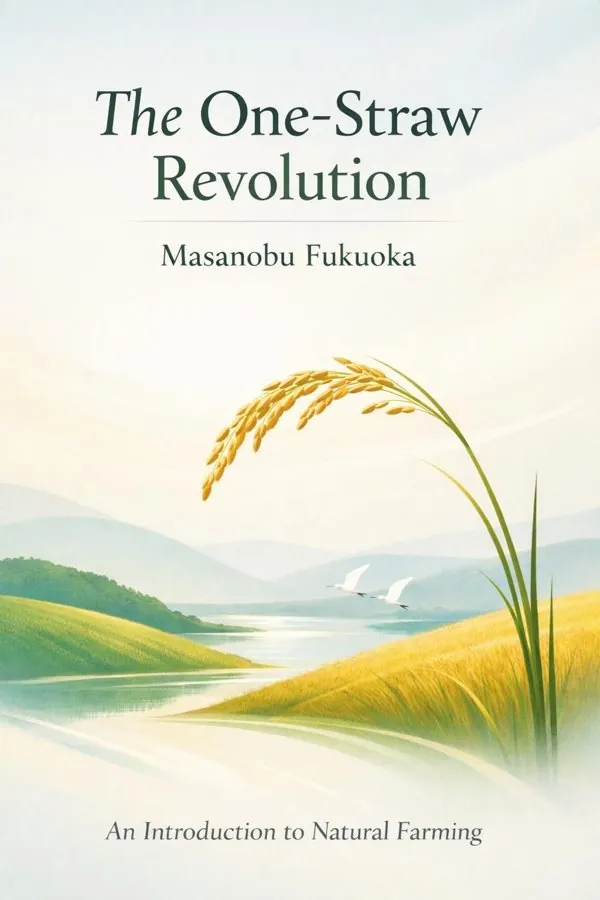
The One-Straw Revolution: An Introduction to Natural Farming
What if the most productive way to farm were not to control nature more aggressively, but to interfere with it less? In The One-Straw Revolution, Masanobu Fukuoka challenges the foundations of modern agriculture and offers a radically different vision: farming that cooperates with natural processes instead of trying to dominate them. Drawing on decades of experience cultivating rice, barley, and citrus on his farm in rural Japan, Fukuoka argues that plowing, chemical fertilizers, pesticides, and heavy machinery are not signs of progress, but symptoms of a misunderstanding of how nature works. Part practical guide, part philosophical manifesto, the book shows how simple methods such as direct sowing, mulching with straw, ground cover, and careful observation can produce abundant harvests while restoring soil health and ecological balance. But Fukuoka’s message reaches far beyond farming. He invites readers to question the modern obsession with efficiency, expertise, and endless intervention. His authority comes not only from scientific training as a former agricultural researcher, but from a lifetime spent testing his ideas in the field. The result is a timeless environmental classic that speaks to farmers, gardeners, and anyone searching for a wiser relationship with the natural world.
Read SummaryKey Insights from Masanobu Fukuoka
Do-Nothing Means Wise Restraint
The most radical insight in Fukuoka’s book is that many of the problems farmers struggle to solve are created by farming methods themselves. When he speaks of “do-nothing” farming, he does not mean neglect, laziness, or abandonment. He means refusing unnecessary work and learning to distinguish what...
From The One-Straw Revolution: An Introduction to Natural Farming
Modern Agriculture Creates Fragile Systems
Fukuoka’s critique of modern agriculture begins with a disturbing paradox: the more humanity tries to improve nature through force, the more dependent and unstable agriculture becomes. Chemical fertilizers can create quick growth, but they bypass the slow, living processes that build resilient soil....
From The One-Straw Revolution: An Introduction to Natural Farming
Farming Should Follow Natural Cycles
One of Fukuoka’s deepest insights is that nature is not chaotic; it is ordered in ways modern agriculture often fails to understand. Natural farming works by aligning cultivation with the rhythms already present in the landscape rather than imposing artificial schedules and rigid control. Fukuoka’s ...
From The One-Straw Revolution: An Introduction to Natural Farming
Direct Sowing Restores Simplicity
Modern agriculture often treats transplantation, nursery management, and intensive soil preparation as signs of sophistication. Fukuoka turned that assumption upside down by showing that direct sowing can be both simpler and more natural. Rather than raising seedlings in special conditions and then ...
From The One-Straw Revolution: An Introduction to Natural Farming
Straw, Clover, and Soil Life Matter
Fukuoka understood that fertility is not something poured onto land from the outside; it emerges from the life within the soil. One of his most practical contributions is his insistence that crop residues, ground cover, and biological activity can replace much of what modern farming seeks through pu...
From The One-Straw Revolution: An Introduction to Natural Farming
Pests Signal Imbalance, Not War
A central mistake of modern farming, according to Fukuoka, is the belief that insects and plant diseases are enemies to be eradicated. In natural systems, pests rarely appear as isolated problems. They are usually signs that a larger balance has been disturbed. When monocultures spread over large ar...
From The One-Straw Revolution: An Introduction to Natural Farming
About Masanobu Fukuoka
Masanobu Fukuoka (1913–2008) was a Japanese farmer and philosopher born in Ehime Prefecture. After working as a researcher for Japan’s Ministry of Agriculture, he developed and practiced the concept of natural farming, which avoids plowing, fertilizers, and pesticides. His ideas have influenced glob...
Read more
Masanobu Fukuoka (1913–2008) was a Japanese farmer and philosopher born in Ehime Prefecture. After working as a researcher for Japan’s Ministry of Agriculture, he developed and practiced the concept of natural farming, which avoids plowing, fertilizers, and pesticides. His ideas have influenced glob...
Masanobu Fukuoka (1913–2008) was a Japanese farmer and philosopher born in Ehime Prefecture. After working as a researcher for Japan’s Ministry of Agriculture, he developed and practiced the concept of natural farming, which avoids plowing, fertilizers, and pesticides. His ideas have influenced global movements in sustainable agriculture and environmental philosophy.


Frequently Asked Questions
Masanobu Fukuoka (1913–2008) was a Japanese farmer and philosopher born in Ehime Prefecture. After working as a researcher for Japan’s Ministry of Agriculture, he developed and practiced the concept of natural farming, which avoids plowing, fertilizers, and pesticides.
Read Masanobu Fukuoka's books in 15 minutes
Get AI-powered summaries with key insights from 1 book by Masanobu Fukuoka.