
Maryanne Wolf Books
Maryanne Wolf is a cognitive neuroscientist and scholar of reading and language development. She is known for her research on dyslexia and the reading brain, and has served as director of the Center for Reading and Language Research at Tufts University.
Known for: Proust and the Squid: The Story and Science of the Reading Brain, Reader, Come Home: The Reading Brain in a Digital World
Books by Maryanne Wolf
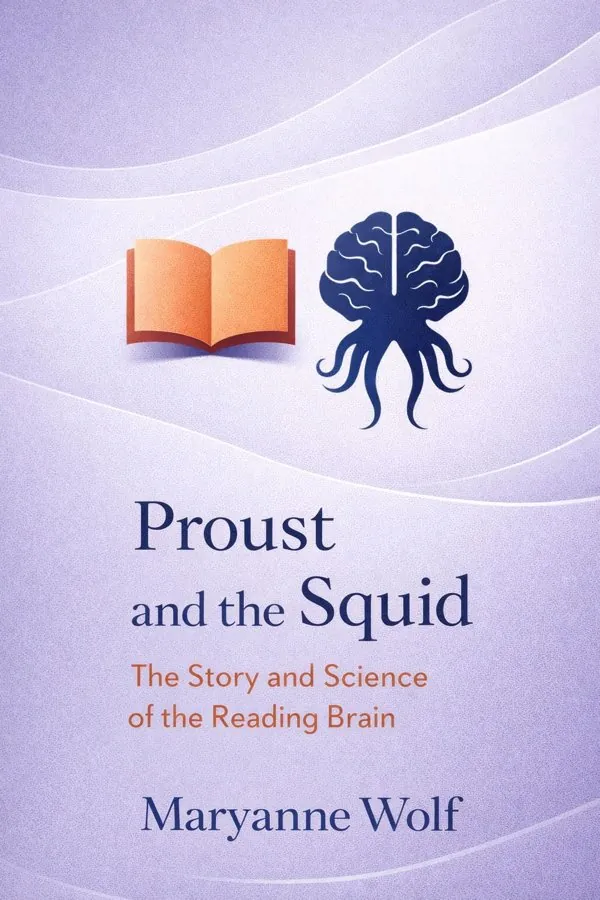
Proust and the Squid: The Story and Science of the Reading Brain
Reading feels so natural to literate adults that it is easy to forget how astonishing it really is. Human beings did not evolve with a built-in reading instinct, yet in just a few thousand years we cr...

Reader, Come Home: The Reading Brain in a Digital World
In this thought-provoking work, cognitive neuroscientist Maryanne Wolf explores how the digital age is reshaping the human reading brain. Drawing on decades of research in neuroscience, education, and...
Key Insights from Maryanne Wolf
Reading Is a Cultural Invention
One of the book’s most powerful insights is that reading is not natural in the same way that speaking is. Children are born prepared to acquire spoken language if they grow up in a normal linguistic environment, but no child is born with a prewired reading module. Reading had to be invented by cultu...
From Proust and the Squid: The Story and Science of the Reading Brain
The Brain Was Recycled for Reading
A remarkable paradox sits at the center of Wolf’s argument: the human brain was never designed to read, yet it learns to do so by repurposing older neural systems. Reading depends on what neuroscientists sometimes call neural plasticity, the brain’s ability to reorganize itself in response to new de...
From Proust and the Squid: The Story and Science of the Reading Brain
Writing Systems Shape Thoughtful Reading
Not all writing systems ask the brain to do the same work. Wolf shows that the path into literacy differs depending on whether a language uses alphabetic letters, syllabic signs, or logographic characters. The reading brain is universal in its plasticity, but the exact circuit it builds reflects the...
From Proust and the Squid: The Story and Science of the Reading Brain
Children Build Reading Step by Step
Reading development is not a switch that flips on; it is a long construction project. Wolf describes how children gradually assemble the reading circuit through stages that move from awareness of sounds and print to fluency, comprehension, and critical thought. What looks effortless in a skilled adu...
From Proust and the Squid: The Story and Science of the Reading Brain
Dyslexia Reflects Difference, Not Deficit
Few parts of Wolf’s book are more important than her treatment of dyslexia. She argues that dyslexia should not be misunderstood as a sign of low intelligence or poor effort. Instead, it often reflects differences in how the brain processes the rapid coordination of sound, print, naming, and timing ...
From Proust and the Squid: The Story and Science of the Reading Brain
Fluency Unlocks Deep Comprehension
Wolf makes a subtle but crucial distinction: decoding words is not the same as truly reading. Real reading culminates in comprehension, inference, empathy, and insight. Yet these higher forms of understanding depend on fluency, because the brain has limited attentional resources. If too much energy ...
From Proust and the Squid: The Story and Science of the Reading Brain
About Maryanne Wolf
Maryanne Wolf is a cognitive neuroscientist and scholar of reading and language development. She is known for her research on dyslexia and the reading brain, and has served as director of the Center for Reading and Language Research at Tufts University.


Frequently Asked Questions
Maryanne Wolf is a cognitive neuroscientist and scholar of reading and language development. She is known for her research on dyslexia and the reading brain, and has served as director of the Center for Reading and Language Research at Tufts University.
Read Maryanne Wolf's books in 15 minutes
Get AI-powered summaries with key insights from 2 books by Maryanne Wolf.