
Martin Gurri Books
Martin Gurri is a former CIA analyst specializing in the study of media and its effects on society. His research focuses on the intersection of information, politics, and public opinion in the digital age.
Known for: The Revolt of the Public and the Crisis of Authority in the New Millennium
Books by Martin Gurri
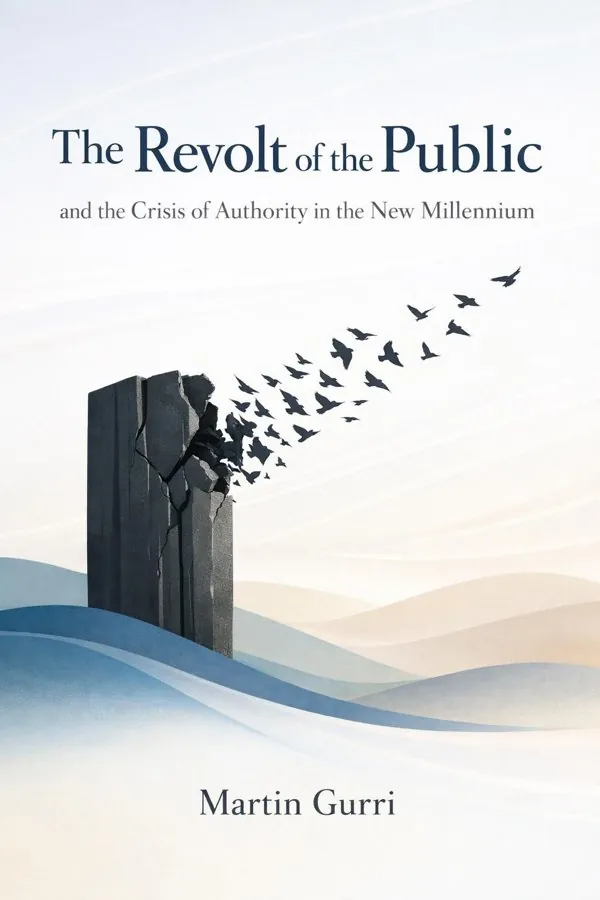
The Revolt of the Public and the Crisis of Authority in the New Millennium
Originally published in 2014 and made even more relevant by the turbulence that followed, The Revolt of the Public and the Crisis of Authority in the New Millennium argues that the digital age has upended one of the oldest arrangements in politics: the assumption that institutions speak and the public listens. Martin Gurri, a former CIA media analyst, shows how the internet and social platforms did more than speed up communication. They shifted power. Ordinary people gained the ability to observe, criticize, organize, ridicule, and resist elites at scale, while governments, media organizations, parties, and experts lost the aura of competence that once protected them. This is not a simple story of democratization or liberation. Gurri’s point is sharper and more unsettling: the networked public is extraordinarily good at exposing failure, but far less capable of building durable alternatives. The result is a world defined by mistrust, protest, instability, and recurring legitimacy crises. Drawing on examples from politics, media, and global protest movements, Gurri offers a framework for understanding why authority now feels fragile almost everywhere. For anyone trying to make sense of populism, institutional decline, and the permanent agitation of online life, this book remains essential.
Read SummaryKey Insights from Martin Gurri
The Information Explosion Changed Power
The most revolutionary feature of the digital age is not that there is more information, but that information is no longer scarce. For centuries, institutions derived influence from controlling the production and distribution of knowledge. Governments classified facts, newspapers decided what counte...
From The Revolt of the Public and the Crisis of Authority in the New Millennium
Authority Depends on Belief, Not Force
Authority survives only as long as people believe it deserves to survive. That is one of Gurri’s central insights. Institutions do not rule by information alone, and not even by coercion alone. They rely on a public willingness to accept that officials, experts, journalists, and leaders possess grea...
From The Revolt of the Public and the Crisis of Authority in the New Millennium
The Public Is Now Networked
The public is not a disciplined political movement, and that is exactly what makes it powerful. Gurri describes a new kind of public formed through digital networks: loosely connected individuals who may disagree about almost everything except their hostility toward visible authority. Unlike parties...
From The Revolt of the Public and the Crisis of Authority in the New Millennium
Revolts Spread Across Different Societies
One of the book’s strongest contributions is showing that public revolt is not confined to one ideology, region, or culture. Gurri examines episodes like the Arab Spring, the Indignados in Spain, Occupy Wall Street, and anti-establishment surges elsewhere to argue that these movements shared a deepe...
From The Revolt of the Public and the Crisis of Authority in the New Millennium
Media Lost Its Gatekeeping Monopoly
Traditional media once acted as the central interpreter between events and the public. Editors selected what mattered, journalists established context, and broadcast institutions helped define legitimacy. Gurri argues that this gatekeeping role has been profoundly weakened. The media did not merely ...
From The Revolt of the Public and the Crisis of Authority in the New Millennium
Expertise Without Trust Stops Persuading
Modern societies depend on experts, yet expertise alone no longer settles public argument. That is a paradox at the center of Gurri’s analysis. We live in highly technical systems run by specialists, but public confidence in those specialists has declined. The issue is not simply ignorance or anti-i...
From The Revolt of the Public and the Crisis of Authority in the New Millennium
About Martin Gurri
Martin Gurri is a former CIA analyst specializing in the study of media and its effects on society. His research focuses on the intersection of information, politics, and public opinion in the digital age. Gurri has written extensively on how technology reshapes authority and governance.


Frequently Asked Questions
Martin Gurri is a former CIA analyst specializing in the study of media and its effects on society. His research focuses on the intersection of information, politics, and public opinion in the digital age.
Read Martin Gurri's books in 15 minutes
Get AI-powered summaries with key insights from 1 book by Martin Gurri.