
Martin Bunton Books
Martin Bunton is a historian at the University of Victoria, Canada, whose research focuses on the modern history of the Middle East, particularly land and law in Palestine.
Known for: A History of the Modern Middle East
Books by Martin Bunton
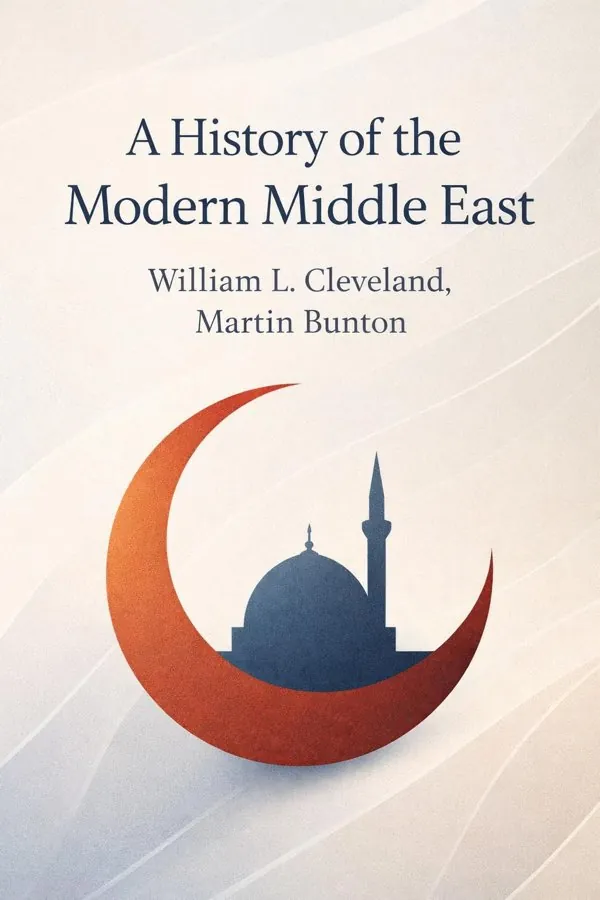
A History of the Modern Middle East
Few regions are discussed as often and understood as poorly as the modern Middle East. In A History of the Modern Middle East, William L. Cleveland and Martin Bunton provide a sweeping, carefully balanced account of how the region moved from imperial rule to modern statehood, from reform movements to revolutions, and from colonial domination to contemporary geopolitical struggles. Rather than reducing Middle Eastern history to endless conflict, the book shows a dynamic world shaped by institutions, ideas, social change, economic pressures, and international power politics. The book matters because it explains how present-day crises emerged from long historical processes: the decline and reform of the Ottoman Empire, European imperial expansion, the rise of nationalism, the creation of new borders, the Arab-Israeli conflict, oil politics, authoritarian rule, and popular movements for change. Cleveland, a leading historian of Arab nationalism and modern Middle Eastern history, built the text into a standard academic reference, and Bunton updated it with clarity and scholarly rigor for newer generations of readers. The result is an accessible yet authoritative guide for anyone who wants to understand how the modern Middle East was made—and why its history continues to shape global affairs.
Read SummaryKey Insights from Martin Bunton
Ottoman Reform Was a Fight for Survival
A powerful way to understand the nineteenth-century Ottoman Empire is to stop thinking of it as a dying empire passively awaiting collapse. Cleveland and Bunton show that it was, instead, a state engaged in intense experimentation to preserve itself in a rapidly changing world. The Tanzimat reforms ...
From A History of the Modern Middle East
European Imperialism Reshaped Regional Possibilities
Imperialism rarely begins with conquest alone; it often arrives through debt, trade, advisers, and strategic dependency. Cleveland and Bunton emphasize that by the late nineteenth century, European powers had become deeply embedded in Middle Eastern affairs, often before formal colonial rule was est...
From A History of the Modern Middle East
Nationalism Emerged From Imperial Breakdown
Nations are not timeless inheritances; they are often forged in moments of imperial crisis. One of the book’s core insights is that nationalism in the Middle East did not simply appear as an inevitable expression of ancient identity. It grew through schools, newspapers, military service, reformist d...
From A History of the Modern Middle East
Mandates Created States With Built-In Tensions
Many modern Middle Eastern states were born not from fully sovereign national self-determination, but from an uneasy compromise between local aspirations and imperial design. Cleveland and Bunton show that the interwar mandate system, established after World War I, was presented as a civilizing and ...
From A History of the Modern Middle East
Decolonization Unleashed Competing Political Projects
Independence did not settle the question of what Middle Eastern states should become; it made that question unavoidable. Cleveland and Bunton show that the decades after World War II were defined by rival ideologies competing to shape the postcolonial future. Liberal constitutionalism, monarchy, Ara...
From A History of the Modern Middle East
The Arab-Israeli Conflict Reordered the Region
Some conflicts do more than divide adversaries; they reshape the political life of entire regions. Cleveland and Bunton treat the Arab-Israeli conflict as one of the central organizing forces of modern Middle Eastern history. Its roots lie in late Ottoman Palestine, the rise of Zionism, British impe...
From A History of the Modern Middle East
About Martin Bunton
Martin Bunton is a historian at the University of Victoria, Canada, whose research focuses on the modern history of the Middle East, particularly land and law in Palestine.


Frequently Asked Questions
Martin Bunton is a historian at the University of Victoria, Canada, whose research focuses on the modern history of the Middle East, particularly land and law in Palestine.
Read Martin Bunton's books in 15 minutes
Get AI-powered summaries with key insights from 1 book by Martin Bunton.