
Mark Bray Books
Mark Bray is an American historian, political organizer, and lecturer at Rutgers University. He specializes in human rights, political radicalism, and modern European history.
Known for: Antifa: The Anti-Fascist Handbook
Books by Mark Bray
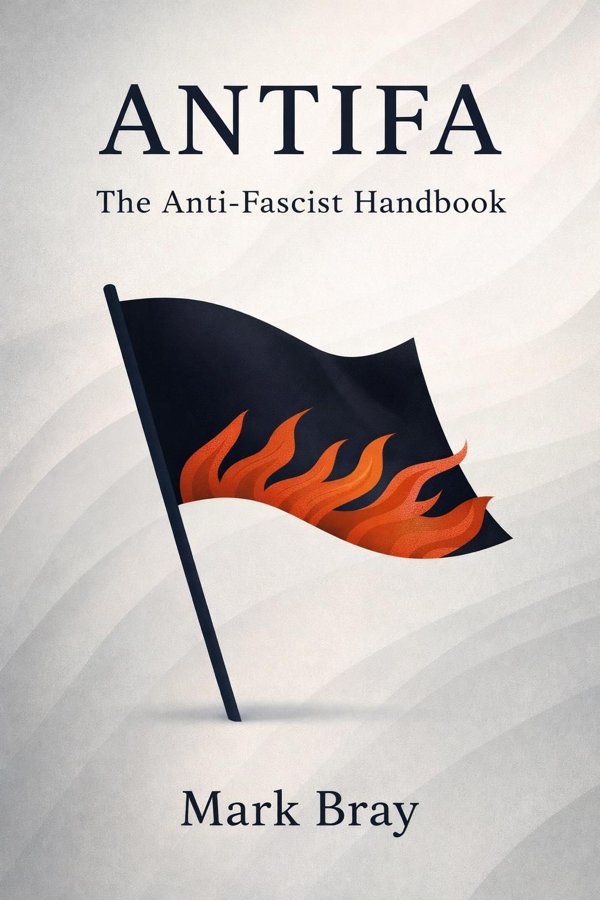
Antifa: The Anti-Fascist Handbook
What should a society do when openly authoritarian movements use democratic freedoms to destroy democracy itself? In Antifa: The Anti-Fascist Handbook, historian and activist Mark Bray tackles that urgent question through a clear, provocative history of anti-fascist resistance. Rather than treating “antifa” as a vague slogan or media caricature, Bray explains it as a political tradition: a loose set of militant, community-based practices aimed at stopping fascist organizing before it becomes entrenched. Drawing on interviews with anti-fascists across Europe and North America, as well as historical research into movements from interwar Europe to the present, he shows how anti-fascism emerged in response to a recurring danger, not as an abstract theory but as a practical form of defense. The book matters because it confronts a dilemma many democracies prefer to ignore: whether tolerance should extend to those committed to hierarchy, exclusion, and political violence. Bray’s authority comes from both scholarship and engagement. He writes with historical depth, moral urgency, and a willingness to examine why anti-fascists believe conventional institutions often fail to stop fascism in time.
Read SummaryKey Insights from Mark Bray
Why Anti-Fascism Starts Before Power
The most unsettling lesson of fascist history is that it rarely arrives all at once. Mark Bray argues that fascism grows through organizing, propaganda, street recruitment, and normalization long before it controls a state. Anti-fascism, therefore, is built on a preventive logic: if fascist movement...
From Antifa: The Anti-Fascist Handbook
No Platforming as Political Self-Defense
A democracy can destroy itself by mistaking every threat for just another opinion. One of Bray’s central themes is “no platforming,” the practice of denying fascists and white supremacists public venues, prestige, and recruitment opportunities. Critics often frame this as intolerance, but Bray expla...
From Antifa: The Anti-Fascist Handbook
Fascism Is More Than Aesthetic Extremism
One reason fascism can spread is that people recognize it too late or too narrowly. Bray emphasizes that fascism is not reducible to uniforms, swastikas, or a single historical regime. It is better understood as a political formation organized around mythic nationalism, hierarchy, scapegoating, and ...
From Antifa: The Anti-Fascist Handbook
Why Institutions Often Fail To Stop It
Many people assume the state will intervene when anti-democratic movements become dangerous. Bray challenges that assumption by tracing how police, courts, media institutions, and mainstream parties have often underestimated, tolerated, or even cooperated with fascist forces. Anti-fascism emerged pa...
From Antifa: The Anti-Fascist Handbook
Militancy, Ethics, And The Violence Debate
The fiercest controversy around antifa concerns violence, but Bray insists the real debate is about political context, not abstract morality. He explains that anti-fascists do not generally celebrate violence for its own sake. Instead, some defend militant tactics because they see fascist organizing...
From Antifa: The Anti-Fascist Handbook
Community Defense Beyond Street Confrontations
The public image of antifa often centers on black-clad clashes, but Bray broadens the picture dramatically. Anti-fascism, he explains, includes a wide range of community defense practices that are less visible but often more durable: research, intelligence gathering, neighborhood organizing, mutual ...
From Antifa: The Anti-Fascist Handbook
About Mark Bray
Mark Bray is an American historian, political organizer, and lecturer at Rutgers University. He specializes in human rights, political radicalism, and modern European history. Bray is also known for his activism and writings on anti-fascism and social movements.


Frequently Asked Questions
Mark Bray is an American historian, political organizer, and lecturer at Rutgers University. He specializes in human rights, political radicalism, and modern European history.
Read Mark Bray's books in 15 minutes
Get AI-powered summaries with key insights from 1 book by Mark Bray.