
Lytton Strachey Books
Lytton Strachey (1880–1932) was an English writer and critic, a member of the Bloomsbury Group. He is known for his innovative biographical style and for his work 'Eminent Victorians', which transformed the way biographies were written by combining psychological analysis and satire.
Known for: Florence Nightingale
Books by Lytton Strachey
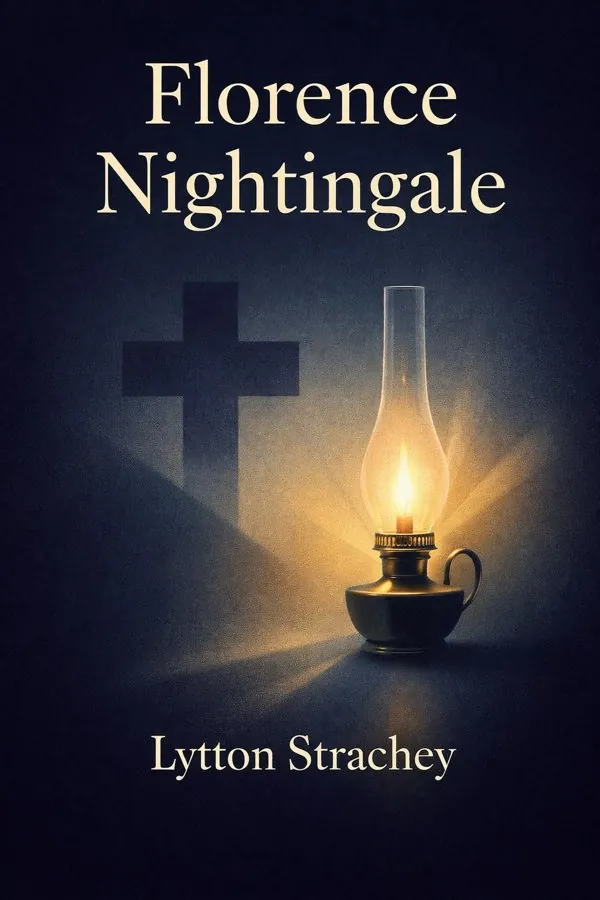
Florence Nightingale
Florence Nightingale by Lytton Strachey is not a conventional tribute to a saintly nurse. First published in 1918 as part of Eminent Victorians, it is a sharply drawn biographical essay that strips away pious legend and replaces it with something more compelling: a portrait of extraordinary will. Strachey presents Nightingale as a woman of intellect, discipline, ambition, spiritual intensity, and relentless administrative power. He shows how a privileged Victorian daughter, expected to marry well and move gracefully through society, instead forced her way into public life and helped transform military medicine, hospital management, and nursing itself. What makes this essay matter is its double achievement. It illuminates Nightingale’s historic role in the Crimean War and in later health reforms, while also questioning the myths that nations build around heroic figures. Strachey’s authority lies not in reverence but in interpretation. As one of the great innovators of modern biography, he combines historical evidence, psychological insight, and irony to reveal character rather than merely list accomplishments. The result is a brief but powerful study of how conviction, intelligence, and administrative genius can reshape institutions—and at great personal cost.
Read SummaryKey Insights from Lytton Strachey
Early Privilege, Unusual Inner Restlessness
Great reformers do not always come from deprivation; sometimes they emerge from comfort and reject its limits. Strachey begins by emphasizing that Florence Nightingale was born into wealth, cultivation, and social privilege. She was not forced into hardship by circumstance. Instead, she was educated...
From Florence Nightingale
A Vocation Tested by Reason
A calling is most powerful when it survives scrutiny. Strachey makes clear that Nightingale’s sense of mission was not a passing emotional impulse. She did not drift into service through sentimentality. Instead, she interrogated her own motives with severity and pursued vocation as if planning a cam...
From Florence Nightingale
Defying Convention to Enter Nursing
Social barriers can be strongest precisely where they look most respectable. For a woman of Nightingale’s class, nursing in the mid-nineteenth century was widely seen as degrading, chaotic, and unsuitable. Her family expected refinement, not hospital wards. Marriage, domestic influence, and social g...
From Florence Nightingale
The Crimean War as Administrative Trial
Crises do not create character as much as reveal its operational strength. Nightingale’s fame rests on the Crimean War, but Strachey refuses to reduce her to a comforting image of kindness moving through dark wards. He presents the war as a brutal test of logistics, discipline, sanitation, bureaucra...
From Florence Nightingale
Myth, Media, and the Lady with the Lamp
Public admiration often simplifies the very people it celebrates. During and after the Crimean War, Florence Nightingale became a national icon, immortalized as the 'Lady with the Lamp.' Strachey treats this image with caution. He does not deny that her nighttime rounds moved people deeply, but he i...
From Florence Nightingale
Illness Did Not End Her Power
Physical weakness does not always diminish influence; sometimes it redirects it. After the Crimea, Nightingale’s health deteriorated, and for long stretches she lived in what appeared to be semi-invalidism. A superficial reading might see this as decline, but Strachey shows something more paradoxica...
From Florence Nightingale
About Lytton Strachey
Lytton Strachey (1880–1932) was an English writer and critic, a member of the Bloomsbury Group. He is known for his innovative biographical style and for his work 'Eminent Victorians', which transformed the way biographies were written by combining psychological analysis and satire.


Frequently Asked Questions
Lytton Strachey (1880–1932) was an English writer and critic, a member of the Bloomsbury Group. He is known for his innovative biographical style and for his work 'Eminent Victorians', which transformed the way biographies were written by combining psychological analysis and satire.
Read Lytton Strachey's books in 15 minutes
Get AI-powered summaries with key insights from 1 book by Lytton Strachey.