
Lao Tzu Books
Lao Tzu, also known as Li Er, was an ancient Chinese philosopher and the founder of Daoism. His teachings emphasize living in harmony with the Tao, the fundamental principle underlying the universe.
Known for: Tao Te Ching
Books by Lao Tzu
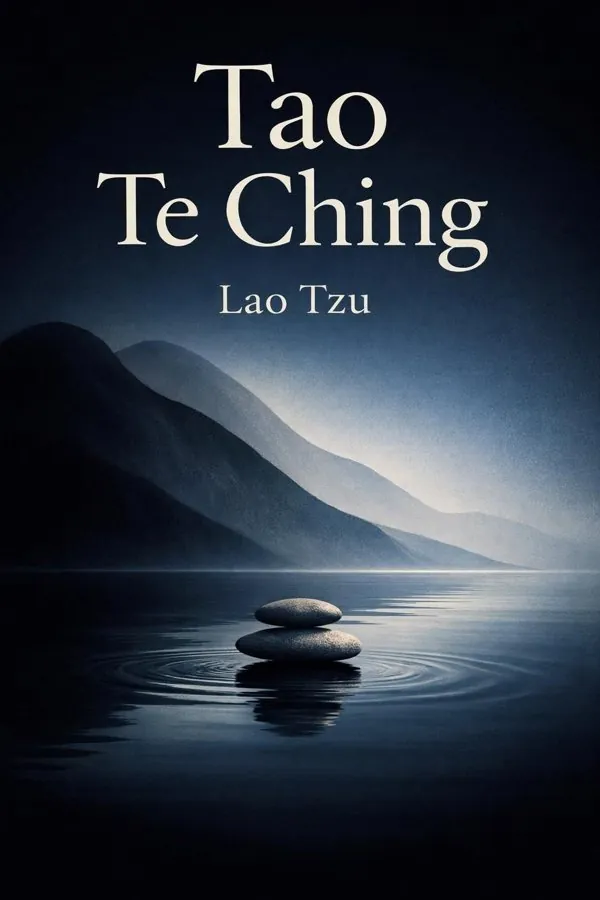
Tao Te Ching
Few books have shaped spiritual thought, leadership, and personal reflection as deeply as the Tao Te Ching. Though brief in length, this ancient classic opens a surprisingly vast way of seeing life: one that values stillness over strain, humility over ego, and alignment over force. At a time when modern life often rewards speed, control, and constant self-assertion, the Tao Te Ching offers a radically different path. It suggests that the most effective way to live is not by pushing harder, but by moving in harmony with the deeper patterns of existence. Attributed to Lao Tzu, the revered sage traditionally associated with the founding of Daoism, this text has endured for more than two millennia because it speaks to timeless human struggles: how to lead without dominating, act without exhausting yourself, and find peace in a world of change. Divided into reflections on the Tao, or the Way, and Te, often translated as virtue or inner power, the book blends poetic paradox with practical wisdom. Its teachings on non-action, simplicity, and natural balance continue to influence philosophy, politics, spirituality, and self-development around the world.
Read SummaryKey Insights from Lao Tzu
Introduction to the Tao
The Tao is the starting point of the entire book, yet Lao Tzu immediately tells us it cannot be fully captured in language. “The Tao that can be spoken is not the eternal Tao” is not a rejection of thought, but a warning against mistaking labels for reality. Words divide and define; the Tao precedes...
From Tao Te Ching
The Nature of the Tao
Lao Tzu describes the Tao through paradox because ordinary logic cannot contain it. It is empty, yet never used up. It is invisible, yet everything depends on it. It does not force, yet nothing is left undone. These contradictions are not meant to confuse us; they train us to see beyond surface appe...
From Tao Te Ching
Wu Wei (Non-Action)
Wu wei is one of the most misunderstood ideas in the Tao Te Ching. It does not mean laziness, passivity, or refusing to act. It means acting without strain, forcing, or needless interference. Wu wei is effortless action—responding in a way that fits the moment so well that energy is not wasted in fr...
From Tao Te Ching
Simplicity and Humility
The Tao Te Ching consistently praises simplicity because complexity often feeds ego, distraction, and dissatisfaction. Lao Tzu sees unnecessary desire as a source of inner turmoil. The more we accumulate—possessions, status markers, rigid opinions—the more burdened we become. Simplicity, by contrast...
From Tao Te Ching
The Role of the Sage
In the Tao Te Ching, the sage is not a distant mystic but a model of wise living. The sage leads without dominating, teaches without preaching, and influences others without seeking credit. This figure embodies deep trust in the Tao and therefore does not need to display power or force outcomes. Ins...
From Tao Te Ching
Relativity and Paradox
One of the Tao Te Ching’s most important insights is that opposites define one another. We know beauty because there is ugliness, success because there is failure, and difficulty because there is ease. Lao Tzu is not celebrating confusion; he is showing that reality is relational, fluid, and dynamic...
From Tao Te Ching
About Lao Tzu
Lao Tzu, also known as Li Er, was an ancient Chinese philosopher and the founder of Daoism. His teachings emphasize living in harmony with the Tao, the fundamental principle underlying the universe. Revered as a sage, Lao Tzu’s ideas on naturalness and non-action have shaped Chinese spiritual and ph...
Read more
Lao Tzu, also known as Li Er, was an ancient Chinese philosopher and the founder of Daoism. His teachings emphasize living in harmony with the Tao, the fundamental principle underlying the universe. Revered as a sage, Lao Tzu’s ideas on naturalness and non-action have shaped Chinese spiritual and ph...
Lao Tzu, also known as Li Er, was an ancient Chinese philosopher and the founder of Daoism. His teachings emphasize living in harmony with the Tao, the fundamental principle underlying the universe. Revered as a sage, Lao Tzu’s ideas on naturalness and non-action have shaped Chinese spiritual and philosophical traditions for over two millennia.





Frequently Asked Questions
Lao Tzu, also known as Li Er, was an ancient Chinese philosopher and the founder of Daoism. His teachings emphasize living in harmony with the Tao, the fundamental principle underlying the universe.
Read Lao Tzu's books in 15 minutes
Get AI-powered summaries with key insights from 1 book by Lao Tzu.