
Kenneth Clark Books
Kenneth Clark (1903–1983) was a British art historian, writer, and broadcaster. He is best known for his documentary series Civilisation (1969), which became a milestone in cultural television.
Known for: Civilisation
Books by Kenneth Clark
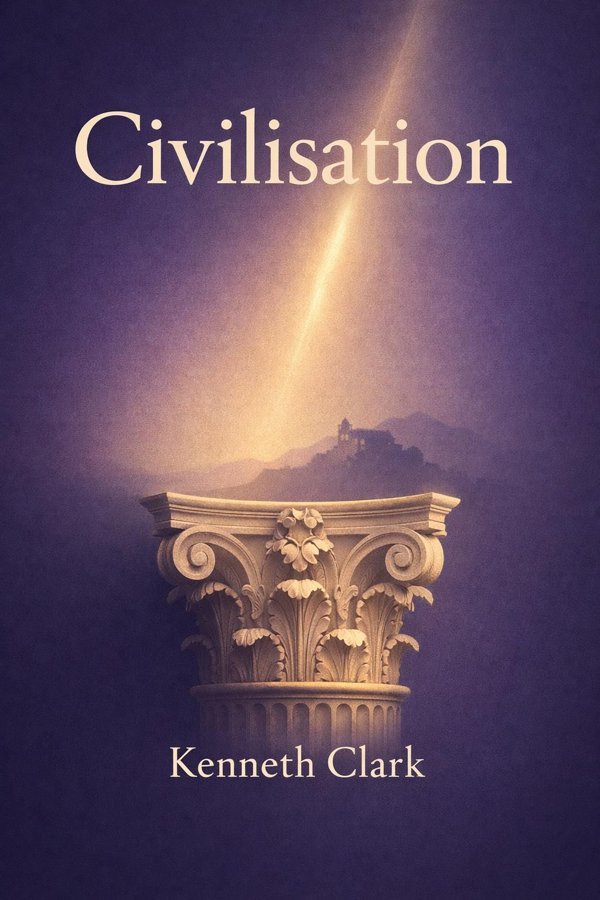
Civilisation
Civilisation by Kenneth Clark is a sweeping interpretation of Western Europe’s cultural journey from the collapse of the Roman Empire to the uncertainties of the modern age. Rather than presenting history as a dry sequence of dates, Clark asks a larger question: what allows a civilisation to endure, renew itself, and create works of lasting beauty? His answer unfolds through art, architecture, religion, philosophy, science, and political thought, all treated as expressions of a society’s inner confidence. Originally developed alongside the landmark BBC series, the book combines scholarly knowledge with the accessibility of a gifted storyteller. Clark writes not simply as a historian of art, but as a cultural interpreter deeply interested in the values that produced cathedrals, paintings, scientific revolutions, and political ideals. The book matters because it argues that civilisation is fragile, sustained not only by wealth or power, but by belief, imagination, discipline, and humane standards. For readers trying to understand the roots of the modern West, Civilisation remains an elegant, provocative, and memorable guide.
Read SummaryKey Insights from Kenneth Clark
Civilisation Survives Through Inner Confidence
A civilisation does not collapse only when its armies fail; it begins to weaken when people lose faith in order, purpose, and continuity. This is one of Kenneth Clark’s central insights. After the fall of Rome, Europe did not become empty of human talent or spiritual aspiration. What disappeared was...
From Civilisation
Christianity Gave Europe Moral Unity
When political unity collapsed, spiritual unity became the framework that held Europe together. Clark shows how Christianity became more than a religion in early medieval Europe: it became the chief source of shared meaning, literacy, symbolism, and artistic inspiration. The Church preserved texts, ...
From Civilisation
Architecture Makes Belief Visible
Buildings reveal what a society believes about itself. Clark uses Romanesque and Gothic architecture to show how stone can become a record of collective aspiration. Romanesque churches, with their thick walls and fortress-like weight, reflect a world seeking security, order, and sacred stability. Go...
From Civilisation
The Renaissance Restored Human Possibility
Great cultural renewals begin when a civilisation rediscovers both its past and its own powers. In Clark’s telling, the Renaissance was not simply a revival of classical art forms. It was a transformation in how human beings understood themselves. By recovering Greek and Roman learning, Renaissance ...
From Civilisation
Reformation and Science Reshaped Authority
Civilisation advances not only through harmony, but also through conflict over truth. Clark treats the Reformation and the rise of scientific inquiry as turning points that challenged inherited authority and forced Europe to rethink belief, knowledge, and institutions. The Reformation fractured reli...
From Civilisation
Baroque Splendor and Enlightenment Reason
Human beings seek grandeur, but they also seek clarity. Clark explores the Baroque era and the Enlightenment as two different but related expressions of European energy. The Baroque age turned power, movement, emotion, and spectacle into cultural form. In architecture, painting, music, and religious...
From Civilisation
About Kenneth Clark
Kenneth Clark (1903–1983) was a British art historian, writer, and broadcaster. He is best known for his documentary series Civilisation (1969), which became a milestone in cultural television. Clark served as director of the National Gallery in London and authored several influential books on art a...
Read more
Kenneth Clark (1903–1983) was a British art historian, writer, and broadcaster. He is best known for his documentary series Civilisation (1969), which became a milestone in cultural television. Clark served as director of the National Gallery in London and authored several influential books on art a...
Kenneth Clark (1903–1983) was a British art historian, writer, and broadcaster. He is best known for his documentary series Civilisation (1969), which became a milestone in cultural television. Clark served as director of the National Gallery in London and authored several influential books on art and aesthetics.



Frequently Asked Questions
Kenneth Clark (1903–1983) was a British art historian, writer, and broadcaster. He is best known for his documentary series Civilisation (1969), which became a milestone in cultural television.
Read Kenneth Clark's books in 15 minutes
Get AI-powered summaries with key insights from 1 book by Kenneth Clark.