
Keisha N. Blain Books
Blain es historiadora y profesora, reconocida por su trabajo sobre el feminismo negro y los movimientos sociales afroamericanos.
Known for: Four Hundred Souls: A Community History of African America, 1619–2019
Books by Keisha N. Blain
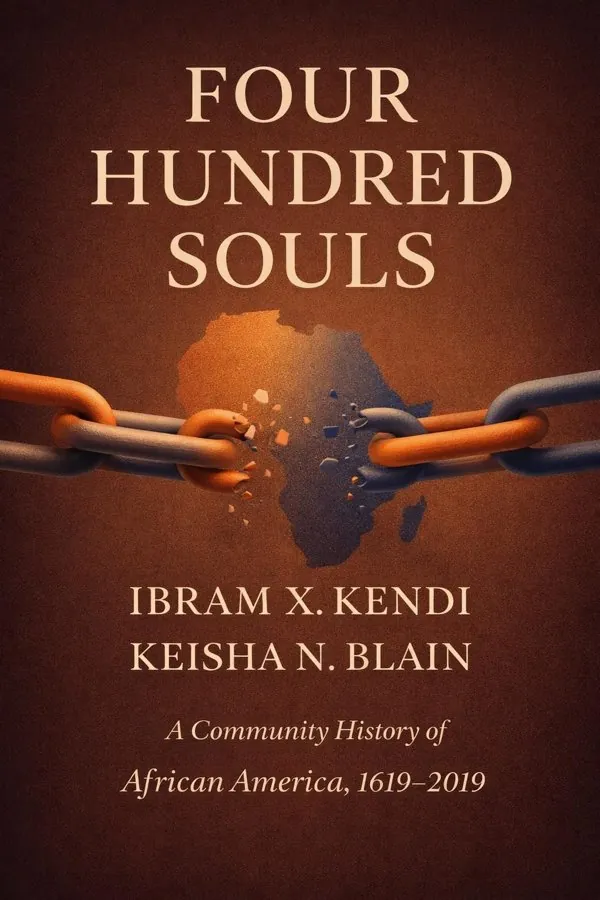
Four Hundred Souls: A Community History of African America, 1619–2019
Four Hundred Souls is not a conventional history book. Edited by Ibram X. Kendi and Keisha N. Blain, it is a sweeping, collaborative account of African American history told across four centuries by ninety contributors, each covering a five-year period between 1619 and 2019. Historians, poets, journalists, novelists, and public intellectuals combine to create a layered portrait of Black life in America—its suffering, creativity, resistance, faith, intellect, and political struggle. The result is both panoramic and intimate: a national history built from lived experience. What makes this book especially powerful is its refusal to flatten the Black past into a simple story of victimhood or progress. Instead, it shows how enslavement, racial capitalism, law, migration, gender, culture, religion, and protest continuously shaped one another. Kendi, a leading scholar of racism and antiracism, and Blain, an acclaimed historian of Black politics and feminism, bring deep authority to the project. Yet the book’s greatest strength lies in its collective voice. Four Hundred Souls matters because it argues that American history cannot be understood without centering African American history—not as a sidebar, but as the nation’s core narrative.
Read SummaryKey Insights from Keisha N. Blain
1619–1624: The First Rupture in America
Some beginnings are not merely dates; they are wounds that keep shaping the future. In Four Hundred Souls, the years 1619 to 1624 mark the arrival of the first captive Africans at Point Comfort, Virginia, a moment often treated as an isolated fact but here presented as a foundational turning point i...
From Four Hundred Souls: A Community History of African America, 1619–2019
1625–1675: Law Learns the Language of Race
Oppression becomes durable when custom turns into law. The period from 1625 to 1675 shows how colonial authorities transformed African bondage from a set of practices into a racial order with legal force. In these decades, the colonies increasingly defined Blackness as inheritable servitude and whit...
From Four Hundred Souls: A Community History of African America, 1619–2019
1676–1725: Rebellion and Racial Order Evolve
Ruling classes often respond to unrest not by reducing injustice, but by redesigning it. In the years following colonial upheavals such as Bacon’s Rebellion, Four Hundred Souls shows how elites sharpened racial divisions to prevent solidarity among poor Europeans, Africans, and Indigenous people. Th...
From Four Hundred Souls: A Community History of African America, 1619–2019
1726–1775: Liberty’s Promise, Slavery’s Reality
A nation can speak the language of freedom while expanding unfreedom. In the decades leading to the American Revolution, Four Hundred Souls exposes the deep contradiction at the heart of colonial political thought: demands for liberty from British rule coexisted with the violent entrenchment of slav...
From Four Hundred Souls: A Community History of African America, 1619–2019
1776–1825: Black Freedom Beyond the Revolution
Emancipation is never a single event; it is a long struggle over what freedom will actually mean. The years after the American Revolution did not deliver broad liberation for African Americans, but they did open new spaces for Black institution-building, political imagination, and self-definition. F...
From Four Hundred Souls: A Community History of African America, 1619–2019
1826–1875: Abolition, War, and Reconstruction
When unjust systems crack, societies face a defining question: will they transform or merely rearrange power? In Four Hundred Souls, the period from 1826 to 1875 captures one of the most explosive and consequential eras in African American history. Abolitionist organizing intensified, Black activist...
From Four Hundred Souls: A Community History of African America, 1619–2019
About Keisha N. Blain
Blain es historiadora y profesora, reconocida por su trabajo sobre el feminismo negro y los movimientos sociales afroamericanos.


Frequently Asked Questions
Blain es historiadora y profesora, reconocida por su trabajo sobre el feminismo negro y los movimientos sociales afroamericanos.
Read Keisha N. Blain's books in 15 minutes
Get AI-powered summaries with key insights from 1 book by Keisha N. Blain.