
Julia Lovell Books
Julia Lovell is a British historian, translator, and professor of modern Chinese history and literature at Birkbeck, University of London. She is known for her works on Chinese history and culture, including translations of key Chinese literary texts and award-winning historical studies.
Known for: Maoism: A Global History
Books by Julia Lovell
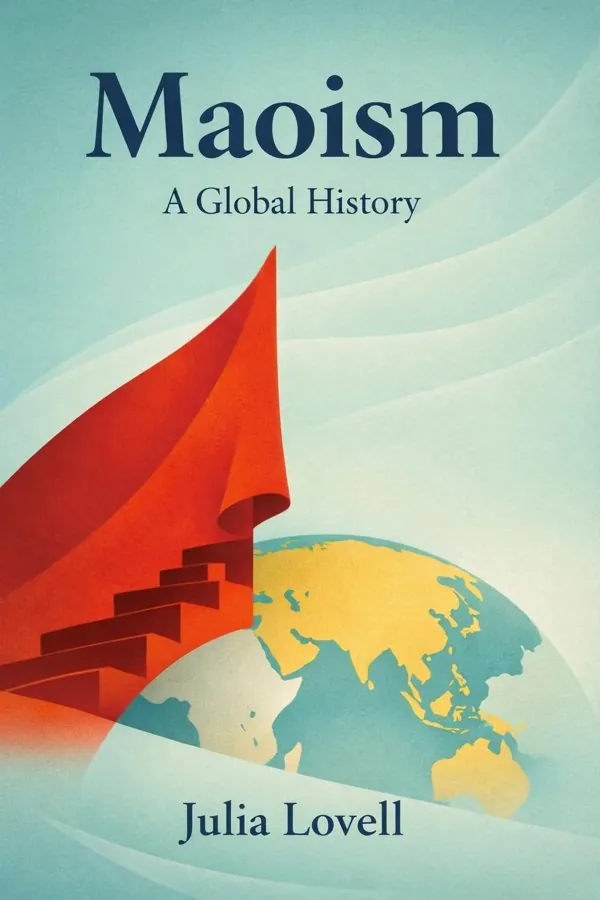
Maoism: A Global History
Some political ideas stay bound to the place that produced them. Maoism did the opposite. In Maoism: A Global History, Julia Lovell shows how a revolutionary doctrine forged in the upheavals of twentieth-century China traveled across continents, inspired guerrilla movements, reshaped anti-colonial politics, energized student radicals, and left violent as well as enduring legacies. This is not simply a biography of Mao Zedong or a history of the Chinese Communist Party. It is an account of how Maoism became one of the modern world’s most portable and adaptable political languages. Lovell argues that Maoism’s power lay in its flexibility: it could speak to peasants in Asia, insurgents in Latin America, liberation leaders in Africa, and intellectual rebels in Europe and the United States. Yet the book is equally attentive to the human costs of that appeal, from authoritarian state-building to revolutionary terror. As a distinguished historian of modern China, translator, and professor, Lovell brings deep archival knowledge and global perspective to a subject often reduced to slogans. The result is a sharp, wide-ranging history that helps explain both the twentieth century and the ideological afterlives still visible today.
Read SummaryKey Insights from Julia Lovell
Maoism Was Born From Chinese Crisis
Ideas become powerful when they seem to solve real historical problems. Lovell begins by showing that Maoism was not an abstract doctrine invented in a study. It emerged from the instability of early twentieth-century China: imperial collapse, warlordism, foreign invasion, social fragmentation, and ...
From Maoism: A Global History
Revolution Was Packaged For Export
No ideology becomes global by accident. Lovell shows that once the People’s Republic of China was established in 1949, Maoism was promoted abroad not only through admiration but through institutions, diplomacy, training networks, propaganda, and strategic calculation. Beijing presented itself as the...
From Maoism: A Global History
Maoism Thrived By Adapting Locally
A rigid ideology rarely travels well; a flexible one can appear universal. One of Lovell’s most important arguments is that Maoism spread globally because it was continually reinterpreted. Though rooted in Chinese revolutionary experience, it proved unusually adaptable. Different movements borrowed ...
From Maoism: A Global History
Latin America Recast Maoist Insurgency
Revolutionary ideas often become most intense far from their birthplace. Lovell’s discussion of Latin America shows how Maoism entered a region already shaped by inequality, oligarchic power, Cold War intervention, and deep frustration with both liberal reform and traditional communist parties. For ...
From Maoism: A Global History
The Cultural Revolution Shocked The World
Sometimes a domestic upheaval becomes an international spectacle. Lovell shows that China’s Cultural Revolution, launched by Mao in 1966, had a paradoxical global impact. Inside China, it unleashed persecution, factional chaos, public humiliation, destroyed lives, and massive institutional breakdown...
From Maoism: A Global History
Violence Was Central, Not Accidental
One of Lovell’s most unsettling insights is that violence was not merely an unfortunate byproduct of Maoism’s spread; in many cases it was integral to its appeal and method. Maoist strategy elevated armed struggle, sacrifice, and revolutionary cleansing as engines of historical change. For movements...
From Maoism: A Global History
About Julia Lovell
Julia Lovell is a British historian, translator, and professor of modern Chinese history and literature at Birkbeck, University of London. She is known for her works on Chinese history and culture, including translations of key Chinese literary texts and award-winning historical studies.



Frequently Asked Questions
Julia Lovell is a British historian, translator, and professor of modern Chinese history and literature at Birkbeck, University of London. She is known for her works on Chinese history and culture, including translations of key Chinese literary texts and award-winning historical studies.
Read Julia Lovell's books in 15 minutes
Get AI-powered summaries with key insights from 1 book by Julia Lovell.