
Jürgen Osterhammel Books
Jürgen Osterhammel is a German historian and professor emeritus of modern and contemporary history at the University of Konstanz. Born in 1952, he is recognized as one of the leading scholars in global history, with research focusing on the nineteenth century, colonial history, and the theory of global historical processes.
Known for: The Transformation of the World: A Global History of the Nineteenth Century
Books by Jürgen Osterhammel
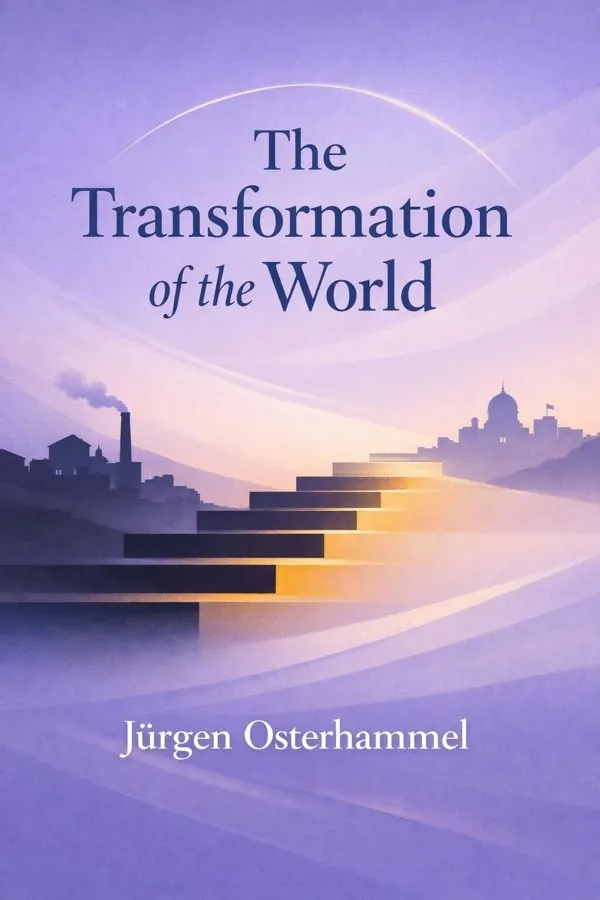
The Transformation of the World: A Global History of the Nineteenth Century
Jürgen Osterhammel’s The Transformation of the World is one of the most ambitious works of modern history ever written. Rather than telling the nineteenth century as a parade of European events or national success stories, Osterhammel reconstructs it as a truly global age of upheaval, connection, and unequal change. He shows how industrialization, empire, migration, urban growth, state-building, scientific knowledge, and new systems of communication reshaped everyday life across continents. The book’s power lies in its refusal to simplify: the nineteenth century was not one single path to “modernity,” but a mosaic of overlapping transformations that affected regions in very different ways. This matters because many of the structures that define our world—global markets, mass mobility, the nation-state, imperial legacies, social inequality, and environmental pressure—took recognizable form in this period. Osterhammel, one of the leading historians of global history, brings extraordinary range and precision to the subject, combining sweeping interpretation with careful attention to detail. The result is a landmark study that helps readers see the nineteenth century not as distant past, but as the deep foundation of the modern world we still inhabit.
Read SummaryKey Insights from Jürgen Osterhammel
The Nineteenth Century Was a Long Era
History rarely obeys the neat boundaries of a calendar. One of Osterhammel’s most important insights is that the nineteenth century should not be understood simply as the years from 1800 to 1900, but as a “long century” whose roots stretch back into the late eighteenth century and whose consequences...
From The Transformation of the World: A Global History of the Nineteenth Century
Space Became More Connected and Unequal
Modernity did not erase distance; it reorganized it. Osterhammel argues that the nineteenth century transformed space itself. Steamships, railways, canals, telegraphs, and improved cartography compressed travel times and linked regions with new intensity. What had once been separated by months of mo...
From The Transformation of the World: A Global History of the Nineteenth Century
Energy and Industry Reordered Human Possibility
Every civilization runs on energy, but the nineteenth century changed the scale of that dependence forever. Osterhammel treats industrialization not as a simple story of factories and machines, but as a vast transformation in how societies captured energy, organized production, and imagined progress...
From The Transformation of the World: A Global History of the Nineteenth Century
Cities Became Laboratories of Modern Life
If the factory was the engine of transformation, the city was its living laboratory. Osterhammel shows that nineteenth-century urbanization was not merely a demographic trend but a civilizational shift. Cities expanded at unprecedented rates, drawing migrants from countryside and overseas, concentra...
From The Transformation of the World: A Global History of the Nineteenth Century
Empire Globalized Power Through Difference
The nineteenth century was not only the age of nations; it was also the age of empires at their peak. Osterhammel places empire and colonialism at the center of global transformation, showing that imperial rule was not a side story to modernization but one of its main engines. European empires, alon...
From The Transformation of the World: A Global History of the Nineteenth Century
Nations and States Were Built, Not Given
One of the great illusions of modern politics is that nations are natural entities waiting to awaken. Osterhammel shows instead that the nineteenth century was a decisive age of nation-making and state-building, in which political communities were actively constructed through institutions, symbols, ...
From The Transformation of the World: A Global History of the Nineteenth Century
About Jürgen Osterhammel
Jürgen Osterhammel is a German historian and professor emeritus of modern and contemporary history at the University of Konstanz. Born in 1952, he is recognized as one of the leading scholars in global history, with research focusing on the nineteenth century, colonial history, and the theory of glo...
Read more
Jürgen Osterhammel is a German historian and professor emeritus of modern and contemporary history at the University of Konstanz. Born in 1952, he is recognized as one of the leading scholars in global history, with research focusing on the nineteenth century, colonial history, and the theory of glo...
Jürgen Osterhammel is a German historian and professor emeritus of modern and contemporary history at the University of Konstanz. Born in 1952, he is recognized as one of the leading scholars in global history, with research focusing on the nineteenth century, colonial history, and the theory of global historical processes.


Frequently Asked Questions
Jürgen Osterhammel is a German historian and professor emeritus of modern and contemporary history at the University of Konstanz. Born in 1952, he is recognized as one of the leading scholars in global history, with research focusing on the nineteenth century, colonial history, and the theory of global historical processes.
Read Jürgen Osterhammel's books in 15 minutes
Get AI-powered summaries with key insights from 1 book by Jürgen Osterhammel.