
Johan Huizinga Books
Johan Huizinga (1872–1945) was a Dutch historian and cultural philosopher known for his influential works on European cultural history. In addition to The Autumn of the Middle Ages, he authored Homo Ludens, which examines play as a fundamental element of culture.
Known for: The Autumn of the Middle Ages
Books by Johan Huizinga
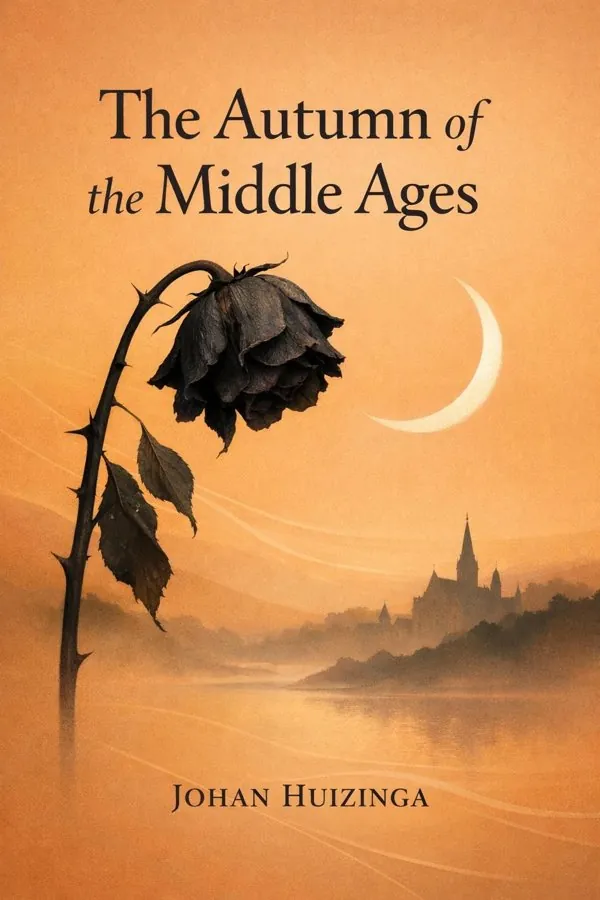
The Autumn of the Middle Ages
The Autumn of the Middle Ages is Johan Huizinga’s brilliant exploration of the emotional, symbolic, and artistic life of fourteenth- and fifteenth-century France and the Low Countries. First published in 1919, the book challenges the simple idea that the late medieval period was merely a worn-out prelude to the Renaissance. Huizinga instead reveals a civilization of extraordinary intensity: deeply religious, fascinated by ritual, saturated with pageantry, and haunted by violence, longing, and death. His focus is not only on events or institutions, but on mentality—how people felt, imagined, and gave form to their world. What makes this book enduring is its ability to turn cultural history into a living landscape of ideas, emotions, and images. Huizinga examines chivalry, courtly love, piety, political ceremony, art, and symbolism to show how a society can appear magnificent and exhausted at the same time. Though some of his interpretations have been debated, his insight into the power of forms, symbols, and shared imagination remains foundational. For anyone interested in medieval Europe, cultural history, or the transition to modernity, this is an essential and unforgettable work.
Read SummaryKey Insights from Johan Huizinga
The Waning of the Medieval Spirit
A civilization does not decline only when its institutions weaken; it can also decline when its forms become too rigid to hold living experience. Huizinga’s central insight is that the late Middle Ages were marked by an excess of form. Rituals, gestures, ranks, ceremonies, and moral codes structured...
From The Autumn of the Middle Ages
Chivalry as Ideal and Illusion
The most admired ideals of an age may also reveal its deepest anxieties. For Huizinga, chivalry was one of the great dreams of medieval civilization: a code of courage, honor, loyalty, courtesy, and noble service. It offered a moralized image of aristocratic life and gave warfare a language of digni...
From The Autumn of the Middle Ages
Courtly Love and Emotional Performance
Feelings are never entirely private; cultures teach people how to feel, express desire, and suffer. Huizinga’s discussion of courtly love shows how the late medieval world transformed emotion into stylized practice. Love was not simply a personal bond between two individuals. It was mediated by poet...
From The Autumn of the Middle Ages
Religious Devotion and Intensified Piety
When life feels unstable, devotion often becomes more vivid, more emotional, and more outwardly visible. Huizinga portrays late medieval Christianity as saturated with sensory and affective power. Religion was not a separate sphere of belief; it shaped time, space, art, morality, and imagination. Fe...
From The Autumn of the Middle Ages
Death as a Cultural Obsession
A society’s deepest truths often appear in the images it cannot stop repeating. In the late Middle Ages, Huizinga argues, death was one of those overpowering images. It was everywhere: in sermons, art, public memory, moral teaching, and popular imagination. War, plague, famine, and high mortality ma...
From The Autumn of the Middle Ages
Politics Through Ceremony and Display
Power rarely survives on force alone; it needs ceremony to become believable. Huizinga shows that late medieval political life was deeply theatrical. Courts, entries, feasts, heraldry, public punishments, marriages, embassies, and oaths all communicated rank and legitimacy through visible form. Prin...
From The Autumn of the Middle Ages
About Johan Huizinga
Johan Huizinga (1872–1945) was a Dutch historian and cultural philosopher known for his influential works on European cultural history. In addition to The Autumn of the Middle Ages, he authored Homo Ludens, which examines play as a fundamental element of culture. His writing is noted for its literar...
Read more
Johan Huizinga (1872–1945) was a Dutch historian and cultural philosopher known for his influential works on European cultural history. In addition to The Autumn of the Middle Ages, he authored Homo Ludens, which examines play as a fundamental element of culture. His writing is noted for its literar...
Johan Huizinga (1872–1945) was a Dutch historian and cultural philosopher known for his influential works on European cultural history. In addition to The Autumn of the Middle Ages, he authored Homo Ludens, which examines play as a fundamental element of culture. His writing is noted for its literary style and its deep insight into the spirit and symbolism of historical periods.


Frequently Asked Questions
Johan Huizinga (1872–1945) was a Dutch historian and cultural philosopher known for his influential works on European cultural history. In addition to The Autumn of the Middle Ages, he authored Homo Ludens, which examines play as a fundamental element of culture.
Read Johan Huizinga's books in 15 minutes
Get AI-powered summaries with key insights from 1 book by Johan Huizinga.